What are the types of water quality measuring devices? pH, residual chlorine, DO, turbidity [Basic Knowledge]

Devices that read the potential and current of electrodes, and those that measure the attenuation and scattering of light. I will explain the mechanisms of different water quality measuring instruments for each item.
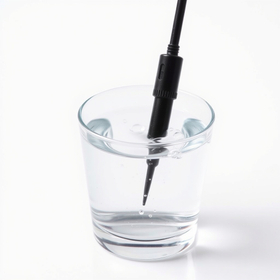
Water quality meters vary significantly depending on the parameters being measured. They can be categorized into two main types: those that read electrical signals with electrodes and those that use light to detect changes. Here, we will discuss four parameters that are commonly addressed in factory water management. ■ What are the four parameters measured with? 1. pH meter: The potential difference between a glass electrode and a reference electrode. 2. Residual chlorine meter: Methods that read the color of a reagent using light or the polarographic method using electrodes. 3. DO meter: Electrical signals from a membrane electrode or fluorescence from an optical sensor. 4. Turbidity meter: Scattering or transmission of light when it hits water. ■ Is a pH meter a type of voltmeter? The glass electrode generates a potential corresponding to hydrogen ions, while the reference electrode maintains a constant potential. The pH is determined from the potential difference between these two. The reference electrode is connected to the water being measured through a porous liquid junction, and the proper functioning of the liquid junction is essential for accurate measurements. The theoretical potential difference is approximately 59 mV per pH unit at 25°C and varies with temperature. Therefore, the measurement manual from the U.S. Geological Survey specifies the use of instruments with temperature compensation features. Please feel free to consult us first.
Inquire About This Product
basic information
■There are two methods for DO measurement? The Ministry of the Environment specifies two methods for measuring bottom-layer dissolved oxygen levels: the membrane electrode dissolved oxygen meter and the optical sensor dissolved oxygen meter. ■The optical method reads the weakening of fluorescence The optical method uses light from a light-emitting diode to excite a dye, measuring the property that oxygen weakens that fluorescence. ■Which one requires stirring?! The membrane method requires sufficient water flow over the surface of the membrane for accurate measurement. The optical method does not consume oxygen at the sensor surface, so it does not require stirring even in slow-moving or stagnant water. The time it takes for the readings to stabilize also differs; typically, the membrane method takes 1 to 5 minutes, while the optical method can take less than a second to several minutes, depending on the model. The consumables also differ; the membrane method requires regular replacement of the membrane and electrolyte, while the optical method requires periodic replacement of the cap containing the phosphor. ■What does a turbidity meter measure? Turbidity is an indicator of the property that light does not pass straight through water but is scattered or absorbed. According to the measurement method of the U.S. Environmental Protection Agency (EPA 180.1), the strength of light scattered by the sample is compared to a standard suspension. The detector is placed at a 90-degree angle to the incident light, and the higher the scattered light, the higher the indicated turbidity.
Price range
Delivery Time
Applications/Examples of results
■Does turbidity values vary even with the same water?! According to the measurement manual from the U.S. Geological Survey, colored water absorbs light, resulting in lower turbidity readings, while bubbles and scratches in the cell scatter light, leading to higher readings. To reduce the influence of color, some devices use near-infrared light sources. ■If comparing, use devices with the same configuration When comparing measurement values across different times and locations, the same manual requires the use of devices with the same optical system and data processing configuration. ■Are there points to consider for calibrating residual chlorine meters? The announcement that defines the testing method for free residual chlorine in drinking water requires that residual chlorine meters used for continuous measurement be calibrated for zero point and span. In the reagent-free polarographic method, it is specified that the pH of the standard solution used for calibration should match the pH of the water being measured. ■Four points to organize before introduction 1. Will measurements be taken on-site or continuously installed? 2. The flow, color, and presence of bubbles in the water being measured 3. The frequency of calibration and consumables such as electrolyte, membranes, and caps for optical sensors 4. Is a multi-parameter device needed to measure multiple items with one unit? Our company also offers rental of water quality measurement devices and will work with you to determine the best measurement method for your water on-site. Please feel free to consult with us first.
catalog(3)
Download All Catalogs

Company information

Since our founding, we have continued to provide flexible services with the motto of accurately supplying a diverse range of products that respond to changes in the times and the diversification of consumer needs, tailored to various applications and requirements. With the corporate slogan "Chemical Engineering Partner," we, as a group of experts in chemical technology, actively discover ideas to solve our customers' problems from advanced technologies both domestically and internationally, and propose them.