What is a water quality inspection for dedicated water supply and simple dedicated water supply? 【Basic Knowledge】

Dedicated water supply with its own water supply system and a simple dedicated water supply that receives tap water in a water storage tank. Although the names are similar, the content of the inspections required by the Water Supply Act is significantly different.
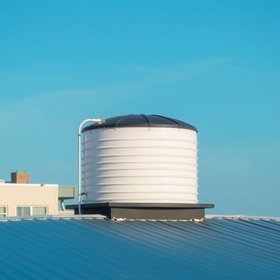
Under the Waterworks Act, not only water service providers but also the operators of facilities with their own water supply are required to undergo inspections. The typical examples are dedicated water supply systems and simple dedicated water supply systems. First, the type determines the inspections that need to be conducted. ■ What are the differences between the two types of water supply? 1. Dedicated water supply: This refers to water supplies for private use, such as those in dormitories or company housing, that provide water necessary for the residence of more than 100 people, or where the amount of water used for living purposes exceeds 20 cubic meters per day. 2. Simple dedicated water supply: This is a system that only uses water sourced from a water service provider, and where the total effective capacity of the receiving tank exceeds 10 cubic meters. ■ Is the water volume from factory wells counted in full? The water volume used for the determination of 20 cubic meters is defined in the enforcement regulations as the amount of water used for drinking, cooking, bathing, and other living purposes. Even if a large amount of well water is used in the manufacturing process, it does not automatically qualify as a dedicated water supply. Conversely, if a facility only receives tap water, it will qualify as a dedicated water supply if the total length of pipes with a diameter of 25 mm or more exceeds 1,500 meters, or if the total effective capacity of the tanks exceeds 100 cubic meters, depending on the above conditions. Please feel free to consult with us first.
Inquire About This Product
basic information
■Dedicated water supply is tested for all water quality standards! Dedicated water supplies are subject to the water quality inspection regulations of water supply operators. The main frequencies are as follows: 1. Daily: Color, turbidity, and residual disinfection effects at least once a day. 2. Generally at least once a month: General bacteria, E. coli, organic matter (TOC), chloride ions, pH value, taste, odor, color, turbidity. 3. Generally at least once every three months: Many other items not mentioned above. PFOS and PFOA are also generally tested at least once every three months. ■Record keeping and outsourcing, inspection plans Records of inspections must be kept for five years from the date of inspection. Inspections can be conducted by oneself, and outsourcing to local government agencies or registered water quality inspection organizations is also permitted. It is also required to establish a water quality inspection plan before the start of each business year. ■When can the frequency be reduced? If there is little risk of significant changes in the quality of the raw water and if the results from the past three years are all below one-fifth of the standard values, some items can be tested generally once a year. If they are below one-tenth, then generally once every three years. However, this does not apply if the type of water source, water intake location, or water purification method has changed in the past three years.
Price range
Delivery Time
Applications/Examples of results
■Is the simple dedicated water supply not one of the 52 items? The installer of a simple dedicated water supply must undergo inspection by a local government agency or a nationally registered agency at least once a year. According to national notifications, inspections are generally defined as follows: 1. Facilities: Confirm the risk of wastewater entering without draining the water from the tank and check for the presence of sediment. 2. Water from the supply faucet: Ensure there are no abnormalities in odor, taste, or color; color should be below 5 degrees; turbidity below 2 degrees; and residual chlorine should be detectable. 3. Documents: Drawings of the facilities, records of tank cleaning, etc. ■Reason for checking residual chlorine Residual chlorine is an item that focuses on its consumption due to long-term stagnation of water, contamination of tanks and pipes, and the mixing of wastewater. ■Annual cleaning is also a requirement! As a management standard, it is stipulated that tank cleaning must be conducted regularly at least once a year. If any abnormalities are recognized in the color, turbidity, odor, or taste of the water from the supply faucet, necessary items from the water quality standards will be inspected. Additionally, for buildings subject to the Building Sanitation Act, inspections can also be conducted based on documents prepared by the installer. ■Cleaning and water quality inspection Torii handles the cleaning and inspection of water storage tanks along with water quality testing. Please feel free to consult us first.
catalog(2)
Download All Catalogs

Company information

Since our founding, we have continued to provide flexible services with the motto of accurately supplying a diverse range of products that respond to changes in the times and the diversification of consumer needs, tailored to various applications and requirements. With the corporate slogan "Chemical Engineering Partner," we, as a group of experts in chemical technology, actively discover ideas to solve our customers' problems from advanced technologies both domestically and internationally, and propose them.