What is the pH of drainage standards? Meaning of 5.8 to 8.6 and causes of deviation [Basic Knowledge]

Outside of marine areas, the pH range is between 5.8 and 8.6, while in marine areas it is between 5.0 and 9.0. This explains the discharge standards for pH set within these ranges and the reasons for deviations.
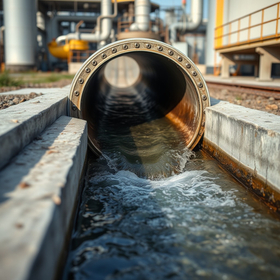
According to the wastewater standards based on the Water Quality Pollution Prevention Act (the ministerial ordinance that establishes wastewater standards), the permissible limits for pH (hydrogen ion concentration) are as follows: 1. Public water areas other than marine areas: 5.8 or higher and 8.6 or lower 2. Marine areas: 5.0 or higher and 9.0 or lower ■Applicable facilities The national standards apply to specific facilities with an average daily discharge of 50 cubic meters or more. It is important to note that if there are different provisions in prefectural ordinances or if the wastewater is discharged into a sewer system, different standards may apply. Furthermore, the ministerial ordinance specifies that the pH standards do not apply to sulfur mining and will not apply to hot spring inns for the time being. ■Is it enough to comply on average? For BOD and SS, there are both maximum values and daily average values, but for pH, only a range is specified, and there is no daily average value. The law prohibits discharging wastewater that does not meet the wastewater standards at the discharge point, so it is required to manage the pH to remain within the range even for short periods. ■Is it the same as the river environmental standards? In the river environmental standards, pH is specified as 6.5 or higher and 8.5 or lower, depending on the type. This serves as a target for river water quality and has a different role from the standards at the discharge point. Please feel free to consult us first.
Inquire About This Product
basic information
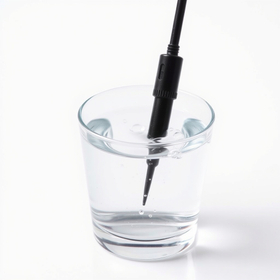
■ Why does it deviate? Depending on the conditions of the factory or workplace, the following causes may exist: 1. Cleaning wastewater: Wastewater from acidic and alkaline chemicals used for cleaning dialysis equipment or wastewater generated from floor cleaning can be a cause. There are cases where the wastewater from floor cleaning has a pH of 10 to 11. 2. Biological treatment: The reaction of nitrifying ammonia itself lowers the pH, and when only nitrification is performed in the treatment of sewage, a large amount of alkali is required for neutralization. 3. Excessive aeration: There have been cases where aeration became too strong after cleaning the aeration pipes of the purification tank, causing the pH to drop to 4.4. ■ Does it deviate to the opposite side due to electrode contamination? There have been cases where the pH electrode in the neutralization tank became dirty, resulting in a higher reading than the actual value, leading to an excessive addition of dilute sulfuric acid and a pH of 4.2. In this case, the pH electrode was immediately cleaned and calibrated. There have also been instances where inadequate maintenance of the pH electrode prevented accurate pH adjustment. ■ It can deviate to either side The deviation in the readings of the pH meter can cause it to deviate on either side of the reference. If the reading is higher than the actual value, it may deviate towards the acidic side, and if it is lower, it may deviate towards the alkaline side.
Price range
Delivery Time
Applications/Examples of results
■What to do when water that may not meet standards is likely to be discharged? According to the Water Pollution Prevention Act, if water that may not meet discharge standards is likely to flow into public water areas due to damage to specific facilities or other accidents, and there is a risk of harm to the living environment, immediate emergency measures must be taken, and the situation of the accident and an overview of the measures must be promptly reported to the governor of the prefecture. The term "accident" here also includes cases where there is a risk of not meeting discharge standards concerning living environment items. If the governor determines that emergency measures have not been taken, they can order such measures to be implemented. ■Establish a monitoring system! It is important to regularly check whether the pH meter's readings are correct and to create a system that can detect abnormalities quickly. ■Continuous monitoring is beneficial The legal requirement for measurements is at least once a year, but since pH can change rapidly, a system for continuous monitoring is useful. Torii has experience in consulting on systems that automatically control electric valves in conjunction with pH meter readings, measuring instruments such as pH meters, water treatment chemicals used for neutralization, and inspections of wastewater treatment facilities. The procedure for neutralization treatment is explained on the page "What is Neutralization Treatment?" Please feel free to consult us first.
catalog(2)
Download All Catalogs
Company information

Since our founding, we have continued to provide flexible services with the motto of accurately supplying a diverse range of products that respond to changes in the times and the diversification of consumer needs, tailored to various applications and requirements. With the corporate slogan "Chemical Engineering Partner," we, as a group of experts in chemical technology, actively discover ideas to solve our customers' problems from advanced technologies both domestically and internationally, and propose them.