iPROS Manufacturing
  • Search for products by classification category

    • Electronic Components and Modules
      Electronic Components and Modules
      61676items
    • Machinery Parts
      Machinery Parts
      75932items
    • Manufacturing and processing machinery
      Manufacturing and processing machinery
      102034items
    • Scientific and Physics Equipment
      Scientific and Physics Equipment
      36331items
    • Materials
      Materials
      37776items
    • Measurement and Analysis
      Measurement and Analysis
      55161items
    • Image Processing
      Image Processing
      15377items
    • Control and Electrical Equipment
      Control and Electrical Equipment
      54564items
    • Tools, consumables, and supplies
      Tools, consumables, and supplies
      65605items
    • Design and production support
      Design and production support
      12663items
    • IT/Network
      IT/Network
      45652items
    • Office
      Office
      14181items
    • Business support services
      Business support services
      25412items
    • Seminars and Skill Development
      Seminars and Skill Development
      6559items
    • Pharmaceutical and food related
      Pharmaceutical and food related
      34177items
    • others
      75348items
  • Search for companies by industry

    • Manufacturing and processing contract
      7338
    • others
      4986
    • Industrial Machinery
      4445
    • Machine elements and parts
      3330
    • Other manufacturing
      2883
    • Trading company/Wholesale
      2650
    • IT/Telecommunications
      2571
    • Industrial Electrical Equipment
      2319
    • Building materials, supplies and fixtures
      1816
    • software
      1666
    • Electronic Components and Semiconductors
      1587
    • Resin/Plastic
      1500
    • Service Industry
      1478
    • Testing, Analysis and Measurement
      1130
    • Ferrous/Non-ferrous metals
      986
    • environment
      699
    • Chemical
      640
    • Automobiles and Transportation Equipment
      581
    • Printing Industry
      513
    • Information and Communications
      465
    • Consumer Electronics
      412
    • Energy
      333
    • Rubber products
      317
    • Food Machinery
      308
    • Optical Instruments
      279
    • robot
      273
    • fiber
      254
    • Paper and pulp
      230
    • Pharmaceuticals and Biotechnology
      173
    • Electricity, Gas and Water Industry
      167
    • Warehousing and transport related industries
      149
    • Glass and clay products
      139
    • Food and Beverage
      130
    • CAD/CAM
      124
    • retail
      108
    • Medical Devices
      107
    • Educational and Research Institutions
      107
    • Ceramics
      98
    • wood
      87
    • Transportation
      84
    • Petroleum and coal products
      63
    • Medical and Welfare
      62
    • Shipbuilding and heavy machinery
      51
    • Aviation & Aerospace
      48
    • Fisheries, Agriculture and Forestry
      41
    • equipment
      40
    • Materials
      33
    • Public interest/special/independent administrative agency
      31
    • Research and development equipment and devices
      29
    • Government
      24
    • self-employed
      24
    • Mining
      17
    • cosmetics
      15
    • Finance, securities and insurance
      14
    • Restaurants and accommodations
      10
    • Individual
      10
    • Police, Fire Department, Self-Defense Forces
      7
    • Laboratory Equipment and Consumables
      5
    • Raw materials for reagents and chemicals
      4
    • Contracted research
      3
  • Special Features
  • Ranking

    • Overall Products Ranking
    • Overall Company Ranking
Search for Products
  • Search for products by classification category

  • Electronic Components and Modules
  • Machinery Parts
  • Manufacturing and processing machinery
  • Scientific and Physics Equipment
  • Materials
  • Measurement and Analysis
  • Image Processing
  • Control and Electrical Equipment
  • Tools, consumables, and supplies
  • Design and production support
  • IT/Network
  • Office
  • Business support services
  • Seminars and Skill Development
  • Pharmaceutical and food related
  • others
Search for Companies
  • Search for companies by industry

  • Manufacturing and processing contract
  • others
  • Industrial Machinery
  • Machine elements and parts
  • Other manufacturing
  • Trading company/Wholesale
  • IT/Telecommunications
  • Industrial Electrical Equipment
  • Building materials, supplies and fixtures
  • software
  • Electronic Components and Semiconductors
  • Resin/Plastic
  • Service Industry
  • Testing, Analysis and Measurement
  • Ferrous/Non-ferrous metals
  • environment
  • Chemical
  • Automobiles and Transportation Equipment
  • Printing Industry
  • Information and Communications
  • Consumer Electronics
  • Energy
  • Rubber products
  • Food Machinery
  • Optical Instruments
  • robot
  • fiber
  • Paper and pulp
  • Pharmaceuticals and Biotechnology
  • Electricity, Gas and Water Industry
  • Warehousing and transport related industries
  • Glass and clay products
  • Food and Beverage
  • CAD/CAM
  • retail
  • Medical Devices
  • Educational and Research Institutions
  • Ceramics
  • wood
  • Transportation
  • Petroleum and coal products
  • Medical and Welfare
  • Shipbuilding and heavy machinery
  • Aviation & Aerospace
  • Fisheries, Agriculture and Forestry
  • equipment
  • Materials
  • Public interest/special/independent administrative agency
  • Research and development equipment and devices
  • Government
  • self-employed
  • Mining
  • cosmetics
  • Finance, securities and insurance
  • Restaurants and accommodations
  • Individual
  • Police, Fire Department, Self-Defense Forces
  • Laboratory Equipment and Consumables
  • Raw materials for reagents and chemicals
  • Contracted research
Special Features
Ranking
  • Overall Products Ranking
  • Overall Company Ranking
  • privacy policy
  • terms of service
  • About Us
  • Careers
  • Advertising
  1. Home
  2. environment
  3. トリイ
  4. Product/Service List
environment
  • Added to bookmarks

    Bookmarks list

    Bookmark has been removed

    Bookmarks list

    You can't add any more bookmarks

    By registering as a member, you can increase the number of bookmarks you can save and organize them with labels.

    Free membership registration

トリイ

addressAichi/Nishio-shi/36 Emukae, Ajihama, Isshikimachi
phone0563-72-8220
  • Special site
  • Official site
last updated:Sep 04, 2026
トリイlogo
  • Contact this company

    Inquiry Form
  • Before making an inquiry

    Download Profile
  • Company information
  • Products/Services(213)
  • catalog(61)
  • news(0)

トリイ Product Lineup

  • category

1~13 item / All 13 items

Displayed results

Filter by category

凝集剤・フロックの基礎知識 凝集剤・フロックの基礎知識
食品・薬品の基礎知識 食品・薬品の基礎知識
食品表示・添加物の基礎知識 食品表示・添加物の基礎知識
甘味料・うま味の基礎知識 甘味料・うま味の基礎知識
設備部品の基礎知識 設備部品の基礎知識
水道水・井戸水・水質基準 水道水・井戸水・水質基準
水質測定(pH・電気伝導率) 水質測定(pH・電気伝導率)
純水・超純水・工業用水 純水・超純水・工業用水
軟水・硬水の基礎知識 軟水・硬水の基礎知識
純水器・軟水器の提案 純水器・軟水器の提案
排水処理の基礎知識 排水処理の基礎知識
排水処理場の点検・保全サービス 排水処理場の点検・保全サービス
排水処理のトラブル事例 排水処理のトラブル事例
冷却塔の基礎知識とメンテナンス 冷却塔の基礎知識とメンテナンス
ボイラーの構造・運転・法規制 ボイラーの構造・運転・法規制
ボイラーの整備・点検・メンテナンス ボイラーの整備・点検・メンテナンス
ボイラーの更新・省エネ・コスト削減 ボイラーの更新・省エネ・コスト削減
ボイラーの薬品・スケール対策 ボイラーの薬品・スケール対策
水質測定(pH・電気伝導率)

水質測定(pH・電気伝導率)

pHや電気伝導率の測定方法や原理など、水質管理に欠かせない測定に関する基礎知識をまとめました。
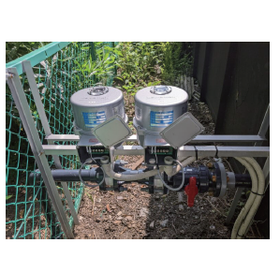
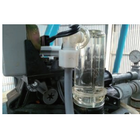
Factory wastewater pH management | Automatic detection and shutdown of pH anomalies [with case studies]

Comprehensive support from automatic control design and construction to alert settings and equipment maintenance!

Do you have any concerns regarding factory wastewater? - The pH of the wastewater occasionally shows abnormal values, raising worries about potential external discharge. - If water exceeding the standard values were to flow out, it could lead to environmental regulation violations or conflicts with neighboring areas. - Continuous monitoring by human resources is difficult, so we want to implement automatic safety measures. A system that automatically controls electric valves in response to pH meter readings contributes to the prevention of factory shutdowns and penalty risks. ◇ Achieving zero discharge of abnormal water ◇ Real-time response to pH anomalies ◇ Assurance in explaining risks to local residents and authorities ◇ Reducing the mental burden on site and contributing to improved work efficiency We are currently offering free case studies on the important pH management as part of wastewater treatment management.

Added to bookmarks

Bookmarks list

Bookmark has been removed

Bookmarks list

You can't add any more bookmarks

By registering as a member, you can increase the number of bookmarks you can save and organize them with labels.

Free membership registration

Is there a difference in conductivity between drinkable and non-drinkable water? 【Basic Knowledge】

Measured with a conductivity meter! What do the differences in values between household groundwater and non-potable well water reveal about water quality standards?

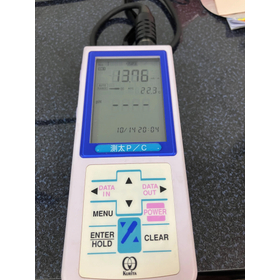
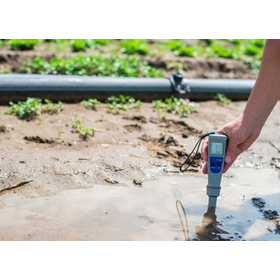
■What happens when you actually measure groundwater with a conductivity meter? We measured two types of well water (not suitable for drinking) and groundwater used as household drinking water (pumped from 25m underground) with a conductivity meter. The results were: household drinking water at 13.76 mS/m, well water 1 (not suitable for drinking) at 7.22 mS/m, and well water 2 (not suitable for drinking) at 11.38 mS/m. ■What does electrical conductivity represent? Electrical conductivity is an indicator that changes based on the amount of dissolved minerals (ions) such as calcium and magnesium in the water. A higher value indicates a greater presence of electrolytes in the water. ■What does it mean that the drinking water has a higher value? In this case, the household drinking water had a higher conductivity than the two types of well water that are not suitable for drinking. Conductivity is merely a guideline for the amount of dissolved ions, and a higher value does not directly indicate safety. The suitability for drinking is determined not only by this value but also through comprehensive testing based on water quality standards. If you are having trouble with water quality management in your facilities, please feel free to consult us first.

Added to bookmarks

Bookmarks list

Bookmark has been removed

Bookmarks list

You can't add any more bookmarks

By registering as a member, you can increase the number of bookmarks you can save and organize them with labels.

Free membership registration

Why can a conductivity meter measure simply by immersion? 【Basic Knowledge】

No need for reagents to check water quality? What is the mechanism of an electrical conductivity meter!

■What is an electrical conductivity meter used for? Electrical conductivity meters are used for a wide range of water quality measurements, from environmental water such as river water to drinking water and industrial aqueous solutions used in factories. Due to their ease of use, as they only require immersion of the sensor, they are widely used for routine checks in the field. ■Why can measurements be taken just by immersing the sensor? Electrical conductivity is the inverse of the electrical resistance of a solution. By applying a voltage between the electrodes of the sensor and measuring the current that flows, the value can be obtained. Unlike water quality tests that use reagents, this allows for simple and instantaneous measurements just by immersion. ■How does the electrical conductivity meter help? Because it is easy and quick to measure, it is used as an indicator for routine water quality management in various settings such as environmental water, drinking water, and industrial wastewater. Since there is no need for reagent preparation or waiting for reactions, it is also suitable for continuous monitoring. If you have any concerns about water quality management, please feel free to consult us first.

Added to bookmarks

Bookmarks list

Bookmark has been removed

Bookmarks list

You can't add any more bookmarks

By registering as a member, you can increase the number of bookmarks you can save and organize them with labels.

Free membership registration

Why is the electrical conductivity of tap water not zero? 【Basic Knowledge】

Pure water is almost zero, but tap water is 10-20 mS/m? What is the reason for that!

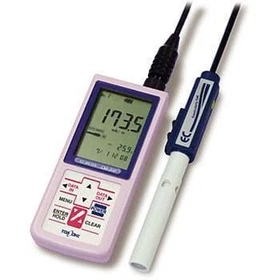
■What is the unit of electrical conductivity "S/m"? The electrical conductivity of water is a value that indicates how easily electricity can pass through it; the larger the value, the easier it is for electricity to flow. The unit is "S/m (siemens per meter)," and it can also be expressed in terms of size as "mS/m" or "μS/cm." ■What is the electrical conductivity of tap water? It varies by region, but in Japan, the electrical conductivity of tap water is generally considered to be around 10-20 mS/m. When measured with a conductivity meter, the value can sometimes be around 20 mS/m. ■Why does tap water not have an electrical conductivity of 0? Even after purification treatment, tap water retains minerals such as calcium and magnesium as ions, which are generally explained as the source of conductivity. Pure water, which contains almost no ions, does not conduct electricity well, leading to a significant difference from the values of tap water. If you have concerns about water quality management, please feel free to consult us first.

Added to bookmarks

Bookmarks list

Bookmark has been removed

Bookmarks list

You can't add any more bookmarks

By registering as a member, you can increase the number of bookmarks you can save and organize them with labels.

Free membership registration

Can the difference in hardness of mineral water be detected by electrical conductivity? 【Basic Knowledge】

Hardness 11 and 1468, with an electrical conductivity difference of 13 times? Verified by actual measurements!

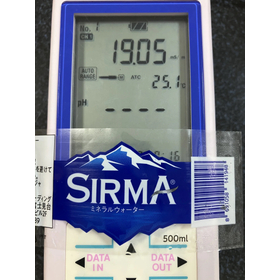
■How does electrical conductivity change with hardness? When measuring the electrical conductivity of seven types of commercially available mineral water, it was found that a product with a hardness of 11 mg/L, which is close to soft water, had an electrical conductivity of 19.05 mS/m, while a product with a very high hardness of 1468 mg/L had a conductivity of 0.243 S/m (243 mS/m), showing a significant difference. ■Why are hardness and electrical conductivity linked? Hardness is an indicator of the amount of calcium and magnesium, both of which exist as ions in water. Since electrical conductivity increases in proportion to the amount of ions in the water, water with higher hardness tends to have higher electrical conductivity as well. Conversely, this means that by measuring electrical conductivity alone, one can roughly estimate the amount of dissolved minerals in the water. ■What is the actual difference? The seven types measured this time had a hardness range of 11 to 1468 mg/L, which is more than a 130-fold difference, and the electrical conductivity varied from 19.05 mS/m to 243 mS/m, resulting in approximately a 13-fold difference. By using a conductivity meter, you can easily check the differences in water hardness numerically. If you are having trouble with water quality management, please feel free to consult us first.

Added to bookmarks

Bookmarks list

Bookmark has been removed

Bookmarks list

You can't add any more bookmarks

By registering as a member, you can increase the number of bookmarks you can save and organize them with labels.

Free membership registration

Is it true that you can tell if water is clean by its electrical conductivity? [Basic Knowledge]

The more ions there are, the easier it is for electricity to flow? Tips for assessing water quality numerically!

■What does electrical conductivity represent? Electrical conductivity is a value that indicates how easily electricity flows through a substance. The more ions that are dissolved in water, the easier it is for electric current to flow, resulting in a larger value. ■How is it different from resistivity? Conversely, resistivity is an indicator that represents how difficult it is for electricity to pass through. Water with fewer ions is less conductive, so the value of resistivity increases. Electrical conductivity and resistivity are essentially two sides of the same coin. ■Why can water quality be determined by electrical conductivity? Many impurities found in natural water are electrolytes that become ions such as calcium and sodium when dissolved in water. Therefore, a higher electrical conductivity indicates a higher concentration of impurities, while a lower conductivity suggests fewer impurities. This property is utilized to easily assess the amount of impurities in water quality management. If you are having trouble with water quality management in your facilities, please feel free to consult us.

Added to bookmarks

Bookmarks list

Bookmark has been removed

Bookmarks list

You can't add any more bookmarks

By registering as a member, you can increase the number of bookmarks you can save and organize them with labels.

Free membership registration

Why is the pH of pure water exactly 7? 【Basic Knowledge】

Pure water has a theoretical pH of 7, but in reality, it can vary slightly? A simple explanation of the chemistry of water!

■Why is the pH of pure water theoretically "7"? Pure water does not contain substances that can be classified as either acidic or alkaline. Water naturally ionizes very slightly, resulting in hydrogen ions that indicate acidity and hydroxide ions that indicate alkalinity being present in equal concentrations, which makes it neutral, or pH 7. ■Why does actual water deviate from pH 7? When substances that indicate acidity or alkalinity dissolve in water, that water will show acidic or alkaline properties. It is known that even pure water, which should theoretically have a pH of 7, becomes slightly acidic when it absorbs carbon dioxide from the air, resulting in a pH of about 5.6. ■How should pure water be handled to remain stable? As mentioned, pure water has a tendency to be influenced by its surrounding environment. When accurate pH values are needed for analysis or experiments, it is important to handle it carefully, such as minimizing exposure to air.

Added to bookmarks

Bookmarks list

Bookmark has been removed

Bookmarks list

You can't add any more bookmarks

By registering as a member, you can increase the number of bookmarks you can save and organize them with labels.

Free membership registration

What is the pH regulation of boiler blowdown? [Basic Knowledge]

Why is neutralization necessary for alkaline corrosion-resistant water? An explanation of the standards of the Sewerage Act and the Water Pollution Control Act.

■ What regulations exist for boiler wastewater? There are additional regulations regarding the water quality standards for boiler wastewater under the Sewerage Act, the Water Pollution Control Act, and municipal ordinances. The Sewerage Act and the Water Pollution Control Act stipulate that the pH must be discharged between 5.8 and 8.6. ■ Why is the standard set around neutral? It is generally said that strongly acidic or alkaline wastewater can corrode sewer pipes and weaken the activity of microorganisms that clean wastewater at treatment plants. By establishing standards close to neutral, it is believed that such impacts are prevented. ■ Why is neutralization necessary? As mentioned previously, it is desirable to maintain the pH of boiler water between 11.0 and 11.8 for corrosion prevention inside the boiler. Therefore, high pH blowdown water must be neutralized before discharge, as discharging it directly would exceed the standards. ■ How is neutralization done? Typically, the pH of alkaline wastewater is lowered by adding an acid to adjust it within the standard values. Please feel free to consult us for more information.

Added to bookmarks

Bookmarks list

Bookmark has been removed

Bookmarks list

You can't add any more bookmarks

By registering as a member, you can increase the number of bookmarks you can save and organize them with labels.

Free membership registration

What is pH? [Basic Knowledge]

What does pH stand for? A simple explanation of the mechanism of "hydrogen ion concentration" that measures acidity and alkalinity.

■What does pH represent? pH stands for potential Hydrogen or power of Hydrogen, pronounced as "pee-aitch" or "peh-ha" in Japanese, and is translated as "hydrogen ion index" in Japanese. The essence of pH is the "amount of hydrogen ions" present in water. Acidic substances release a lot of hydrogen ions when dissolved in water, while alkaline substances change the amount of hydrogen ions by either absorbing them or releasing hydroxide ions. The values typically range from 1 to 14, with 7 being the midpoint, considered "neutral." Values less than 7 are "acidic," and values greater than 7 are "alkaline." ■What is the pH of common liquids? Water is a representative of neutral, vinegar and lemon are representatives of acidic, and soap water is a representative of alkaline. ■Why is the "P" in pH lowercase? Since it refers to the exponent of hydrogen ion concentration (power), the lowercase "p" from power is combined with the "H" for hydrogen to form pH. ■Why is pH important in boiler and water treatment settings? Managing the pH of water quality is essential to prevent corrosion and scale buildup in boilers and piping. It is measured using pH test strips or a pH meter. Please feel free to consult us first.

Added to bookmarks

Bookmarks list

Bookmark has been removed

Bookmarks list

You can't add any more bookmarks

By registering as a member, you can increase the number of bookmarks you can save and organize them with labels.

Free membership registration

What are the types of pH meters and how to choose them? 【Basic Knowledge】

The reasons for pH measurement range widely from "quality control" to "environmental monitoring"!

There are actually many places in factories where pH is measured. Depending on the purpose and location, the shape of the equipment and the measurement method vary. ■ Uses range from "quality control" to "environmental monitoring" The applications of pH measurement are very broad, covering everything from process management in product manufacturing at factories to pollution monitoring of factory wastewater and river water. Both management to maintain consistent product quality and management to ensure that discharged water meets standards are capturing the state of water using the same measure: pH. ■ Choose the shape and measurement method according to usage The shapes of the equipment include portable handheld types, desktop types for use on tables, and fixed types for continuous monitoring installed in facilities. There are also multiple measurement methods, including indicator reagent types that show color changes, antimony electrode types, and glass electrode types that offer superior accuracy. Choosing between convenience and accuracy or continuous monitoring is essential. Selecting the right combination for your application is the first step toward proper water quality management. You can find an explanation of how to choose pH management and water quality measurement equipment suitable for your needs in this document. Please download the document!

Added to bookmarks

Bookmarks list

Bookmark has been removed

Bookmarks list

You can't add any more bookmarks

By registering as a member, you can increase the number of bookmarks you can save and organize them with labels.

Free membership registration

Basic Water Quality Management! What are the methods for measuring pH? 【Fundamental Knowledge】

There are precise instruments and convenient test strips for measuring pH!

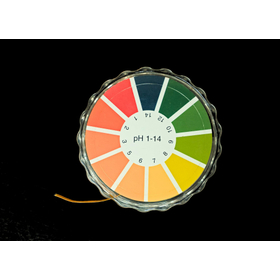
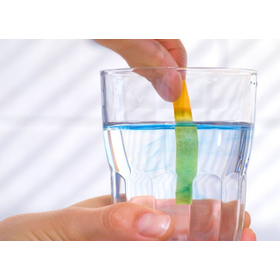
The pH, which is fundamental to water quality management. There are two methods for measuring it: using precise instruments and convenient test strips, which are chosen based on the purpose. ■ pH Meter (measures accurately with electricity) A pH meter is an electrical measuring device that uses an internal glass electrode. When two types of solutions are separated by a glass membrane, a potential difference arises according to the difference in pH between the two. By utilizing this mechanism, the potential generated between the reference solution inside the electrode and the water to be measured is read to accurately quantify the pH. However, to maintain accuracy and reliability, it is necessary to regularly perform "calibration" (adjusting to correct values) not only when starting to use it or when replacing the electrode but also during use. ■ pH Test Strips (easy determination by color) pH test strips are paper that determines the approximate pH of a liquid by color change. They start as green, and when immersed in a liquid, they change from red (acidic) to green (neutral) to blue (alkaline) depending on the pH. For example, if a strong acid like sulfuric acid is present, it will show red. While they are less accurate than instruments in terms of numerical precision, their strengths lie in the fact that they do not require power or calibration, allowing for quick assessments of acidity or alkalinity on the spot. The appropriate methods for pH management and water quality measurement according to your needs are explained in this document. Please download the document!

Added to bookmarks

Bookmarks list

Bookmark has been removed

Bookmarks list

You can't add any more bookmarks

By registering as a member, you can increase the number of bookmarks you can save and organize them with labels.

Free membership registration

The conductivity of pure water is rising! Replacement work and maintenance examples of ion exchange resin in pure water systems.

What is the optimal solution for replacing and maintaining ion exchange resins and purifiers?

The effectiveness of the ion exchange resin is declining! The conductivity of the soft water is increasing! In the boiler equipment that supports the manufacturing line, a stable supply of high-quality pure water is crucial. There has been a challenge where the effectiveness of the ion exchange resin in use on-site is gradually decreasing, leading to an increase in the conductivity of the pure water. Furthermore, although the resin regeneration was set to occur automatically, there were concerns that starting regeneration during operation could impact production, leading to requests for control over the timing of regeneration. For more details, please refer to the downloadable materials.

Added to bookmarks

Bookmarks list

Bookmark has been removed

Bookmarks list

You can't add any more bookmarks

By registering as a member, you can increase the number of bookmarks you can save and organize them with labels.

Free membership registration

[Case Study of Automatic Control System] Automatic Detection and Interruption of pH Abnormalities

Automatic blocking of abnormal pH wastewater! Introduction of a system to prevent environmental troubles!

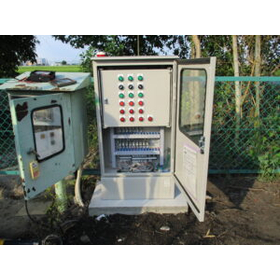
We would like to introduce a case study of the implementation of an automatic control system for industries such as aluminum processing, metal processing, surface treatment, and extrusion molding, where pH management of factory wastewater is required. We received inquiries expressing concerns that the pH of the wastewater sometimes shows abnormal values and that there might be a risk of it flowing out externally. Abnormal pH levels in wastewater can occur suddenly, and there are limitations to monitoring and responding manually. Our proposal was to implement a system that automatically controls an electric valve in conjunction with the pH meter readings. After implementation, we achieved zero outflow of abnormal water, and real-time responses to pH anomalies became possible. 【Challenges on-site】 ■ The pH of the wastewater sometimes shows abnormal values, raising concerns about potential external outflow. ■ If water exceeding the standard value were to flow out, it could lead to environmental standard violations or issues with neighboring areas. ■ Continuous monitoring by human resources is difficult, so we want to implement automatic safety measures. *For more details, please download the PDF or feel free to contact us.

Added to bookmarks

Bookmarks list

Bookmark has been removed

Bookmarks list

You can't add any more bookmarks

By registering as a member, you can increase the number of bookmarks you can save and organize them with labels.

Free membership registration
Prev 1 Next
  • 金属・化学・窯業・食品・医薬品などのほぐし・解砕・ふるい分けがこれ一台 解砕機構付き佐藤式振動ふるい機 つばさ デモ実施中!
  • 排気熱風なく気温-4.1℃の冷風を 工事不要で暑さ対策 店舗・工場の安全対策に! 気化式スポットクーラー Pure Drive
    • Contact this company

      Inquiry Form
    • Before making an inquiry

      Download Profile

    Products

    • Search for Products

    Company

    • Search for Companies

    Special Features

    • Special Features

    Ranking

    • Overall Products Ranking
    • Overall Company Ranking

    support

    • site map
    IPROS
    • privacy policy Regarding external transmission of information
    • terms of service
    • About Us
    • Careers
    • Advertising
    IPROS Services
    • >IPROS GMS | Search site for the manufacturing industry
    • >IPROS | Search site for the B2B industry
    COPYRIGHT © 2001-2026 IPROS CORPORATION ALL RIGHTS RESERVED.
    Please note that the English text on this page is automatically translated and may contain inaccuracies.