iPROS Manufacturing
  • Search for products by classification category

    • Electronic Components and Modules
      Electronic Components and Modules
      61676items
    • Machinery Parts
      Machinery Parts
      75932items
    • Manufacturing and processing machinery
      Manufacturing and processing machinery
      102035items
    • Scientific and Physics Equipment
      Scientific and Physics Equipment
      36331items
    • Materials
      Materials
      37776items
    • Measurement and Analysis
      Measurement and Analysis
      55161items
    • Image Processing
      Image Processing
      15377items
    • Control and Electrical Equipment
      Control and Electrical Equipment
      54564items
    • Tools, consumables, and supplies
      Tools, consumables, and supplies
      65605items
    • Design and production support
      Design and production support
      12663items
    • IT/Network
      IT/Network
      45652items
    • Office
      Office
      14181items
    • Business support services
      Business support services
      25412items
    • Seminars and Skill Development
      Seminars and Skill Development
      6558items
    • Pharmaceutical and food related
      Pharmaceutical and food related
      34177items
    • others
      75348items
  • Search for companies by industry

    • Manufacturing and processing contract
      7338
    • others
      4986
    • Industrial Machinery
      4445
    • Machine elements and parts
      3330
    • Other manufacturing
      2883
    • Trading company/Wholesale
      2650
    • IT/Telecommunications
      2571
    • Industrial Electrical Equipment
      2319
    • Building materials, supplies and fixtures
      1816
    • software
      1666
    • Electronic Components and Semiconductors
      1587
    • Resin/Plastic
      1500
    • Service Industry
      1478
    • Testing, Analysis and Measurement
      1130
    • Ferrous/Non-ferrous metals
      986
    • environment
      699
    • Chemical
      640
    • Automobiles and Transportation Equipment
      581
    • Printing Industry
      513
    • Information and Communications
      465
    • Consumer Electronics
      412
    • Energy
      333
    • Rubber products
      317
    • Food Machinery
      308
    • Optical Instruments
      279
    • robot
      273
    • fiber
      254
    • Paper and pulp
      230
    • Pharmaceuticals and Biotechnology
      173
    • Electricity, Gas and Water Industry
      167
    • Warehousing and transport related industries
      149
    • Glass and clay products
      139
    • Food and Beverage
      130
    • CAD/CAM
      124
    • retail
      108
    • Medical Devices
      107
    • Educational and Research Institutions
      107
    • Ceramics
      98
    • wood
      87
    • Transportation
      84
    • Petroleum and coal products
      63
    • Medical and Welfare
      62
    • Shipbuilding and heavy machinery
      51
    • Aviation & Aerospace
      48
    • Fisheries, Agriculture and Forestry
      41
    • equipment
      40
    • Materials
      33
    • Public interest/special/independent administrative agency
      31
    • Research and development equipment and devices
      29
    • Government
      24
    • self-employed
      24
    • Mining
      17
    • cosmetics
      15
    • Finance, securities and insurance
      14
    • Restaurants and accommodations
      10
    • Individual
      10
    • Police, Fire Department, Self-Defense Forces
      7
    • Laboratory Equipment and Consumables
      5
    • Raw materials for reagents and chemicals
      4
    • Contracted research
      3
  • Special Features
  • Ranking

    • Overall Products Ranking
    • Overall Company Ranking
Search for Products
  • Search for products by classification category

  • Electronic Components and Modules
  • Machinery Parts
  • Manufacturing and processing machinery
  • Scientific and Physics Equipment
  • Materials
  • Measurement and Analysis
  • Image Processing
  • Control and Electrical Equipment
  • Tools, consumables, and supplies
  • Design and production support
  • IT/Network
  • Office
  • Business support services
  • Seminars and Skill Development
  • Pharmaceutical and food related
  • others
Search for Companies
  • Search for companies by industry

  • Manufacturing and processing contract
  • others
  • Industrial Machinery
  • Machine elements and parts
  • Other manufacturing
  • Trading company/Wholesale
  • IT/Telecommunications
  • Industrial Electrical Equipment
  • Building materials, supplies and fixtures
  • software
  • Electronic Components and Semiconductors
  • Resin/Plastic
  • Service Industry
  • Testing, Analysis and Measurement
  • Ferrous/Non-ferrous metals
  • environment
  • Chemical
  • Automobiles and Transportation Equipment
  • Printing Industry
  • Information and Communications
  • Consumer Electronics
  • Energy
  • Rubber products
  • Food Machinery
  • Optical Instruments
  • robot
  • fiber
  • Paper and pulp
  • Pharmaceuticals and Biotechnology
  • Electricity, Gas and Water Industry
  • Warehousing and transport related industries
  • Glass and clay products
  • Food and Beverage
  • CAD/CAM
  • retail
  • Medical Devices
  • Educational and Research Institutions
  • Ceramics
  • wood
  • Transportation
  • Petroleum and coal products
  • Medical and Welfare
  • Shipbuilding and heavy machinery
  • Aviation & Aerospace
  • Fisheries, Agriculture and Forestry
  • equipment
  • Materials
  • Public interest/special/independent administrative agency
  • Research and development equipment and devices
  • Government
  • self-employed
  • Mining
  • cosmetics
  • Finance, securities and insurance
  • Restaurants and accommodations
  • Individual
  • Police, Fire Department, Self-Defense Forces
  • Laboratory Equipment and Consumables
  • Raw materials for reagents and chemicals
  • Contracted research
Special Features
Ranking
  • Overall Products Ranking
  • Overall Company Ranking
  • privacy policy
  • terms of service
  • About Us
  • Careers
  • Advertising
  1. Home
  2. environment
  3. トリイ
  4. Product/Service List
environment
  • Added to bookmarks

    Bookmarks list

    Bookmark has been removed

    Bookmarks list

    You can't add any more bookmarks

    By registering as a member, you can increase the number of bookmarks you can save and organize them with labels.

    Free membership registration

トリイ

addressAichi/Nishio-shi/36 Emukae, Ajihama, Isshikimachi
phone0563-72-8220
  • Special site
  • Official site
last updated:Sep 04, 2026
トリイlogo
  • Contact this company

    Inquiry Form
  • Before making an inquiry

    Download Profile
  • Company information
  • Products/Services(213)
  • catalog(61)
  • news(0)

トリイ Product Lineup

  • category

1~7 item / All 7 items

Displayed results

Filter by category

凝集剤・フロックの基礎知識 凝集剤・フロックの基礎知識
食品・薬品の基礎知識 食品・薬品の基礎知識
食品表示・添加物の基礎知識 食品表示・添加物の基礎知識
甘味料・うま味の基礎知識 甘味料・うま味の基礎知識
設備部品の基礎知識 設備部品の基礎知識
水道水・井戸水・水質基準 水道水・井戸水・水質基準
水質測定(pH・電気伝導率) 水質測定(pH・電気伝導率)
純水・超純水・工業用水 純水・超純水・工業用水
軟水・硬水の基礎知識 軟水・硬水の基礎知識
純水器・軟水器の提案 純水器・軟水器の提案
排水処理の基礎知識 排水処理の基礎知識
排水処理場の点検・保全サービス 排水処理場の点検・保全サービス
排水処理のトラブル事例 排水処理のトラブル事例
冷却塔の基礎知識とメンテナンス 冷却塔の基礎知識とメンテナンス
ボイラーの構造・運転・法規制 ボイラーの構造・運転・法規制
ボイラーの整備・点検・メンテナンス ボイラーの整備・点検・メンテナンス
ボイラーの更新・省エネ・コスト削減 ボイラーの更新・省エネ・コスト削減
ボイラーの薬品・スケール対策 ボイラーの薬品・スケール対策
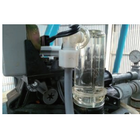
排水処理の基礎知識

排水処理の基礎知識

排水と廃水の違いやBOD・CODなど、排水処理を理解する上での基本的な用語や仕組みをまとめました。
What is the pH regulation of boiler blowdown? [Basic Knowledge]

Why is neutralization necessary for alkaline corrosion-resistant water? An explanation of the standards of the Sewerage Act and the Water Pollution Control Act.

■ What regulations exist for boiler wastewater? There are additional regulations regarding the water quality standards for boiler wastewater under the Sewerage Act, the Water Pollution Control Act, and municipal ordinances. The Sewerage Act and the Water Pollution Control Act stipulate that the pH must be discharged between 5.8 and 8.6. ■ Why is the standard set around neutral? It is generally said that strongly acidic or alkaline wastewater can corrode sewer pipes and weaken the activity of microorganisms that clean wastewater at treatment plants. By establishing standards close to neutral, it is believed that such impacts are prevented. ■ Why is neutralization necessary? As mentioned previously, it is desirable to maintain the pH of boiler water between 11.0 and 11.8 for corrosion prevention inside the boiler. Therefore, high pH blowdown water must be neutralized before discharge, as discharging it directly would exceed the standards. ■ How is neutralization done? Typically, the pH of alkaline wastewater is lowered by adding an acid to adjust it within the standard values. Please feel free to consult us for more information.

Added to bookmarks

Bookmarks list

Bookmark has been removed

Bookmarks list

You can't add any more bookmarks

By registering as a member, you can increase the number of bookmarks you can save and organize them with labels.

Free membership registration

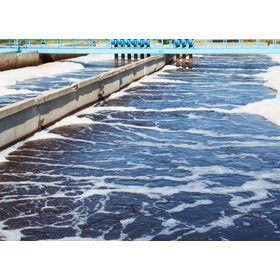
What is wastewater treatment technology? 【Basic Knowledge】

What are BOD and COD? An explanation of the four methods of wastewater treatment (physical, chemical, physicochemical, and biological treatment).

■What does wastewater treatment technology do? Wastewater treatment technology is a method that separates particles and dissolved substances (such as organic matter) detected as BOD and COD from water, or transforms them into harmless, stable substances (such as CO2) for removal. Treatment methods are divided into four categories: physical treatment, chemical treatment, physicochemical treatment, and biological treatment. ■What do BOD and COD represent? BOD (Biochemical Oxygen Demand) indicates the amount of oxygen consumed by microorganisms when decomposing organic matter, while COD (Chemical Oxygen Demand) indicates the amount of oxygen consumed by oxidizing agents when decomposing organic matter. Higher values mean a reduction in dissolved oxygen in the water, which can adversely affect aquatic organisms. Generally, rivers are regulated by BOD, while lakes and marine areas are regulated by COD. ■How do the four treatment methods differ? 1. Physical treatment: Separates contaminants through processes like sedimentation and filtration. 2. Chemical treatment: Neutralizes contaminants through processes like neutralization and redox reactions. 3. Physicochemical treatment: Combines processes like coagulation-sedimentation and activated carbon adsorption. 4. Biological treatment: Decomposes organic matter using the power of microorganisms. ■Which treatment method should be chosen? The appropriate treatment method or combination depends on the types and concentrations of substances contained in the wastewater. Please feel free to consult with us first.

Added to bookmarks

Bookmarks list

Bookmark has been removed

Bookmarks list

You can't add any more bookmarks

By registering as a member, you can increase the number of bookmarks you can save and organize them with labels.

Free membership registration

What is the difference between drainage and wastewater? 【Basic Knowledge】

Do you know the difference between "drainage" and "wastewater"? An explanation of the basics of factory wastewater treatment and drainage treatment.

■What is the difference between drainage and wastewater? "Drainage" refers to the act of discharging water outside or the water that has been discharged. On the other hand, "wastewater" specifically refers to the dirty water that has been used. The key distinction between these two terms is that wastewater is in a dirty state due to treatment, while drainage water is not necessarily dirty. ■How does wastewater treatment create "clean water"? In production sites, various types of wastewater, such as polishing wastewater and cutting fluid wastewater, are generated. Wastewater treatment involves separating these wastewaters into clean water and contaminants through processes like coagulation treatment. In coagulation treatment, a coagulant is added to the fine particles of contaminants to cause them to clump together into larger masses, which are then removed through sedimentation and filtration. The cleaned water from wastewater treatment may be reused in the production site, but since treated water contains some chemical components, careful consideration should be given to whether it can be reused. ■Why are wastewater treatment and discharge standards necessary? Wastewater treatment is the process of treating wastewater to discharge water outside the factory. The discharge standards vary depending on the components contained in the wastewater. These standards are established to protect public water bodies such as rivers and seas, as well as groundwater, from pollution and to preserve the living environment.

Added to bookmarks

Bookmarks list

Bookmark has been removed

Bookmarks list

You can't add any more bookmarks

By registering as a member, you can increase the number of bookmarks you can save and organize them with labels.

Free membership registration

What causes the smell of wastewater treatment? [Basic Knowledge]

The main cause of unpleasant odors generated at wastewater treatment plants is this!

The unique smell of the wastewater treatment plant. Are you just brushing it off with "Well, it's that kind of place, so it can't be helped"? In fact, that smell is a sign that can be life-threatening for workers. ■ The source of the smell like rotten eggs A typical foul odor generated in wastewater treatment is hydrogen sulfide (H2S, which smells like rotten eggs). The troublesome part is that its specific gravity is about 1.2 times that of air. This means it is heavier than air and accumulates in "low places" such as pits and tanks. While the smell may be faint above, there is a risk of suddenly plunging your head into a high-concentration layer when you bend down. ■ Moreover, the danger of "getting used to it" Hydrogen sulfide has a strong odor at low concentrations, but at high concentrations, it can numb the sense of smell, making it undetectable. This does not mean "it smells less than before = it has become safe"; rather, it indicates that you may have entered a dangerous zone. The inability to use the presence or absence of smell as a safety gauge is the most frightening aspect of this substance. Other foul-smelling substances, such as methyl mercaptan (which smells like rotten onions) and ammonia, also exist, each with different properties. We have summarized methods to ensure safety in wastewater treatment plant inspections not relying on smell but on systems in this document.

Added to bookmarks

Bookmarks list

Bookmark has been removed

Bookmarks list

You can't add any more bookmarks

By registering as a member, you can increase the number of bookmarks you can save and organize them with labels.

Free membership registration

Case Study of Diffuser Replacement in Aeration Tanks: Textile Industry, Dyeing Factory, Silk Spinning Factory

The reason the drainage treatment was ineffective was the "absence" of the diffuser!

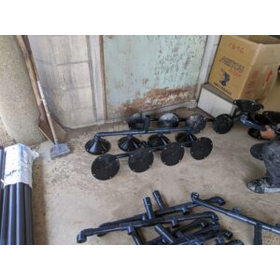
We would like to introduce a case of updating the diffusers in the aeration tank at factories with wastewater treatment facilities, such as fiber, dyeing, and silk factories. The water quality in the wastewater treatment tank changed at a certain point. There were concerns that the strong odor indicated that biological treatment was not effective. First, we temporarily halted the aeration equipment on-site and conducted an investigation of the air piping. It was discovered that the diffusers (aeration devices) that should have been installed at the bottom of the aeration tank were missing. We immediately reinstalled and inspected the diffusers, confirming normal aeration and recovery of the dissolved oxygen (DO) levels. [On-site concerns] - The water that used to be gray has turned dark. - The DO (dissolved oxygen concentration) is not increasing at all. - There is a strong odor, and it seems that biological treatment is not effective. *For more details, please download the PDF or feel free to contact us.*

Added to bookmarks

Bookmarks list

Bookmark has been removed

Bookmarks list

You can't add any more bookmarks

By registering as a member, you can increase the number of bookmarks you can save and organize them with labels.

Free membership registration

How should one choose deodorants to suppress the odor from the sewage treatment purification center?

Prepare multiple deodorants and conduct deodorization effectiveness tests to propose the most effective deodorant!

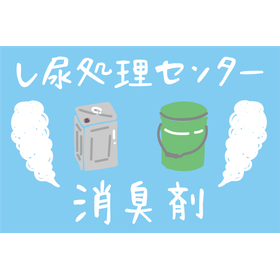
We often receive inquiries about 'deodorants not being effective at sewage treatment facilities.' Do you have similar concerns? 'Even though there are deodorants, it still smells.' 'What can I do to enhance the effectiveness of the deodorants?' 'Which deodorant is the most effective?' A 'site manager at a purification center's sewage treatment facility' had such worries. 'The smell is strong, and the effectiveness of the deodorants we've used so far is diminishing.' What exactly is an 'effective deodorant'? It is a 'deodorant that works effectively at that specific site.' To verify the effectiveness at each site, conducting on-site investigations is effective. *For more detailed information, you can view it through the related links. For more details, please download the PDF or feel free to contact us.

Added to bookmarks

Bookmarks list

Bookmark has been removed

Bookmarks list

You can't add any more bookmarks

By registering as a member, you can increase the number of bookmarks you can save and organize them with labels.

Free membership registration

"Improvement of wastewater treatment through DO meter maintenance" Textile manufacturer - dyeing factory

In fact, "measuring the oxygen levels" was the key to the ongoing poor drainage treatment at the site!

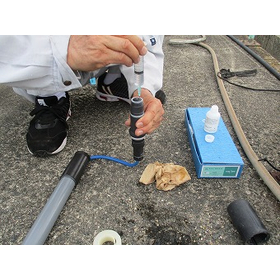
We would like to introduce a case of maintenance and cleaning/recalibration of the DO meter at the wastewater treatment facility of a fiber manufacturer and dyeing factory. One day, an anomaly occurred in the biological treatment tank that processes factory wastewater. Various responses were attempted on-site, such as increasing aeration and adding chemicals, but no decisive improvement was achieved, and the overall instability of the treatment tank continued. We suspected a decrease in DO (dissolved oxygen) concentration within the biological treatment tank. Although no significant abnormalities were observed in the DO meter's displayed values, upon performing maintenance and cleaning/recalibration of the sensor, it became clear that the actual dissolved oxygen concentration was significantly lower than the measured values displayed. Based on this cause, we reviewed the aeration conditions, resulting in a recovery of microbial activity, which ultimately led to improvements in sedimentation. [On-site Issues] - Sludge does not settle in the downstream sedimentation tank. - Treated water is cloudy. - It seems that microorganisms are not functioning properly. *For more details, please download the PDF or feel free to contact us.*

Added to bookmarks

Bookmarks list

Bookmark has been removed

Bookmarks list

You can't add any more bookmarks

By registering as a member, you can increase the number of bookmarks you can save and organize them with labels.

Free membership registration
Prev 1 Next
  • 技術・製品展示会 新技術創出交流会2026 入場無料 来場登録受付中 開催日時10月22日木・23日金 会場東京たま未来メッセ
  • 排気熱風なく気温-4.1℃の冷風を 工事不要で暑さ対策 店舗・工場の安全対策に! 気化式スポットクーラー Pure Drive
    • Contact this company

      Inquiry Form
    • Before making an inquiry

      Download Profile

    Products

    • Search for Products

    Company

    • Search for Companies

    Special Features

    • Special Features

    Ranking

    • Overall Products Ranking
    • Overall Company Ranking

    support

    • site map
    IPROS
    • privacy policy Regarding external transmission of information
    • terms of service
    • About Us
    • Careers
    • Advertising
    IPROS Services
    • >IPROS GMS | Search site for the manufacturing industry
    • >IPROS | Search site for the B2B industry
    COPYRIGHT © 2001-2026 IPROS CORPORATION ALL RIGHTS RESERVED.
    Please note that the English text on this page is automatically translated and may contain inaccuracies.