iPROS Manufacturing
  • Search for products by classification category

    • Electronic Components and Modules
      Electronic Components and Modules
      63019items
    • Machinery Parts
      Machinery Parts
      76249items
    • Manufacturing and processing machinery
      Manufacturing and processing machinery
      103115items
    • Scientific and Physics Equipment
      Scientific and Physics Equipment
      36988items
    • Materials
      Materials
      38214items
    • Measurement and Analysis
      Measurement and Analysis
      55122items
    • Image Processing
      Image Processing
      15526items
    • Control and Electrical Equipment
      Control and Electrical Equipment
      55211items
    • Tools, consumables, and supplies
      Tools, consumables, and supplies
      66169items
    • Design and production support
      Design and production support
      12763items
    • IT/Network
      IT/Network
      46677items
    • Office
      Office
      14237items
    • Business support services
      Business support services
      28466items
    • Seminars and Skill Development
      Seminars and Skill Development
      6647items
    • Pharmaceutical and food related
      Pharmaceutical and food related
      35565items
    • others
      68347items
  • Search for companies by industry

    • Manufacturing and processing contract
      7367
    • others
      5046
    • Industrial Machinery
      4502
    • Machine elements and parts
      3402
    • Other manufacturing
      2909
    • Trading company/Wholesale
      2809
    • IT/Telecommunications
      2582
    • Industrial Electrical Equipment
      2338
    • Building materials, supplies and fixtures
      1816
    • software
      1703
    • Electronic Components and Semiconductors
      1618
    • Resin/Plastic
      1505
    • Service Industry
      1501
    • Testing, Analysis and Measurement
      1141
    • Ferrous/Non-ferrous metals
      1006
    • environment
      697
    • Chemical
      654
    • Automobiles and Transportation Equipment
      622
    • Printing Industry
      517
    • Information and Communications
      485
    • Consumer Electronics
      414
    • Energy
      341
    • Rubber products
      322
    • Food Machinery
      309
    • Optical Instruments
      285
    • robot
      284
    • fiber
      264
    • Paper and pulp
      233
    • Pharmaceuticals and Biotechnology
      178
    • Electricity, Gas and Water Industry
      169
    • Warehousing and transport related industries
      151
    • Food and Beverage
      140
    • Glass and clay products
      140
    • CAD/CAM
      126
    • Educational and Research Institutions
      119
    • Medical Devices
      116
    • retail
      111
    • Ceramics
      98
    • wood
      86
    • Transportation
      84
    • Petroleum and coal products
      67
    • Medical and Welfare
      62
    • Shipbuilding and heavy machinery
      52
    • Aviation & Aerospace
      50
    • equipment
      46
    • Fisheries, Agriculture and Forestry
      43
    • Materials
      41
    • Research and development equipment and devices
      37
    • Public interest/special/independent administrative agency
      32
    • Government
      23
    • self-employed
      23
    • Finance, securities and insurance
      17
    • Mining
      17
    • cosmetics
      16
    • Restaurants and accommodations
      10
    • Individual
      10
    • Police, Fire Department, Self-Defense Forces
      7
    • Raw materials for reagents and chemicals
      5
    • Laboratory Equipment and Consumables
      5
    • Contracted research
      5
  • Special Features
  • Ranking

    • Overall Products Ranking
    • Overall Company Ranking
Search for Products
  • Search for products by classification category

  • Electronic Components and Modules
  • Machinery Parts
  • Manufacturing and processing machinery
  • Scientific and Physics Equipment
  • Materials
  • Measurement and Analysis
  • Image Processing
  • Control and Electrical Equipment
  • Tools, consumables, and supplies
  • Design and production support
  • IT/Network
  • Office
  • Business support services
  • Seminars and Skill Development
  • Pharmaceutical and food related
  • others
Search for Companies
  • Search for companies by industry

  • Manufacturing and processing contract
  • others
  • Industrial Machinery
  • Machine elements and parts
  • Other manufacturing
  • Trading company/Wholesale
  • IT/Telecommunications
  • Industrial Electrical Equipment
  • Building materials, supplies and fixtures
  • software
  • Electronic Components and Semiconductors
  • Resin/Plastic
  • Service Industry
  • Testing, Analysis and Measurement
  • Ferrous/Non-ferrous metals
  • environment
  • Chemical
  • Automobiles and Transportation Equipment
  • Printing Industry
  • Information and Communications
  • Consumer Electronics
  • Energy
  • Rubber products
  • Food Machinery
  • Optical Instruments
  • robot
  • fiber
  • Paper and pulp
  • Pharmaceuticals and Biotechnology
  • Electricity, Gas and Water Industry
  • Warehousing and transport related industries
  • Food and Beverage
  • Glass and clay products
  • CAD/CAM
  • Educational and Research Institutions
  • Medical Devices
  • retail
  • Ceramics
  • wood
  • Transportation
  • Petroleum and coal products
  • Medical and Welfare
  • Shipbuilding and heavy machinery
  • Aviation & Aerospace
  • equipment
  • Fisheries, Agriculture and Forestry
  • Materials
  • Research and development equipment and devices
  • Public interest/special/independent administrative agency
  • Government
  • self-employed
  • Finance, securities and insurance
  • Mining
  • cosmetics
  • Restaurants and accommodations
  • Individual
  • Police, Fire Department, Self-Defense Forces
  • Raw materials for reagents and chemicals
  • Laboratory Equipment and Consumables
  • Contracted research
Special Features
Ranking
  • Overall Products Ranking
  • Overall Company Ranking
  • privacy policy
  • terms of service
  • About Us
  • Careers
  • Advertising
  1. Home
  2. environment
  3. トリイ
  4. Product/Service List
environment
  • Added to bookmarks

    Bookmarks list

    Bookmark has been removed

    Bookmarks list

    You can't add any more bookmarks

    By registering as a member, you can increase the number of bookmarks you can save and organize them with labels.

    Free membership registration

トリイ

addressAichi/Nishio-shi/36 Emukae, Ajihama, Isshikimachi
phone0563-72-8220
  • Special site
  • Official site
last updated:Sep 04, 2026
トリイlogo
  • Contact this company

    Inquiry Form
  • Before making an inquiry

    Download Profile
  • Company information
  • Products/Services(356)
  • catalog(62)
  • news(0)

トリイ Product Lineup

  • category

1~31 item / All 31 items

Displayed results

Filter by category

純水・超純水・工業用水 純水・超純水・工業用水
工場の困りごと解決事例 工場の困りごと解決事例
活性汚泥・汚泥処理 活性汚泥・汚泥処理
水質検査の項目・依頼先 水質検査の項目・依頼先
食品・薬品の基礎知識 食品・薬品の基礎知識
食品表示・添加物の基礎知識 食品表示・添加物の基礎知識
甘味料・うま味の基礎知識 甘味料・うま味の基礎知識
設備部品の基礎知識 設備部品の基礎知識
水道水・井戸水・水質基準 水道水・井戸水・水質基準
水質測定(pH・電気伝導率) 水質測定(pH・電気伝導率)
ボイラーの薬品・スケール対策 ボイラーの薬品・スケール対策
軟水・硬水の基礎知識 軟水・硬水の基礎知識
凝集剤・フロックの基礎知識 凝集剤・フロックの基礎知識
排水処理の基礎知識 排水処理の基礎知識
排水処理場の点検・保全サービス 排水処理場の点検・保全サービス
排水処理のトラブル事例 排水処理のトラブル事例
冷却塔の基礎知識とメンテナンス 冷却塔の基礎知識とメンテナンス
ボイラーの構造・運転・法規制 ボイラーの構造・運転・法規制
ボイラーの整備・点検・メンテナンス ボイラーの整備・点検・メンテナンス
ボイラーの更新・省エネ・コスト削減 ボイラーの更新・省エネ・コスト削減
純水・超純水・工業用水

純水・超純水・工業用水

純水と水道水の違いや用途、超純水、工業用水など、産業用に使われるさまざまな水の種類と特徴をまとめました。
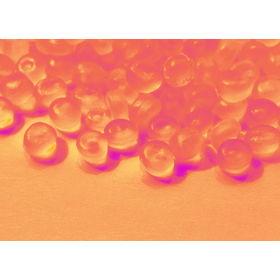
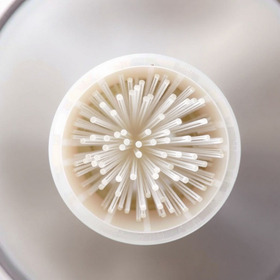
Pure water system ion exchange resin | Replacement work and general maintenance [with examples]

For those struggling with boiler equipment and water softening systems! Leave your inquiries about updates, maintenance, and improvements to us.

Are you facing any of these concerns regarding the stable supply of high-quality pure water in boiler systems? - The effectiveness of the ion exchange resin currently in use is gradually declining, leading to an increase in the conductivity of softened water. - Although the resin regeneration is set to occur automatically, there is a risk that starting regeneration during operation could impact production, so we want to control the timing of regeneration. By replacing used ion exchange resin and consumable parts and adding a timer control function, it becomes possible to ensure a stable supply of high-purity softened water. ◇ Scale formation in the boiler is reduced, improving heat transfer efficiency. ◇ The quality of steam stabilizes, allowing for smooth supply to heating equipment. ◇ As a result, thermal efficiency increases, leading to a reduction in fuel consumption. ◇ The stable operation of the equipment also enhances the overall reliability of production. We are currently offering free case studies on boiler systems that support manufacturing lines.

Added to bookmarks

Bookmarks list

Bookmark has been removed

Bookmarks list

You can't add any more bookmarks

By registering as a member, you can increase the number of bookmarks you can save and organize them with labels.

Free membership registration

Why is ultrapure water called "hungry water"? 【Basic Knowledge】

Water that is further refined than pure water? The surprising properties and capabilities of ultrapure water!

■What is the difference between pure water and ultra-pure water in terms of purification methods? Pure water refers to water that has undergone treatment to remove impurities from tap water, while ultra-pure water is further purified using a combination of reverse osmosis membranes, ion exchange resins, activated carbon, ultraviolet light, and ultrafiltration membranes, enhancing its specific resistivity to 18 MΩ·cm or higher. ■Why is 18 MΩ·cm the standard for ultra-pure water? Water ionizes very slightly on its own, so even if impurity ions are reduced to nearly zero, the effects of this ionization remain. Therefore, the theoretical upper limit for specific resistivity is considered to be around 18.2 MΩ·cm, which serves as the standard for ultra-pure water. ■Why is ultra-pure water referred to as "hungry water"? Ultra-pure water contains almost no impurities, making it more likely to absorb surrounding substances, which is why it is sometimes called that. This property is utilized in cleaning processes, allowing for the maximum removal of invisible ions and organic materials, and it is also used in the cleaning processes of precision equipment such as semiconductors.

Added to bookmarks

Bookmarks list

Bookmark has been removed

Bookmarks list

You can't add any more bookmarks

By registering as a member, you can increase the number of bookmarks you can save and organize them with labels.

Free membership registration

Why is industrial water separate from tap water? 【Basic Knowledge】

Industrial water is cheaper than tap water, even though it can't be consumed? The reason lies in measures against land subsidence!

■What is the difference between industrial water and tap water? Tap water is strictly managed for quality to be safe for human consumption, while industrial water is defined by the quality needed for use in factories. It is not filtered or sterilized, and only the clear liquid after removing sediments is used, making it unsuitable for drinking. However, it is supplied at a lower cost through a separate water supply network from tap water. ■Why was this separate water supply network created? In fact, this system was initiated due to the serious ground subsidence that occurred in various areas when factories excessively pumped groundwater. While the government regulated the extraction of groundwater, it established a dedicated water supply network to provide alternative sources such as river water to factories. This is why it is not subject to the Water Supply Act. ■Where is industrial water actually used? It is utilized in various situations within factories, such as for cleaning machines, cooling iron, and providing water for boilers. Beyond factories, it is also used in a wide range of scenarios, including washing trucks and in thermal power plants.

Added to bookmarks

Bookmarks list

Bookmark has been removed

Bookmarks list

You can't add any more bookmarks

By registering as a member, you can increase the number of bookmarks you can save and organize them with labels.

Free membership registration

Why is pure water widely used? 【Basic Knowledge】

Pure water is active from boilers to scientific experiments! Here’s an explanation of why it is chosen!

■What is pure water used for? Pure water is utilized in a wide range of applications, taking advantage of its low impurity characteristics, not only as experimental water in the fields of physics and chemistry but also in the production of boiler water and drinking water. ■Why is pure water suitable for boiler water? Calcium carbonate has the property of becoming less soluble as temperature increases, which causes scale buildup in boilers. Since pure water has impurities like calcium removed in advance, this phenomenon is less likely to occur, making scale residue less common. ■Why is pure water used in physical and chemical experiments? Pure water has the characteristic of being able to dissolve substances effectively due to the absence of impurities. Thanks to this property, it is easy to handle reagents and samples accurately, and the presence of extra components is less likely to affect the results, making it widely chosen as water for physical and chemical experiments.

Added to bookmarks

Bookmarks list

Bookmark has been removed

Bookmarks list

You can't add any more bookmarks

By registering as a member, you can increase the number of bookmarks you can save and organize them with labels.

Free membership registration

Why is the pH of pure water exactly 7? 【Basic Knowledge】

Pure water has a theoretical pH of 7, but in reality, it can vary slightly? A simple explanation of the chemistry of water!

■Why is the pH of pure water theoretically "7"? Pure water does not contain substances that can be classified as either acidic or alkaline. Water naturally ionizes very slightly, resulting in hydrogen ions that indicate acidity and hydroxide ions that indicate alkalinity being present in equal concentrations, which makes it neutral, or pH 7. ■Why does actual water deviate from pH 7? When substances that indicate acidity or alkalinity dissolve in water, that water will show acidic or alkaline properties. It is known that even pure water, which should theoretically have a pH of 7, becomes slightly acidic when it absorbs carbon dioxide from the air, resulting in a pH of about 5.6. ■How should pure water be handled to remain stable? As mentioned, pure water has a tendency to be influenced by its surrounding environment. When accurate pH values are needed for analysis or experiments, it is important to handle it carefully, such as minimizing exposure to air.

Added to bookmarks

Bookmarks list

Bookmark has been removed

Bookmarks list

You can't add any more bookmarks

By registering as a member, you can increase the number of bookmarks you can save and organize them with labels.

Free membership registration

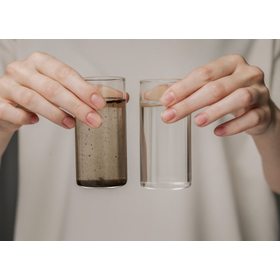
What is the difference between pure water and tap water? 【Basic Knowledge】

Why is pure water "zero impurities"? An explanation of how purity is measured using resistivity!

■What is the difference between pure water and tap water? Tap water contains minerals such as calcium and magnesium, chlorine for disinfection, and aluminum used in the purification process. On the other hand, pure water is water from which such impurities (ions and foreign substances) have been removed, and it is theoretically considered safe to drink as it does not contain harmful substances for the human body. ■How is the purity of pure water measured? The purity of water is generally measured by its "specific resistivity," which indicates how difficult it is for electricity to pass through. The fewer ions present in the water, the harder it is for electricity to pass through, so a higher specific resistivity indicates higher purity. Generally, water with a specific resistivity of 18.2 MΩ·cm or more is called "ultrapure water," while water with 0.2 MΩ·cm or more is referred to as "pure water." ■Is it really safe to drink pure water? Some experts point out that because pure water lacks impurities, it has a strong ability to dissolve surrounding substances, which could potentially leach minerals that the body retains. While this is not a medically established theory, it is good to be aware that such views exist.

Added to bookmarks

Bookmarks list

Bookmark has been removed

Bookmarks list

You can't add any more bookmarks

By registering as a member, you can increase the number of bookmarks you can save and organize them with labels.

Free membership registration

What is the difference between softening water and purifying water? 【Basic Knowledge】

Does water made with a softener contain sodium? The difference between the mechanisms of softening and purifying water.

■What is a softener? A softener is a device that converts hard water into soft water by passing it through an ion exchange resin, which removes hardness components such as calcium and magnesium. These hardness components can crystallize and form scale, leading to reduced heat transfer efficiency in boilers and clogging in pipes. ■What is the mechanism of ion exchange resin? Ion exchange resin is a type of resin that performs ion exchange by capturing ions present in water and releasing the ions it originally holds in exchange. ■Are soft water and pure water the same? Generally, softening using only cation exchange resin replaces calcium and magnesium with sodium, so sodium itself remains in the water. In contrast, by combining cation exchange resin with anion exchange resin, it is possible to produce purer water by removing both cations like calcium and magnesium and anions like chlorine and carbonate found in tap water. ■Summary While softening and purification are similar, their mechanisms are different. It is important to select the right device according to your needs. Please feel free to consult us first.

Added to bookmarks

Bookmarks list

Bookmark has been removed

Bookmarks list

You can't add any more bookmarks

By registering as a member, you can increase the number of bookmarks you can save and organize them with labels.

Free membership registration

Can a small pure water purifier combined with a regeneration timer improve both cost and performance? Case study.

We have a small pure water purifier that fits your company's budget and specifications!

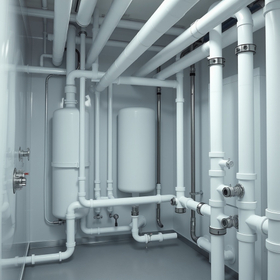
One of the important processes in electrodeposition painting is the "cleaning and dilution process using pure water." The core pure water system had aged and was due for renewal. However, during the review of the renewal, the following issues arose: - The models proposed by other companies had excessive specifications and were over-specified for the usage amount. - There was an explanation that it was necessary to introduce large equipment to match the pure water regeneration capacity. - It was difficult to renew within the limited budget. On-site, there was a request for "as small and simple as possible, while having sufficient performance." Therefore, we proposed the optimal pure water system based on our investigation. Please refer to the downloadable materials for more details.

Added to bookmarks

Bookmarks list

Bookmark has been removed

Bookmarks list

You can't add any more bookmarks

By registering as a member, you can increase the number of bookmarks you can save and organize them with labels.

Free membership registration

The conductivity of pure water is rising! Replacement work and maintenance examples of ion exchange resin in pure water systems.

What is the optimal solution for replacing and maintaining ion exchange resins and purifiers?

The effectiveness of the ion exchange resin is declining! The conductivity of the soft water is increasing! In the boiler equipment that supports the manufacturing line, a stable supply of high-quality pure water is crucial. There has been a challenge where the effectiveness of the ion exchange resin in use on-site is gradually decreasing, leading to an increase in the conductivity of the pure water. Furthermore, although the resin regeneration was set to occur automatically, there were concerns that starting regeneration during operation could impact production, leading to requests for control over the timing of regeneration. For more details, please refer to the downloadable materials.

Added to bookmarks

Bookmarks list

Bookmark has been removed

Bookmarks list

You can't add any more bookmarks

By registering as a member, you can increase the number of bookmarks you can save and organize them with labels.

Free membership registration

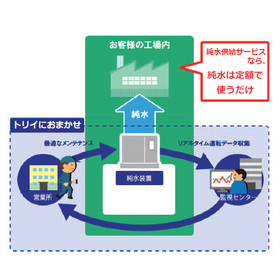
Pure Water Supply Service

Use pure water for a fixed fee! Water treatment professionals will take care of stable operation comprehensively.

We offer a "Pure Water Supply Service" that provides pure water systems on a subscription basis. Since the pure water equipment will be installed on your premises as an asset of the manufacturer, you will not incur any capital investment costs. With our service, the usage fee for pure water is a fixed monthly rate, making it easier to plan your finances. 【Features】 ■ No capital investment required for service implementation ■ Relief from the burden of managing fluctuating maintenance budgets ■ Reduced management and maintenance burden, alleviating staff shortages *For more details, please download the PDF or feel free to contact us.

Added to bookmarks

Bookmarks list

Bookmark has been removed

Bookmarks list

You can't add any more bookmarks

By registering as a member, you can increase the number of bookmarks you can save and organize them with labels.

Free membership registration

Pure Water System Total Support

Performing parts replacement and resin exchange for the pure water system, as well as regular maintenance!

We solve various issues related to pure water systems and consistently provide high-purity pure water. We carry out tasks including the installation and updating of pure water systems, regular maintenance, and the delivery of chemicals (such as caustic soda and hydrochloric acid). Additionally, we can respond to emergencies through control replacements due to program changes and regular maintenance contracts. [For the following requests/issues] ■ I want to perform regeneration at a fixed time every month. ■ The required water quality can no longer be achieved. *For more details, please download the PDF or feel free to contact us.

Added to bookmarks

Bookmarks list

Bookmark has been removed

Bookmarks list

You can't add any more bookmarks

By registering as a member, you can increase the number of bookmarks you can save and organize them with labels.

Free membership registration

How to choose a filtration method? [Basic knowledge]

Is the optimal method different for river water and well water? An explanation of how to choose a filtration system.

■What types of filtration methods are there? There are various types of filtration methods, including coagulation sedimentation, coagulation filtration, activated carbon filtration, sand filtration, iron and manganese removal filtration, and fiber filtration. We can propose the optimal equipment according to the raw water supplied (river water, well water, industrial water, tap water, etc.) and the required water quality. ■Why change the method depending on the raw water? Generally, river water tends to contain a lot of turbidity (suspended solids), making coagulation sedimentation and coagulation filtration suitable. Well water, influenced by underground components, tends to contain iron and manganese, making iron and manganese removal filtration appropriate. Activated carbon filtration primarily removes chlorine and organic matter, while sand filtration mainly removes turbidity. ■How does a soft water system differ from filtration? A soft water system uses ion exchange resin to replace hardness components (calcium ions, magnesium ions) in water with sodium ions, producing soft water. Its main role is to serve as a pretreatment facility for boiler water and pure water systems. ■Why is pretreatment necessary? If hardness components are not removed beforehand, they can cause scaling issues in boilers and place unnecessary strain on subsequent treatments in pure water systems. Please feel free to consult with us first.

Added to bookmarks

Bookmarks list

Bookmark has been removed

Bookmarks list

You can't add any more bookmarks

By registering as a member, you can increase the number of bookmarks you can save and organize them with labels.

Free membership registration

What is RO membrane (reverse osmosis membrane)? Mechanism and applications [Basic knowledge]

RO membranes remove even salts, allowing only almost pure water to pass through. They operate by pushing water in the opposite direction of natural "osmosis."

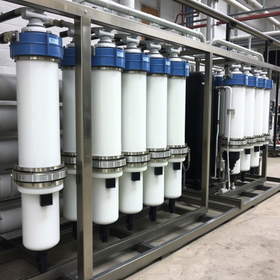
RO membranes (reverse osmosis membranes) are the membranes with the highest separation performance among pressure-driven membranes that can remove dissolved ions and small molecules from water. They are used in a wide range of water treatment applications, including seawater desalination and industrial water production. ■ What does "reverse" osmosis mean? When a semi-permeable membrane that allows water to pass through but not dissolved substances separates pure water from saltwater, water moves from the pure water side to the saltwater side. This is osmosis. When pressure equal to the osmotic pressure is applied to the saltwater side, the movement stops, and if pressure beyond that is applied, the flow reverses, pushing water out from the saltwater side. ■ Can't separation be done just by hole size?! Filtration membranes like MF membranes sieve out particles larger than the holes. In contrast, in RO membranes, water dissolves into the membrane material and passes through, while the substances to be removed cannot dissolve. They are separated based on compatibility with the material. The charge of the membrane also significantly affects removal. ■ Water splits into two flows Water that passes through the membrane is called permeate, while water that does not pass through is called concentrate. Not all supplied water becomes permeate; the remainder exits as concentrate, where the dissolved substances are more concentrated. Please feel free to consult with us first.

Added to bookmarks

Bookmarks list

Bookmark has been removed

Bookmarks list

You can't add any more bookmarks

By registering as a member, you can increase the number of bookmarks you can save and organize them with labels.

Free membership registration

What is the pretreatment of RO pure water systems? From sand filtration to activated carbon.

Pre-treatment involves removing impurities, chlorine, and scale components that can damage the membrane, right before the membrane itself. This explains the combination of roles and main equipment.

If raw water is passed directly through RO membranes or pure water systems, dirt can accumulate on the membrane, or the membrane can become damaged. Therefore, the process of conditioning the water before it reaches the main unit is called pretreatment. ■ What does pretreatment remove? The role of pretreatment can be broadly divided into three categories: 1. Turbidity (fine particles, etc.): Accumulates on the surface of the membrane and blocks it. 2. Oxidants (residual chlorine, etc.): Damages the membrane material. 3. Scale components (calcium, etc.): Concentrates and precipitates on the membrane surface. All of these can cause a decrease in membrane performance. ■ Just like preparing ingredients for cooking! Before the actual cooking, washing off dirt and removing impurities stabilizes the final result. Pretreatment is similar; it is the process of reducing the sources of dirt before they reach the membrane. Insufficient pretreatment can lead to increased membrane fouling, necessitating chemical cleaning. ■ The final checkpoint is just before the membrane At the end of the pretreatment, just before the membrane, a cartridge-type filter called a safety filter is placed to capture particles that could not be removed in the previous stages. The necessary processes vary depending on the raw water, and not all systems require the same components. Please feel free to consult with us first.

Added to bookmarks

Bookmarks list

Bookmark has been removed

Bookmarks list

You can't add any more bookmarks

By registering as a member, you can increase the number of bookmarks you can save and organize them with labels.

Free membership registration

What are the differences between MF, UF, NF, and RO membranes? Comparison [Basic Knowledge]

Even if the names are similar, the things that can be removed are vastly different. We will compare the differences among the four types of filtration membranes from three perspectives: size, pressure, and usage.

The membranes used in water treatment are classified into MF membranes, UF membranes, NF membranes, and RO membranes, depending on their separation performance and the substances involved. Although their names are similar, each has its own strengths. ■ How can the four membranes be compared to sieves? Generally, MF membranes, UF membranes, NF membranes, and RO membranes can separate smaller substances in that order. You can imagine this as a kitchen strainer, tea strainer, coffee filter, and then a much finer membrane, with each having smaller mesh sizes. The finer the mesh, the smaller the particles it can capture, but it requires higher pressure to operate. ■ Areas of expertise for each type 1. MF membrane (microfiltration membrane): Particles causing turbidity and bacteria 2. UF membrane (ultrafiltration membrane): Macromolecules such as proteins and viruses 3. NF membrane (nanofiltration membrane): Hardness components like calcium and pesticides 4. RO membrane (reverse osmosis membrane): Ions such as sodium ■ Finer is not always better! If the goal is to remove turbidity and bacteria, MF membranes or UF membranes can be used. In municipal water purification processes, membrane filtration methods utilizing MF or UF membranes are implemented. It is essential to choose a membrane that matches the desired particle size. Please feel free to consult us first.

Added to bookmarks

Bookmarks list

Bookmark has been removed

Bookmarks list

You can't add any more bookmarks

By registering as a member, you can increase the number of bookmarks you can save and organize them with labels.

Free membership registration

What is the difference between distilled water and purified water? A comparison with pure water and deionized water [Basic Knowledge]

All of them are "clean water," but the things represented by the names are slightly different. I will organize them based on the difference between names that indicate how they are made and names that indicate standards.

Deionized water, distilled water, and purified water are all types of water that have had impurities reduced, but the names represent slightly different things. Knowing the differences will help you choose the specified water correctly. ■ Names that indicate how they are made 1. Deionized water: Water from which dissolved ions have been removed by exchanging them with ion exchange resin. 2. Distilled water: Water that has been heated to create steam, which is then cooled back into water. Both deionized water and distilled water are names that indicate "how they were made." ■ Is purified water a name that indicates "standards"? Purified water is the name of water defined in the Japanese Pharmacopoeia, which is the standard for pharmaceuticals. Not only distilled water but also water purified by methods such as ion exchange resin has been referred to as purified water. In other words, purified water is a name that indicates "what kind of water it should be" rather than how it is made. ■ Names indicating how they are made and names indicating standards Deionized water and distilled water are names indicating how they are made, while purified water is a name indicating the standards that should be met. By separating these two concepts, it becomes less confusing. Even if it says purified water, you cannot tell from the name which method was used to make it. Please feel free to consult us first.

Added to bookmarks

Bookmarks list

Bookmark has been removed

Bookmarks list

You can't add any more bookmarks

By registering as a member, you can increase the number of bookmarks you can save and organize them with labels.

Free membership registration

What is a ultrapure water production system? Manufacturing process from primary pure water [Basic knowledge]

Ultrapure water is refined through preprocessing, primary pure water, subsystems, and multiple stages. This explains the role of each process and the reason for placing ion exchange after ultraviolet treatment.

The ultrapure water production system is a facility that produces water with highly removed impurities, including not only ionic components in water but also organic substances, fine particles, viable bacteria, and dissolved oxygen. It is used in semiconductor manufacturing, such as for cleaning silicon wafers. If impurities from the water used for cleaning remain on the surface of the wafers, it can lead to pattern anomalies and potentially lower the yield of the products. ■ How is the process divided? 1. Pre-treatment: Mainly removes turbidity components using sand filtration, etc. 2. Primary ultrapure water system: Mainly removes ionic components (deionization). 3. Secondary ultrapure water system (subsystem): Highly removes trace impurities remaining in the primary ultrapure water. ■ Primary ultrapure water is sent through a tank. Primary ultrapure water is temporarily stored in a pure water tank and then pumped to the secondary ultrapure water system. ■ What is inside the primary ultrapure water system? It combines RO membranes, ion exchange resins, and degassing devices that remove dissolved gases from water. The RO membrane also removes some organic substances along with salts, thus playing a role in reducing TOC (total organic carbon). For degassing, membrane-type devices that create a vacuum on the outside of the membrane to extract dissolved gases are also used. Please feel free to consult us first.

Added to bookmarks

Bookmarks list

Bookmark has been removed

Bookmarks list

You can't add any more bookmarks

By registering as a member, you can increase the number of bookmarks you can save and organize them with labels.

Free membership registration

What is activated carbon adsorption? What can be removed and what is difficult to remove? [Basic Knowledge]

Some activated carbon has a surface area equivalent to several tennis courts, all in just 1g. This explains the mechanism by which it adsorbs odors and organic substances in water, as well as the concept of breakthrough.

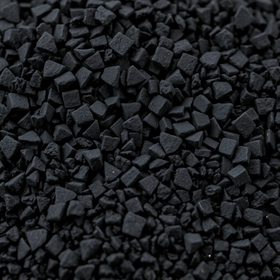
Activated carbon is used in water treatment plants and wastewater recycling to remove odors and organic substances. It may only look like black granules or powder, but it is densely packed with tiny pores inside. ■ How many tennis courts can 1g cover?! The surface area of activated carbon can reach 1,000 to 2,000 square meters per gram, depending on the product. A doubles tennis court is about 260 square meters, so with 1,000 square meters, just 1 gram would cover approximately 4 courts. The process by which substances in water adhere to this large surface area is called adsorption. ■ How is it different from filtration? Conventional water treatment methods like coagulation, sedimentation, and sand filtration are not sufficient to remove dissolved odor-causing substances. Activated carbon is characterized by its ability to adsorb these dissolved organic substances onto its surface. In municipal water systems, granular activated carbon is best placed in the later stages of filtration. ■ Specialty areas vary by raw material The raw materials can be plant-based, such as coconut shells and wood, or mineral-based, like coal. Coconut shell carbon tends to have many small pores suitable for smaller molecules, while coal-based carbon has a wider range of larger pores that can also accommodate larger molecules. Choosing the right activated carbon for your application is something we encourage you to consult us about.

Added to bookmarks

Bookmarks list

Bookmark has been removed

Bookmarks list

You can't add any more bookmarks

By registering as a member, you can increase the number of bookmarks you can save and organize them with labels.

Free membership registration

How to Make Pure Water? Comparison of Ion Exchange, RO, and Distillation [Basic Knowledge]

Whether to separate by heat, by membrane, or by exchanging ions. We will compare the three methods based on the materials used, the products obtained, and the differences in components that are challenging to handle.

The main methods for producing pure water include distillation, RO membranes (reverse osmosis membranes), and ion exchange. All of these methods reduce impurities in water, but since the principles of separation differ, the required energy, chemicals, operational effort, and byproducts from the equipment also vary. Here, we will compare them by focusing on "what they use and what they produce." ■ What do the three methods use for separation? 1. Distillation: Collects only the steam generated by boiling and condenses it. 2. RO membrane: Uses pressure to separate water that passes through the membrane from components that do not. 3. Ion exchange: Replaces ions in the water with hydrogen ions or hydroxide ions from the resin. The difference is that distillation and RO membranes separate water from impurities, while ion exchange allows the resin to take on the ions that are the impurities. ■ Are there components that each method struggles with? RO membranes have difficulty removing dissolved gases, and ion exchange cannot remove organic matter, fine particles, or bacteria. Distillation also has components that it cannot remove on its own. Therefore, in factories, it is common to combine multiple methods according to the desired water quality. Please feel free to consult with us first.

Added to bookmarks

Bookmarks list

Bookmark has been removed

Bookmarks list

You can't add any more bookmarks

By registering as a member, you can increase the number of bookmarks you can save and organize them with labels.

Free membership registration

What is deionized water (ion-exchanged water)? The relationship with pure water and ultra-pure water [Basic Knowledge]

Deionized water, which has had ions dissolved in water removed. This explains the differences between pure water, ultrapure water, and soft water, as well as the mechanism for measuring cleanliness based on electrical conductivity.

Deionized water is water that has had its dissolved ions removed through ion exchange resin. It is also referred to as ion-exchanged water. The process of removing ions is also described as "de-salting." Regardless of the terminology, the goal is to "reduce the ions dissolved in water." ■ What is dissolved in tap water? Even drinkable tap water contains small amounts of ions such as calcium. While this is not a problem for drinking, these ions can cause issues as impurities in precise analyses or cleaning processes. In boilers, they can also lead to scaling. ■ How is it different from pure water? Pure water is water that has had extremely low levels of impurities. It is produced through methods such as distillation, ion exchange, or RO membranes, either individually or in combination. Deionized water can be understood as water produced specifically through ion exchange. ■ Imagine erasing ions from a list Consider tap water as a list of various ions. Ion exchange is the process of replacing those ions with different ions held by the resin, erasing one name at a time. The fewer names left, the cleaner the water becomes. Please feel free to consult with us first.

Added to bookmarks

Bookmarks list

Bookmark has been removed

Bookmarks list

You can't add any more bookmarks

By registering as a member, you can increase the number of bookmarks you can save and organize them with labels.

Free membership registration

What is an RO system? Key points on configuration and operational management [Basic Knowledge]

The RO system is a single system that includes not only the membrane but also pumps, instruments, and cleaning equipment. This explains the configuration of the system and the key points to focus on during daily operation.

An RO system (reverse osmosis membrane system) is a device that applies pressure to an RO membrane to allow water to pass through, producing permeate water with reduced dissolved ions and other impurities. While the membrane is the main component, it is essential to combine it with surrounding equipment and manage daily operations to fully utilize its performance and ensure long-term use. ■ What is an RO system made of? 1. Pre-treatment equipment: Removes turbidity and residual chlorine before water enters the membrane. 2. High-pressure pump: Applies pressure to the water supplied to the membrane. 3. Membrane module: Contains spiral-shaped elements loaded into a pressure vessel. 4. Instruments: Measure pressure, flow rate, water quality, etc. 5. Cleaning equipment: Tanks, pumps, and filters used to wash the membrane with chemicals. ■ Why are pressure vessels arranged in two stages? There is a limit to the amount of permeate water that can be extracted per element. Therefore, when aiming to increase recovery rates, the concentrated water from the first stage is sent to the second stage to extract additional permeate water. ■ Fewer vessels in the later stages As the permeate water is extracted and the flow rate decreases, it is common to reduce the number of vessels in the later stages, arranging them in ratios such as 2 to 1. Please feel free to consult us first.

Added to bookmarks

Bookmarks list

Bookmark has been removed

Bookmarks list

You can't add any more bookmarks

By registering as a member, you can increase the number of bookmarks you can save and organize them with labels.

Free membership registration

What is seawater desalination? The mechanism of the RO membrane method [Basic knowledge]

Desalination of seawater to produce fresh water. This explains why the RO membrane method is mainstream, detailing the processes of one of the largest facilities in the country, as well as the handling of two-stage RO membranes and concentrated seawater.

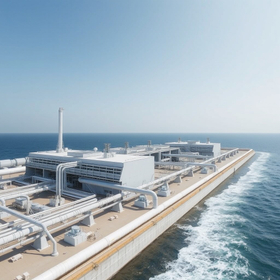
■Technology for Extracting Fresh Water from Seawater Seawater desalination is a technology that obtains fresh water by removing salt and other impurities from seawater. It is also used for removing impurities from groundwater that contains salt and other substances. The methods that have already been put into practical use include evaporation, reverse osmosis (RO membrane method), and electrodialysis. ■Why is the RO membrane method increasing? The reverse osmosis method is gaining popularity because it consumes less energy compared to other methods, leading to an increase in the number of plants. As of the end of March 2025, the desalination capacity for residential facilities (those producing more than 10 cubic meters per day) is approximately 87% for reverse osmosis and about 13% for electrodialysis. It has been used as a source of water for daily living in areas with scarce water resources, such as remote islands. ■Are Japanese facilities mostly small? As of the end of March 2025, domestic freshwater desalination plants have a total desalination capacity of about 110,000 cubic meters per day. Many seawater desalination plants for municipal water supply are small-scale, producing several dozen to several hundred cubic meters per day, with large-scale facilities of 50,000 cubic meters per day in Fukuoka Prefecture and 40,000 cubic meters per day in Okinawa Prefecture. Please feel free to consult with us first.

Added to bookmarks

Bookmarks list

Bookmark has been removed

Bookmarks list

You can't add any more bookmarks

By registering as a member, you can increase the number of bookmarks you can save and organize them with labels.

Free membership registration

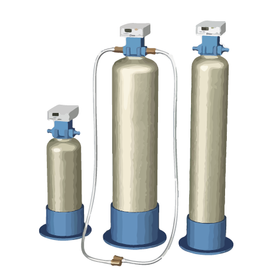
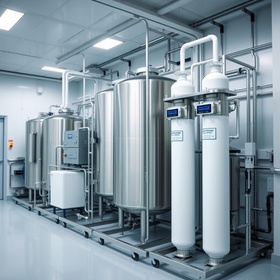
What is a pure water system? Key points of the 2-bed 3-tower mechanism and operation [Basic Knowledge]

Why is there a tower without resin between the cation tower and the anion tower? I will explain the reasons for the arrangement of two beds and three towers, as well as the key points for operation.

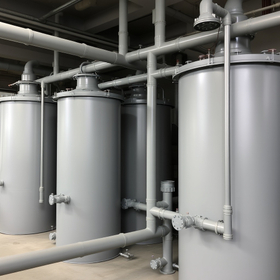
The pure water system is a device that creates pure water by removing ions dissolved in water. In the method using ion exchange resin, "2 beds and 3 towers" or mixed bed systems are common. Here, we will look at the meaning of the name "2 beds and 3 towers" and the reason for the order of the towers. ■ Meaning of the name "2 beds and 3 towers" "2 beds" refers to two types of resin layers for cations and anions, while "3 towers" refers to the following three towers. Water flows through them in this order: 1. Cation exchange tower: exchanges cations with hydrogen ions 2. Decarbonation tower: exposes water to air to expel carbonic acid 3. Anion exchange tower: exchanges anions such as chloride ions with hydroxide ions ■ Is there no resin in the middle tower?! In the first tower, calcium and other ions are exchanged with hydrogen ions, making the water acidic. In acidic water, dissolved carbonic acid tends to convert to gas. When air is blown in, it escapes into the atmosphere as carbon dioxide. ■ Why remove it first? Carbonic acid is originally the responsibility of the anion exchange resin. By expelling it with air first, the burden on the anion side is reduced, and the amount of resin packed in the tower can also be decreased. Please feel free to consult with us first.

Added to bookmarks

Bookmarks list

Bookmark has been removed

Bookmarks list

You can't add any more bookmarks

By registering as a member, you can increase the number of bookmarks you can save and organize them with labels.

Free membership registration

What is sand filtration? The mechanism and management of backwashing [Basic Knowledge]

Is the sand immediately after washing not sufficiently filtered yet? This explains the mechanism by which the sand layer captures turbidity, as well as the procedures, timing, and management points for backwashing.

Sand filtration is a method of passing water through a layer filled with granular filter media such as sand to remove turbidity from the water. In addition to filtration ponds at water treatment plants, pressure-type filters (filtration towers) that pass water through a sealed container under pressure are also used in the treatment of industrial water and wastewater. ■ What is the difference between rapid filtration and slow filtration? Slow filtration is a method that removes impurities using a microbial film (biological filtration membrane) that forms on the surface of the sand. To avoid damaging this membrane, the filtration rate is generally kept below 5 m/day. Rapid filtration, on the other hand, is a method of passing water that has undergone treatment such as coagulation at a high speed. The filtration rate for rapid filtration is over 120 m/day, compared to about 4 m/day for slow filtration (with upper limits ranging from 180 m/day to 720 m/day). The sand layer is regularly cleaned through backwashing. ■ Does sand only remove turbidity through "sieving"? In rapid filtration, turbidity is removed not only by sieving particles through the gaps in the sand but also by adhering to the surface of the sand or settling between the grains of sand. As can be seen from the accumulation of turbidity within the sand layer during continuous filtration, turbidity is captured not only on the surface but also within the sand layer itself. Please feel free to consult us first.

Added to bookmarks

Bookmarks list

Bookmark has been removed

Bookmarks list

You can't add any more bookmarks

By registering as a member, you can increase the number of bookmarks you can save and organize them with labels.

Free membership registration

What is MF membrane (microfiltration membrane)? Differentiation from UF membrane and sand filtration [Basic Knowledge]

MF membranes that separate turbidity and bacteria through membrane pores. This will explain how to differentiate their use from sand filtration and UF membranes, along with the concepts of membrane differential pressure and cleaning observed during operation.

MF membrane (microfiltration membrane) is a membrane with fine pores that separates particles in water. According to the design guidelines for water supply facilities, it is categorized as a membrane that removes colloids, suspended substances, bacteria, and other sources of turbidity. Membranes with relatively large pores, around 2μm, are also used for the purpose of removing Cryptosporidium. ■ How is it different from sand filtration? In rapid filtration, coagulants are used to aggregate turbidity into flocs, which are then settled and filtered through a layer of sand. In contrast, MF membranes separate particles directly through the membrane itself. Therefore, coagulants are either unnecessary or only required in small amounts. The ease of automation and the smaller installation area are also reasons why membranes are chosen. There are different shapes of membranes, including hollow fiber type, which bundles thin tubes, and flat sheet type, which arranges flat membranes. ■ Dissolved substances pass through The primary function of MF membranes is to remove substances that are not dissolved in water. Dissolved iron, manganese, substances that cause musty odors, and pesticides can pass through the membrane. For water where these substances are problematic, additional treatments are combined before and after. In other words, the less dissolved substances present in the water, the more effectively the advantages of membrane filtration can be utilized. Please feel free to consult with us.

Added to bookmarks

Bookmarks list

Bookmark has been removed

Bookmarks list

You can't add any more bookmarks

By registering as a member, you can increase the number of bookmarks you can save and organize them with labels.

Free membership registration

What is pure water? Guidelines for purity and the concept of grades [Basic Knowledge]

How is the purity of water referred to as pure water determined? This explains the guidelines for electrical conductivity and how to interpret the grades A1 to A4 defined by JIS K 0557.

Pure water is water that has had impurities, such as ions found in tap water, removed through methods like distillation, ion exchange, and reverse osmosis. However, due to its wide range of applications, the required water quality is set according to its intended use. There are different standards for various fields, such as for analytical purposes and pharmaceuticals. ■ How is purity expressed? The purity of pure water is generally expressed in terms of electrical conductivity or its reciprocal, resistivity (specific resistance). The fewer ions remain in the water, the less current can flow. Electrical conductivity is a continuous indicator of the remaining ions observed at the outlet of the device. ■ What standards are used to determine specifications? The specifications for pure water not only include electrical conductivity but also set upper limits for items such as TOC (Total Organic Carbon). There are standards that classify the grades of pure water based on the differences in upper limits for each item. One such standard is JIS K 0557, which is introduced below. ■ Standards are not limited to domestic use There are also international standards for reagent water, such as ASTM D1193 from the United States. Additionally, there are separate standards established by CLSI for water used in clinical testing. Please feel free to consult us first.

Added to bookmarks

Bookmarks list

Bookmark has been removed

Bookmarks list

You can't add any more bookmarks

By registering as a member, you can increase the number of bookmarks you can save and organize them with labels.

Free membership registration

What is ultrapure water? The difference from pure water and the meaning of 18.2 [Basic Knowledge]

18.2 MΩ·cm is the upper limit determined by water itself at 25°C. Ultrapure water is managed not only by specific resistance but also by multiple indicators such as organic substances and fine particles.

Ultra-pure water is water that has further reduced impurities from pure water, not only ions but also organic substances, fine particles, and even living bacteria. Depending on the application, it can also have low levels of dissolved oxygen. It is used for washing substrates in semiconductor manufacturing, equipment analysis in laboratories, and cell culture, among other uses. ■ What is the difference from pure water? The quality of pure water is primarily described by its resistivity (the inverse of electrical conductivity), which indicates the low presence of ions. In ultra-pure water, in addition to this, limits are set for indicators other than ions, such as TOC (total organic carbon) and the number of fine particles. The difference lies not only in the higher numbers but also in the number of indicators being measured. ■ Where does the number 18.2 come from? Water molecules slightly dissociate into hydrogen ions and hydroxide ions. Even after removing all impurities, these ions carry electricity, so the electrical conductivity does not reach zero. The theoretical value at 25°C is about 0.055μS/cm, and taking the inverse gives a resistivity of about 18.2MΩ·cm. ■ There is a ceiling to resistivity In other words, resistivity does not exceed the upper limit determined by the water itself, no matter how much it is purified at 25°C. Please feel free to consult with us.

Added to bookmarks

Bookmarks list

Bookmark has been removed

Bookmarks list

You can't add any more bookmarks

By registering as a member, you can increase the number of bookmarks you can save and organize them with labels.

Free membership registration

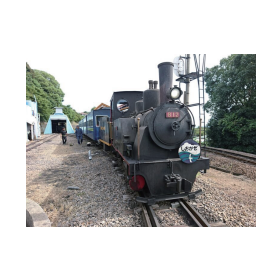
Proposal for Used Water Softener | Reduce Installation Costs by 70% [With Case Studies]

For those struggling with water softeners! We restore soft water supply in a short period and at a low cost (about 1/3 of a new one), balancing implementation within budget and short construction time.

Do you have any concerns such as a malfunctioning water softener for steam locomotives used in tourist facilities? - The water softener for the steam locomotive has broken down, leading to the risk of scale buildup and service interruptions. - As a public facility, securing a budget for new equipment is difficult. We propose a refurbished used water softener for boilers. It has been reinstalled to match the site environment, restoring soft water supply in a short period and at a low cost (about one-third of the price of new equipment). ◇ Soft water supply was restored in just a few days, allowing for continued operation of the train. ◇ Introduced at about one-third the cost compared to new machines. ◇ Stable steam supply ensures safe operation of the boiler. We are currently offering a free case study on the selection, maintenance, and installation of used machines handled as a package.

Added to bookmarks

Bookmarks list

Bookmark has been removed

Bookmarks list

You can't add any more bookmarks

By registering as a member, you can increase the number of bookmarks you can save and organize them with labels.

Free membership registration

What is a pure water purifier? Cartridge system mechanism and replacement guidelines [Basic Knowledge]

A cartridge pure water purifier that allows you to obtain pure water simply by connecting it to a water supply. This explains the mechanism inside the container and the reason why the amount of water obtained before replacement varies depending on the source water.

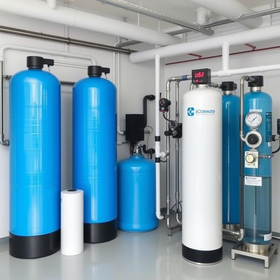
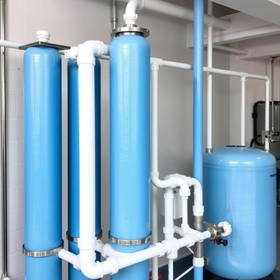
A pure water system is a device that obtains pure water by passing tap water through ion exchange resin, removing dissolved ions from the water. The cartridge type uses a tank made of FRP (fiber-reinforced plastic) filled with resin, which is connected to the water supply piping or hose. When the resin is no longer effective, the entire container or the resin inside is replaced. ■ What is inside the container? Pure water cartridges often contain a "mixed bed" of resin that holds both cations and anions. This allows both cations and anions to be exchanged in a single container, enabling the direct production of water with low electrical conductivity from tap water. ■ In what situations is it used? 1. Finishing touches for car washing: Preventing water spots after drying 2. Supplementary water for humidifiers and similar devices 3. Water for cleaning glassware and other equipment ■ Removing the source of white marks Tap water contains dissolved minerals such as calcium, which leave white marks (ion deposits) when the moisture evaporates. Pure water is used in car washing because it is finished with water that has had these mineral components removed. Please feel free to consult us first.

Added to bookmarks

Bookmarks list

Bookmark has been removed

Bookmarks list

You can't add any more bookmarks

By registering as a member, you can increase the number of bookmarks you can save and organize them with labels.

Free membership registration

What is a boiler softener? Reasons for use in water supply and regeneration/inspection [Basic Knowledge]

In low-pressure boilers, it is common to use softened water from a water softener as make-up water. This explains the reasons for needing softened water, the regeneration process, and daily inspections.

The softener for boilers (softening device) is a device that exchanges hardness components (mainly calcium ions and magnesium ions) in the supply water with sodium ions using cation exchange resin. The softened water referred to in JIS B 8223 is water that has been treated through this device to reduce hardness to 1 mg/L or less (calcium carbonate equivalent). ■ Why is soft water necessary for boiler feed water? When water evaporates inside the boiler, hardness components such as calcium remain in the concentrated water and eventually precipitate on the heat transfer surfaces. This scale blocks the path of heat, requiring more fuel to obtain the same amount of steam. According to JIS, it is difficult to prevent scale formation solely through blowdown management for certain types of boilers, and it is stipulated to use softened water or ion-exchanged water for makeup water. ■ What is the guideline for feed water hardness? According to the table in JIS B 8223, when using softened water as makeup water for multi-tube special circulation boilers, the hardness of the feed water should be 1 mg/L or less. Additionally, many boilers operating at pressures of 2 MPa or less use softened water for makeup water. Please feel free to consult us first.

Added to bookmarks

Bookmarks list

Bookmark has been removed

Bookmarks list

You can't add any more bookmarks

By registering as a member, you can increase the number of bookmarks you can save and organize them with labels.

Free membership registration

What is the cost of pure water? How to compare purchasing, equipment, and rental [Basic Knowledge]

Whether to buy distilled water, own a device, or rent one. This explains the cost items you want to compare in the estimate, as well as the often-overlooked costs of water, electricity, and drainage.

There are several options for obtaining pure water, such as buying purified water, owning a device, or renting a device. When comparing these options, it is easier to make a decision if you determine the amount you will use and the required purity, and then compare the costs per year or per liter under the same conditions, rather than just looking at the initial price or monthly fees. ■ What costs are involved when buying? Purified water is sold in containers, and there are options available in 20L tanks. The cost is determined by the unit price and the amount used, but there are also efforts involved in receiving, storing, and transporting it. ■ Options for renting or outsourcing There are examples of rental or subscription services where you can use a device for a monthly fee. Additionally, with cartridge-type pure water systems, the supplier collects and regenerates the used resin, so users do not have to perform regeneration work with chemicals or dispose of the resin themselves. ■ What is included in the fixed fee? The scope of what is included in the fixed fee varies by contract. For example, some subscriptions for pure water production devices include repair costs but do not cover transportation, installation, or consumables like replacement cartridges. Please feel free to consult with us first.

Added to bookmarks

Bookmarks list

Bookmark has been removed

Bookmarks list

You can't add any more bookmarks

By registering as a member, you can increase the number of bookmarks you can save and organize them with labels.

Free membership registration
Prev 1 Next
  • UL Solutions セミナー 全15講座 データセンター・AI 自動車・サステナビリティ 他 最新規制対応 解説
  • 部品の残数管理、トレーサビリティを効率化! 検証キット(プリンター×周辺機器)無料貸出中 手作業の裁断・記入から脱却!システム改修なしでスマートに
    • Contact this company

      Inquiry Form
    • Before making an inquiry

      Download Profile

    Products

    • Search for Products

    Company

    • Search for Companies

    Special Features

    • Special Features

    Ranking

    • Overall Products Ranking
    • Overall Company Ranking

    support

    • site map
    IPROS
    • privacy policy Regarding external transmission of information
    • terms of service
    • About Us
    • Careers
    • Advertising
    IPROS Services
    • >IPROS GMS | Search site for the manufacturing industry
    • >IPROS | Search site for the B2B industry
    COPYRIGHT © 2001-2026 IPROS CORPORATION ALL RIGHTS RESERVED.
    Please note that the English text on this page is automatically translated and may contain inaccuracies.