What is deionized water (ion-exchanged water)? The relationship with pure water and ultra-pure water [Basic Knowledge]

Deionized water, which has had ions dissolved in water removed. This explains the differences between pure water, ultrapure water, and soft water, as well as the mechanism for measuring cleanliness based on electrical conductivity.
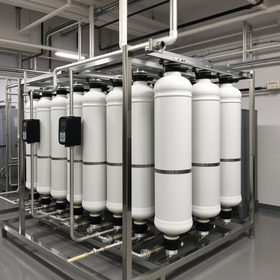
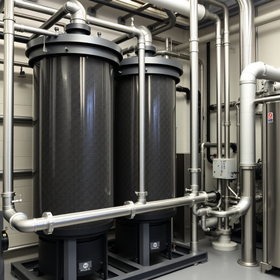
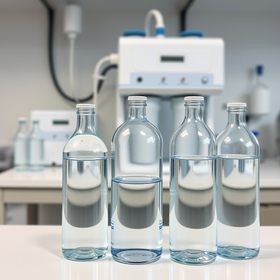
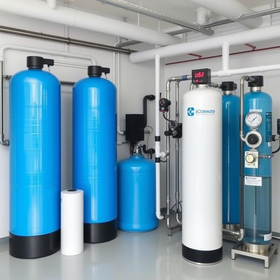
Deionized water is water that has had its dissolved ions removed through ion exchange resin. It is also referred to as ion-exchanged water. The process of removing ions is also described as "de-salting." Regardless of the terminology, the goal is to "reduce the ions dissolved in water." ■ What is dissolved in tap water? Even drinkable tap water contains small amounts of ions such as calcium. While this is not a problem for drinking, these ions can cause issues as impurities in precise analyses or cleaning processes. In boilers, they can also lead to scaling. ■ How is it different from pure water? Pure water is water that has had extremely low levels of impurities. It is produced through methods such as distillation, ion exchange, or RO membranes, either individually or in combination. Deionized water can be understood as water produced specifically through ion exchange. ■ Imagine erasing ions from a list Consider tap water as a list of various ions. Ion exchange is the process of replacing those ions with different ions held by the resin, erasing one name at a time. The fewer names left, the cleaner the water becomes. Please feel free to consult with us first.
Inquire About This Product
basic information
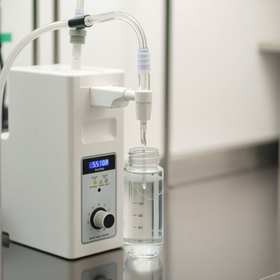
■Cleanliness is measured by electrical conductivity! Water with fewer ions is less conductive. Therefore, the quality of pure water is expressed in terms of electrical conductivity and its reciprocal, resistivity. As a guideline, pure water has a value of less than 1μS/cm, while tap water has a value of more than 100μS/cm. ■How clean can it get? No matter how many ions are removed, there is a limit to the resistivity of water. The theoretical value at 25°C is about 18.2MΩ·cm. Ultrapure water generally refers to water with a resistivity of 18MΩ·cm or more at 25°C, which is just below this limit. ■What cannot be removed by deionized water Ion exchange can remove dissolved electrolytes from water. However, organic substances that do not ionize, as well as fine particles and bacteria, are generally not subject to removal. Water that has been reduced to the extreme in these aspects is referred to as ultrapure water. ■Stored water changes over time When pure water is exposed to air, carbon dioxide from the air dissolves into it. This causes the water to become weakly acidic, which also affects the electrical conductivity value. In tests for pharmaceutical water, methods of measurement that take into account the influence of this carbon dioxide have been established.
Price range
Delivery Time
Applications/Examples of results
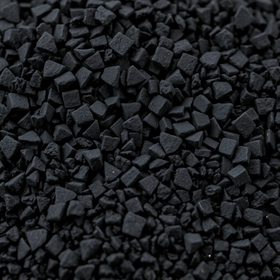
■In what situations is it used? 1. Cleaning of semiconductors and electronic components 2. Pharmaceutical manufacturing processes 3. Boiler feed water 4. Water used for research, experiments, and analysis In all these cases, ions dissolved in water can affect quality and equipment. For example, in boilers, if ions like calcium remain, they can lead to scale buildup. ■How to differentiate between soft water, deionized water, and ultra-pure water? 1. Soft water: Water from which hardness components like calcium have been removed 2. Deionized water: Water from which both cations and anions have been removed 3. Ultra-pure water: Water from which not only ions but also organic substances and fine particles have been reduced The higher the required water quality, the more processes are involved in the combination. ■Resins are regenerated and reused Ion exchange resins can no longer exchange ions once all the exchange sites have been replaced. Therefore, they are regenerated using chemicals such as acids or alkalis. Since there is a limit to the amount of ions that the resin can exchange, the more ions are present in the raw water and the more water is used, the more regeneration cycles will be needed. Please feel free to consult us first.
catalog(3)
Download All Catalogs
Company information

Since our founding, we have continued to provide flexible services with the motto of accurately supplying a diverse range of products that respond to changes in the times and the diversification of consumer needs, tailored to various applications and requirements. With the corporate slogan "Chemical Engineering Partner," we, as a group of experts in chemical technology, actively discover ideas to solve our customers' problems from advanced technologies both domestically and internationally, and propose them.