
What is activated carbon adsorption? What can be removed and what is difficult to remove? [Basic Knowledge]

Some activated carbon has a surface area equivalent to several tennis courts, all in just 1g. This explains the mechanism by which it adsorbs odors and organic substances in water, as well as the concept of breakthrough.
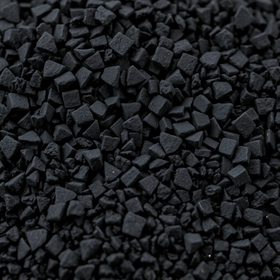
Activated carbon is used in water treatment plants and wastewater recycling to remove odors and organic substances. It may only look like black granules or powder, but it is densely packed with tiny pores inside. ■ How many tennis courts can 1g cover?! The surface area of activated carbon can reach 1,000 to 2,000 square meters per gram, depending on the product. A doubles tennis court is about 260 square meters, so with 1,000 square meters, just 1 gram would cover approximately 4 courts. The process by which substances in water adhere to this large surface area is called adsorption. ■ How is it different from filtration? Conventional water treatment methods like coagulation, sedimentation, and sand filtration are not sufficient to remove dissolved odor-causing substances. Activated carbon is characterized by its ability to adsorb these dissolved organic substances onto its surface. In municipal water systems, granular activated carbon is best placed in the later stages of filtration. ■ Specialty areas vary by raw material The raw materials can be plant-based, such as coconut shells and wood, or mineral-based, like coal. Coconut shell carbon tends to have many small pores suitable for smaller molecules, while coal-based carbon has a wider range of larger pores that can also accommodate larger molecules. Choosing the right activated carbon for your application is something we encourage you to consult us about.
Inquire About This Product
basic information
■Difference between Granular and Powdered Activated Carbon In the field of water supply, activated carbon with a particle size of 150μm or larger is classified as granular activated carbon, while that with a particle size of less than 150μm is classified as powdered activated carbon. 1. Granular Activated Carbon: Packed into adsorption tanks or filters and used by passing water through it. 2. Powdered Activated Carbon: Used by being injected into water. It can be processed with existing equipment. For short-term or emergency treatment, powdered carbon is used, while for long-term use throughout the year, granular carbon that can be regenerated is more economical. ■What Can Be Removed The main substances that can be removed by activated carbon are as follows: 1. Odor-causing substances such as musty smells 2. Trihalomethanes and their precursor substances 3. Color (color degree) 4. Pesticides, phenolic compounds, anionic surfactants 5. Volatile organic compounds such as trichloroethylene It is also used to treat chemicals that have temporarily mixed in due to accidents at water sources. ■Some Substances Are Difficult to Remove! In general, substances that are easily soluble in water and have small molecules tend to be difficult to adsorb. Even if the molecules are large, substances that are easily soluble in water, like humic substances, are also difficult to adsorb. For PFAS, those with shorter molecular chains appear in treated water more quickly.
Price range
Delivery Time
Applications/Examples of results
■Is it not usable indefinitely? Activated carbon gradually fills up its adsorption sites as it is used. If water continues to pass through, the adsorption becomes saturated, and the substances you want to remove start appearing in the treated water. This is called breakthrough. ■What is the breakthrough point and desorption? The point at which the concentration of treated water reaches a predetermined value is called the breakthrough point. When using granular activated carbon for PFAS removal, frequent replacement or regeneration is necessary. Additionally, there is a phenomenon called "desorption," where substances that have been adsorbed can detach again, which is more likely to occur at higher water temperatures. ■Using the power of microorganisms There is a method that utilizes the action of microorganisms attached to the surface of activated carbon to decompose ammonia nitrogen and organic matter. This is known as "biologically activated carbon," used in water treatment plants. The addition of decomposition activity helps maintain the adsorption function for a longer period. ■In what settings is it used? 1. Removal of odors and organic matter in water treatment plants 2. Treatment to suppress color and odor in recycled sewage water 3. Exhaust gas treatment for volatile substances expelled through aeration The type of activated carbon is selected based on the substances to be removed and the method of use. Please feel free to consult with us first.
catalog(3)
Download All Catalogs

Company information

Since our founding, we have continued to provide flexible services with the motto of accurately supplying a diverse range of products that respond to changes in the times and the diversification of consumer needs, tailored to various applications and requirements. With the corporate slogan "Chemical Engineering Partner," we, as a group of experts in chemical technology, actively discover ideas to solve our customers' problems from advanced technologies both domestically and internationally, and propose them.


