
What is MF membrane (microfiltration membrane)? Differentiation from UF membrane and sand filtration [Basic Knowledge]

MF membranes that separate turbidity and bacteria through membrane pores. This will explain how to differentiate their use from sand filtration and UF membranes, along with the concepts of membrane differential pressure and cleaning observed during operation.
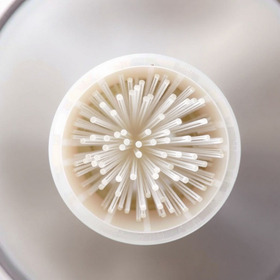
MF membrane (microfiltration membrane) is a membrane with fine pores that separates particles in water. According to the design guidelines for water supply facilities, it is categorized as a membrane that removes colloids, suspended substances, bacteria, and other sources of turbidity. Membranes with relatively large pores, around 2μm, are also used for the purpose of removing Cryptosporidium. ■ How is it different from sand filtration? In rapid filtration, coagulants are used to aggregate turbidity into flocs, which are then settled and filtered through a layer of sand. In contrast, MF membranes separate particles directly through the membrane itself. Therefore, coagulants are either unnecessary or only required in small amounts. The ease of automation and the smaller installation area are also reasons why membranes are chosen. There are different shapes of membranes, including hollow fiber type, which bundles thin tubes, and flat sheet type, which arranges flat membranes. ■ Dissolved substances pass through The primary function of MF membranes is to remove substances that are not dissolved in water. Dissolved iron, manganese, substances that cause musty odors, and pesticides can pass through the membrane. For water where these substances are problematic, additional treatments are combined before and after. In other words, the less dissolved substances present in the water, the more effectively the advantages of membrane filtration can be utilized. Please feel free to consult with us.
Inquire About This Product
basic information
■There are two ways to flow water. Full filtration is a method where all the water sent is passed through the membrane. Since dirt accumulates on the membrane surface, filtration is periodically stopped to remove it. Cross-flow filtration washes the surface while filtering along the membrane surface. While dirt is less likely to accumulate, the energy required per volume of filtered water increases. There are various methods to apply force to push water through the membrane, such as using a pump to push, a pump to pull, or utilizing a difference in water levels. ■Why does the membrane differential pressure increase? The pressure required to obtain filtered water is called membrane differential pressure. When continuing filtration at a constant water volume, the membrane differential pressure increases with the accumulation of dirt on the membrane surface. When the water temperature is low, the membrane differential pressure required to obtain the same water volume also increases. During operation, the filtered water volume and membrane differential pressure are recorded to understand the condition of the membrane. ■Dirt that can be removed by washing, and damage that cannot be reversed? The adhesion of dirt (fouling) is distinguished from degradation as dirt that can be recovered through cleaning. In addition to physical cleaning methods such as backwashing with water flowing in the reverse direction and air cleaning, chemical cleaning is used for inorganic substances with acids and for organic substances and microorganisms with sodium hypochlorite. On the other hand, degradation that changes the material of the membrane itself cannot be reversed through cleaning.
Price range
Delivery Time
Applications/Examples of results
■How to differentiate usage? 1. Sand filtration: Easy to handle even with highly turbid water when combined with coagulation. 2. MF membrane: Desired to separate turbidity and bacteria while minimizing the use of coagulants. 3. UF membrane: Aimed at removing even smaller viruses than those filtered by MF membranes. It is common to place a pre-treatment before the membrane when the raw water turbidity is moderate to high. ■How to notice membrane rupture? When a membrane ruptures, particles that were supposed to be filtered leak out. Therefore, it is mandated that water supply membrane filtration systems have a function to detect membrane breakage. ■What is the cycle for chemical cleaning and replacement? In water supply membrane filtration systems, chemical cleaning is often performed every few months, and membrane replacement every few years. Chemicals used for cleaning include alkalis, acids, oxidants, organic acids, and detergents. Additionally, cellulose-based membranes are prone to microbial invasion, so adding chlorine to prevent this is required. It is also important to note that the chemicals that can be used and the conditions that must be maintained vary depending on the membrane material. Our company offers proposals for filtration systems tailored to the raw water and desired water quality, as well as consultations on water treatment chemicals such as coagulants. Please feel free to contact us for inquiries.
catalog(3)
Download All Catalogs


Company information

Since our founding, we have continued to provide flexible services with the motto of accurately supplying a diverse range of products that respond to changes in the times and the diversification of consumer needs, tailored to various applications and requirements. With the corporate slogan "Chemical Engineering Partner," we, as a group of experts in chemical technology, actively discover ideas to solve our customers' problems from advanced technologies both domestically and internationally, and propose them.


