Why can defoamers eliminate foam? This will explain the types such as silicone-based, the disadvantages of using too much, how to check for dangers, and how to choose them for wastewater treatment.
Defoamers are agents added to eliminate bubbles formed in liquids or to suppress foaming. They are used in manufacturing processes and wastewater treatment in factories to prevent issues such as bubbles overflowing from tanks or halting operations. ■ Does pure water not foam? Bubbles are gases wrapped in a thin film of liquid. Pure water does not form stable bubbles even when stirred. Bubbles persist longer when substances with high surface activity are present in the liquid, stabilizing the bubble film. ■ Main types of defoamers 1. Mineral oil-based: Primarily composed of mineral oil, offering high cost efficiency. 2. Silicone-based: Primarily composed of silicone oil, with particularly low surface tension. 3. Polyether-based: Primarily composed of polymers that are not easily soluble in water. In all cases, the main components are oil-like liquids that do not mix well with water. Many products also include fine solid particles like silica to enhance their effectiveness. ■ There are also differences in form! Even with the same ingredients, there are oil types used in their concentrated form and emulsion types that are finely dispersed in water. Emulsion types are commonly used in water-based liquids. Please feel free to consult us first.
Inquire About This Product
basic information
■Why do bubbles disappear? Defoamers are used by dispersing low surface tension liquids into fine particles within the liquid. These particles penetrate the bubble film and spread over it, causing the film to thin and break. Only a very small amount is added. ■It works because it doesn't dissolve! One condition for a defoamer is that it does not dissolve in the liquid. Even silicone-based defoamers with short chains that easily blend into the liquid can actually stabilize bubbles. It is crucial to choose a product with the right properties that neither blends too much nor too little. ■Are there any drawbacks? If too much is added or if it does not match the liquid, it can cause issues like beading (chipping like a repelled surface), cloudiness, or separation of oils. Additionally, it may make it difficult for oxygen to dissolve in the liquid, so in biological treatments where oxygen is supplied through aeration, attention must be paid to changes in dissolved oxygen (DO). ■Is it harmful to the body? Are there any dangers? Silicone resins are designated as food additives and are used in the production of tofu and in fermentation processes to eliminate foam. On the other hand, the dangers of industrial products vary, with some potentially causing severe eye damage and others not falling under GHS classifications. It is important to check the SDS for each product used.
Price range
Delivery Time
Applications/Examples of results
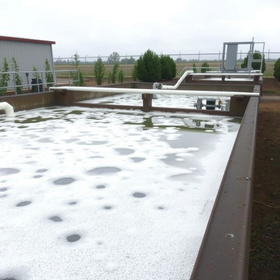
■Reasons Why Foam is a Problem in Wastewater Treatment When foam increases in aeration tanks and other areas, it can overflow from the tank, causing sludge and scum to flow out. It is also undesirable to discharge foamy liquid as it is. In manufacturing processes, foam can lead to operational stoppages and defects in product appearance. ■Does Foam Affect Different Systems? The effectiveness of defoaming agents varies depending on the properties of the foam. Even with the same biological treatment foam, one type may work well while another may hardly be effective. The appropriate product can also change depending on where it is used. ■Points to Check When Choosing! 1. Effectiveness: Test by adding small amounts to the actual foam. 2. Water Quality: Observe the impact on treated water and microorganisms. 3. Oxygen: Ensure that aeration efficiency is not compromised. 4. Safety: Check hazards and handling using the SDS. ■Use the Minimum Amount Necessary While increasing the amount of additive enhances defoaming effects, it can also lead to more disadvantages. The basic principle is to add only what is necessary while monitoring effectiveness. From inspecting wastewater sites troubled by foam to selecting agents for each tank, Torii will work with you. Please feel free to consult with us first.
catalog(3)
Download All Catalogs

Company information

Since our founding, we have continued to provide flexible services with the motto of accurately supplying a diverse range of products that respond to changes in the times and the diversification of consumer needs, tailored to various applications and requirements. With the corporate slogan "Chemical Engineering Partner," we, as a group of experts in chemical technology, actively discover ideas to solve our customers' problems from advanced technologies both domestically and internationally, and propose them.