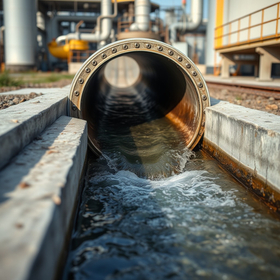
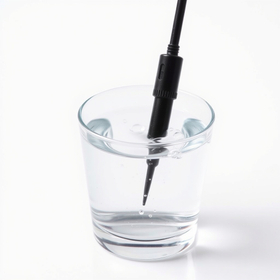
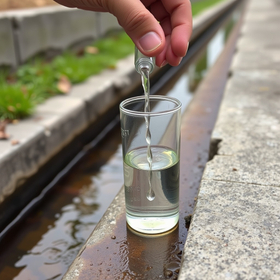
A pH meter with a dirty electrode may show readings within the standard range, but in reality, it may be outside the standard range. This explains the key points of neutralization treatment and management.
Wastewater with a pH outside the standard cannot be discharged as is. The process of adding a chemical with the opposite property to bring the pH back within the standard range is called neutralization treatment. ■ How far should it be returned? When discharging into public water bodies such as rivers and lakes, the uniform wastewater standards are as follows: 1. Non-marine areas: pH between 5.8 and 8.6 2. Marine areas: pH between 5.0 and 9.0 National standards apply to facilities with an average daily discharge of 50 cubic meters or more. When discharging into the sewer system, it must comply with the sewer law and local ordinances regarding wastewater discharge standards. ■ Flow of neutralization treatment 1. Adjustment tank: Store wastewater to equalize volume and water quality 2. Neutralization tank: Add chemicals and mix to adjust pH 3. Monitoring tank: Confirm pH before discharge By equalizing the quantity and quality of water at the beginning, fluctuations in the load on subsequent processes can be minimized. ■ Caustic soda for acids, sulfuric acid for alkalies Caustic soda is commonly used for neutralizing acidic wastewater, while sulfuric acid is used for neutralizing alkaline wastewater. Both are designated as hazardous substances when exceeding certain concentrations, so care must be taken in storage and handling. Please feel free to consult us first.
Inquire About This Product
basic information
■Is it better for chemicals to be concentrated? If the chemicals used for neutralization are too concentrated, it can lead to excessive pH swings, resulting in a phenomenon known as "hunting." The same applies if too much chemical is added. Variability in concentration can also cause treatment to fail. Use chemicals at a concentration that stabilizes the pH. ■Caution with wastewater containing metals regarding re-dissolution When neutralizing with caustic soda, depending on the type of metal, if the pH is raised too high, hydroxides that have formed may re-dissolve. ■Unique precautions for carbon dioxide! Alkaline wastewater can also be neutralized using carbon dioxide. In this method, it is important to regularly check the remaining amount in the gas cylinder to ensure a continuous supply. It is also essential to confirm that sufficient neutralization has occurred. ■Where to place the pH meter? The pH measuring electrode should be placed near the outlet of the neutralization tank, while the point where chemicals are added should be away from the electrode. The neutralization tank should be well mixed to ensure uniform pH throughout. ■Be cautious of over-addition If too little chemical is added, neutralization will be insufficient. Conversely, adding too much can hinder the treatment process. It is important to check not only the quantity but also whether the concentration of the chemicals is appropriate.
Price range
Delivery Time
Applications/Examples of results
■Can I trust the readings? When the electrode gets dirty, the pH meter will no longer show accurate values. In fact, there have been cases where debris on the electrode prevented accurate pH measurement, leading to violations of standards. Even if the readings on the instrument are within standards, the actual wastewater can be outside the standards. ■How do I maintain the pH meter? 1. Cleaning: Wash the electrode according to the level of dirt. Use neutral detergents for oil stains. 2. Calibration: Calibrate using two types of pH standard solutions. 3. Record keeping: Document the results of inspections in a logbook or similar. Also, check daily that the pH recorder in the monitoring tank has enough paper and ink, and write the date on the chart paper. ■Running out of chemicals can lead to standard violations! If chemicals run out, there is a risk that wastewater will flow without being neutralized. Check the levels of chemicals in tanks and gas cylinders to prevent running out of liquids or gases. ■Control to stabilize pH There is a method called "time-proportional control," which shortens the operating time of the chemical pump as it approaches the target pH. This method makes it easier to suppress overshooting and hunting of pH levels. Keeping a record of the situation in daily operation reports can help you notice abnormalities quickly. Please feel free to consult us first.
catalog(3)
Download All Catalogs

Company information

Since our founding, we have continued to provide flexible services with the motto of accurately supplying a diverse range of products that respond to changes in the times and the diversification of consumer needs, tailored to various applications and requirements. With the corporate slogan "Chemical Engineering Partner," we, as a group of experts in chemical technology, actively discover ideas to solve our customers' problems from advanced technologies both domestically and internationally, and propose them.