iPROS Manufacturing
  • Search for products by classification category

    • Electronic Components and Modules
      Electronic Components and Modules
      61665items
    • Machinery Parts
      Machinery Parts
      75915items
    • Manufacturing and processing machinery
      Manufacturing and processing machinery
      102012items
    • Scientific and Physics Equipment
      Scientific and Physics Equipment
      36331items
    • Materials
      Materials
      37773items
    • Measurement and Analysis
      Measurement and Analysis
      55152items
    • Image Processing
      Image Processing
      15366items
    • Control and Electrical Equipment
      Control and Electrical Equipment
      54549items
    • Tools, consumables, and supplies
      Tools, consumables, and supplies
      65597items
    • Design and production support
      Design and production support
      12662items
    • IT/Network
      IT/Network
      45645items
    • Office
      Office
      14181items
    • Business support services
      Business support services
      25345items
    • Seminars and Skill Development
      Seminars and Skill Development
      6558items
    • Pharmaceutical and food related
      Pharmaceutical and food related
      34151items
    • others
      75341items
  • Search for companies by industry

    • Manufacturing and processing contract
      7339
    • others
      4986
    • Industrial Machinery
      4445
    • Machine elements and parts
      3330
    • Other manufacturing
      2883
    • Trading company/Wholesale
      2650
    • IT/Telecommunications
      2571
    • Industrial Electrical Equipment
      2319
    • Building materials, supplies and fixtures
      1816
    • software
      1667
    • Electronic Components and Semiconductors
      1587
    • Resin/Plastic
      1501
    • Service Industry
      1478
    • Testing, Analysis and Measurement
      1130
    • Ferrous/Non-ferrous metals
      986
    • environment
      699
    • Chemical
      641
    • Automobiles and Transportation Equipment
      582
    • Printing Industry
      513
    • Information and Communications
      465
    • Consumer Electronics
      412
    • Energy
      332
    • Rubber products
      317
    • Food Machinery
      308
    • Optical Instruments
      279
    • robot
      273
    • fiber
      254
    • Paper and pulp
      230
    • Pharmaceuticals and Biotechnology
      173
    • Electricity, Gas and Water Industry
      167
    • Warehousing and transport related industries
      149
    • Glass and clay products
      139
    • Food and Beverage
      130
    • CAD/CAM
      124
    • retail
      108
    • Medical Devices
      107
    • Educational and Research Institutions
      107
    • Ceramics
      98
    • wood
      87
    • Transportation
      84
    • Petroleum and coal products
      63
    • Medical and Welfare
      62
    • Shipbuilding and heavy machinery
      51
    • Aviation & Aerospace
      48
    • Fisheries, Agriculture and Forestry
      41
    • equipment
      40
    • Materials
      33
    • Public interest/special/independent administrative agency
      31
    • Research and development equipment and devices
      29
    • Government
      24
    • self-employed
      24
    • Mining
      17
    • cosmetics
      15
    • Finance, securities and insurance
      14
    • Restaurants and accommodations
      10
    • Individual
      10
    • Police, Fire Department, Self-Defense Forces
      7
    • Laboratory Equipment and Consumables
      5
    • Raw materials for reagents and chemicals
      4
    • Contracted research
      3
  • Special Features
  • Ranking

    • Overall Products Ranking
    • Overall Company Ranking
Search for Products
  • Search for products by classification category

  • Electronic Components and Modules
  • Machinery Parts
  • Manufacturing and processing machinery
  • Scientific and Physics Equipment
  • Materials
  • Measurement and Analysis
  • Image Processing
  • Control and Electrical Equipment
  • Tools, consumables, and supplies
  • Design and production support
  • IT/Network
  • Office
  • Business support services
  • Seminars and Skill Development
  • Pharmaceutical and food related
  • others
Search for Companies
  • Search for companies by industry

  • Manufacturing and processing contract
  • others
  • Industrial Machinery
  • Machine elements and parts
  • Other manufacturing
  • Trading company/Wholesale
  • IT/Telecommunications
  • Industrial Electrical Equipment
  • Building materials, supplies and fixtures
  • software
  • Electronic Components and Semiconductors
  • Resin/Plastic
  • Service Industry
  • Testing, Analysis and Measurement
  • Ferrous/Non-ferrous metals
  • environment
  • Chemical
  • Automobiles and Transportation Equipment
  • Printing Industry
  • Information and Communications
  • Consumer Electronics
  • Energy
  • Rubber products
  • Food Machinery
  • Optical Instruments
  • robot
  • fiber
  • Paper and pulp
  • Pharmaceuticals and Biotechnology
  • Electricity, Gas and Water Industry
  • Warehousing and transport related industries
  • Glass and clay products
  • Food and Beverage
  • CAD/CAM
  • retail
  • Medical Devices
  • Educational and Research Institutions
  • Ceramics
  • wood
  • Transportation
  • Petroleum and coal products
  • Medical and Welfare
  • Shipbuilding and heavy machinery
  • Aviation & Aerospace
  • Fisheries, Agriculture and Forestry
  • equipment
  • Materials
  • Public interest/special/independent administrative agency
  • Research and development equipment and devices
  • Government
  • self-employed
  • Mining
  • cosmetics
  • Finance, securities and insurance
  • Restaurants and accommodations
  • Individual
  • Police, Fire Department, Self-Defense Forces
  • Laboratory Equipment and Consumables
  • Raw materials for reagents and chemicals
  • Contracted research
Special Features
Ranking
  • Overall Products Ranking
  • Overall Company Ranking
  • privacy policy
  • terms of service
  • About Us
  • Careers
  • Advertising
  1. Home
  2. environment
  3. トリイ
  4. Product/Service List
environment
  • Added to bookmarks

    Bookmarks list

    Bookmark has been removed

    Bookmarks list

    You can't add any more bookmarks

    By registering as a member, you can increase the number of bookmarks you can save and organize them with labels.

    Free membership registration

トリイ

addressAichi/Nishio-shi/36 Emukae, Ajihama, Isshikimachi
phone0563-72-8220
  • Special site
  • Official site
last updated:Sep 04, 2026
トリイlogo
  • Contact this company

    Inquiry Form
  • Before making an inquiry

    Download Profile
  • Company information
  • Products/Services(213)
  • catalog(61)
  • news(0)

トリイ Product Lineup

  • category

46~90 item / All 213 items

Displayed results

Filter by category

純水器・軟水器の提案 純水器・軟水器の提案
ボイラーの薬品・スケール対策 ボイラーの薬品・スケール対策
ボイラーの更新・省エネ・コスト削減 ボイラーの更新・省エネ・コスト削減
ボイラーの整備・点検・メンテナンス ボイラーの整備・点検・メンテナンス
ボイラーの構造・運転・法規制 ボイラーの構造・運転・法規制
冷却塔の基礎知識とメンテナンス 冷却塔の基礎知識とメンテナンス
排水処理のトラブル事例 排水処理のトラブル事例
排水処理場の点検・保全サービス 排水処理場の点検・保全サービス
排水処理の基礎知識 排水処理の基礎知識
凝集剤・フロックの基礎知識 凝集剤・フロックの基礎知識
軟水・硬水の基礎知識 軟水・硬水の基礎知識
純水・超純水・工業用水 純水・超純水・工業用水
水質測定(pH・電気伝導率) 水質測定(pH・電気伝導率)
水道水・井戸水・水質基準 水道水・井戸水・水質基準
設備部品の基礎知識 設備部品の基礎知識
class="retina-image"

What is the difference between pipe diameter designation A and designation B? 【Basic Knowledge】

What is the reason for the different names "A designation" and "B designation" for the same piping? An explanation of the origins of the colloquial terms used on site!

■What does "nominal diameter" in piping mean? The thickness of piping is managed by a value called "nominal diameter." The nominal diameter is not the actual outer diameter of the pipe itself, but a designation defined by JIS standards. If the nominal diameter is the same, the outer diameter will be the same even if the notation differs. ■What is the difference between A designation and B designation? There are "A designation" and "B designation" for nominal diameters. A designation is based on millimeters, such as "10A" and "20A," while B designation is based on inches, represented as "3/8" and "1." Both refer to pipes with the same outer diameter. ■Why are there two different designations? It is said that this is due to Japanese piping standards being influenced by American standards (inch-based), leading to the parallel use of both millimeter and inch standards. ■What should you be careful about regarding the "common names" you hear on-site? In addition to these two designations, a "common name" that fixes the denominator of the B designation to 8 is also used on-site. "1/8" is referred to as "one-bun," and "1/4" as "two-bun," with the "bun" unit said to originate from the shakkanhō measurement system. It is reassuring to confirm the official nominal diameter when placing orders. Please feel free to consult with us first.

  • Piping Materials
  • Pipe Fittings
  • valve

Added to bookmarks

Bookmarks list

Bookmark has been removed

Bookmarks list

You can't add any more bookmarks

By registering as a member, you can increase the number of bookmarks you can save and organize them with labels.

Free membership registration

What is a liquid level gauge? How to choose the type? 【Basic Knowledge】

Why can we tell what's inside the tank from the outside? An explanation of the mechanism and types of liquid level gauges!

■What is a level gauge used for? A level gauge is a general term for devices that allow the liquid level inside a tank or container to be visually observed from the outside. The boundary between gases and liquids, or between different liquids, is called a "level," and a level gauge is an instrument that measures this level. ■Why is it necessary to check from outside the tank? Many tanks and boilers in petroleum and chemical plants are equipment that cannot be directly looked into. Therefore, level gauges that can safely provide information from the outside are essential, and various types exist depending on the application. ■How do the mechanisms differ by type? 1. Float type: Judged by the position of a float that floats on the liquid surface. 2. Glass tube type: Direct visual observation of the liquid level based on the principle of communicating vessels. 3. Differential pressure type: Detects the pressure difference caused by the height of the liquid level. 4. Capacitance type, ultrasonic type, radar type: Non-contact methods that do not touch the liquid. ■Is the choice of method dependent on conditions? While the differential pressure type has a proven track record, its weakness is that it is prone to errors when the density of the liquid changes. On the other hand, the capacitance type can handle harsh environments of high temperature and pressure, as well as high-viscosity liquids. Selecting the appropriate type based on the tank's pressure, size, temperature, and contents is important. Please feel free to consult us first.

  • Level gauges and level switches
  • Liquid level control/level switch
  • Liquid Level Sensor

Added to bookmarks

Bookmarks list

Bookmark has been removed

Bookmarks list

You can't add any more bookmarks

By registering as a member, you can increase the number of bookmarks you can save and organize them with labels.

Free membership registration

What is an economizer? 【Basic Knowledge】

Reducing boiler fuel with discarded waste heat? What is the mechanism of an economizer?

■What is an "Economizer" in the first place? An economizer is a device also referred to as a "coal-saving device" due to its historical use of coal as the main fuel. It is installed in the middle of the exhaust gas piping of a boiler. ■How does it reduce fuel consumption? It works by preheating the water supply to the boiler using the thermal energy from the exhaust gas. If the temperature of the water supply is already high from the start, less heat is required to raise it to the target temperature in the boiler itself, thereby reducing the amount of fuel used. ■Can the reuse of exhaust heat be applied beyond boilers? For example, exhaust gas generated at around 40°C in processes like compressors can also be used as a heat source for another process, leading to a reduction in fuel consumption. The economizer is a prime example of the concept of recovering waste heat by "using heat that was previously discarded." If you are facing issues with energy-saving in your equipment, please feel free to consult us first.

  • Heat exchanger
  • Energy efficient utilization system
  • boiler

Added to bookmarks

Bookmarks list

Bookmark has been removed

Bookmarks list

You can't add any more bookmarks

By registering as a member, you can increase the number of bookmarks you can save and organize them with labels.

Free membership registration

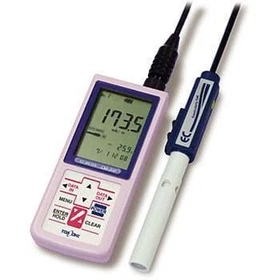
Is there a difference in conductivity between drinkable and non-drinkable water? 【Basic Knowledge】

Measured with a conductivity meter! What do the differences in values between household groundwater and non-potable well water reveal about water quality standards?

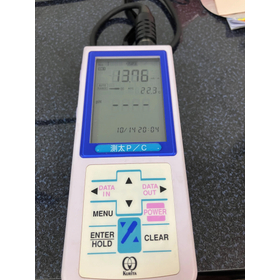
■What happens when you actually measure groundwater with a conductivity meter? We measured two types of well water (not suitable for drinking) and groundwater used as household drinking water (pumped from 25m underground) with a conductivity meter. The results were: household drinking water at 13.76 mS/m, well water 1 (not suitable for drinking) at 7.22 mS/m, and well water 2 (not suitable for drinking) at 11.38 mS/m. ■What does electrical conductivity represent? Electrical conductivity is an indicator that changes based on the amount of dissolved minerals (ions) such as calcium and magnesium in the water. A higher value indicates a greater presence of electrolytes in the water. ■What does it mean that the drinking water has a higher value? In this case, the household drinking water had a higher conductivity than the two types of well water that are not suitable for drinking. Conductivity is merely a guideline for the amount of dissolved ions, and a higher value does not directly indicate safety. The suitability for drinking is determined not only by this value but also through comprehensive testing based on water quality standards. If you are having trouble with water quality management in your facilities, please feel free to consult us first.

  • Water quality testing
  • Other water quality analysis
  • Water purifiers/water softeners

Added to bookmarks

Bookmarks list

Bookmark has been removed

Bookmarks list

You can't add any more bookmarks

By registering as a member, you can increase the number of bookmarks you can save and organize them with labels.

Free membership registration

What are the three levels of water quality standards? 【Basic Knowledge】

Are the mandatory standards, effort targets, and candidates under investigation actually divided into three levels for water quality standards?

■What exactly are "water quality standard items"? The quality of tap water is strictly managed by "water quality standard items" established by ministerial ordinances based on the Water Supply Act. These have legal binding force, and water suppliers are obligated to provide water that meets these standards and to conduct inspections. ■Why are there also stages called "water quality management target setting items" and "items for consideration"? In fact, in addition to water quality standard items, there are categories such as "water quality management target setting items," which have a similar status, and "items for consideration," which are at the information gathering stage. Substances for which the reliability of toxicity assessment and the examination of detection realities are insufficient are initially placed in these two categories, and once scientific knowledge is solidified, they are upgraded to formal water quality standard items. ■Have standards been increasing recently? An example of this system in action is the organic fluorinated compounds PFOS and PFOA. For a long time, they were classified as water quality management target setting items, but following the solidification of toxicity assessments, they were upgraded to formal water quality standard items in April 2026. Standards are not fixed; they continue to be updated as new knowledge accumulates. If you are having trouble with water quality management in your facilities, please feel free to consult with us first.

  • Water quality testing
  • Water purifiers/water softeners
  • Water quality improvement

Added to bookmarks

Bookmarks list

Bookmark has been removed

Bookmarks list

You can't add any more bookmarks

By registering as a member, you can increase the number of bookmarks you can save and organize them with labels.

Free membership registration

Why are there 51 items in the water quality standards? 【Basic Knowledge】

Since the enactment of the Water Supply Act in 1957, how have the standards accumulated up to the present day in the Reiwa era?

■What is the "Water Supply Act" that underpins water quality standards? The quality of tap water is supported by the "Water Supply Act," a law enacted in 1957 (Showa 32). Water quality standards are the "requirements that tap water should meet," established by ministerial ordinances based on this Water Supply Act, and they mandate water suppliers, such as prefectures and municipalities, to provide water that meets the national quality standards. ■How often are the standards reviewed? Water quality standards are not set in stone; they are revised according to the latest findings through a "sequential revision method," with reviews of standard items and values occurring almost every year. ■Why are there currently 51 standard values? As of April 2021 (Reiwa 3), there are 51 different items with established standard values in the water quality standards. This is the result of over 60 years of sequential revisions since the enactment of the Water Supply Act. The large number of standards is a testament to the detailed history of ensuring the safety of tap water. If you are having trouble with water quality management in your facilities, please feel free to consult us.

  • Water quality testing
  • Water purifiers/water softeners
  • Water quality improvement

Added to bookmarks

Bookmarks list

Bookmark has been removed

Bookmarks list

You can't add any more bookmarks

By registering as a member, you can increase the number of bookmarks you can save and organize them with labels.

Free membership registration

What are the water quality standards for tap water? 【Basic Knowledge】

Who is responsible for ensuring the safety of tap water, and how is it done? What is the system behind the "water quality standards" that you should know about?

■What exactly are "water quality standards"? Tap water contains various substances that are not visible to the eye, many of which can affect health, taste, and smell. Water quality standards refer to the quality regulations for tap water established by the government regarding these substances. Specific items and values are defined in the "Ministerial Ordinance on Water Quality Standards" based on Article 4 of the Water Supply Act. ■Who is obligated to comply with these standards? The obligation to comply with the standards falls on water suppliers such as prefectures and municipalities that provide tap water. It is legally mandated to deliver water that meets the standards, and the safety of the tap water we consume daily is supported by this system. ■Why are the standards not set in stone once established? Water quality standards are reviewed periodically through a system called "sequential revision." As analytical techniques and research on health impacts advance, substances that were previously overlooked may be added to the standards. By continuously updating in line with the latest findings, the safety of tap water is maintained. If you have concerns about water quality management in your facilities, please feel free to consult us first.

  • Water quality testing
  • Water purifiers/water softeners
  • Water quality improvement

Added to bookmarks

Bookmarks list

Bookmark has been removed

Bookmarks list

You can't add any more bookmarks

By registering as a member, you can increase the number of bookmarks you can save and organize them with labels.

Free membership registration

Is it true that the boundary between shallow wells and deep wells is a depth of 30 meters? 【Basic Knowledge】

Why are shallow wells more prone to contamination? How does the depth affect the safety of well water?

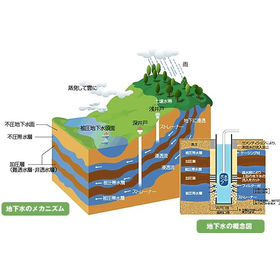
■ Where is the boundary between shallow wells and deep wells? Wells less than 30 meters deep are called "shallow wells," while those 30 meters or deeper are referred to as "deep wells." Shallow wells draw groundwater from the "unconfined aquifer" close to the surface, whereas deep wells extract groundwater from the "confined aquifer" located beneath the "pressurized layer (impermeable layer)," which acts as a barrier preventing the intrusion of contaminants. ■ Why is the water quality of shallow wells prone to change? Because shallow wells are close to the surface, bacteria and harmful substances from animal waste can easily seep into the ground, posing a contamination risk. Additionally, the water quality can change daily due to seasonal variations, weather conditions, and the sanitary state of surrounding facilities, making it less stable compared to deep wells. ■ Can anyone safely drink well water? While some people prefer drinking well water for its pleasant taste, the water quality is not guaranteed for the reasons mentioned above. If you intend to drink it, you need to ensure proper sanitation management at your own responsibility. If you have concerns about water quality management for your facilities, please feel free to consult us.

  • Water purifiers/water softeners
  • Hardness Tester
  • Filtration Equipment

Added to bookmarks

Bookmarks list

Bookmark has been removed

Bookmarks list

You can't add any more bookmarks

By registering as a member, you can increase the number of bookmarks you can save and organize them with labels.

Free membership registration

Why does hard water conduct electricity more easily? 【Basic Knowledge】

Are there ions that can be counted as hardness and ions that cannot? What is the difference!

■What are electrolytes (ions)? Sodium, potassium, calcium, and magnesium, among others, have the property of conducting electricity when dissolved in water. These are called electrolytes (ions), and it is thanks to these ions that tap water conducts electricity. Pure water, which contains no impurities such as ions or organic matter, conducts very little electricity. ■What does hardness refer to among electrolytes? Among the various electrolytes, hardness specifically refers to the concentration of calcium and magnesium metal ions. Water with a high concentration of these ions is referred to as "hard water." Sodium and potassium are also electrolytes that conduct electricity, but they are not included in the calculation of hardness. ■Why are hardness and electrical conductivity correlated? The higher the hardness, the greater the total amount of dissolved ions in the water. Since electrical conductivity increases in proportion to the amount of ions, water with higher hardness also has higher electrical conductivity. If you are having trouble with water quality management, please feel free to consult us first.

  • Conductivity Meter
  • Conductivity Meter
  • Hardness Tester

Added to bookmarks

Bookmarks list

Bookmark has been removed

Bookmarks list

You can't add any more bookmarks

By registering as a member, you can increase the number of bookmarks you can save and organize them with labels.

Free membership registration

Why is well water not considered as safe as tap water? 【Basic Knowledge】

What is the difference in safety between deep wells and shallow wells? The geological layers hold the key!

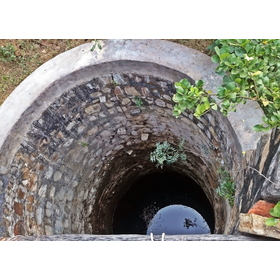
■What is the difference between well water and tap water? Tap water is treated with chemicals for sterilization, enhancing its safety, while well water is simply drawn from underground without undergoing disinfection processes. ■Is not all well water safe? Generally, well water used for drinking as "mineral water" is drawn from deep wells, which are considered to be about 30 meters or more below the surface. In contrast, water from shallow wells (within about 8 meters from the surface), commonly found in households, is not considered as safe compared to deep well water. ■Why is deep well water considered safe? Deep well water passes through multiple layers of soil before reaching the depths, providing thorough filtration. It is often sandwiched between clay layers, which can offer antibacterial effects, and it accumulates rich minerals during its journey through the soil layers. On the other hand, shallow wells are more susceptible to surface contamination due to their shallow depth, often rendering the water undrinkable. If you are having trouble managing the quality of your well water, please feel free to consult us.

  • Water purifiers/water softeners
  • Hardness Tester
  • Filtration Equipment

Added to bookmarks

Bookmarks list

Bookmark has been removed

Bookmarks list

You can't add any more bookmarks

By registering as a member, you can increase the number of bookmarks you can save and organize them with labels.

Free membership registration

Can the difference in hardness of mineral water be detected by electrical conductivity? 【Basic Knowledge】

Hardness 11 and 1468, with an electrical conductivity difference of 13 times? Verified by actual measurements!

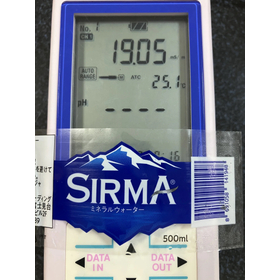
■How does electrical conductivity change with hardness? When measuring the electrical conductivity of seven types of commercially available mineral water, it was found that a product with a hardness of 11 mg/L, which is close to soft water, had an electrical conductivity of 19.05 mS/m, while a product with a very high hardness of 1468 mg/L had a conductivity of 0.243 S/m (243 mS/m), showing a significant difference. ■Why are hardness and electrical conductivity linked? Hardness is an indicator of the amount of calcium and magnesium, both of which exist as ions in water. Since electrical conductivity increases in proportion to the amount of ions in the water, water with higher hardness tends to have higher electrical conductivity as well. Conversely, this means that by measuring electrical conductivity alone, one can roughly estimate the amount of dissolved minerals in the water. ■What is the actual difference? The seven types measured this time had a hardness range of 11 to 1468 mg/L, which is more than a 130-fold difference, and the electrical conductivity varied from 19.05 mS/m to 243 mS/m, resulting in approximately a 13-fold difference. By using a conductivity meter, you can easily check the differences in water hardness numerically. If you are having trouble with water quality management, please feel free to consult us first.

  • Conductivity Meter
  • Conductivity Meter
  • Hardness Tester

Added to bookmarks

Bookmarks list

Bookmark has been removed

Bookmarks list

You can't add any more bookmarks

By registering as a member, you can increase the number of bookmarks you can save and organize them with labels.

Free membership registration

Why is the electrical conductivity of tap water not zero? 【Basic Knowledge】

Pure water is almost zero, but tap water is 10-20 mS/m? What is the reason for that!

■What is the unit of electrical conductivity "S/m"? The electrical conductivity of water is a value that indicates how easily electricity can pass through it; the larger the value, the easier it is for electricity to flow. The unit is "S/m (siemens per meter)," and it can also be expressed in terms of size as "mS/m" or "μS/cm." ■What is the electrical conductivity of tap water? It varies by region, but in Japan, the electrical conductivity of tap water is generally considered to be around 10-20 mS/m. When measured with a conductivity meter, the value can sometimes be around 20 mS/m. ■Why does tap water not have an electrical conductivity of 0? Even after purification treatment, tap water retains minerals such as calcium and magnesium as ions, which are generally explained as the source of conductivity. Pure water, which contains almost no ions, does not conduct electricity well, leading to a significant difference from the values of tap water. If you have concerns about water quality management, please feel free to consult us first.

  • Conductivity Meter
  • Conductivity Meter
  • Hardness Tester

Added to bookmarks

Bookmarks list

Bookmark has been removed

Bookmarks list

You can't add any more bookmarks

By registering as a member, you can increase the number of bookmarks you can save and organize them with labels.

Free membership registration

Why can a conductivity meter measure simply by immersion? 【Basic Knowledge】

No need for reagents to check water quality? What is the mechanism of an electrical conductivity meter!

■What is an electrical conductivity meter used for? Electrical conductivity meters are used for a wide range of water quality measurements, from environmental water such as river water to drinking water and industrial aqueous solutions used in factories. Due to their ease of use, as they only require immersion of the sensor, they are widely used for routine checks in the field. ■Why can measurements be taken just by immersing the sensor? Electrical conductivity is the inverse of the electrical resistance of a solution. By applying a voltage between the electrodes of the sensor and measuring the current that flows, the value can be obtained. Unlike water quality tests that use reagents, this allows for simple and instantaneous measurements just by immersion. ■How does the electrical conductivity meter help? Because it is easy and quick to measure, it is used as an indicator for routine water quality management in various settings such as environmental water, drinking water, and industrial wastewater. Since there is no need for reagent preparation or waiting for reactions, it is also suitable for continuous monitoring. If you have any concerns about water quality management, please feel free to consult us first.

  • Conductivity Meter
  • Conductivity Meter
  • Other water quality analysis

Added to bookmarks

Bookmarks list

Bookmark has been removed

Bookmarks list

You can't add any more bookmarks

By registering as a member, you can increase the number of bookmarks you can save and organize them with labels.

Free membership registration

Is it true that you can tell if water is clean by its electrical conductivity? [Basic Knowledge]

The more ions there are, the easier it is for electricity to flow? Tips for assessing water quality numerically!

■What does electrical conductivity represent? Electrical conductivity is a value that indicates how easily electricity flows through a substance. The more ions that are dissolved in water, the easier it is for electric current to flow, resulting in a larger value. ■How is it different from resistivity? Conversely, resistivity is an indicator that represents how difficult it is for electricity to pass through. Water with fewer ions is less conductive, so the value of resistivity increases. Electrical conductivity and resistivity are essentially two sides of the same coin. ■Why can water quality be determined by electrical conductivity? Many impurities found in natural water are electrolytes that become ions such as calcium and sodium when dissolved in water. Therefore, a higher electrical conductivity indicates a higher concentration of impurities, while a lower conductivity suggests fewer impurities. This property is utilized to easily assess the amount of impurities in water quality management. If you are having trouble with water quality management in your facilities, please feel free to consult us.

  • Ion Measurement
  • Conductivity Meter
  • Conductivity Meter

Added to bookmarks

Bookmarks list

Bookmark has been removed

Bookmarks list

You can't add any more bookmarks

By registering as a member, you can increase the number of bookmarks you can save and organize them with labels.

Free membership registration

Why is ultrapure water called "hungry water"? 【Basic Knowledge】

Water that is further refined than pure water? The surprising properties and capabilities of ultrapure water!

■What is the difference between pure water and ultra-pure water in terms of purification methods? Pure water refers to water that has undergone treatment to remove impurities from tap water, while ultra-pure water is further purified using a combination of reverse osmosis membranes, ion exchange resins, activated carbon, ultraviolet light, and ultrafiltration membranes, enhancing its specific resistivity to 18 MΩ·cm or higher. ■Why is 18 MΩ·cm the standard for ultra-pure water? Water ionizes very slightly on its own, so even if impurity ions are reduced to nearly zero, the effects of this ionization remain. Therefore, the theoretical upper limit for specific resistivity is considered to be around 18.2 MΩ·cm, which serves as the standard for ultra-pure water. ■Why is ultra-pure water referred to as "hungry water"? Ultra-pure water contains almost no impurities, making it more likely to absorb surrounding substances, which is why it is sometimes called that. This property is utilized in cleaning processes, allowing for the maximum removal of invisible ions and organic materials, and it is also used in the cleaning processes of precision equipment such as semiconductors.

  • Ultrapure water production equipment
  • Pure water production equipment
  • Pure water production equipment

Added to bookmarks

Bookmarks list

Bookmark has been removed

Bookmarks list

You can't add any more bookmarks

By registering as a member, you can increase the number of bookmarks you can save and organize them with labels.

Free membership registration

Why is industrial water separate from tap water? 【Basic Knowledge】

Industrial water is cheaper than tap water, even though it can't be consumed? The reason lies in measures against land subsidence!

■What is the difference between industrial water and tap water? Tap water is strictly managed for quality to be safe for human consumption, while industrial water is defined by the quality needed for use in factories. It is not filtered or sterilized, and only the clear liquid after removing sediments is used, making it unsuitable for drinking. However, it is supplied at a lower cost through a separate water supply network from tap water. ■Why was this separate water supply network created? In fact, this system was initiated due to the serious ground subsidence that occurred in various areas when factories excessively pumped groundwater. While the government regulated the extraction of groundwater, it established a dedicated water supply network to provide alternative sources such as river water to factories. This is why it is not subject to the Water Supply Act. ■Where is industrial water actually used? It is utilized in various situations within factories, such as for cleaning machines, cooling iron, and providing water for boilers. Beyond factories, it is also used in a wide range of scenarios, including washing trucks and in thermal power plants.

  • Water treatment equipment and technology
  • Water treatment equipment
  • boiler

Added to bookmarks

Bookmarks list

Bookmark has been removed

Bookmarks list

You can't add any more bookmarks

By registering as a member, you can increase the number of bookmarks you can save and organize them with labels.

Free membership registration

Why is the pH of pure water exactly 7? 【Basic Knowledge】

Pure water has a theoretical pH of 7, but in reality, it can vary slightly? A simple explanation of the chemistry of water!

■Why is the pH of pure water theoretically "7"? Pure water does not contain substances that can be classified as either acidic or alkaline. Water naturally ionizes very slightly, resulting in hydrogen ions that indicate acidity and hydroxide ions that indicate alkalinity being present in equal concentrations, which makes it neutral, or pH 7. ■Why does actual water deviate from pH 7? When substances that indicate acidity or alkalinity dissolve in water, that water will show acidic or alkaline properties. It is known that even pure water, which should theoretically have a pH of 7, becomes slightly acidic when it absorbs carbon dioxide from the air, resulting in a pH of about 5.6. ■How should pure water be handled to remain stable? As mentioned, pure water has a tendency to be influenced by its surrounding environment. When accurate pH values are needed for analysis or experiments, it is important to handle it carefully, such as minimizing exposure to air.

  • Water purifiers/water softeners
  • Water treatment equipment and technology
  • Pure water production equipment

Added to bookmarks

Bookmarks list

Bookmark has been removed

Bookmarks list

You can't add any more bookmarks

By registering as a member, you can increase the number of bookmarks you can save and organize them with labels.

Free membership registration

Why is pure water widely used? 【Basic Knowledge】

Pure water is active from boilers to scientific experiments! Here’s an explanation of why it is chosen!

■What is pure water used for? Pure water is utilized in a wide range of applications, taking advantage of its low impurity characteristics, not only as experimental water in the fields of physics and chemistry but also in the production of boiler water and drinking water. ■Why is pure water suitable for boiler water? Calcium carbonate has the property of becoming less soluble as temperature increases, which causes scale buildup in boilers. Since pure water has impurities like calcium removed in advance, this phenomenon is less likely to occur, making scale residue less common. ■Why is pure water used in physical and chemical experiments? Pure water has the characteristic of being able to dissolve substances effectively due to the absence of impurities. Thanks to this property, it is easy to handle reagents and samples accurately, and the presence of extra components is less likely to affect the results, making it widely chosen as water for physical and chemical experiments.

  • Water purifiers/water softeners
  • Water treatment equipment and technology
  • Pure water production equipment

Added to bookmarks

Bookmarks list

Bookmark has been removed

Bookmarks list

You can't add any more bookmarks

By registering as a member, you can increase the number of bookmarks you can save and organize them with labels.

Free membership registration

What is the difference between pure water and tap water? 【Basic Knowledge】

Why is pure water "zero impurities"? An explanation of how purity is measured using resistivity!

■What is the difference between pure water and tap water? Tap water contains minerals such as calcium and magnesium, chlorine for disinfection, and aluminum used in the purification process. On the other hand, pure water is water from which such impurities (ions and foreign substances) have been removed, and it is theoretically considered safe to drink as it does not contain harmful substances for the human body. ■How is the purity of pure water measured? The purity of water is generally measured by its "specific resistivity," which indicates how difficult it is for electricity to pass through. The fewer ions present in the water, the harder it is for electricity to pass through, so a higher specific resistivity indicates higher purity. Generally, water with a specific resistivity of 18.2 MΩ·cm or more is called "ultrapure water," while water with 0.2 MΩ·cm or more is referred to as "pure water." ■Is it really safe to drink pure water? Some experts point out that because pure water lacks impurities, it has a strong ability to dissolve surrounding substances, which could potentially leach minerals that the body retains. While this is not a medically established theory, it is good to be aware that such views exist.

  • Water purifiers/water softeners
  • Water treatment equipment and technology
  • Pure water production equipment

Added to bookmarks

Bookmarks list

Bookmark has been removed

Bookmarks list

You can't add any more bookmarks

By registering as a member, you can increase the number of bookmarks you can save and organize them with labels.

Free membership registration

What are the reasons for getting an upset stomach from overseas water? 【Basic Knowledge】

Have you ever experienced stomach pain or frizzy hair while abroad? The cause was the hardness of the water!

■Why can drinking water abroad cause stomach issues? Japanese tap water is soft, but in many countries overseas, the water is hard and contains high levels of minerals like calcium and magnesium. Magnesium is not absorbed much in the intestines, and the portion that remains in the intestines has the effect of drawing in water (osmotic effect), which makes Japanese people, who are not accustomed to hard water, more prone to stomach pain and diarrhea. ■Why does hair become frizzy after showering abroad? The calcium and magnesium in hard water combine with soap components to create insoluble soap scum. When this residue remains on the hair and scalp, it negatively affects the texture after washing, making the hair feel rough and frizzy. ■What should you be careful about when choosing mineral water abroad? Since many mineral waters sold overseas are hard, it is recommended to check the hardness on the label when purchasing. According to Japanese standards, water with a hardness of 100 mg/L or more is considered hard, and the higher the value, the greater the burden on the stomach and intestines.

  • Water purifiers/water softeners
  • Water treatment equipment and technology
  • Simple water quality test

Added to bookmarks

Bookmarks list

Bookmark has been removed

Bookmarks list

You can't add any more bookmarks

By registering as a member, you can increase the number of bookmarks you can save and organize them with labels.

Free membership registration

Are there few countries where tap water can be drunk as is? 【Basic Knowledge】

Why is tap water in Japan safe all the way to the faucet? An explanation of the differences with water conditions around the world!

■Why can tap water in Japan be drunk as is? In Japan's water purification plants, the processes of sedimentation and filtration are thoroughly conducted to remove turbidity and microorganisms, followed by chlorine disinfection. Some facilities combine advanced treatments to eliminate odor-causing substances, and strict process management supports safety. ■What is the mechanism that ensures safe water reaches the tap? In fact, regulations under the Water Supply Act require that a certain concentration of chlorine remains in the water that comes out of the tap. This residual chlorine prevents the growth of bacteria in the pipes after leaving the purification plant, and the presence of chlorine smell in tap water can be considered a sign of safety. ■Why can't tap water be drunk in many countries? The high costs associated with establishing water purification facilities and piping networks are considered a factor, as countries lacking sufficient funds and technology struggle to keep up with the necessary infrastructure. It is said that many people around the world still do not have access to safe drinking water.

  • Water purifiers/water softeners
  • Water treatment equipment and technology
  • Simple water quality test

Added to bookmarks

Bookmarks list

Bookmark has been removed

Bookmarks list

You can't add any more bookmarks

By registering as a member, you can increase the number of bookmarks you can save and organize them with labels.

Free membership registration

Is silica water good for the body? What are the precautions for consumption? [Basic Knowledge]

Does silica play a role in the function of collagen that supports bones and skin? Explanation of features and precautions!

■What is the difference between silica water and mineral water? General mineral water contains minerals such as calcium, magnesium, and sodium, while silica water contains these along with the rare mineral silica (silicon). ■Why is silica said to be good for the body? Silicon is thought to play a supportive role in the enzymes that produce collagen, which supports bones and skin, and research has reported its connection to maintaining bone health. Its involvement with skin and blood vessels has also been pointed out, but this area is still under research. ■Why is it important to be cautious about excessive mineral intake? Most of the minerals consumed are excreted as urine, but if the amount is too high, it can put a burden on the kidneys and other organs responsible for excretion. It is important to maintain an appropriate intake of all minerals, including silica.

  • Water purifiers/water softeners
  • Water treatment equipment and technology
  • Pure water production equipment

Added to bookmarks

Bookmarks list

Bookmark has been removed

Bookmarks list

You can't add any more bookmarks

By registering as a member, you can increase the number of bookmarks you can save and organize them with labels.

Free membership registration

What are the reasons soft water is gentle on the body and hair? 【Basic Knowledge】

Why is soft water gentle on the stomach and hair? There is also a reason for its compatibility with soap!

■Why is soft water said to be gentle on the organs? Soft water is characterized by its low magnesium content. Magnesium is not absorbed much in the intestines, and the portion that remains in the intestines has the ability to draw in water (osmotic effect), which is why soft water, with its low content, is considered to be less burdensome even for infants with weak digestive systems. ■Why does soft water produce better soap lather? Calcium and magnesium have the property of binding with soap components to create insoluble "soap scum." Since soft water has lower levels of these components, it allows for better lathering of soap and reduces the likelihood of residue on hair and skin. ■What happens if soap scum remains on the skin or hair? Skin experts point out that deposits like soap scum can irritate the skin and worsen problems. It is also believed that the tendency for calcium to remain in the hair when washed with hard water is related to the same mechanism.

  • Water purifiers/water softeners
  • Water treatment equipment and technology
  • Water quality improvement

Added to bookmarks

Bookmarks list

Bookmark has been removed

Bookmarks list

You can't add any more bookmarks

By registering as a member, you can increase the number of bookmarks you can save and organize them with labels.

Free membership registration

What are the benefits and precautions of hard water? 【Basic Knowledge】

Hard water, which is supposed to be good for beauty, why does it taste "bad" and cause "loose stomach"? Here's an explanation of the reasons!

■Why is hard water said to be good for beauty and health? The calcium abundant in hard water is believed to promote fat burning, making it appealing as it can simultaneously replenish the fluids and minerals that are often lacking during a diet. Additionally, calcium is expected to bind with fatty acids in the intestines, creating a soap-like substance that is difficult to dissolve, which may help reduce fat absorption. ■Why do some people find hard water "tastes bad"? The mouth has bitter taste sensors (receptors) that react to metal ions, and it has been found that calcium and magnesium ions directly stimulate these sensors. Water that contains higher levels of sodium and calcium tends to be perceived as more bitter. ■What happens if you consume too much magnesium? Magnesium is not absorbed much in the intestines, and the portion that remains in the intestines has the property of drawing in water (osmotic pressure), which can lead to a loose stomach. If consumed in excess, this effect can be pronounced, resulting in diarrhea, which may lead to dehydration, so caution is necessary.

  • Water purifiers/water softeners
  • Water treatment equipment and technology
  • Simple water quality test

Added to bookmarks

Bookmarks list

Bookmark has been removed

Bookmarks list

You can't add any more bookmarks

By registering as a member, you can increase the number of bookmarks you can save and organize them with labels.

Free membership registration

What is the difference between hard water and soft water? 【Basic Knowledge】

Does the name change for the same water between "hard water" and "soft water"? Explaining the secrets of hardness and scale prevention!

■What is the difference between hard water and soft water? "Hardness" is an indicator that represents the total amount of calcium and magnesium contained in water. These two elements react with soap in water and tend to create insoluble soap scum, making them components that have historically been used as a standard for hardness due to their potential to cause equipment troubles. ■Are the standards for hardness different by country? In Japan, water with a hardness of less than 100 mg/L is called "soft water," while water with 100 mg/L or more is called "hard water." On the other hand, the WHO guidelines classify water more finely: less than 60 mg/L is "soft water," 60 to less than 120 mg/L is "moderately soft water," 120 to less than 180 mg/L is "hard water," and 180 mg/L or more is "very hard water." ■Why are boilers troubled by "scale"? Calcium carbonate has properties that are opposite to many substances. While most substances dissolve more easily in water as the temperature rises, calcium carbonate becomes less soluble as the temperature increases. Therefore, when water is heated and concentrated in a boiler, the calcium that cannot dissolve adheres to pipes and heat transfer surfaces as scale. Facilities that use hard water require diligent water quality management.

  • Water purifiers/water softeners
  • Water Treatment Chemicals
  • Water treatment equipment and technology

Added to bookmarks

Bookmarks list

Bookmark has been removed

Bookmarks list

You can't add any more bookmarks

By registering as a member, you can increase the number of bookmarks you can save and organize them with labels.

Free membership registration

Why does carryover occur? [Basic Knowledge]

What are the chain failures that occur when neglecting to blow down? From alkaline corrosion to scaling.

■What is carryover? Carryover occurs when dissolved salts and suspended solids in boiler water become concentrated. Carryover is the phenomenon where water droplets and impurities in the boiler water are carried out with the steam to the outside of the boiler (steam system side). ■Why does low water level occur frequently? The occurrence of carryover can lead to frequent low water levels. This is thought to happen because the water droplets that are carried out mix with the water level detection sensors, causing them to mistakenly recognize the water level as higher than it actually is, which restricts the water supply and results in a lower actual water level. ■What issues arise during chemical injection and scale formation? When chemicals are injected, the pH can rise too high, leading to alkaline corrosion. If hardness is leaking, scale adhesion can increase rapidly. Scale adhesion can potentially cause localized overheating. ■What happens if left unattended? Sludge and detached scale can lead to blockages in water pipes and valves. Neglecting to blow down can cause these issues to occur in a chain reaction. Please feel free to consult us first.

  • Water Treatment Chemicals
  • boiler
  • Boiler

Added to bookmarks

Bookmarks list

Bookmark has been removed

Bookmarks list

You can't add any more bookmarks

By registering as a member, you can increase the number of bookmarks you can save and organize them with labels.

Free membership registration

What is boiler blowdown? 【Basic Knowledge】

Why is canned water concentrated? An explanation of the roles of continuous blow and bottom blow.

■What is blowdown? Blowdown is the process of discharging a portion of the boiler water from the bottom of the boiler to keep the concentration of hardness within permissible limits. If the blowdown amount is excessive, it results in significant heat loss and unnecessarily wastes water (leading to extra make-up water). ■Why does boiler water become concentrated? A boiler heats water to produce steam, but impurities such as hardness that were dissolved in the water do not transfer to the steam and remain in the boiler water. As evaporation continues, the ratio of impurities in the remaining water increases, so blowdown is the measure taken to discharge this water and dilute the concentration. ■What are the differences between the two types of blowdown? In addition to continuous blowdown, there is also bottom blowdown in boilers. Continuous blowdown: This is the constant discharge during operation. Bottom blowdown: This is used to remove scale and sludge that accumulate at the bottom of the boiler during shutdown. They are differentiated by their roles: continuous blowdown serves to continuously dilute from areas prone to water quality deterioration, while bottom blowdown is used to remove settled solids all at once. ■How is the blowdown amount determined? Generally, a method is employed where the electrical conductivity is measured, and if it exceeds a pre-set standard value, the blowdown amount is automatically adjusted. Please feel free to consult with us.

  • Water Treatment Chemicals
  • boiler
  • Boiler

Added to bookmarks

Bookmarks list

Bookmark has been removed

Bookmarks list

You can't add any more bookmarks

By registering as a member, you can increase the number of bookmarks you can save and organize them with labels.

Free membership registration

Why do once-through boilers become unstable? [Basic Knowledge]

Is the rapid steam generation and instability caused by the same factor? An explanation of the structure of a once-through boiler.

■What is the structure of a once-through boiler? It is a type of boiler composed of pipes, where water is fed in from one side and steam is extracted from the other. It has a small water capacity, allowing for quick steam generation. Additionally, it is compact, requiring less installation space for the boiler. ■Why can it produce steam quickly? Having a small water capacity means there is less water to heat. The less water there is to warm, the quicker it can reach boiling and vaporization. Therefore, both water tube boilers and once-through boilers have the advantage of being able to produce steam relatively quickly compared to cylindrical boilers. ■Does this also make it unstable for the same reason? On the other hand, having a small water capacity means there is also less water reserve to maintain pressure and water level when the steam usage suddenly changes. As a result, pressure and water levels can fluctuate easily due to load variations, making operation more unstable, which requires quick control measures such as adjusting the feed water flow. ■Summary The same characteristic of having a "small water capacity" creates both the advantage of quick steam production and the disadvantage of potential operational instability. Please feel free to consult with us first.

  • boiler
  • Boiler
  • Water Treatment Chemicals

Added to bookmarks

Bookmarks list

Bookmark has been removed

Bookmarks list

You can't add any more bookmarks

By registering as a member, you can increase the number of bookmarks you can save and organize them with labels.

Free membership registration

How to choose a filtration method? [Basic knowledge]

Is the optimal method different for river water and well water? An explanation of how to choose a filtration system.

■What types of filtration methods are there? There are various types of filtration methods, including coagulation sedimentation, coagulation filtration, activated carbon filtration, sand filtration, iron and manganese removal filtration, and fiber filtration. We can propose the optimal equipment according to the raw water supplied (river water, well water, industrial water, tap water, etc.) and the required water quality. ■Why change the method depending on the raw water? Generally, river water tends to contain a lot of turbidity (suspended solids), making coagulation sedimentation and coagulation filtration suitable. Well water, influenced by underground components, tends to contain iron and manganese, making iron and manganese removal filtration appropriate. Activated carbon filtration primarily removes chlorine and organic matter, while sand filtration mainly removes turbidity. ■How does a soft water system differ from filtration? A soft water system uses ion exchange resin to replace hardness components (calcium ions, magnesium ions) in water with sodium ions, producing soft water. Its main role is to serve as a pretreatment facility for boiler water and pure water systems. ■Why is pretreatment necessary? If hardness components are not removed beforehand, they can cause scaling issues in boilers and place unnecessary strain on subsequent treatments in pure water systems. Please feel free to consult with us first.

  • Filtration Equipment
  • Water purifiers/water softeners
  • Water Treatment Chemicals

Added to bookmarks

Bookmarks list

Bookmark has been removed

Bookmarks list

You can't add any more bookmarks

By registering as a member, you can increase the number of bookmarks you can save and organize them with labels.

Free membership registration

Why can ion exchange resins be regenerated? [Basic Knowledge]

Can table salt be used multiple times? The regeneration principle of ion exchange resin and exchange guidelines.

■Why does a water softener stop working? As a water softener is used, calcium and other hardness components are adsorbed by the ion exchange resin, and when it can no longer adsorb any more, it stops producing soft water. ■Why can it be used repeatedly? The ion exchange resin can be regenerated by passing saltwater through it, allowing it to be used multiple times. The only requirement for regeneration is salt, which makes it very cost-effective to produce soft water. The main feature of ion exchange resin is that it can release the ions it has captured and return them to the original ions before exchange. This process is called "regeneration," and by regenerating, the ion exchange resin that has been used once can be reused repeatedly. ■Why does it still degrade? Even with repeated use, factors such as wear from the expansion and contraction of the resin beads, contamination from iron in the water, and oxidation from chlorine work together, gradually reducing the exchange capacity. ■What is the guideline for replacement? In a typical usage environment, it can be used for over a year while performing regeneration as needed (approximately 5% degradation per year). It is recommended to perform a complete replacement every 2 to 3 years. Please feel free to consult with us first.

  • Water purifiers/water softeners
  • Water Treatment Chemicals
  • boiler

Added to bookmarks

Bookmarks list

Bookmark has been removed

Bookmarks list

You can't add any more bookmarks

By registering as a member, you can increase the number of bookmarks you can save and organize them with labels.

Free membership registration

What is the difference between softening water and purifying water? 【Basic Knowledge】

Does water made with a softener contain sodium? The difference between the mechanisms of softening and purifying water.

■What is a softener? A softener is a device that converts hard water into soft water by passing it through an ion exchange resin, which removes hardness components such as calcium and magnesium. These hardness components can crystallize and form scale, leading to reduced heat transfer efficiency in boilers and clogging in pipes. ■What is the mechanism of ion exchange resin? Ion exchange resin is a type of resin that performs ion exchange by capturing ions present in water and releasing the ions it originally holds in exchange. ■Are soft water and pure water the same? Generally, softening using only cation exchange resin replaces calcium and magnesium with sodium, so sodium itself remains in the water. In contrast, by combining cation exchange resin with anion exchange resin, it is possible to produce purer water by removing both cations like calcium and magnesium and anions like chlorine and carbonate found in tap water. ■Summary While softening and purification are similar, their mechanisms are different. It is important to select the right device according to your needs. Please feel free to consult us first.

  • Water purifiers/water softeners
  • Water Treatment Chemicals
  • boiler

Added to bookmarks

Bookmarks list

Bookmark has been removed

Bookmarks list

You can't add any more bookmarks

By registering as a member, you can increase the number of bookmarks you can save and organize them with labels.

Free membership registration

What is the pH regulation of boiler blowdown? [Basic Knowledge]

Why is neutralization necessary for alkaline corrosion-resistant water? An explanation of the standards of the Sewerage Act and the Water Pollution Control Act.

■ What regulations exist for boiler wastewater? There are additional regulations regarding the water quality standards for boiler wastewater under the Sewerage Act, the Water Pollution Control Act, and municipal ordinances. The Sewerage Act and the Water Pollution Control Act stipulate that the pH must be discharged between 5.8 and 8.6. ■ Why is the standard set around neutral? It is generally said that strongly acidic or alkaline wastewater can corrode sewer pipes and weaken the activity of microorganisms that clean wastewater at treatment plants. By establishing standards close to neutral, it is believed that such impacts are prevented. ■ Why is neutralization necessary? As mentioned previously, it is desirable to maintain the pH of boiler water between 11.0 and 11.8 for corrosion prevention inside the boiler. Therefore, high pH blowdown water must be neutralized before discharge, as discharging it directly would exceed the standards. ■ How is neutralization done? Typically, the pH of alkaline wastewater is lowered by adding an acid to adjust it within the standard values. Please feel free to consult us for more information.

  • Water Treatment Chemicals
  • Wastewater treatment equipment, technology and maintenance
  • boiler

Added to bookmarks

Bookmarks list

Bookmark has been removed

Bookmarks list

You can't add any more bookmarks

By registering as a member, you can increase the number of bookmarks you can save and organize them with labels.

Free membership registration

Why is boiler condensate prone to corrosion? [Basic Knowledge]

Is higher purity more prone to corrosion? Reasons for managing boiler water at around pH 11.

■Why is steam and condensate prone to corrosion? Boiler steam has a low level of impurities, making it easy for iron ions and copper ions to dissolve. Generally, high-purity water with few impurities has a poor buffering capacity to neutralize acids, and even a small amount of acidic components can significantly lower the pH, thereby increasing its corrosive nature that can dissolve metals. ■Why does the pH of condensate decrease? Condensate that has been heat exchanged and condensed tends to dissolve oxygen and carbon dioxide (CO2) easily. When CO2 dissolves in water, it forms carbonic acid, which lowers the pH. This decrease in pH is a cause of corrosion in piping. ■Why does maintaining alkalinity help prevent corrosion? Maintaining the pH of boiler water between 11.0 and 11.8 is considered desirable for corrosion prevention. In the alkaline range, a dense oxide film (magnetite) forms on the surface of iron, which is thought to protect the metal and suppress corrosion. ■What are some often-overlooked points of caution? Since the steam line is not included in the annual boiler performance inspection items, it requires attention from the management side. Please feel free to consult us first.

  • Water Treatment Chemicals
  • boiler
  • Boiler

Added to bookmarks

Bookmarks list

Bookmark has been removed

Bookmarks list

You can't add any more bookmarks

By registering as a member, you can increase the number of bookmarks you can save and organize them with labels.

Free membership registration

What is ion exchange in soft water systems? [Basic Knowledge]

Why is hard water the source of scale? An explanation of WHO standards and the mechanism of ion exchange.

■What is the role of a soft water system? To prevent scale buildup, it is necessary to remove the hardness components from the water supplied to the boiler. When hard water (water containing hardness components) passes through a soft water system, the hardness components are removed, resulting in soft water (water without hardness components). ■What is water hardness? In simple terms, water that contains relatively high levels of calcium and magnesium is considered hard water. According to the WHO (World Health Organization) standards, it is defined as follows: - Less than 60 mg/l: "soft water" - Between 60 and 120 mg/l: "moderately soft water" - Between 120 and 180 mg/l: "hard water" - 180 mg/l or more: "very hard water" ■How is hardness removed? A typical soft water system works by using ion exchange resin to replace calcium and magnesium ions in the water with sodium ions. Since sodium is less likely to cause scale, the water that passes through becomes soft water. When the resin's exchange capacity decreases, it is regenerated by passing brine through it for repeated use. ■Summary Hardness components are often overlooked because they are not visible, but they are an important factor in the foundation of scale prevention for boilers. Please feel free to consult with us first.

  • Water purifiers/water softeners
  • Water Treatment Chemicals
  • boiler

Added to bookmarks

Bookmarks list

Bookmark has been removed

Bookmarks list

You can't add any more bookmarks

By registering as a member, you can increase the number of bookmarks you can save and organize them with labels.

Free membership registration

Boiler scale removal, why is it labor-intensive? 【Basic Knowledge】

If the corrosiveness is low, is monitoring unnecessary? The concept of boiler chemicals.

■Why was traditional scale removal labor-intensive? Traditional scale removal required the addition of a separate scale remover in addition to the usual boiler chemicals when scale attachment was confirmed. During this process, monitoring had to be conducted to prevent corrosion of the boiler heat transfer surfaces. ■Why was monitoring necessary? Generally, the agents used to dissolve scale not only react with scale components like calcium carbonate but also with the steel of the boiler base material. Therefore, it was necessary to continuously monitor the state of the chemical solution to avoid excessive dissolution of the base material. ■What changes if the chemicals have low corrosiveness? Certain boiler chemicals have very low corrosiveness and can be applied under normal operating conditions without the need for special monitoring. If the risk of corrosion to the base material itself is low, the effort of monitoring to prevent it becomes unnecessary. ■What can be achieved with a single chemical? There are chemicals that can prevent scale attachment, remove attached scale, and also handle high-concentration operations such as silica, all with just one product. Please feel free to consult us first.

  • Water Treatment Chemicals
  • boiler
  • Boiler

Added to bookmarks

Bookmarks list

Bookmark has been removed

Bookmarks list

You can't add any more bookmarks

By registering as a member, you can increase the number of bookmarks you can save and organize them with labels.

Free membership registration

What are the measures for freezing in cooling towers by location? 【Basic Knowledge】

Piping, valves, flow meters... An explanation of freeze prevention measures around cooling towers by location.

■Why are measures different depending on the location? The freezing prevention measures for cooling towers change depending on whether the water is moving or stagnant. Generally, water is less likely to freeze as long as it continues to circulate, while stagnant water has a higher risk of freezing. The measures can be divided into three patterns: continue circulating, drain the water, or insulate. ■What are the specific measures for each location? Insulation material is wrapped around the piping on the supply water side. For closed cooling towers, either keep the circulation pump running or drain the closed side cooling water. The backup circulation pump, which is currently stopped, should either have the water drained or be wrapped in insulation material. Insulation material is also wrapped around cast iron valves and glass flow meters. For faucets where the water flow has stopped, either leave it slightly open or wrap it in insulation material. ■What is the common approach? The commonality among the six locations is the idea of either "keeping it moving," "draining," or "insulating," which prevents the conditions for water to freeze (stagnation and low temperature). Equipment that is stopped is often overlooked, so caution is necessary. ■Summary The state of water around cooling towers varies by location, and uniform measures are insufficient. Taking measures while checking the condition of each piece of equipment is key to preventing freezing damage. Please feel free to consult us first.

  • Water Treatment Chemicals
  • cooling tower
  • Chiller

Added to bookmarks

Bookmarks list

Bookmark has been removed

Bookmarks list

You can't add any more bookmarks

By registering as a member, you can increase the number of bookmarks you can save and organize them with labels.

Free membership registration

What is cooling tower scale? 【Basic Knowledge】

Does it become concentrated enough to evaporate water? An explanation of the nature of cooling tower scale.

■What is scale? Cooling towers can develop scale over long periods of use. Scale is the accumulation of "minerals" such as calcium and magnesium. Specifically, it includes calcium, magnesium, silica, and iron. ■Why does scale form? Cooling towers operate by evaporating a portion of the water, using the heat of vaporization to cool the remaining water. Only water molecules evaporate, leaving the minerals behind, which increases the concentration of minerals in the water as the cycle repeats. This "evaporation concentration" causes the minerals to become insoluble, resulting in the crystallization that forms scale. ■Where and what kind of damage occurs? Scale can attach not only inside the cooling tower but also to heat exchangers, copper pipes, and plumbing. If not detected early, the damage could become significant. Scale issues can severely reduce the cooling tower's efficiency and corrode metals. ■What are the key points for countermeasures? As long as cooling towers are in use, scale removal is essential. Regular water quality management and periodic inspections and cleaning are crucial to prevent efficiency loss and corrosion. Please feel free to consult us first.

  • Water Treatment Chemicals
  • cooling tower
  • Chiller

Added to bookmarks

Bookmarks list

Bookmark has been removed

Bookmarks list

You can't add any more bookmarks

By registering as a member, you can increase the number of bookmarks you can save and organize them with labels.

Free membership registration

What are the measures to prevent freezing in cooling towers? [Basic Knowledge]

Does water expand by about 9% when it freezes? Key points to prevent freezing damage in cooling towers.

■Why are cooling towers prone to freezing? Water freezes when it drops below 0 degrees Celsius (freezing point). Cooling towers are designed to spray water into the air and cool it through evaporation, making circulating water, spray water, and makeup water easily exposed to outside air and wind. This creates a risk of freezing, especially during winter. It is generally said that it is too late to address freezing issues once they occur. ■Why do devices break when freezing occurs? When water freezes and turns into ice, it is said to expand in volume by about 9 percent. If this expansion occurs within pipes, it can cause a rapid increase in internal pressure, leading to damage to the pipes and fittings. The reason freezing damage is considered "too late once it happens" lies in this physical phenomenon of volume expansion. ■What happens if freezing is left unattended? If the circulating water, spray water, and makeup water in the cooling tower freeze, it can render the cooling tower inoperable, prolong recovery time, and result in significant costs. What actions to take to prevent freezing becomes a crucial key point. ■What preparations can be made regularly? In addition to managing the water quality of the cooling water system, during periods when freezing is a concern, it is important to maintain operations without stopping the circulating water and to insulate the pipes. Regular preparations are key to preventing damage. Please feel free to consult with us first.

  • Water Treatment Chemicals
  • cooling tower
  • Chiller

Added to bookmarks

Bookmarks list

Bookmark has been removed

Bookmarks list

You can't add any more bookmarks

By registering as a member, you can increase the number of bookmarks you can save and organize them with labels.

Free membership registration

What is the route of infection for Legionella bacteria? [Basic Knowledge]

Hot springs, baths, and showers also require caution? An explanation of the infection routes of Legionella bacteria.

■What kind of environment does Legionella bacteria prefer? Legionella bacteria thrive in "humid and warm environments." They can survive at 50 degrees Celsius for several hours and cannot multiply below 20 degrees. Approximately 35 degrees is considered the most suitable temperature for survival, making hot springs and bathing facilities ideal environments for Legionella bacteria. The water temperature in air conditioning cooling systems typically ranges from 10°C to 40°C, which is close to the optimal temperature for their proliferation. ■How do infections occur? Legionnaires' disease occurs when bacteria that have proliferated in cooling water are aerosolized from cooling towers, or when bacteria that have grown in water circulation systems or on the surfaces of bathtubs and hot tubs are inhaled through shower sprays or bubbles from jacuzzi baths. ■What are the common risks? Not only cooling towers but also hot springs, bathing facilities, showers, and jacuzzi baths are not free from the risk of Legionella bacteria. ■How can risks be prevented? Managing the water temperature of cooling water and preventing the growth of slime are key points in daily water quality management to prevent the proliferation of Legionella species. Please feel free to consult us.

  • Water Treatment Chemicals
  • cooling tower
  • Chiller

Added to bookmarks

Bookmarks list

Bookmark has been removed

Bookmarks list

You can't add any more bookmarks

By registering as a member, you can increase the number of bookmarks you can save and organize them with labels.

Free membership registration

How to inspect a cooling tower? 【Basic Knowledge】

Once a month and once a year, a gentle explanation of the legal inspection items for cooling towers.

■What inspection obligations are there for cooling towers? Inspections of cooling towers are required to be conducted once at the start of use and once within one month after starting use, regularly checking the condition of dirt and performing cleaning or water replacement as necessary. However, periods of non-use exceeding one month are excluded from this requirement. Additionally, cleaning of the cooling tower, water pipes, and humidifying devices must be done regularly once within a year. ■What should be checked during inspections? The operational condition of the drive mechanism, adjustment of the V-belt, gear oil level of the reduction gear, and the presence of vibrations or abnormal sounds should be checked. For the upper water tank, in square cooling towers, the clogging of the spray holes should be inspected, and in round cooling towers, the adjustment of rotation should be checked. ■How is water quality checked? In addition to checking for carryover, the water quality of circulating water and make-up water is tested by measuring conductivity. ■What happens if inspections are neglected? Neglecting inspections can lead to various risks being overlooked, such as the accumulation of scale and slime, and the proliferation of Legionella bacteria. Please feel free to consult us first.

  • Water Treatment Chemicals
  • cooling tower
  • Chiller

Added to bookmarks

Bookmarks list

Bookmark has been removed

Bookmarks list

You can't add any more bookmarks

By registering as a member, you can increase the number of bookmarks you can save and organize them with labels.

Free membership registration

What are cooling towers and Legionella bacteria? [Basic Knowledge]

Why do they parasitize and multiply in amoebas? An explanation of the risks and symptoms of Legionella bacteria.

■Why do Legionella bacteria increase in cooling towers? The water temperature in air conditioning cooling water systems generally ranges from 10°C to 40°C. The optimal temperature for the growth of Legionella bacteria is around 36°C (the temperature range for proliferation is 25°C to 43°C), and from May to September, the water temperature in cooling systems approaches the optimal temperature for the proliferation of Legionella bacteria. ■How do Legionella bacteria proliferate? Legionella bacteria are known to proliferate by parasitizing amoebas. Environments where slime develops on the cooling tower itself or on the walls of pipes are believed to promote the growth of Legionella bacteria. ■What is Legionnaires' disease? The main forms of Legionnaires' disease are severe Legionella pneumonia and mild Pontiac fever. Legionella pneumonia begins with symptoms such as general fatigue, headache, loss of appetite, and muscle pain, and can progress to coughing, high fever above 38°C, chills, chest pain, and difficulty breathing. Rarely, symptoms outside the lungs, such as myocarditis, may also occur. ■How can risks be prevented? Regular water quality management, such as controlling the water temperature and preventing slime formation, is key to preventing the proliferation of Legionella bacteria. Please feel free to consult us for more information.

  • Water Treatment Chemicals
  • cooling tower
  • Chiller

Added to bookmarks

Bookmarks list

Bookmark has been removed

Bookmarks list

You can't add any more bookmarks

By registering as a member, you can increase the number of bookmarks you can save and organize them with labels.

Free membership registration

Why is cleaning the cooling tower necessary? 【Basic Knowledge】

The essential reasons for reducing electricity costs, addressing Legionella, and cleaning cooling towers.

■What changes with cooling tower cleaning? The purpose of cleaning a cooling tower is to remove dirt, but it ultimately contributes to maintaining the cooling tower's capacity. When scale and slime accumulate, the heat exchange efficiency decreases, and the load on fans and pumps increases. Therefore, if cleaning improves the performance of the equipment, it can reduce power consumption and lead to lower electricity costs. ■Why are legal measures necessary? If air conditioning equipment is installed, measures must be taken to prevent indoor air from being contaminated by pathogens. This is to address the "Legionella" bacteria that can cause Legionnaires' disease. According to the Building Sanitation Law, regular inspections and cleaning of cooling towers and cooling water are required for applicable buildings. ■How often should cleaning be done? Generally, cleaning and water replacement should be done at least once a year. If dirt in the cooling tower is left unattended, it can lead to inadequate hygiene management, making regular cleaning essential not only for maintaining capacity but also for infection control. Please feel free to consult us first.

  • Water Treatment Chemicals
  • cooling tower
  • Chiller

Added to bookmarks

Bookmarks list

Bookmark has been removed

Bookmarks list

You can't add any more bookmarks

By registering as a member, you can increase the number of bookmarks you can save and organize them with labels.

Free membership registration

What is the impact of scale impairment? 【Basic Knowledge】

Is it just a decrease in thermal efficiency? The cost increase and pipe corrosion caused by scale issues.

■What happens with scale problems? When scale adheres to the pipes, the water flow through the pipes decreases, and the heat exchange efficiency significantly declines. When a "scale problem" occurs, it becomes impossible to heat or cool the water to the required temperature, and the heat exchanger can no longer perform its intended function. ■Why do operating costs increase? When a scale problem occurs, it becomes necessary to set the temperature of the heat source higher than before to ensure the required heat exchange, which increases operating costs. ■How does it affect fuel consumption? As the energy consumption for heat in the heat exchanger rises, the consumption of electricity, gas, heavy oil, and other energy sources increases, leading to unnecessary costs. Additionally, the rise in energy consumption puts a load on the heat exchanger itself, which can lead to various failures. ■What impact does it have on the piping? Scale problems can cause a decrease in water flow velocity, clogging of the pipes, and backflow of water. The adherence and accumulation of scale in the pipes can lead to premature deterioration and eventually corrosion. Please feel free to consult us first.

  • Water Treatment Chemicals
  • cooling tower
  • Chiller

Added to bookmarks

Bookmarks list

Bookmark has been removed

Bookmarks list

You can't add any more bookmarks

By registering as a member, you can increase the number of bookmarks you can save and organize them with labels.

Free membership registration

Why is water treatment for cooling towers necessary? 【Basic Knowledge】

Reasons why water treatment agents are necessary for corrosion, slime, scale, and Legionella prevention.

■What happens if cooling water is left untreated? If cooling water circulating in a cooling tower is operated without treatment, it may lead to the occurrence of what are called the "three major issues" in the cooling water system: corrosion, slime, and scale. Corrosion issues arise from the corrosion of metals, scale issues are caused by the deposition of minerals, and slime issues occur due to the attachment of algae and bacteria, which can lead to a decline in equipment performance and the risk of sudden operational shutdowns. ■What is the problem with Legionella bacteria? If cooling water is left unattended, it can lead to the growth of "Legionella bacteria," which causes Legionnaires' disease. Cooling towers are considered to be conducive to the proliferation of Legionella bacteria due to water temperature and quality conditions, and the Ministry of Health, Labour and Welfare continuously calls for proper management of cooling towers. ■Why are water treatment agents necessary? To prevent these issues and health risks, it is necessary to not only perform rust prevention, scale prevention, and slime control but also to manage water quality with an awareness of Legionella bacteria. For this purpose, water treatment agents are used. Please feel free to consult with us.

  • Water Treatment Chemicals
  • cooling tower
  • Chiller

Added to bookmarks

Bookmarks list

Bookmark has been removed

Bookmarks list

You can't add any more bookmarks

By registering as a member, you can increase the number of bookmarks you can save and organize them with labels.

Free membership registration

What are the benefits of using water treatment chemicals? 【Basic Knowledge】

Why can using chemicals save water? An explanation of the benefits of water treatment for cooling water.

■What are the benefits of using water treatment chemicals? Using water treatment chemicals in cooling water can reduce the risk of performance degradation and unexpected operational shutdowns caused by various issues such as scale buildup and corrosion. It helps maintain heat exchange efficiency, preventing energy loss, and by keeping the system clean, it also reduces the effort required for cleaning tasks. ■How does it lead to water conservation? As cooling water evaporates, the components in the water become concentrated, so typically, the concentration is managed within a certain range through makeup water and blowdown (drainage). If the risks of scale and corrosion can be controlled with water treatment chemicals, operations can continue at a higher concentration, allowing for a reduction in the amount of makeup water and blowdown, which ultimately leads to water conservation. ■What are the hygiene benefits? In cooling water systems, slime caused by algae and bacteria can occur. Generally, in such water systems like cooling towers, the risk of microorganisms such as Legionella is known, and keeping the system clean is considered to reduce health risks. Please feel free to consult with us first.

  • Water Treatment Chemicals
  • cooling tower
  • Chiller

Added to bookmarks

Bookmarks list

Bookmark has been removed

Bookmarks list

You can't add any more bookmarks

By registering as a member, you can increase the number of bookmarks you can save and organize them with labels.

Free membership registration
Prev 12345 Next
  • 竹中直人と対談しませんか? 出演企業募集中!
  • 排気熱風なく気温-4.1℃の冷風を 工事不要で暑さ対策 店舗・工場の安全対策に! 気化式スポットクーラー Pure Drive
    • Contact this company

      Inquiry Form
    • Before making an inquiry

      Download Profile

    Products

    • Search for Products

    Company

    • Search for Companies

    Special Features

    • Special Features

    Ranking

    • Overall Products Ranking
    • Overall Company Ranking

    support

    • site map
    IPROS
    • privacy policy Regarding external transmission of information
    • terms of service
    • About Us
    • Careers
    • Advertising
    IPROS Services
    • >IPROS GMS | Search site for the manufacturing industry
    • >IPROS | Search site for the B2B industry
    COPYRIGHT © 2001-2026 IPROS CORPORATION ALL RIGHTS RESERVED.
    Please note that the English text on this page is automatically translated and may contain inaccuracies.