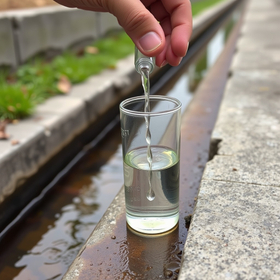
What determines the yellowing of water? This explains the meaning of the standard of 5 degrees for tap water, how to measure using platinum and cobalt, and how to distinguish between humic substances, iron, and manganese.
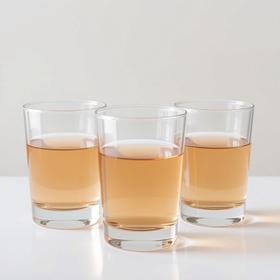
Colorimetry is an indicator that represents the degree of yellowish to brownish color exhibited by substances dissolved in water or colloidal substances. It mainly measures the same hue as the color caused by humic substances derived from geology, with the water quality standard for tap water set at below 5 degrees. The values set by the WHO (World Health Organization) and the U.S. Environmental Protection Agency are 15, while Japan's standard is lower than this. For chemicals used in drinking water and water supply systems, there is an even stricter standard of 0.5 degrees. ■ How is 1 degree determined? The color of a standard solution containing 1 mg of platinum and 0.5 mg of cobalt in 1 liter of purified water is defined as 1 degree. This approach does not quantify the color itself but seeks to determine what degree it corresponds to in comparison to the standard solution. ■ How is it different from turbidity? Turbidity indicates the degree of cloudiness caused by particles in water. Colorimetry represents the degree of color due to dissolved components, etc. The color measured with turbidity included is called "apparent color," while the color measured after removing particles is referred to as "true color," and they are distinguished. In water with high turbidity, the values for both can differ significantly due to the particles, so it is important to verify which method was used for measurement. Please feel free to consult us first.
Inquire About This Product
basic information
■There are three measurement methods The announcement that establishes the inspection methods for tap water specifies the following methods for measuring color: 1. Colorimetric method: Place 100ml of the sample water in a colorimetric tube and compare it with a series of standard solutions with gradually varying concentrations. 2. Transmittance measurement method: Measure the absorbance at a wavelength around 390nm using a spectrophotometer and determine it from the calibration curve. 3. Continuous automatic measurement device for transmittance measurement: Continuously flow the sample water through the device for measurement. The device in method 3 is required to have a detection limit of 0.2 degrees or lower and maintain an accuracy within ±0.5 degrees during operation. ■What is in the standard solution? The standard stock solution for color is made by dissolving potassium chloroplatinate and cobalt chloride in hydrochloric acid and diluting it to 1L with purified water. This stock solution corresponds to 1000 degrees, and it is diluted 10 times to be used as a standard solution of 100 degrees. ■There are also specifications for the height of the colorimetric tube The colorimetric tube for the colorimetric method is specified to be a colorless test tube with a flat bottom and a stopper, marked with a 100ml graduation line at a height of 30cm from the bottom. In the transmittance measurement method, if the sample water exceeds 10 degrees, it should be diluted with purified water to bring it below 10 degrees before measurement.
Price range
Delivery Time
Applications/Examples of results
■What are the causes of color? 1. Humic substances: Organic matter mainly derived from geology, showing yellow to brownish-yellow colors. 2. Iron: When present in high amounts, it can cause red water and discoloration of laundry to reddish-brown. 3. Manganese: Oxidation causes it to turn black, leading to black water. ■Why did the treated water exceed the standards? In cases where the color of treated water exceeded the standards, the main causes were an increase in turbidity of the source water due to heavy rain and insufficient treatment of the water leading to discoloration from iron and manganese. Additionally, organic matter that contributes to color, such as humic substances, reacts with chlorine to produce disinfection by-products containing trihalomethanes. ■How can the causes be distinguished? The color value alone cannot specify the cause of the color. When iron levels exceed 0.05 to 0.1 mg/L, it can lead to increased color and turbidity in the distribution pipes. Measuring the concentration of iron and manganese along with the true color excluding turbidity makes it easier to narrow down the causes and select appropriate treatment methods. At Torii, we offer water quality testing for well water and consultations on treatment methods tailored to the causes of discoloration. Please feel free to contact us for more information.
catalog(2)
Download All Catalogs
Company information

Since our founding, we have continued to provide flexible services with the motto of accurately supplying a diverse range of products that respond to changes in the times and the diversification of consumer needs, tailored to various applications and requirements. With the corporate slogan "Chemical Engineering Partner," we, as a group of experts in chemical technology, actively discover ideas to solve our customers' problems from advanced technologies both domestically and internationally, and propose them.