Reasons for the decrease in effective chlorine in sodium hypochlorite for disinfection [Basic Knowledge]

Does the concentration decrease just by leaving the same product out? The mechanism of sodium hypochlorite disinfection used in business and storage precautions.
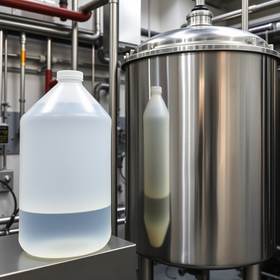
One of the chlorine-based disinfectants used in various business settings, such as for disinfecting tap water and pool water, as well as for sterilizing raw materials in cooking facilities, is a liquid containing sodium hypochlorite (NaClO) as its active ingredient. Commercially available tap water products typically have an effective chlorine content of over 12% and are a pale yellow, transparent liquid with a pH of over 12. This agent is primarily used for chlorine disinfection in water supply systems. ■ Is hypochlorous acid the main player in disinfection? Due to its alkaline nature, this agent mainly exists as hypochlorite ions. The proportion of hypochlorous acid is high in acidic conditions and low in alkaline conditions, and the bactericidal power of hypochlorous acid is about 80 times that of hypochlorite ions. ■ The concentration used varies by application! 1. Vegetables and fruits served without heating in large-scale cooking facilities: 200 mg/L for 5 minutes, or 100 mg/L for 10 minutes. 2. Swimming pools: A free residual chlorine level of 0.4 mg/L or higher, but below 1.0 mg/L is desirable. ■ Dilute the concentrate for use The product is sold at high concentrations and is typically diluted for use in soaking and other applications. It should be diluted from the concentration of the original solution to a level suitable for the intended use. Please feel free to consult us first.
Inquire About This Product
basic information
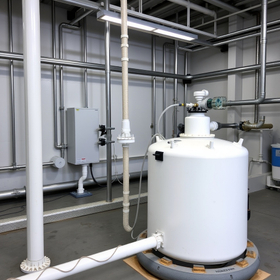
■Does it thin out just by being left alone?! This agent is unstable at room temperature and gradually decomposes. Decomposition accelerates with sunlight, especially ultraviolet rays and rising temperatures, and is significantly promoted in the presence of metals such as iron, copper, nickel, and cobalt. As it decomposes, the effective chlorine decreases, and the byproduct chlorate increases. ■Injection failure due to bubbles Oxygen released during decomposition can form bubbles in the injection line, potentially causing injection failures, so regular air purging is also required. ■How much difference does temperature make? For a product with 12% effective chlorine, the time it takes to drop to 10% is approximately 23 days at 30°C and about 80 days at 20°C when calculated considering only temperature. To suppress decomposition, it is important to store it at low temperatures below 20°C. ■Do more concentrated products decompose faster? The rate of decomposition is greatly influenced by the initial effective chlorine concentration, with more concentrated products decomposing faster. Additionally, if air enters the storage tank, carbon dioxide dissolves, and if the pH drops below 10, decomposition accelerates rapidly, so it is advisable to avoid conditions where new air constantly enters.
Price range
Delivery Time
Applications/Examples of results
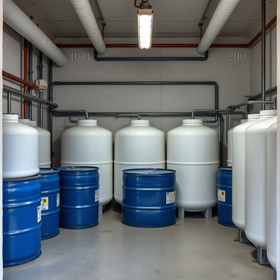
■Pay attention to the standards for chlorate! The water quality standard for chlorate in drinking water is 0.6 mg/L or less, while the standard for chlorate added to water from injected chemicals (chemical standard) is 0.4 mg/L or less. To prevent an increase in chlorate, it is important to consider storage temperature and duration, as well as to clean storage tanks. ■Shouldn't mix with acids or coagulants? When in contact with acids, it decomposes and releases harmful chlorine gas, and the same occurs when it comes into contact with coagulants such as aluminum sulfate (alum) or polyaluminum chloride (PAC). If these storage tanks and piping are in the same room, measures such as installing partitions are necessary to prevent mixing in case of leaks. ■Buy in small quantities and use them up quickly? Consider reducing the amount purchased at one time and increasing the frequency of purchases as needed to avoid prolonged storage at high temperatures. ■15 kg containers lighter than 20 kg We offer sodium hypochlorite products in 15 kg containers that are lighter than the conventional 20 kg containers. We also provide consultations on suitable capacities and storage methods based on usage. Please feel free to contact us first.
catalog(3)
Download All Catalogs

Company information

Since our founding, we have continued to provide flexible services with the motto of accurately supplying a diverse range of products that respond to changes in the times and the diversification of consumer needs, tailored to various applications and requirements. With the corporate slogan "Chemical Engineering Partner," we, as a group of experts in chemical technology, actively discover ideas to solve our customers' problems from advanced technologies both domestically and internationally, and propose them.