What is the activated sludge method? Basics of its mechanism and operation [Fundamental Knowledge]

The activated sludge method cultivates a mass of microorganisms to decompose organic matter in wastewater. This explains the roles of the aeration tank and the sedimentation tank, the reasons for recycling sludge, and the key points for daily management.
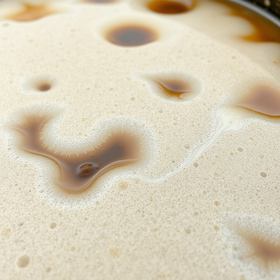
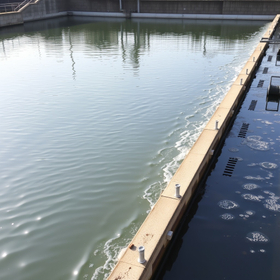
The activated sludge method is a treatment process that uses a collection of microorganisms (activated sludge) that utilize oxygen to break down organic matter in wastewater. It is a widely used representative biological treatment method, from sewage treatment plants to industrial wastewater treatment. The effectiveness of the treatment is greatly influenced by how well the activity of these microorganisms is maintained. ■ Dividing roles in two tanks 1. Aeration tank: Air is supplied to allow microorganisms to break down organic matter. 2. Sedimentation tank: The clumps of microorganisms (flocs) are settled to separate the clean supernatant. The supernatant is discharged as treated water, while the settled sludge is redirected for further processing. Whether the separation in the sedimentation tank is successful significantly affects the quality of the treated water. ■ Why circulate the sludge? The sludge that settles in the sedimentation tank is returned to the aeration tank (return activated sludge). This is to maintain a sufficient quantity of the microorganisms, which are the main agents of decomposition, within the tank. At the same time, as microorganisms multiply while breaking down organic matter, the excess is removed as surplus sludge to maintain the sludge volume in the tank. ■ Is it like adding to a bread starter? The concept of the activated sludge method is to continue operating while leaving behind active microorganisms, similar to how a portion of the previous dough is retained for the next batch of bread. Please feel free to consult with us first.

Inquire About This Product
basic information
■Conditions Favorable for Microbial Activity The optimal pH for activated sludge to function well is typically between 6 and 8; outside of this range, its activity diminishes. Temperature also affects the rate of decomposition, and as a rule of thumb, within a certain range, an increase of 10°C in water temperature roughly doubles the rate. During winter, decomposition slows down, so it is common to increase the amount of sludge to compensate. ■Main Indicators Observed During Operation 1. DO (Dissolved Oxygen): The concentration of oxygen dissolved in the aeration tank water 2. MLSS: The concentration of sludge in the aeration tank 3. SV30: The degree of settling of sludge after standing for 30 minutes 4. BOD-MLSS Load: The amount of BOD flowing in relative to the amount of sludge In wastewater treatment for food factories, MLSS is generally maintained at around 3,000 to 5,000 mg/L. The BOD-MLSS load, whether low (below 0.2 kg/(kg·day)) or high (above 0.4), can lead to difficulties in sludge settling depending on the conditions. ■Is More Oxygen Always Better? If DO is insufficient, decomposition does not progress. On the other hand, a certain concentration of DO is sufficient, and higher levels are not necessarily better. The level of DO significantly affects the power required for aeration, so maintaining an appropriate DO can also lead to savings on electricity costs.
Price range
Delivery Time
Applications/Examples of results
■What kind of sites are they used in? In addition to sewage treatment plants, they are also used in factories that discharge wastewater containing a lot of organic matter, such as food factories. ■What are common troubles? 1. Sludge becomes difficult to settle (bulking) 2. Foam generation and scum formation 3. Cloudiness of the supernatant Bulking, in particular, can be triggered by excessive or insufficient load, lack of dissolved oxygen (DO), or lack of nutrient salts. Such issues can be resolved by correcting the management of sludge quantity and load according to the conditions. ■There is also an advanced form called MBR The method of separating sludge and water using a membrane instead of a settling tank is called Membrane Bioreactor (MBR). It is characterized by being able to maintain a high MLSS of about 8,000 to 15,000 mg/L, and it also allows for easier control of installation area. ■Daily records are clues for adjustments! Since activated sludge is a living organism, its condition changes daily. By recording and organizing operational data, it can provide clues for adjusting sludge quantity according to the season and determining appropriate DO levels. The suitable operating conditions vary depending on the nature of the wastewater. Please feel free to consult with us first.
catalog(3)
Download All Catalogs
Company information

Since our founding, we have continued to provide flexible services with the motto of accurately supplying a diverse range of products that respond to changes in the times and the diversification of consumer needs, tailored to various applications and requirements. With the corporate slogan "Chemical Engineering Partner," we, as a group of experts in chemical technology, actively discover ideas to solve our customers' problems from advanced technologies both domestically and internationally, and propose them.