What is the reuse of factory wastewater? Necessary water quality by application [Basic Knowledge]

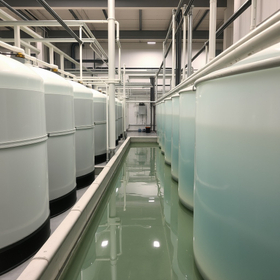
Reusing wastewater that has been treated for use again in the factory. The level of cleanliness depends on the intended use. This explains the concept of water quality standards.
The reuse of factory wastewater refers to the process of treating water that has been used once in a factory and using it again in production processes. Overall, the recycling and reuse of once-used water is progressing in industrial water usage. In facilities with more than 30 employees, the freshwater usage in 2013 was approximately 46.2 billion cubic meters, and the newly sourced freshwater supply was about 9.7 billion cubic meters. The recovery rate of industrial water is 79.1%. The recovered water, according to statistics, refers to all water that is circulated and used within the facility, not just the water that is treated from wastewater. ■ Are there differences by industry? The recovery rate varies significantly by industry. The chemical and steel industries maintain high recovery rates of around 80-90%, while the pulp, paper, and paper processing industries have seen rates of about 40% in recent years. Regionally, areas such as the Kanto coastal region, Kinki coastal region, Sanyo, and Kitakyushu have recovery rates exceeding 80%. ■ Why has reuse progressed? The recovery rate has increased due to the necessity of using water efficiently and complying with wastewater regulations. In addition to reducing the amount of water drawn from rivers and underground sources, the ability to decrease the volume of wastewater discharged is an advantage of reuse. Please feel free to consult with us first.
Inquire About This Product
basic information
■How clean does it need to be? The quality of water required for reuse is determined by its intended use. The standards for reclaimed water are considered from three perspectives: sanitary safety, appearance and comfort, and not damaging facilities. Deciding on the appropriate water quality for the intended use is the starting point for planning reuse. ■Toilet water and irrigation water are different! For general water used in specific buildings like offices, there are legal standards for water quality. Water used for irrigation, landscaping, and cleaning cannot be sourced from water containing sewage and must meet requirements such as turbidity of 2 degrees or less. On the other hand, there are no turbidity standards for water used in flush toilets. Even with reclaimed water, there are different standards and treatment facility considerations for landscaping, which assumes no human contact, and for water that is intended for human contact. ■What are the guidelines for industrial water? There are no legal standards for the quality of industrial water. As a guideline, there are standard water quality values for industrial water supply, which include turbidity of 20 degrees, pH of 6.5 to 8.0, hardness of 120 mg/L, iron of 0.3 mg/L, and manganese of 0.2 mg/L. If treated water is used as a substitute for industrial water, these values serve as a reference.
Price range
Delivery Time
Applications/Examples of results
■What points should be considered for each use? 1. Flush toilets: Retain free residual chlorine of 0.1 mg/L or more, no detection of E. coli, pH, odor, appearance. 2. Irrigation and cleaning: In addition to the above items, it should be almost colorless and transparent, with turbidity below 2 degrees. 3. Boiler feed water: To prevent scaling, keep hardness low. Even with the same treated water, the necessary treatment stages and methods vary depending on the intended use. ■Why is hardness undesirable in boilers? In boilers, calcium and other substances contained in the feed water are concentrated and precipitate as scale on the heat transfer tubes. Therefore, the quality of the feed water is managed according to JIS B 8223, and the concentration is controlled by blowing off a portion of the boiler water. By maintaining the quality of the feed water appropriately, the blow-off ratio can be reduced, which helps to limit the increase in fuel consumption. ■What to be cautious about in reuse When utilizing reclaimed water, measures must be taken to prevent misconnection to drinking water pipes and accidental ingestion. Considerations should also include measures against pipe corrosion and clogging. Our company also examines the confirmation of water quality and the selection of water treatment chemicals when considering reuse. Please feel free to consult with us first.
catalog(3)
Download All Catalogs
Company information

Since our founding, we have continued to provide flexible services with the motto of accurately supplying a diverse range of products that respond to changes in the times and the diversification of consumer needs, tailored to various applications and requirements. With the corporate slogan "Chemical Engineering Partner," we, as a group of experts in chemical technology, actively discover ideas to solve our customers' problems from advanced technologies both domestically and internationally, and propose them.