Explaining the characteristics, advantages, disadvantages, and examples of silk screen printing.

"What kind of printing method is silk screen printing?" "What benefits are there to creating novelties?" Do you have these questions?
In particular, it is suitable for producing the same design in a substantial quantity and is a printing method widely adopted for corporate novelties. What is silk screen printing? Explanation of the mechanism Silk screen printing is a method that uses a fine mesh plate (screen) to directly print ink onto the material. It is also suitable for expressing corporate logos and brand colors, making it a standard printing method in novelty production. Three advantages of silk screen printing [Advantage 1] Good color reproduction, allowing for clear expression of logos and text For example, when creating tote bags or pouches incorporating a company's brand color, clearly printing the logo and text can convey the company's identity. [Advantage 2] Suitable for large-scale printing of the same design By considering the production quantity and number of print colors, it leads to a balance of quality and cost in novelty production. [Advantage 3] Can print on various materials The ability to choose from various materials according to the purpose and target of the items being produced is a significant advantage in novelty production.

Inquire About This Product
basic information
Three Disadvantages of Silk Screen Printing [Disadvantage 1] Costs tend to increase with the number of colors If you want to keep costs down, one way is to simplify the design by reducing the number of print colors. [Disadvantage 2] Not suitable for expressing photos or gradients If you want to print photos or full-color illustrations, it is advisable to consider other printing methods such as inkjet printing. [Disadvantage 3] Fine lines and text can be difficult to reproduce It is important to adjust the thickness of lines, the size of text, and the margins according to the material and design being printed. Materials and Items Compatible with Silk Screen Printing A major feature of silk screen printing is its ability to work with various materials. [Material 1] Fabric materials such as cotton and canvas [Material 2] Nylon and polyester materials [Material 3] Plastic materials [Material 4] Metal materials [Material 5] Wood and paper materials
Price range
Delivery Time
Applications/Examples of results
Three examples of utilizing silk screen printing for promotional items 【Example 1】 Tote bags distributed at exhibitions If they are used in daily life after distribution, there will be more opportunities to see the company name or brand, leading to continuous brand recognition improvement. 【Example 2】 T-shirts or staff wear for events When printing simple logos or text, it is easy to take advantage of the characteristics of silk screen printing, making it suitable for producing a substantial quantity. 【Example 3】 Pouches or eco-bags with company logos By incorporating the company logo and brand colors into the design, practicality and originality can be achieved. Reasons why silk screen printing is chosen for promotional item production It meets various requirements sought in corporate promotional items, such as color vibrancy, durability, production costs, and a wide range of items that can be accommodated.
Company information
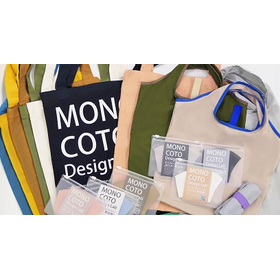
Koshioka Sangyo Co., Ltd. has been responding to various customer requests for over 50 years since its establishment, manufacturing products from parts to finished goods through made-to-order production. Leveraging that experience, we have now centralized the entire process from market research for "delightful products" starting with product creation, to planning/design, design, prototyping, production, and shipping. Our efforts have been well received by companies such as amusement parks and restaurant chains. Additionally, we have embarked on a novelty (MONOCOTO LAB) business to assist customers with their challenges, enhancing added value, defining their existence, and contributing to society. We are also focusing on design development and advancing our own product commercialization, which has been appreciated by companies in the entertainment industry and beyond.