World Steel and Aluminum Alloy Industry Outlook 2026-2032: Analyzing the Background of Increasing Demand and a Growth Rate of 6.0%
Iron-aluminum alloy refers to a soft magnetic alloy primarily composed of iron (Fe) with aluminum (Al) as the main additive element, typically containing 6 to 16% aluminum. Iron-aluminum alloys possess low coercivity, relatively high permeability and electrical resistivity, as well as excellent hardness and wear resistance, making them suitable for use in magnetic head cores, electromagnetic components, transducers, and frequency converters. When the aluminum content exceeds 10%, brittleness increases, so managing the composition and optimizing processing conditions are crucial in the production of iron-aluminum alloys.
Inquire About This Product
basic information
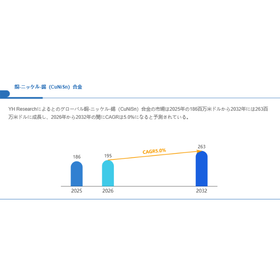
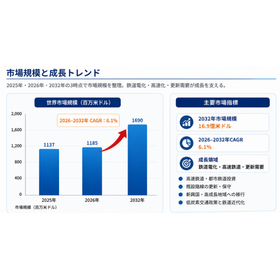
World Market Size of Iron Aluminum Alloys According to the latest research report published by Global Reports titled "World Market Size, Share, Company Rankings, Sales, and Demand Trend Forecast for Iron Aluminum Alloys (2026-2032)," the global market size for iron aluminum alloys is expected to expand from approximately 963 million USD in 2025 to about 1.024 billion USD in 2026. The compound annual growth rate (CAGR) from 2026 to 2032 is projected to be 6.0%, reaching approximately 1.45 billion USD by 2032. The global sales volume of iron aluminum alloys in 2025 is estimated to be around 38,000 tons, with an average selling price of about 25,362 USD per ton. Market growth is supported not only by the increase in sales volume but also by the demand for high-performance grades.
Price range
Delivery Time
Applications/Examples of results
The raw material costs of iron-aluminum alloys are influenced by the aluminum content and quality control. The main raw materials for iron-aluminum alloys are industrial pure iron or low-carbon steel and aluminum ingots, with trace amounts of silicon or manganese added as needed to adjust the composition. In iron-aluminum alloys, impurity management is required, keeping the carbon content below 0.03% and phosphorus and sulfur each below 0.015%. The aluminum content is also strictly controlled according to the grade, with an allowable deviation of approximately ±0.4%. In the raw material costs of iron-aluminum alloys, aluminum ingots account for about 30-40% of the total raw material cost, while industrial pure iron accounts for about 25-35%. Fluctuations in aluminum prices can easily affect the manufacturing costs of iron-aluminum alloys, making stable procurement and improved yield in formulation critical to manufacturers' profitability. Particularly in high-aluminum content grades, increased difficulty in processing due to brittleness and higher defect rates can lead to cost burdens.
Company information

Global Reports integrates industrial information from around the world and provides highly accurate market intelligence to support corporate decision-making. We deliver in-depth analyses based on numerical data and facts, including market size, share, industry structure, price trends, growth forecasts, rankings of major companies, and competitive trends, with clear information categorized by country, region, and application. Leveraging a rich database that has supported the business growth of over 65,000 companies and an international research network, we accompany our clients in their global expansion and continuous growth.