The random dot pattern diffractive optical element (DOE) market is expected to reach 352 million USD by 2026.
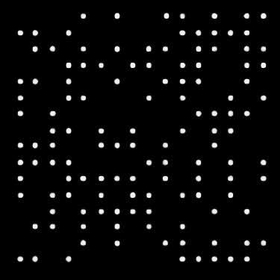
A random dot pattern diffractive optical element (DOE) is a micro-nano optical component that divides and projects laser light into numerous random or pseudo-random dots through fine diffraction structures. When combined with infrared lasers such as VCSELs and used to illuminate structured light, it enables the recognition of depth and three-dimensional shapes of objects. Random dot pattern diffractive optical elements (DOEs) are used in applications such as smartphone facial recognition, smart locks, robotics, industrial 3D inspection, AR/VR, and in-car sensing.
Inquire About This Product
basic information
Global Market Size of Random Dot Pattern Diffractive Optical Elements (DOE) According to the latest research report published by Global Reports titled "Global Market Size, Share, Company Rankings, Sales, and Demand Trend Forecast for Random Dot Pattern Diffractive Optical Elements (DOE) (2026-2032)," the global market size for Random Dot Pattern Diffractive Optical Elements (DOE) is projected to expand from approximately 325 million USD in 2025 to about 352 million USD in 2026, and is expected to reach around 534 million USD by 2032. The compound annual growth rate (CAGR) from 2026 to 2032 is 7.2%. As the applications of 3D sensing expand from facial recognition to robotics and industrial machine vision, the demand for Random Dot Pattern Diffractive Optical Elements (DOE) equipped with high-density dots, wide illumination fields, low zero-order light, and high diffraction efficiency is increasing.
Price range
Delivery Time
Applications/Examples of results
Product configuration of Random Dot Pattern Diffractive Optical Elements (DOE): High-density products with over 100,000 dots are in high value-added areas. Random Dot Pattern Diffractive Optical Elements (DOE) are classified by the number of dots into categories of fewer than 5,000, 5,000 to 30,000, 30,000 to 100,000, and over 100,000. As the number of dots increases, the accuracy of depth information acquisition and the ability to distinguish patterns improve, making high-density products increasingly important for high-precision 3D sensing applications. In terms of wavelength, near-infrared products centered around 940nm and 850/830nm are predominant, while products in the visible red range of 635 to 660nm, as well as 808nm and 980nm, are also developed according to specific applications.
Company information

Global Reports integrates industrial information from around the world and provides highly accurate market intelligence to support corporate decision-making. We deliver in-depth analyses based on numerical data and facts, including market size, share, industry structure, price trends, growth forecasts, rankings of major companies, and competitive trends, with clear information categorized by country, region, and application. Leveraging a rich database that has supported the business growth of over 65,000 companies and an international research network, we accompany our clients in their global expansion and continuous growth.