Perovskite Solar Cell Materials Industry Report 2026: Market Size of 1,125 Million USD and Future Outlook
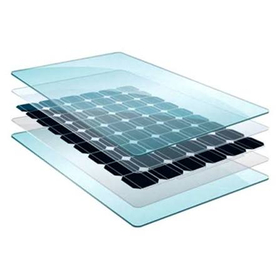
Perovskite solar cell materials refer to a category of light-absorbing semiconductor materials that possess an ABX₃-type crystal structure similar to the mineral perovskite, as well as functional materials used in their power generation layers, charge transport layers, and interface formation. They are primarily composed of metal cations such as lead and tin, halides like iodine and bromine, and organic or inorganic cations. These materials are characterized by high photovoltaic conversion efficiency, tunability of the bandgap, and compatibility with low-temperature film formation. In 2025, the global production volume is expected to be approximately 1,585 tons, with a production capacity of 1,820 tons per year and an average selling price of about \$600,000 per ton, while the industry average gross profit margin was 38.47%. The product forms range from high-purity precursor salts to formulated inks and synthesized powders, and the ability to adapt to mass production processes influences the competitiveness of supply companies.
Inquire About This Product
basic information
Global Market Size of Perovskite Solar Cell Materials According to the latest research report published by Global Reports, titled "Global Market Size, Share, Company Rankings, Sales, and Demand Trends Forecast for Perovskite Solar Cell Materials (2026-2032)," the global market size for perovskite solar cell materials is projected to expand from 951 million USD in 2025 to 1.125 billion USD in 2026. The compound annual growth rate (CAGR) from 2026 to 2032 is expected to be 15.8%, reaching 2.706 billion USD by 2032.
Price range
Delivery Time
Applications/Examples of results
In 2026, the absorption layer materials are expected to account for approximately 40% of the market value, with China holding about 42% of the regional demand. In terms of product structure, the main categories include perovskite precursor salts, mixed precursor solutions (inks), and synthesized perovskite powders. It is anticipated that materials and precursors for the absorption layer will represent around 40% of the market value by 2026, with high-purity lead iodide, tin iodide, organic ammonium salts, and cesium salts being the primary procurement targets. On the other hand, hole transport materials and interface passivation materials are high-value-added product groups due to their direct impact on charge transport efficiency and defect suppression. In terms of manufacturing methods, the importance of formulated inks and nano-dispersions suitable for large-area coating is increasing, in addition to traditional powders and high-purity salts. Particularly in tandem solar cells with silicon, the adoption of wide bandgap materials, self-assembled monolayers (SAM), and interface control materials is progressing, and material manufacturers are required to ensure crystallization control, uniform film thickness, and quality stability between batches.
Company information

Global Reports integrates industrial information from around the world and provides highly accurate market intelligence to support corporate decision-making. We deliver in-depth analyses based on numerical data and facts, including market size, share, industry structure, price trends, growth forecasts, rankings of major companies, and competitive trends, with clear information categorized by country, region, and application. Leveraging a rich database that has supported the business growth of over 65,000 companies and an international research network, we accompany our clients in their global expansion and continuous growth.