List of IT/Network products
- classification:IT/Network
5311~5355 item / All 42551 items
For those who have isolators. Achieving high chemical resistance and workability. Low cost and short delivery times are also possible for glove box and isolator gloves.
- Work gloves
Notice of participation in 'INTERPHEX Week Tokyo' from May 20 (Wednesday) to May 22 (Friday), 2026.
Ito Corporation will be exhibiting at "INTERPHEX Week Tokyo" held at Makuhari Messe. This exhibition is the largest in Japan, showcasing a wide range of products and services related to the research and manufacturing of pharmaceuticals, cosmetics, and regenerative medicine from 25 countries and regions around the world. Pharmaceutical and cosmetic manufacturers, as well as regenerative medicine companies, will be attending from all over the globe. We will be showcasing "Gloves for Glove Boxes/Isolators" manufactured by Tron Power. We look forward to your visit.
A business-use mobile terminal entry model that balances cost performance with high basic performance (IP67 dust and water resistance, drop resistance of 1.5m).
- Industrial PCs
- PDAs and handheld terminals
- Handheld barcode reader
Cost-performance focused 2D wireless scanner with cradle, communication distance 100m, continuous battery operation up to 40 hours.
- 2D Code Reader
- Scanner
- Document and Data Management
Supports Lightning connection, iOS utilities, and SDK! Maximum reading distance of 10m, with long-range models available.
- Handheld barcode reader
- Mobile phones, PHS, data communication cards
- Industrial PCs
Compact and lightweight, ready to use immediately after connection. Can read poorly printed barcodes as well. Drop impact resistance of 2.1m.
- 2D Code Reader
- Scanner
- Document and Data Management
Detachable from PA768 with a single touch, achieving stable and fast RFID tag reading through a physical connection using pogo pins.
- Industrial PCs
- IC tag reader/writer
Replaceable battery | IP67 & drop resistance of 1.5m | 4G-LTE model lineup | GMS and AER certification obtained
- Handheld barcode reader
- Industrial PCs
- Notebook PC
Simply place the scanner in the cradle for automatic pairing. High cost-performance 2D barcode scanner with Bluetooth connection.
- 2D Code Reader
- Scanner
- Document and Data Management
Easy pairing with a dedicated communication dongle | Supports 2D and 1D barcodes including QR codes | IP42 + drop resistance of 2.1m for durability
- 2D Code Reader
- Scanner
- Document and Data Management
Both hands are free to use. Efficient barcode scanning with a finger attachment. Equipped with a high-performance engine that can also read QR codes.
- 2D Code Reader
- Commercial printers
- Production Management System
Active in various scenes such as factories, warehouses, and work sites! A business-use handheld terminal equipped with Android OS. A super long-range model is also available in the lineup.
- PDAs and handheld terminals
- label
- Production Management System
500mW high output, maximum reading distance of 2m, ultra-compact UHF band RFID reader.
- Industrial PCs
- IC tag reader/writer
- IC tag
MFi certification obtained, supports iOS apps and app development SDK | Compatible with specific low-power radio stations (output below 250mW)
- Industrial PCs
- IC tag reader/writer
- IC tag
Maximum reading distance: approximately 10 m | Integrated UHF band RFID reader | 6700mAh, hot-swappable battery adopted
- Industrial PCs
- IC tag reader/writer
- IC tag
High-performance UHF band RFID reader module based on Impinj R2000 chip.
- IC tag
- IC tag reader/writer
- Communications
On March 22, 2013, we will launch the UHF RFID module RM300 that supports the new frequency band.
Unitech Japan Co., Ltd. will launch the industry's first high-output UHF RFID module, RM300. Orders are scheduled to begin on April 1, 2013. Starting from January 2013, the frequency band for UHF RFID will be transitioned and reorganized, leading to the development of devices such as handheld readers, fixed readers, and printers that utilize UHF RFID, with expectations for market expansion. UHF RFID devices are wireless equipment, and even if products are developed, it is necessary to obtain type certification from the Ministry of Internal Affairs and Communications or construction design certification, which involves costs and time. The RM300 has already obtained construction design certification as a high-output module with 1W, so devices using this module do not need to obtain these certifications again or can do so easily. The RM300 supports and has obtained certification for frequency bands usable not only in Japan but also in the United States, Europe, China, and Taiwan (some are planned). For more details, please refer to the materials.
High-performance 2D barcode reader with an effective pixel count of 1200×800 pixels and a maximum motion tolerance of 6 m/s.
- 2D Code Reader
- Scanner
- Document and Data Management
Handheld laser barcode scanner capable of continuous high-speed reading.
- Expansion Boards
- Scanner
- Handheld barcode reader
[Free demo units available] Easy to use, affordable, and highly reliable Unitech MS146 barcode slot reader.
- Expansion Boards
[Free demo units available] Easy to use and highly cost-effective Unitech MS100 pen scanner.
- Expansion Boards
2 antenna ports, compact and low-cost, fixed-type UHF band RFID reader RS200
- IC tag
- IC tag reader/writer
- Communications
Easy connection Bluetooth wireless laser barcode scanner that automatically pairs just by placing it in the cradle.
- Expansion Boards
- Scanner
- Handheld barcode reader
Just place the scanner in the cradle for automatic pairing. A high-performance 2D imager engine equipped barcode scanner with Bluetooth connectivity.
- 2D Code Reader
- Scanner
- Document and Data Management
Fixed UHF band RFID reader RS804 with 4 antenna ports and various interfaces.
- IC tag
- IC tag reader/writer
- Communications
This is the Bluetooth headset BONX mini, which supports cable-free and hands-free calls with Bluetooth functionality.
- Other network tools
Read only the targeted RFID tags! It is suitable for narrow production lines where you want to limit the reading range and reduce misreads.
- antenna
- Document and Data Management
- Storage shelves
What is Technical Standards Compliance Certification (Giteki)?
"Technical Standards Conformity Certification," commonly known as "Giteki," refers to the "government approval" necessary for safely using wireless devices (such as smartphones, Wi-Fi routers, transceivers, etc.) in Japan without affecting other communications. To put it simply... For example, products that use wireless technology emit "radio waves." If these radio waves are too strong or the frequency is incorrect, there is a risk of adversely affecting devices like televisions or emergency radios. Therefore, in Japan, only products that have been certified to comply with regulations regarding radio wave emissions can be used, and this certification is indicated by the Giteki mark. ■ Where can you find the Giteki mark? The Giteki mark can be displayed on the product itself or in the settings screen, and products with this mark are legally usable wireless devices in Japan. ■ What happens if you use a product without Giteki? Using devices that have not received Giteki certification in Japan may result in a violation of the Radio Law. For instance, smartphones or transceivers purchased overseas often lack the Giteki mark, and using them in Japan can be illegal, so caution is advised.
A left-handed circularly polarized antenna that can be combined with a specific low-power reader/writer! Waterproof types are also available, making it suitable for narrow factory lines.
- antenna
- Entrance and exit control system
What is an anechoic chamber? Is it really necessary?
An anechoic chamber is a "special room" used to test the performance and safety of wireless devices. In a regular room, invisible waves from smartphones, Wi-Fi, and televisions are present, making it impossible to conduct accurate tests on devices. Therefore, an anechoic chamber is a special space that "completely shuts out external waves" and also ensures that "waves inside do not leak outside." When is it used? - Testing and inspection of wireless devices - Testing for obtaining technical standard conformity certification (Giteki) - Confirming that there is no interference from waves to other devices In other words, it is "an essential place for creating accurate and reliable wireless devices." What is the inside of the room like? - The walls, ceiling, and floor are covered with "sponge-like materials that absorb waves (wave-absorbing panels)." - The entire room is covered with a metal shield to prevent external waves from entering. Why is it so important? Wireless devices can significantly impact medical equipment, airplanes, and fire department radios, depending on where they are used. That is why it is crucial to thoroughly verify that they emit waves correctly and safely in a place free from external influences, which is the anechoic chamber.
Enables a stylish design of ultra-thin, narrow-directional gates! With a circularly polarized RFID antenna, it minimizes misreads for security management.
- antenna
- Entrance and exit control system
What is an anechoic chamber? Is it really necessary?
An anechoic chamber is a "special room" used to test the performance and safety of wireless devices. In a regular room, invisible waves from smartphones, Wi-Fi, and televisions are present, making it impossible to conduct accurate tests on devices. Therefore, an anechoic chamber is a special space that "completely shuts out external waves" and also ensures that "waves inside do not leak outside." When is it used? - Testing and inspection of wireless devices - Testing for obtaining technical standard conformity certification (Giteki) - Confirming that there is no interference from waves to other devices In other words, it is "an essential place for creating accurate and reliable wireless devices." What is the inside of the room like? - The walls, ceiling, and floor are covered with "sponge-like materials that absorb waves (wave-absorbing panels)." - The entire room is covered with a metal shield to prevent external waves from entering. Why is it so important? Wireless devices can significantly impact medical equipment, airplanes, and fire department radios, depending on where they are used. That is why it is crucial to thoroughly verify that they emit waves correctly and safely in a place free from external influences, which is the anechoic chamber.
A left-handed circularly polarized antenna that can be combined with a specific low-power reader/writer! Waterproof types are also available, providing security measures for entry and exit management.
- antenna
- Entrance and exit control system
A clear explanation of how to obtain a technical standards conformity certification!
To sell and use products that utilize wireless technology in Japan, it is necessary to obtain a national certification called "Technical Standards Conformity Certification (Giteki)." So, "how do you obtain Giteki?" 【Step 1】 What products require Giteki? Devices that communicate using wireless technology that emits radio waves are subject to this requirement, such as smartphones, Wi-Fi routers, Bluetooth earphones, wireless mice, wireless transceivers, IoT devices, etc. 【Step 2】 Where can you get the assessment done? The assessment for Giteki is conducted by a third-party organization recognized by the government, called a "Registered Certification Body." Examples include the Telecommunications Engineering Center (TELEC) and the Japan Maritime Bureau (JCI). 【Step 3】 What do you need to submit? For the assessment, you need to submit documents and samples such as the following, to check for "signal strength," "frequency accuracy," and "radio interference": Product technical specifications (such as frequency and output), circuit diagrams or design drawings, and the actual product (or prototype). 【Step 4】 If you pass the test, you will receive the "Giteki mark"! 【Step 5】 After that, you can freely sell and use the product!
Just place items with RFID tags on top of the antenna! Real-time visualization at the shelf level eliminates the need for visual checks or handheld scanners, reducing labor in logistics.
- antenna
- Storage shelves
- Document and Data Management
[Model Number Change] The model number of the UHF band RFID shelf antenna has been changed.
"FZ9205/FZ9206" has been discontinued and unified into "FZ9205-2." The specifications will be the same as "FZ9205." For details, please download the catalog and check.
Electronically control the beam radiation direction! High-precision security measures with RFID tag reading in specific areas.
- antenna
- Entrance and exit control system
What is Technical Standards Compliance Certification (Giteki)?
"Technical Standards Conformity Certification," commonly known as "Giteki," refers to the "government approval" necessary for safely using wireless devices (such as smartphones, Wi-Fi routers, transceivers, etc.) in Japan without affecting other communications. To put it simply... For example, products that use wireless technology emit "radio waves." If these radio waves are too strong or the frequency is incorrect, there is a risk of adversely affecting devices like televisions or emergency radios. Therefore, in Japan, only products that have been certified to comply with regulations regarding radio wave emissions can be used, and this certification is indicated by the Giteki mark. ■ Where can you find the Giteki mark? The Giteki mark can be displayed on the product itself or in the settings screen, and products with this mark are legally usable wireless devices in Japan. ■ What happens if you use a product without Giteki? Using devices that have not received Giteki certification in Japan may result in a violation of the Radio Law. For instance, smartphones or transceivers purchased overseas often lack the Giteki mark, and using them in Japan can be illegal, so caution is advised.
Enables a stylish design for ultra-thin, narrow-directional gates! With a circularly polarized RFID antenna, it minimizes misreads and manages quantities effectively.
- antenna
- Entrance and exit control system
What is an anechoic chamber? Is it really necessary?
An anechoic chamber is a "special room" used to test the performance and safety of wireless devices. In a regular room, invisible waves from smartphones, Wi-Fi, and televisions are present, making it impossible to conduct accurate tests on devices. Therefore, an anechoic chamber is a special space that "completely shuts out external waves" and also ensures that "waves inside do not leak outside." When is it used? - Testing and inspection of wireless devices - Testing for obtaining technical standard conformity certification (Giteki) - Confirming that there is no interference from waves to other devices In other words, it is "an essential place for creating accurate and reliable wireless devices." What is the inside of the room like? - The walls, ceiling, and floor are covered with "sponge-like materials that absorb waves (wave-absorbing panels)." - The entire room is covered with a metal shield to prevent external waves from entering. Why is it so important? Wireless devices can significantly impact medical equipment, airplanes, and fire department radios, depending on where they are used. That is why it is crucial to thoroughly verify that they emit waves correctly and safely in a place free from external influences, which is the anechoic chamber.
Various applications such as apparel, logistics, and vehicle management are possible! Standard model RFID antenna.
- antenna
- Document and Data Management
- Entrance and exit control system
[Model Number Change] The model number of the UHF band RFID flat antenna has been changed.
The UHF band RFID flat antenna "FP9207/FP9207L" has been changed from "FP9207L" to "FP9207L-2." The specifications will remain the same as "FP9207L." Please note that there are no changes to "FP9207." For details, please download the catalog and check.
Read only the targeted RFID tags! It is suitable for narrow production lines where you want to limit the reading range and reduce misreads.
- antenna
- Document and Data Management
- Storage shelves
What is an anechoic chamber? Is it really necessary?
An anechoic chamber is a "special room" used to test the performance and safety of wireless devices. In a regular room, invisible waves from smartphones, Wi-Fi, and televisions are present, making it impossible to conduct accurate tests on devices. Therefore, an anechoic chamber is a special space that "completely shuts out external waves" and also ensures that "waves inside do not leak outside." When is it used? - Testing and inspection of wireless devices - Testing for obtaining technical standard conformity certification (Giteki) - Confirming that there is no interference from waves to other devices In other words, it is "an essential place for creating accurate and reliable wireless devices." What is the inside of the room like? - The walls, ceiling, and floor are covered with "sponge-like materials that absorb waves (wave-absorbing panels)." - The entire room is covered with a metal shield to prevent external waves from entering. Why is it so important? Wireless devices can significantly impact medical equipment, airplanes, and fire department radios, depending on where they are used. That is why it is crucial to thoroughly verify that they emit waves correctly and safely in a place free from external influences, which is the anechoic chamber.
Reduced misreading with multiple built-in RFID antenna elements! Smart management of small items like jewelry.
- antenna
- Document and Data Management
A clear explanation of how to obtain a technical standards conformity certification!
To sell and use products that utilize wireless technology in Japan, it is necessary to obtain a national certification called "Technical Standards Conformity Certification (Giteki)." So, "how do you obtain Giteki?" 【Step 1】 What products require Giteki? Devices that communicate using wireless technology that emits radio waves are subject to this requirement, such as smartphones, Wi-Fi routers, Bluetooth earphones, wireless mice, wireless transceivers, IoT devices, etc. 【Step 2】 Where can you get the assessment done? The assessment for Giteki is conducted by a third-party organization recognized by the government, called a "Registered Certification Body." Examples include the Telecommunications Engineering Center (TELEC) and the Japan Maritime Bureau (JCI). 【Step 3】 What do you need to submit? For the assessment, you need to submit documents and samples such as the following, to check for "signal strength," "frequency accuracy," and "radio interference": Product technical specifications (such as frequency and output), circuit diagrams or design drawings, and the actual product (or prototype). 【Step 4】 If you pass the test, you will receive the "Giteki mark"! 【Step 5】 After that, you can freely sell and use the product!
From project management to tool management, it can be read across a wide range! For efficient and accurate production line construction.
- antenna
- Entrance and exit control system
What is Technical Standards Compliance Certification (Giteki)?
"Technical Standards Conformity Certification," commonly known as "Giteki," refers to the "government approval" necessary for safely using wireless devices (such as smartphones, Wi-Fi routers, transceivers, etc.) in Japan without affecting other communications. To put it simply... For example, products that use wireless technology emit "radio waves." If these radio waves are too strong or the frequency is incorrect, there is a risk of adversely affecting devices like televisions or emergency radios. Therefore, in Japan, only products that have been certified to comply with regulations regarding radio wave emissions can be used, and this certification is indicated by the Giteki mark. ■ Where can you find the Giteki mark? The Giteki mark can be displayed on the product itself or in the settings screen, and products with this mark are legally usable wireless devices in Japan. ■ What happens if you use a product without Giteki? Using devices that have not received Giteki certification in Japan may result in a violation of the Radio Law. For instance, smartphones or transceivers purchased overseas often lack the Giteki mark, and using them in Japan can be illegal, so caution is advised.
Monitor the entry and exit of people! A UHF band RFID antenna that can be easily installed just by placing it under the carpet.
- antenna
- Entrance and exit control system
What is an anechoic chamber? Is it really necessary?
An anechoic chamber is a "special room" used to test the performance and safety of wireless devices. In a regular room, invisible waves from smartphones, Wi-Fi, and televisions are present, making it impossible to conduct accurate tests on devices. Therefore, an anechoic chamber is a special space that "completely shuts out external waves" and also ensures that "waves inside do not leak outside." When is it used? - Testing and inspection of wireless devices - Testing for obtaining technical standard conformity certification (Giteki) - Confirming that there is no interference from waves to other devices In other words, it is "an essential place for creating accurate and reliable wireless devices." What is the inside of the room like? - The walls, ceiling, and floor are covered with "sponge-like materials that absorb waves (wave-absorbing panels)." - The entire room is covered with a metal shield to prevent external waves from entering. Why is it so important? Wireless devices can significantly impact medical equipment, airplanes, and fire department radios, depending on where they are used. That is why it is crucial to thoroughly verify that they emit waves correctly and safely in a place free from external influences, which is the anechoic chamber.
You can instantly understand the manufacturing status of the factory! It consists of "administrator support tools" and "worker support tools."
- Production Management System
Are you having trouble with the issue of "not being able to record safety checks during work"? Here’s an example of voice input for safety checks!
- Other production management systems
Are you having trouble with the complicated process of photographing and recording the condition of equipment? Here’s an example of managing the history of equipment status in a chronological manner!
- Other production management systems
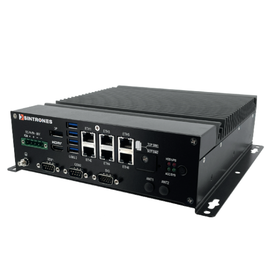
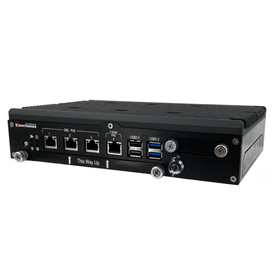
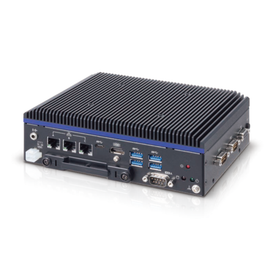
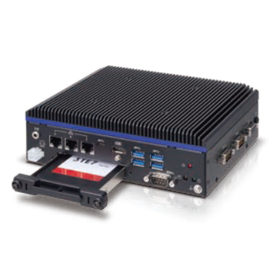
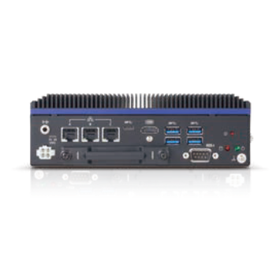
We will manufacture at a designated factory in Taiwan with high quality and flexible response - desktop type, rack-mounted type, small and embedded types, and for automotive use.
- Industrial PCs
- Desktop PC
A SaaS service that optimizes personnel allocation in the manufacturing industry using AI.
- Other operation management software
Fully utilizing advanced technology and expertise! Contract services to accelerate materials research and development.
- Embedded OS
- Contract Analysis
- Other polymer materials