
List of Scientific and Physics Equipment products
- classification:Scientific and Physics Equipment
8446~8460 item / All 36050 items


Reduce the workload from handling heavy objects! Here are five case studies that solved customer challenges! We are also accepting free consultations and tests tailored to your work!

- Other conveying machines


Ideal for micro-machining! Achieves deburring of holes and double-sided machining in one pass, which was difficult with conventional tools!

- Other machine tools

We will be exhibiting at Mecatronics Tech Japan 2021 from October 20 (Wednesday) to October 23 (Saturday)!
Our company will exhibit at "Mechatrotech Japan 2021," which will be held at Portmesse Nagoya from Wednesday, October 20 to Saturday, October 23, 2021. We will introduce our tools, including the 'Bar Off Tool' capable of chamfering and deburring from a diameter of 0.8 mm, and the 'FEM' tool breakage detection device that reliably detects breakage. We look forward to your visit. (Booth number: 2B12)


-40°C ultra-low temperature freezer using non-fluorocarbon refrigerants, considerate of the environment.
- Refrigerators and freezers

Introducing the method for measuring titratable acidity in orange juice! We will provide a comprehensive explanation of recommended equipment, setup of the titration apparatus, modifications to the me...
- Analytical Equipment and Devices
- Other physicochemical equipment

Not only the convenience of self-service design but also a high-end ultrapure water purification system equipped with an intelligent user interface.


- Pure water production equipment
![[Comprehensive Catalog] Lab Product...](https://image.mono.ipros.com/public/product/image/a9c/2001524230/IPROS14930390205422699229.jpg?w=280&h=280)
Budget application for centrifuges, safety cabinets, shakers, incubators, and other equipment required for research labs.
- Other physicochemical equipment
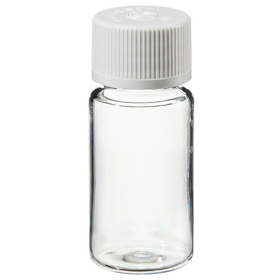
PETG serum vials suitable for sampling, storage, and transportation of small amounts of reagents.
- Plastic utensils and containers
- Other laboratory equipment and containers


Are you throwing away used masking rubber? Reduce your rubber purchasing costs with our mini koma!
- High pressure cleaner
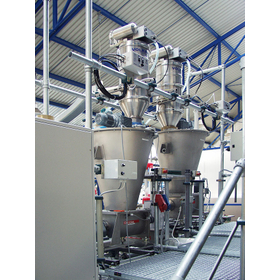

It's so compact, yet super powerful! I've been waiting for an air transport device like this!
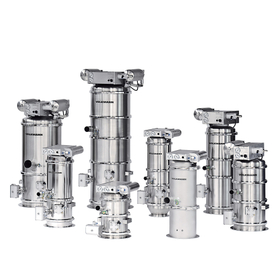
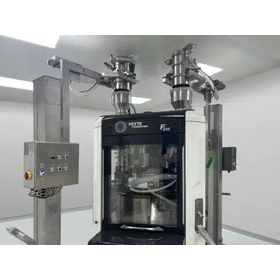
- Powder Conveyor Device
- Powder Supply Device
- Vacuum pump

Perfect for saving space! A compact type vacuum conveyor! It is completely air-operated and requires no installation!


- Powder Conveyor Device
- Food Conveyor Equipment
- Powder Supply Device

4000 units delivered domestically! Contributing to labor-saving in the workplace! No external scattering of powder, protecting both people and equipment.


- Food Conveyor Equipment
- Powder Conveyor Device
- Powder Supply Device

All you need to transport powder is "compressed air"! Introducing Germany's cutting-edge technology!


- Conveyor
- Powder Conveyor Device
- Food Conveyor Equipment
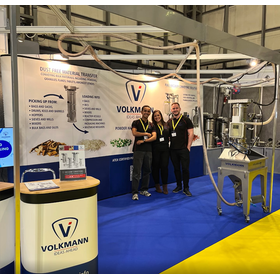
Overseas (UK/Netherlands) Exhibition Participation Information
Volkmann exhibited at trade shows in the UK for the pharmaceutical industry and in the Netherlands for the SEED (seed industry). At the UK trade show: ✔️ Discuss production challenges ✔️ Showcase conveyor operation ✔️ Share advice and solutions to help optimize processes Reasons to consider vacuum conveying in processes: ➡️ Increased productivity: With a conveying speed of up to 10,000 kg/h, bottlenecks are reduced, leading to increased output. ➡️ Minimized waste and contamination: Fully sealed, dust-free transfer enables cleaner production. ➡️ Safe design: ATEX-certified equipment ensures reliable operation even in hazardous environments. ➡️ Hygienic and compliant: FDA-approved materials meet strict food and pharmaceutical standards. ➡️ Reduced downtime: Tool-free disassembly allows for quick cleaning and changeovers. ➡️ Protecting product integrity: Gentle conveying prevents damage to fragile materials. ➡️ Reliable engineering: Built to the highest standards backed by decades of expertise.

Is the suction power decreasing? Clogged internal filters can cause a decrease in suction power!


- Powder Conveyor Device
- Food Conveyor Equipment
- Dust collector

Please consider our proposal for automation in transportation, weighing, and filling packaged solutions!
- Food Conveyor Equipment
- Powder Conveyor Device
- Weighing Machine
![[Case Study] Air transport of food ...](https://image.mono.ipros.com/public/product/image/062/2001481763/IPROS4773661153720185542.png?w=280&h=280)
[Case Study] Air transport of mixtures without classification through our unique technology of [plug transport].
- Powder Conveyor Device

We provide a comprehensive solution for powder transportation, weighing, and filling!
- Powder Supply Device