
List of Powder Equipment products
- classification:Powder Equipment
1516~1530 item / All 4884 items


Reduce the workload from handling heavy objects! Here are five case studies that solved customer challenges! We are also accepting free consultations and tests tailored to your work!

- Other conveying machines


Strong cold wind from room temperature to -13°C! Depending on the usage environment, you can choose between the combo type or the separate type!
- Cooling system

April 10, 2024 (Wednesday) to April 12, 2024 (Friday) Notice of Participation in Nagoya Manufacturing World 2024
Sanwa Shiki Ventilator Co., Ltd. will be exhibiting at the 2024 Monozukuri World (Nagoya) held at Port Messe Nagoya. We will also be showcasing our large cooling fans and cool/warm ambient products. Date: April 10, 2024 - April 12, 2024 Opening: 10:00 AM Location: Nagoya Port Messe (Exhibition Hall 1) *Our booth: 19-1 We would be grateful if you could visit us if you have the time.
![[Automatic Mortar] Ultra-compact, t...](https://image.mono.ipros.com/public/product/image/0a6/2001087053/IPROS77864125937500969859.jpeg?w=280&h=280)

Optimal for pre-dispersion! Can mix and grind materials from just a few grams. Reproduces hand grinding【Compact Automatic Mortar】. Fits in a glove box at the smallest size!
- Other machine tools
- Mixer/agitator
- Fine grinding machine

Dependence of Zeolite Particle Distribution on Grinding Time
**Summary** To understand the performance of the Ishikawa-type mixing and grinding machine produced at the Ishikawa factory, zeolite was used as the standard material to clarify the relationship between grinding time and particle size distribution through experiments. First, experiments were conducted using the D18S (desktop machine) to examine the relationship between the particle size distribution of zeolite and grinding time. The grinding times were varied at 15 minutes, 30 minutes, 1 hour, 2 hours, and 4 hours, with 2g samples taken at each interval. These samples were then analyzed for particle size distribution using a laser diffraction particle size measurement device. **Conclusion** In the particle size distribution, the peak value (mode) was 0.4μm for grinding times up to 1 hour. After 2 hours of grinding, it was 0.1μm. The standard deviation, which represents the variation in particle size, decreased with longer grinding times. However, beyond 2 hours, it saturated and remained almost constant at 3μm. From this, it can be concluded that within the experimental range, the relationship between the particle size distribution of zeolite and grinding time using the D18S shows that longer grinding times result in smaller particle size (mode) and less variation (standard deviation), but after 2 hours, it becomes constant.
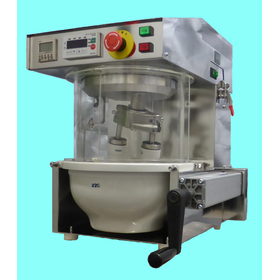
The pestle rotation part rises and falls, making it easier to exchange the mortar and pestle, remove the ground material after grinding, and clean the machine. A tabletop machine for simultaneous stir...
- Emulsifier/Disperser
- Fine grinding machine
- Mixer/agitator
Dependence of Zeolite Particle Distribution on Grinding Time
**Summary** To understand the performance of the Ishikawa-type mixing and grinding machine produced at the Ishikawa factory, zeolite was used as the standard material to clarify the relationship between grinding time and particle size distribution through experiments. First, experiments were conducted using the D18S (desktop machine) to examine the relationship between the particle size distribution of zeolite and grinding time. The grinding times were varied at 15 minutes, 30 minutes, 1 hour, 2 hours, and 4 hours, with 2g samples taken at each interval. These samples were then analyzed for particle size distribution using a laser diffraction particle size measurement device. **Conclusion** In the particle size distribution, the peak value (mode) was 0.4μm for grinding times up to 1 hour. After 2 hours of grinding, it was 0.1μm. The standard deviation, which represents the variation in particle size, decreased with longer grinding times. However, beyond 2 hours, it saturated and remained almost constant at 3μm. From this, it can be concluded that within the experimental range, the relationship between the particle size distribution of zeolite and grinding time using the D18S shows that longer grinding times result in smaller particle size (mode) and less variation (standard deviation), but after 2 hours, it becomes constant.

Automation of porcelain mortar (mortar) and porcelain pestle (pestle). Ideal for a wide range of applications in food, pharmaceuticals, chemicals, and electronic materials, including stirring, grindin...
- Fine grinding machine
- Mixer/agitator
- Other processing machines
Dependence of Zeolite Particle Distribution on Grinding Time
**Summary** To understand the performance of the Ishikawa-type mixing and grinding machine produced at the Ishikawa factory, zeolite was used as the standard material to clarify the relationship between grinding time and particle size distribution through experiments. First, experiments were conducted using the D18S (desktop machine) to examine the relationship between the particle size distribution of zeolite and grinding time. The grinding times were varied at 15 minutes, 30 minutes, 1 hour, 2 hours, and 4 hours, with 2g samples taken at each interval. These samples were then analyzed for particle size distribution using a laser diffraction particle size measurement device. **Conclusion** In the particle size distribution, the peak value (mode) was 0.4μm for grinding times up to 1 hour. After 2 hours of grinding, it was 0.1μm. The standard deviation, which represents the variation in particle size, decreased with longer grinding times. However, beyond 2 hours, it saturated and remained almost constant at 3μm. From this, it can be concluded that within the experimental range, the relationship between the particle size distribution of zeolite and grinding time using the D18S shows that longer grinding times result in smaller particle size (mode) and less variation (standard deviation), but after 2 hours, it becomes constant.
![[Case Study] Ishikawa-style Automat...](https://image.mono.ipros.com/public/product/image/790/2001508377/IPROS8122767706193048872.jpg?w=280&h=280)
Grinding and refining organic pigments using NaCl!
- Fine grinding machine
- Fine grinding machine
- Crusher

Materials Technology for Lithium-Ion Batteries and All-Solid-State Batteries: From Processes to Evaluation Techniques
- Fine grinding machine
- Crusher/Mill
- Fine grinding machine
![[Use Case] Ishikawa-style Automatic...](https://image.mono.ipros.com/public/product/image/bd7/2001508301/IPROS11924421177150472312.png?w=280&h=280)
Powerfully crush with forced rotation. Capable of grinding hard materials.
- Fine grinding machine
- Crusher/Mill
- Crusher

Also for the pre-dispersion of electrode materials for all-solid-state batteries! A single machine can stir, grind, disperse, and knead! Reproducing hand grinding [Automatic mortar and pestle].
- Fine grinding machine
- Mixer/agitator
- Emulsifier/Disperser

Simultaneous processing of dispersion, kneading, concentration, drying, and grinding of slurry/paste/powder with a single machine! Slurry grinding rotary evaporator.
- Other powder equipment
- Emulsifier/Disperser
- Concentration Equipment

Equipped with ceramic bowls (mortar) and double boilers (jacket) for heating/cooling. Simultaneous processing of grinding (crushing, disintegration), dispersion, kneading, concentration, and drying op...
- Fine grinding machine
- Emulsifier/Disperser
- Mixer/agitator
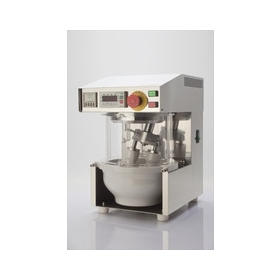
This is the Ishikawa-type mixing and grinding machine, which is widely used not only for the mixing, blending, and kneading of ointments but also for the grinding, stirring, and dispersing of medicina...
- Food Processing Equipment
- Fine grinding machine
- Mixer/agitator

Please leave the 'Ishikawa-style stirring and grinding machine' for 'stirring', 'crushing', 'mixing', and 'kneading' to Ishikawa Factory Co., Ltd.
- Mixer/agitator
- Fine grinding machine
- Emulsifier/Disperser
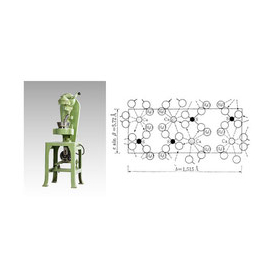
Introduction to the paper "Mechanochemical Dehydration of Hydrate Crystals Using AGA"
**Introduction to the Paper** Title: Mechanochemical Reactions of Hydrated Crystals Author: Professor Yasuo Arai Summary: The paper titled "Mechanochemical Reactions of Hydrated Crystals" was published in 1971 and provides valuable research findings related to gypsum and lime. This paper was written by Professor Yasuo Arai. The focus of this paper is on the characteristics and mechanisms of mechanochemical reactions in hydrated crystals. Professor Arai conducted a detailed study of the processes by which hydrated crystals, such as gypsum and lime, change under physical stimuli. As a result, he revealed that changes in crystal structure and recrystallization of materials occur during the mechanochemical reactions of hydrated crystals. The equipment used to apply this "physical stimulus" is our company's AGA. The significance of this paper contributes to understanding how mechanochemical reactions of hydrated crystals affect the applications of gypsum and lime. Furthermore, this research suggests potential applications in fields such as materials science and architectural engineering. References: Arai, Yasuo. "Gypsum and Lime," 1971. "Mechanochemical Reactions of Hydrated Crystals."

- The use of stainless steel bowls enhances thermal responsiveness, allowing for rapid heating and processing. - By thermal spraying zirconia onto stainless steel, processing performance equivalent ...
- Other processing machines
- Concentration Equipment
- Fine grinding machine
![[Heating/Cooling Type] 24REB Automa...](https://image.mono.ipros.com/public/product/image/2bb/2001504801/IPROS25542357994764581749.png?w=280&h=280)
Ceramic mortar (mortar bowl) and ceramic pestle (pestle) manufacturing machine, suitable for chemical products and electronic materials! The bowl can be tilted.
- Food Processing Equipment
- Mixer/agitator
- Fine grinding machine

It is possible to grind while heating (maximum temperature: 180°C) and cooling (minimum temperature: -20°C) in a vacuum.
- Other processing machines
- Crusher
- Concentration Equipment

Powerful processing of stirring, grinding, crushing, disintegration, kneading, mixing, and dispersion of liquids, slurries, pastes, colloids, and powders - Ishikawa-type stirring and grinding machine,...
- Crusher
- Emulsifier/Disperser
- Fine grinding machine