
List of Cells and batteries products
- classification:Cells and batteries
751~765 item / All 2920 items


Reduce the workload from handling heavy objects! Here are five case studies that solved customer challenges! We are also accepting free consultations and tests tailored to your work!

- Other conveying machines


We can accommodate high resistance over 10,000 ohms, with diameters ranging from approximately 30 mm to 8 inches, and we also offer thinning and chip processing arrangements!
- Other semiconductors
- Processing Contract
- Wafer


The specifications are PSE/UL/EU/UK/AU! The output type is USB Type-C, and the output capacity is PD 20W.
- Charger
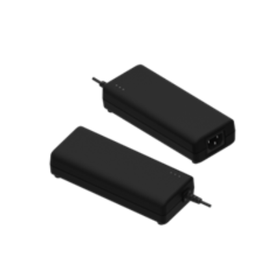
Output voltage is 42V 2.85A for 36V battery, 54.6V 2.2A for 48V battery.
- Charger
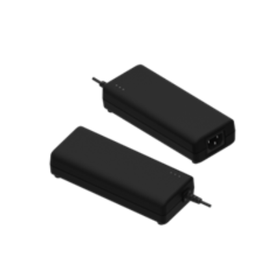
Introducing a charger with a capacity of 160W that meets the standards of 60335 and UL1310!
- Charger
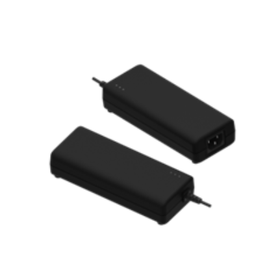
Tabletop type! Introducing a product with an output capacity of 200W, compliant with standards 60335 and UL1310.
- Charger
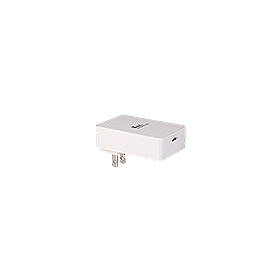
Introducing a charger with a USB Type-C connector and an output capacity of 60W!
- Charger

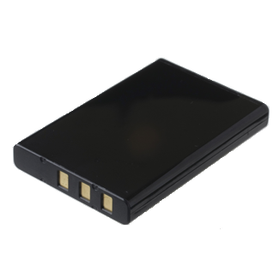
A battery pack fixed in a high-quality, inexpensive thin case or frame with a protection circuit, based on lithium-ion battery cells from Japanese manufacturers.
- Lithium-ion battery
- Secondary Cells/Batteries
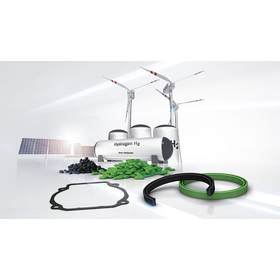

Accelerating sustainable technological innovation.
- Hydrogen battery
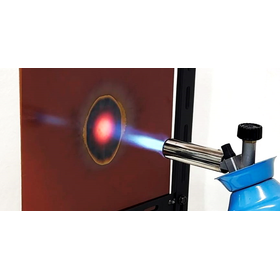

Ultra-thin, strongest sheet to prevent fire spread due to thermal runaway.
- Secondary Cells/Batteries
- Lithium-ion battery


https://cmcre.com/archives/140874/
- Technical and Reference Books
- Lithium-ion battery
- Secondary Cells/Batteries
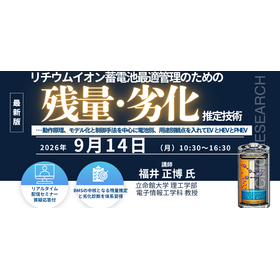
September 14 Webinar "Battery Remaining Capacity and Degradation Estimation Technology"
■Title: "Explanation of Remaining Capacity and Degradation Estimation Techniques for Optimal Management of Lithium-Ion Batteries" ――Focusing on operating principles, modeling, and control methods, this seminar explains battery management technologies for EVs, HEVs, PHEVs, etc., from the perspectives of different battery types and applications. It covers everything from remaining capacity estimation and degradation diagnosis necessary for BMS to lifespan prediction. 【Knowledge Gained from the Seminar】 - Basic characteristics and operating principles of lithium-ion batteries - Electrical characteristics of batteries and equivalent circuit models - Extraction of equivalent circuit models from Nyquist plots - Battery simulation using MATLAB - High-precision remaining capacity estimation using Kalman filters - Degradation phenomena of batteries and modeling - Degradation diagnosis using Recursive Least Squares (RLS) - Latest technologies related to degradation diagnosis and lifespan prediction 【Target Audience for the Seminar】 - Beginners and young engineers who want to learn about battery technology - Engineers involved in BMS and battery simulation - Those interested in remaining capacity estimation, degradation diagnosis, and lifespan prediction technologies
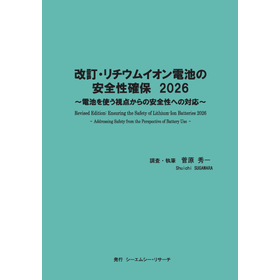
The latest version summarizing changes in domestic and international laws, regulations, and standards from 2023 to 2025, divided into chapters!
- Lithium-ion battery
- Technical and Reference Books
- Secondary Cells/Batteries
September 14 Webinar "Battery Remaining Capacity and Degradation Estimation Technology"
■Title: "Explanation of Remaining Capacity and Degradation Estimation Techniques for Optimal Management of Lithium-Ion Batteries" ――Focusing on operating principles, modeling, and control methods, this seminar explains battery management technologies for EVs, HEVs, PHEVs, etc., from the perspectives of different battery types and applications. It covers everything from remaining capacity estimation and degradation diagnosis necessary for BMS to lifespan prediction. 【Knowledge Gained from the Seminar】 - Basic characteristics and operating principles of lithium-ion batteries - Electrical characteristics of batteries and equivalent circuit models - Extraction of equivalent circuit models from Nyquist plots - Battery simulation using MATLAB - High-precision remaining capacity estimation using Kalman filters - Degradation phenomena of batteries and modeling - Degradation diagnosis using Recursive Least Squares (RLS) - Latest technologies related to degradation diagnosis and lifespan prediction 【Target Audience for the Seminar】 - Beginners and young engineers who want to learn about battery technology - Engineers involved in BMS and battery simulation - Those interested in remaining capacity estimation, degradation diagnosis, and lifespan prediction technologies
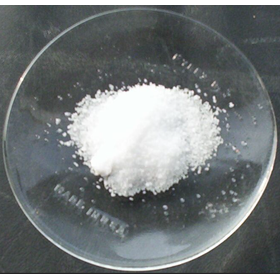

For heat treatment of metals. Anhydrous high-purity lithium chloride.
- Secondary Cells/Batteries
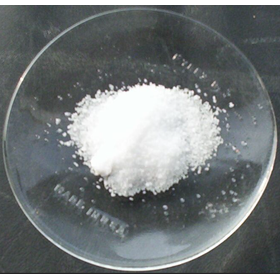
High purity, domestically produced anhydrous lithium chloride. For dyeing applications.
- Secondary Cells/Batteries
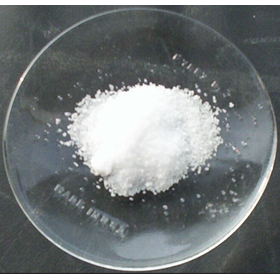
For catalytic applications in petroleum refining. Providing high-purity anhydrous lithium chloride.
- Secondary Cells/Batteries
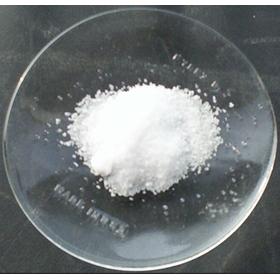
High purity anhydrous lithium chloride. For use as fertilizer.
- Secondary Cells/Batteries