
List of others products
- classification:others
6211~6255 item / All 68022 items


Reduce the workload from handling heavy objects! Here are five case studies that solved customer challenges! We are also accepting free consultations and tests tailored to your work!

- Other conveying machines


Amino acid-derived natural cationic polymer that can be used in food preservatives, hygiene materials, and daily necessities. It is a safe material as it is a fermentation product produced by natural ...


- Shelf life enhancer

Introduction of the preservative polylysine / fermented polyamino acids that contribute to food poisoning prevention.
We provide easy-to-understand materials explaining the natural preservative polylysine, which prevents food poisoning. ε-Polylysine (hereafter referred to as polylysine) is an amino acid-derived preservative widely used as a food preservative. By adding polylysine, the growth of microorganisms that cause food poisoning can be prevented. Every year, food poisoning caused by microorganisms is a significant issue and is frequently reported in the news. Even foods that do not appear to be spoiled can rapidly proliferate microorganisms if the growth environment is suitable, so caution is necessary. Even if something looks clean, contamination by bacteria can progress, posing a risk of food poisoning. By ensuring hygiene management during the manufacturing process, proper storage at appropriate temperatures, and the appropriate use of the preservative polylysine, food safety can be more effectively protected. 【Features】 ■ A safe material produced through fermentation by natural microorganisms (not genetically modified organisms) ■ Provides a good image as a natural fermented product ■ Listed in the existing additive registry as a food preservative ■ A safe domestic product *Please feel free to contact us.


Improving the durability of agricultural machinery with a powder coating that excels in wear resistance.
- others

Dry conditions and paint management are important.
- others


The possibilities of environmental management are limitless.
- others
Pre-treatment is all about corrosion prevention measures.
- others

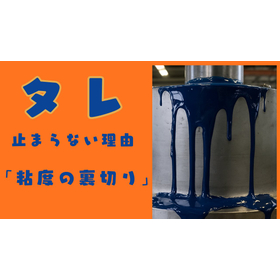



Improvement of quality through optimization of the drying process.
- others

The quality of the pre-treatment greatly affects adhesion. What processes should be checked before the paint and equipment?
- others
The true cause of pinhole formation is not the paint, but insufficient gas release. This explains how it can occur even with heating at 60 degrees.
- others

The cause of blisters is the volatilization and gasification of oils. The simultaneous removal of moisture and oils from the material is the key point for countermeasures.
- others

The cause of chipping is poor adhesion and insufficient film thickness. A film thickness of over 40 microns can reduce the occurrence rate by 95 percent.
- others
The true cause of pinhole formation is not the paint, but insufficient gas release. This explains how it can occur even with heating at 60 degrees.
- others

The cause of blisters is the volatilization and gasification of oils. The key to prevention is the simultaneous removal of moisture and oils from the material.
- others
The cause of the dripping is the mismatch between paint viscosity and curing temperature. It explains the phenomenon where a 20-degree difference results in a threefold increase in occurrence rate.
- others

Insufficient degreasing leads to poor adhesion. Explaining the importance of often-overlooked processes.
- others

Insufficient degreasing leads to poor adhesion. An explanation of the importance of the often-overlooked degreasing process.
- others

Most paint peeling is caused not by the paint itself but by inadequate pre-treatment. This explains the poor adhesion due to insufficient degreasing and chemical treatment.
- others
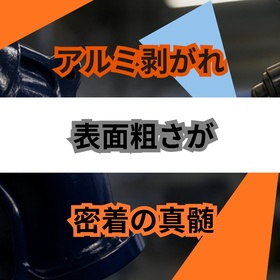
Peeling paint on aluminum products may be caused by surface roughness. I will explain the pretreatment that affects adhesion.
- others

Pinhole defects that are likely to occur in die casting and casting. This explains the relationship between internal gas and pre-treatment.
- others
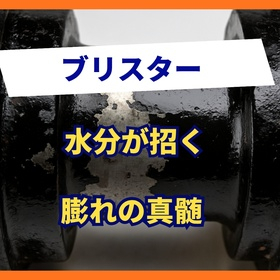
Blistering defects may be caused by moisture or corrosion rather than paint. I will explain the phenomena occurring within the paint film.
- others

Blisters that occur months later, even if there are no issues at the time of delivery. This explains the relationship between internal corrosion and pre-treatment.
- others

Defects in which the paint film peels off during assembly may be caused by the pretreatment rather than the paint itself.
- others
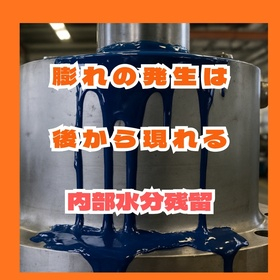
The invisible swelling defects at the time of shipment are related to moisture residue and insufficient substrate treatment.
- others

Appearance defects caused by paint dripping occur due to excessive film thickness or irregularities in viscosity management.
- others

Whether the coating is too thick or too thin, it affects corrosion resistance and assembly accuracy.
- others

Adhesion to areas where it should not be applied can lead to assembly issues or poor electrical conductivity.
- others
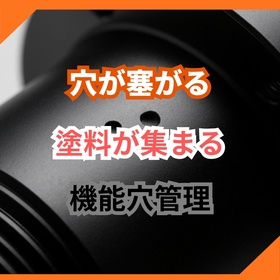
The paint accumulation around the hole is a critical inspection point that can lead to assembly defects and drainage issues.
- others
Even small holes can affect rust prevention performance. We will organize measures against pinholes based on three factors: oil, moisture, and air.
- others
Invisible swelling defects at the time of shipment can lead to complaints a month later. Managing moisture beneath the coating is important.
- others

Foreign matter contamination is not just a problem in the booth. We will explain measures against surface defects by dividing the sources into four categories.
- others

Color unevenness is not just a visual issue. Quality differences arise from four conditions: stirring, dilution, film thickness, and curing.
- others
The sauce is generated not only by the skill of the operator but also by three conditions: film thickness, viscosity, and component posture.
- others

A coating that is too thick or too thin will result in defects. We will explain the management of film thickness from three aspects: dimensions, rust, and appearance.
- others

Defects in the film thickness of metal baked coatings are a cause of quality deterioration. This explains the importance of film thickness management and points for improvement.
- others

What is the difference between the paint and thinner used in metal baking paint? I will explain each role in an easy-to-understand manner.
- others

Do you think that adding more thinner makes it easier to paint? Here’s an explanation of the reasons that can lead to poor quality.
- others
Why do we differentiate between summer and winter thinners? I will explain the impact of temperature on painting quality.
- others
Countless small holes appearing on the painted surface. We will address the fundamental causes that cannot be solved by merely adjusting the viscosity of the paint.
- others