
List of Other optical parts products
- classification:Other optical parts
811~840 item / All 2265 items


For those who have isolators. Achieving high chemical resistance and workability. Low cost and short delivery times are also possible for glove box and isolator gloves.


- Work gloves
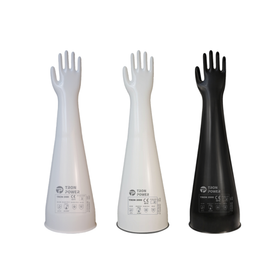
Notice of participation in 'INTERPHEX Week Tokyo' from May 20 (Wednesday) to May 22 (Friday), 2026.
Ito Corporation will be exhibiting at "INTERPHEX Week Tokyo" held at Makuhari Messe. This exhibition is the largest in Japan, showcasing a wide range of products and services related to the research and manufacturing of pharmaceuticals, cosmetics, and regenerative medicine from 25 countries and regions around the world. Pharmaceutical and cosmetic manufacturers, as well as regenerative medicine companies, will be attending from all over the globe. We will be showcasing "Gloves for Glove Boxes/Isolators" manufactured by Tron Power. We look forward to your visit.


◆The fastest response for BER testing of 10G/25G SFP◆Reading registers of optical transceivers◆Built-in optical power meter◆Pocket-sized
- Other optical parts
- Other physicochemical equipment
- Other measurement, recording and measuring instruments

◆Pocket-sized yet highly stable ◆Pulse mode (270Hz/2KHz) ◆Easy to use on-site with AA battery operation
- Other optical parts
- Other physicochemical equipment
- Other measurement, recording and measuring instruments

◆Up to 36 channels, freely combinable light source/power meter modules ◆Modules can be freely attached and detached even during product operation ◆Supports remote operation
- Other optical parts
- Other physicochemical equipment
- Other measurement, recording and measuring instruments


Over 500 successful projects and a rich lineup of film deposition processing. With 100 years of experience since our founding, we contribute to our customers' technological innovations through optical...
- Sensors
- LED lighting
- Other optical parts
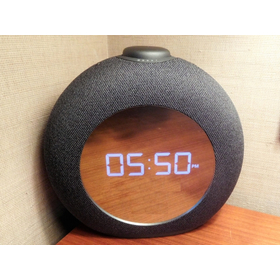
I have added 'Understanding Half Mirrors in 5 Minutes! A Thorough Explanation' to the technical trend keywords.
There are surprisingly many situations around us where half mirrors, which look like mirrors but actually allow light to pass through, are used. For example, they are essential optical components in smartphone facial recognition and car head-up displays. Half mirrors play a role in skillfully reflecting and transmitting light, delivering images and information more conveniently and precisely. This time, we have summarized the mechanism of half mirrors, their uses, and the future evolution of technology in an easy-to-understand manner that can be grasped in five minutes. 【1】What is a half mirror? 【2】Difference between half mirrors and magic mirrors 【3】Structure of half mirrors 【4】Applications of half mirrors 【5】Points to consider when selecting half mirrors 【6】Future prospects of half mirrors For more details, please visit our company website.

◆MPO polarity testing (type-A/B/C) insertion loss (IL) and return loss (RL) can be performed with a single unit ◆19-inch rack mount type
- Other optical parts
- Other physicochemical equipment
- Other measurement, recording and measuring instruments

◆Dial type allows continuity check of MPO one core at a time ◆Equipped with lighting and flashing modes ◆Custom options available for 12 cores, as well as 24 cores and 36 cores
- Other optical parts
- Other physicochemical equipment

◆Equipped with up to 8 channels and compact◆Compact housing◆No warm-up required◆Plug-in and unplug freely during measurement
- Other optical parts
- Other measurement, recording and measuring instruments
- Other physicochemical equipment

◆0.1Gbps to 100Gbps◆The simplest and fastest BER testing for AOC/optical transceivers.
- Other optical parts
- Other physicochemical equipment
- Other measurement, recording and measuring instruments

◆Quick simultaneous Type A/B/C polarity diagnosis and loss testing◆Simple operability using a touch panel◆Compact and lightweight
- Other optical parts
- Other measurement, recording and measuring instruments
- Other physicochemical equipment

It is a high light-transmitting ITO coating that combines an ITO film (transparent conductive film) with a dielectric multilayer anti-reflective film. It prevents condensation while allowing high tran...
- Other optical parts
- Sensors
- Surveillance Cameras

"I will provide a thorough explanation about ITO (transparent conductive film)!" has been added to the technical trend keywords.
ITO (Indium Tin Oxide) is a special material that is transparent yet possesses high conductivity, making it indispensable in modern display technology, touch panels, and solar cells. In recent years, the demand for ITO has rapidly increased alongside the proliferation of smartphones and flat panel displays. This time, we will provide a detailed explanation of the properties, applications, and manufacturing methods of ITO, and introduce the unique ITO proposals from Adachi New Industry. Please see how ITO, which is transparent yet conducts electricity, supports our daily lives. 1. Summary of ITO properties 2. Applications of ITO 3. Manufacturing methods of ITO 4. Features of ITO from Adachi New Industry For more details, please visit our company website.

◆ Individually measure the optical power of each lane of the optical transceiver ◆ Compatible with 400G LR4, SR8, DR8, FR8, LR8/ER8
- Other optical parts
- Other measurement, recording and measuring instruments
- Other physicochemical equipment

It is an optical thin-film filter that reduces the reflectance at specific wavelengths and improves transmittance. By increasing the amount of light, it contributes to energy saving and power reductio...
- Other optical parts
- lens
- Sensors
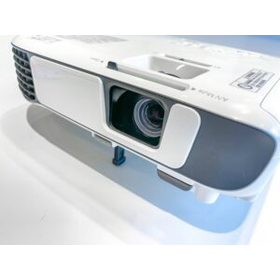
I have added 'A Comprehensive Explanation of UV-IR Cut Filters in 5 Minutes!' to the technical trend keywords.
The UV-IR cut filter is an optical thin-film filter that selectively removes unwanted light in the ultraviolet (UV) and infrared (IR) wavelength ranges, allowing only specific wavelength bands of light to be transmitted or reflected with high precision. This filter achieves wavelength selectivity by utilizing interference effects through the precise layering of multilayer dielectric films and metal films. Generally, it requires control of film thickness on the order of nanometers, exceeding several tens to over a hundred layers, and its optical properties are determined by multiple parameters such as film thickness accuracy, refractive index of the film material, smoothness of the film interfaces, and adhesion of the films. 1) What is a UV-IR cut filter? 2) Historical background of UV-IR filter manufacturing in Japan 3) Why has overseas manufacturing of UV-IR cut filters progressed? 4) If UV-IR cut filters were to be produced again in Japan... necessary points (hypothesis) 5) Technically important points when selecting UV-IR cut filters 6) Future prospects Conclusion - The efforts of Adachi New Industry Co., Ltd. to focus on domestic production in Japan For more details, please visit our company website.

◆14-pin butterfly package ◆Wideband, high output ◆Built-in power monitor function included
- Other optical parts
- Other physicochemical equipment

◆Narrow linewidth <2MHz ◆Excellent center wavelength accuracy ◆Mode-hop free
- Other optical parts
- Other semiconductors
- Other physicochemical equipment

It is an optical filter that cuts ultraviolet and infrared light while having a high transmittance in the visible light range.
- Other optical parts
- Surveillance Cameras
- Sensors
I have added 'A Comprehensive Explanation of UV-IR Cut Filters in 5 Minutes!' to the technical trend keywords.
The UV-IR cut filter is an optical thin-film filter that selectively removes unwanted light in the ultraviolet (UV) and infrared (IR) wavelength ranges, allowing only specific wavelength bands of light to be transmitted or reflected with high precision. This filter achieves wavelength selectivity by utilizing interference effects through the precise layering of multilayer dielectric films and metal films. Generally, it requires control of film thickness on the order of nanometers, exceeding several tens to over a hundred layers, and its optical properties are determined by multiple parameters such as film thickness accuracy, refractive index of the film material, smoothness of the film interfaces, and adhesion of the films. 1) What is a UV-IR cut filter? 2) Historical background of UV-IR filter manufacturing in Japan 3) Why has overseas manufacturing of UV-IR cut filters progressed? 4) If UV-IR cut filters were to be produced again in Japan... necessary points (hypothesis) 5) Technically important points when selecting UV-IR cut filters 6) Future prospects Conclusion - The efforts of Adachi New Industry Co., Ltd. to focus on domestic production in Japan For more details, please visit our company website.

It is a filter that efficiently cuts (reflects) short-wavelength UV (ultraviolet) light while allowing visible light to pass through.
- Sensors
- Other optical parts
- Lighting for image processing
I have added 'A Comprehensive Explanation of UV-IR Cut Filters in 5 Minutes!' to the technical trend keywords.
The UV-IR cut filter is an optical thin-film filter that selectively removes unwanted light in the ultraviolet (UV) and infrared (IR) wavelength ranges, allowing only specific wavelength bands of light to be transmitted or reflected with high precision. This filter achieves wavelength selectivity by utilizing interference effects through the precise layering of multilayer dielectric films and metal films. Generally, it requires control of film thickness on the order of nanometers, exceeding several tens to over a hundred layers, and its optical properties are determined by multiple parameters such as film thickness accuracy, refractive index of the film material, smoothness of the film interfaces, and adhesion of the films. 1) What is a UV-IR cut filter? 2) Historical background of UV-IR filter manufacturing in Japan 3) Why has overseas manufacturing of UV-IR cut filters progressed? 4) If UV-IR cut filters were to be produced again in Japan... necessary points (hypothesis) 5) Technically important points when selecting UV-IR cut filters 6) Future prospects Conclusion - The efforts of Adachi New Industry Co., Ltd. to focus on domestic production in Japan For more details, please visit our company website.

It is a dielectric multilayer film filter that transmits visible light and reflects near-infrared light.
- Other optical parts
- Color camera
- Sensors
I have added 'A Comprehensive Explanation of UV-IR Cut Filters in 5 Minutes!' to the technical trend keywords.
The UV-IR cut filter is an optical thin-film filter that selectively removes unwanted light in the ultraviolet (UV) and infrared (IR) wavelength ranges, allowing only specific wavelength bands of light to be transmitted or reflected with high precision. This filter achieves wavelength selectivity by utilizing interference effects through the precise layering of multilayer dielectric films and metal films. Generally, it requires control of film thickness on the order of nanometers, exceeding several tens to over a hundred layers, and its optical properties are determined by multiple parameters such as film thickness accuracy, refractive index of the film material, smoothness of the film interfaces, and adhesion of the films. 1) What is a UV-IR cut filter? 2) Historical background of UV-IR filter manufacturing in Japan 3) Why has overseas manufacturing of UV-IR cut filters progressed? 4) If UV-IR cut filters were to be produced again in Japan... necessary points (hypothesis) 5) Technically important points when selecting UV-IR cut filters 6) Future prospects Conclusion - The efforts of Adachi New Industry Co., Ltd. to focus on domestic production in Japan For more details, please visit our company website.

◆Adjustable output between 10% and 100%◆With protection features for overcurrent/voltage/temperature
- Other optical parts
- Other physicochemical equipment

◆ Wavelength stability: 0.02nm/℃, 0.05nm/A ◆ Spectral width: <0.5nm ◆ 0.22NA fiber
- Other semiconductors
- Laser Components
- Other optical parts

Han's TCS is a company that sells semiconductor laser modules and systems with fiber couplings.
- Other semiconductors
- Other optical parts
- Other physicochemical equipment

◆1.25 to 11.3 Gbps ◆Compact 4mm x 4mm QFN28 package ◆Constant current (200mW chip power)
- Other optical parts
- Other physicochemical equipment

◆11.3Gbps TIA 10G APD◆Automatic Gain Controller included Ultra High Sensitivity TIA◆Compact die size
- diode
- Other optical parts
- Other measurement, recording and measuring instruments

◆High-sensitivity TIA with automatic gain controller ◆Sensitivity -32dBm / Dynamic range ≧35dB
- diode
- Other measurement, recording and measuring instruments
- Other optical parts

◆Ultra-high sensitivity TIA with automatic gain controller◆ Sensitivity -31dBm / Dynamic range ≧31dB
- Other optical parts
- Other measurement, recording and measuring instruments
- diode

◆2.5Gbps TIA with RSSI for 2.5G APD/PIN PD◆ High-sensitivity TIA with automatic gain controller
- Other optical parts
- diode
- Other measurement, recording and measuring instruments


Cuts ultraviolet (UV) and near ultraviolet (IR)! Visible light (visible rays) passes through!
- Other optical parts

◆2.5Gbps GPON TIA 2.5G GPON compatible◆ with internal PD bias filter function◆ can replace major products from various companies
- Other measurement, recording and measuring instruments
- Communications
- Other optical parts


For hole processing, including ultra-fine pores on a nano scale and holes requiring high precision, high quality, high density, and high positioning accuracy, please leave it to Toray Precision.
- Other optical parts
- Other semiconductors
- Processing Contract

◆12.5Gbps◆50Ω back termination, 3.0kΩ transimpedance and CML output
- Other optical parts
- Other physicochemical equipment

◆Coherent pulse vertical mode single RGB laser with a length of over 3 meters ◆The laser is used by a company that manufactures holograms.
- Other optical parts
- Other physicochemical equipment
- others