
List of Scientific and Physics Equipment products
- classification:Scientific and Physics Equipment
946~990 item / All 36045 items


Reduce the workload from handling heavy objects! Here are five case studies that solved customer challenges! We are also accepting free consultations and tests tailored to your work!

- Other conveying machines


Ideal for micro-machining! Achieves deburring of holes and double-sided machining in one pass, which was difficult with conventional tools!

- Other machine tools

We will be exhibiting at Mecatronics Tech Japan 2021 from October 20 (Wednesday) to October 23 (Saturday)!
Our company will exhibit at "Mechatrotech Japan 2021," which will be held at Portmesse Nagoya from Wednesday, October 20 to Saturday, October 23, 2021. We will introduce our tools, including the 'Bar Off Tool' capable of chamfering and deburring from a diameter of 0.8 mm, and the 'FEM' tool breakage detection device that reliably detects breakage. We look forward to your visit. (Booth number: 2B12)
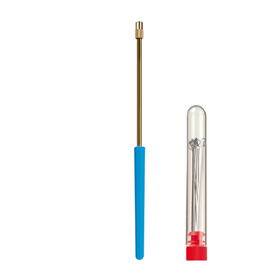

The handle is made of a chemical-resistant material that is easy to grip and has a lightweight design that reduces strain on the hand.
- Other laboratory equipment and containers
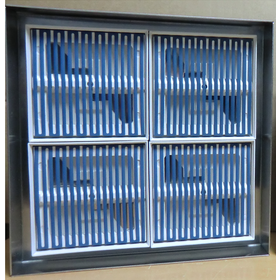

Energy-saving high-speed heating far-infrared panel heater PHX series
- Other heaters
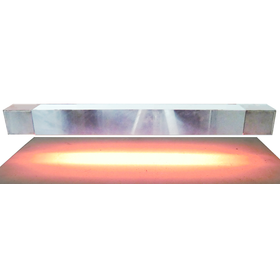
Radiates mid-infrared close to the absorption wavelength of water.
- Other heaters
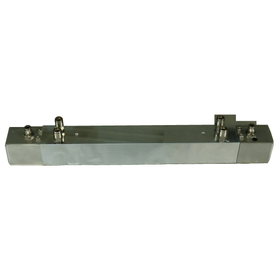
It can be heated to 900°C in a band shape. It can also be installed in narrow spaces.
- Other heaters
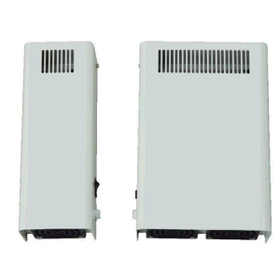
Ultraviolet sterilization and powerful ozone deodorization - OZ-10, OZ-20
- Ozone Generator
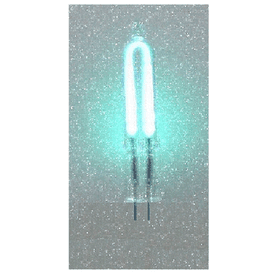
Small ultraviolet lamp with a cold cathode type and a diameter of φ4.5mm.
- Ultraviolet irradiation equipment
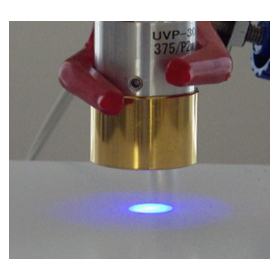
It can irradiate a small point with a diameter of 13 mm with ultraviolet light.
- Ultraviolet irradiation equipment
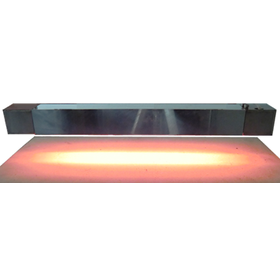
Radiates mid-infrared close to the absorption wavelength of water.
- Other heaters
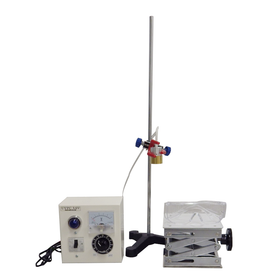
Focal diameter Φ13 allows for easy UV point irradiation!
- Ultraviolet irradiation equipment
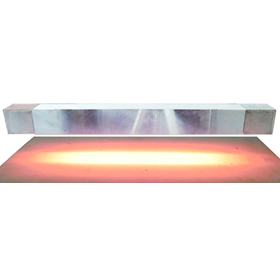
Radiates mid-infrared close to the absorption wavelength of water.
- Other heaters
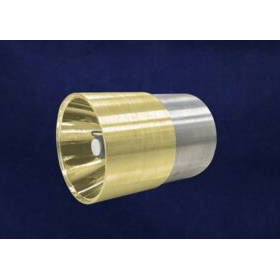
The emission frequency can be changed by varying the voltage.
- Other heaters
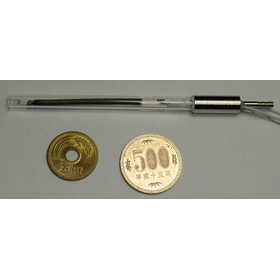
The heating tube is the size of a pencil with a diameter of 6 mm.
- Other heaters
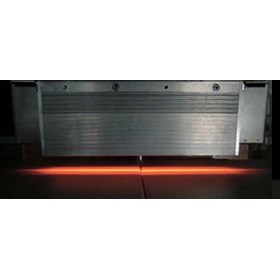
It can be heated linearly up to a maximum of 1300°C.
- Other heaters
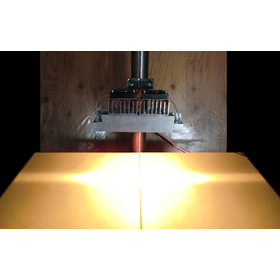
It can be heated linearly up to 1000°C in a compact size.
- Other heaters
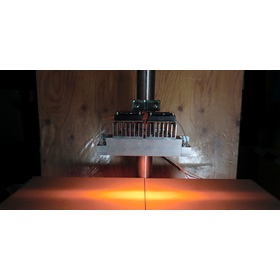
It can be heated linearly up to 900°C in a compact size.
- Other heaters
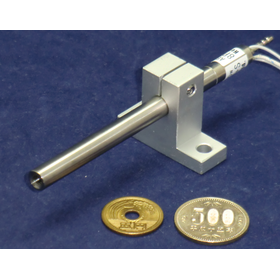
Pencil-sized hot air heater
- Other heaters
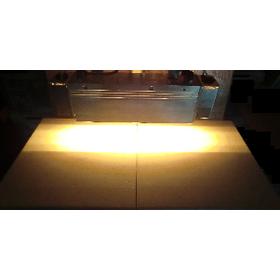
It can be heated in a band shape up to a maximum of 850℃.
- Other heaters
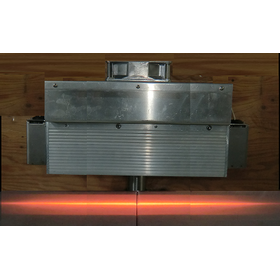
It can be heated in a linear fashion with a distance of 75mm.
- Other heaters
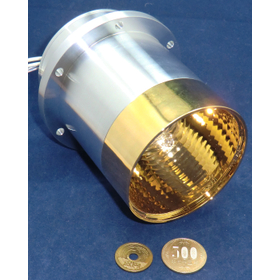
Vacuum chamber compatible halogen point heater
- Other heaters
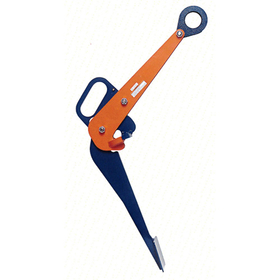

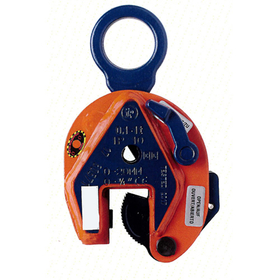
Adopting special alloy steel for enhanced toughness and miniaturization.
- Stainless steel container
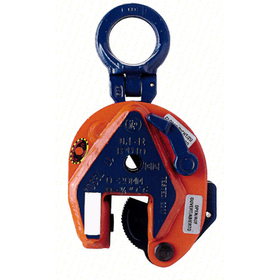
Adopting special alloy steel for enhanced toughness and miniaturization.
- Stainless steel container
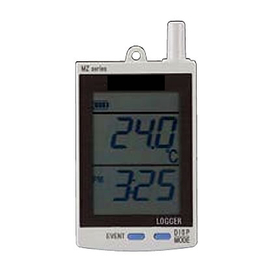
Voltage input and pulse input model / Additional specifications for large capacity batteries
- Stainless steel container
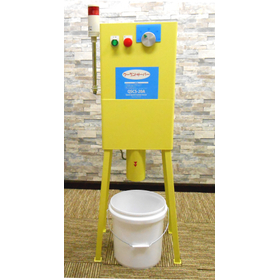

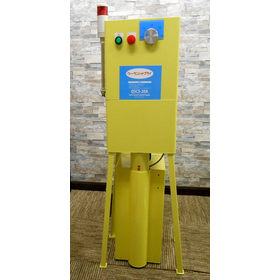
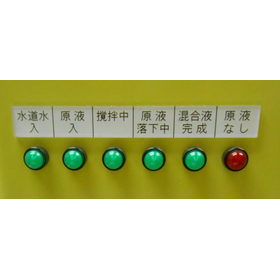
Cutting fluid management contributing to the enhancement of durability in railway vehicle manufacturing.
- Other physicochemical equipment
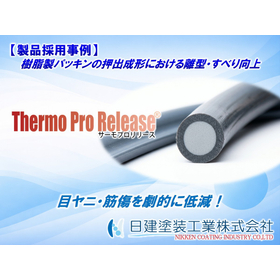

**Dramatically reduce defect rates** by imparting release properties and lubricity to the fine holes of the die. Shut out resin retention and adhesion, improving product yield!
- Surface treatment contract service

Durability lifespan: 2 weeks → 3 months. Super strong adhesion even for small diameter inner diameters! Reduces frequent disassembly cleaning and parts replacement due to fluorine wear, significantly ...
- Surface treatment contract service
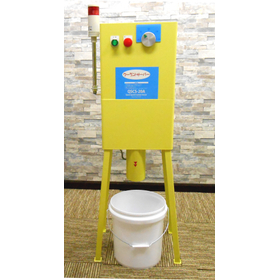
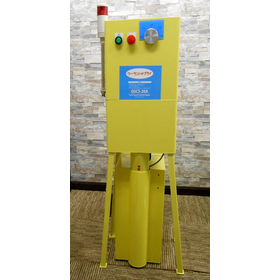
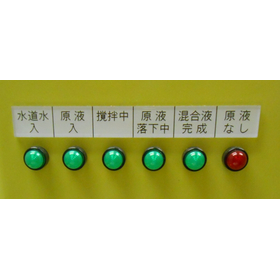
Generates cutting fluid with a specified concentration of ±0.5% in about 2 minutes through button operation. Contributes to the reduction of concentrated liquid.
- Other physicochemical equipment


Prevention of sticking for sticky materials such as molten resin plastic, labels, adhesive tape, and raw rubber. This is a coating that exhibits excellent non-stick properties.


- Surface treatment contract service

A must-see for those considering the introduction of Teflon coating! We will introduce the three essential points needed for implementation, comparing them with actual case studies.
- Surface treatment contract service

Hot melt adhesive does not stick. The effect lasts even with cleaning using solvents. It is a silicone-based release surface treatment that is different from silicone release agents.


- Surface treatment contract service

In the adhesive tape release test, the force to peel off the tape is zero! The MRS coating can easily peel off sticky substances like adhesive tape and seals.


- Surface treatment contract service

◆Yoshida SKT Co., Ltd.◆ NEW "Non-stick and excellent release properties 'Hard Coat'" has been released.
"MRS Coating" (Mold Release Silicone) is a non-stick and release coating that features characteristics not found in conventional silicone coatings. In particular, MRS-014 is a thin film with a hardness of 9H, making it hard and excellent in non-stick and release properties. "MRS-014" - Non-stick (release) + Film hardness (9H) For more details, please refer to the product link.

[Materials Presentation] A textbook on fluororesin coatings that covers everything from the basics to practical examples! Understanding the fundamentals will also lead to applications in practical wor...


- Surface treatment contract service

Packed with content that connects theory to practice, from basics to applications! This is an extensive work spanning 38 pages where you can learn all about fluororesin coatings.


- Surface treatment contract service

◆Yoshida SKT Co., Ltd.◆ NEW The "Textbook on Teflon Coating and Fluororesin Coating" has been published in the "Tokai and Hokuriku Region Industrial Sector" of the Nikkan Kogyo Shimbun.
On November 29, an article about "The Textbook of Teflon Coating and Fluororesin Coating" was published in the Nikkan Kogyo Shimbun's "Aichi Prefecture Industrial Sector." The "Textbook of Teflon Coating and Fluororesin Coating," which ranked first in the Ipros catalog download, will be featured in the Nikkan Kogyo Shimbun. This textbook is packed with useful information on fluororesin coating that will be beneficial for the next ten years, catering to both beginners and experienced design engineers. It can be utilized not only for your own learning but also as educational material within your company. Please take this opportunity to check it out.

This is a groundbreaking fluororesin coating that has made it possible to process thin films with a thickness of 10 μm, which was previously considered difficult to process.

- Surface treatment contract service

◆Yoshida SKT Co., Ltd.◆ NEW "Introduction of [Developed Product] Thin Film Fluororesin Coating 10under" has been released.
The "Thin Film Fluororesin Coating 10under" is a groundbreaking fluororesin coating that enables thin film processing at a film thickness of 10μm, which was traditionally considered difficult to process. ■ Features of 10under - Non-stick properties equivalent to standard fluororesin coatings - Capable of thin film processing of approximately 10µm, reducing dimensional changes - While being a thin film, it minimizes transparency For more details, please refer to the product link.
![[Case Study] Coating that extends t...](https://image.mono.ipros.com/public/product/image/e6e/2000743712/IPROS35685979426840845040.png?w=280&h=280)
We will introduce examples of the use of non-stick coatings that last five times longer in release effect compared to fluoropolymer coatings.
- Surface treatment contract service

◆Yoshida SKT Co., Ltd.◆ NEW "【Case Study】 Coating that Extends the Lifespan of Polypropylene Heat Welded Plates by 5 Times" has been released.
We will introduce a real case of a non-stick coating that improves release effect by five times compared to PFA coating. This is a case of a fluorine-based release coating that combines release properties with "thermal hardness" (film hardness at high temperatures). Among fluoropolymers, PFA and FEP exhibit excellent release effects for molten resins, but as the usage temperature increases, the coating can become soft and unusable. Additionally, while PTFE has a low reduction in hardness when heated, it can be more difficult to release compared to PFA and FEP. FSR (Fluoro Super Release) has achieved excellent thermal hardness that withstands use at temperatures above 200°C, along with release properties comparable to PFA and FEP. For more details, please refer to the product link.

We are offering a free 38-page document filled with know-how on fluoropolymer coatings!


- Surface treatment contract service

◆Yoshida SKT Co., Ltd.◆ NEW "What is 'fluororesin' that you can't ask about anymore? *Textbook on fluororesin is currently being distributed."
You can learn the basics of fluororesin coatings from scratch! We are distributing a textbook filled with practical content, from fundamental information to tips for selection. It provides detailed explanations of the types and properties of fluororesins, as well as the differences in functions and characteristics in coatings—topics you might be hesitant to ask about. In addition to basic content, we also introduce tips for selection that connect to practical applications, suitable substrates for coatings, and case studies, all in a total of 38 pages. If you are interested, please feel free to download the materials.

To use Teflon coating for a long time, not only selection and processing technology are important, but also quality inspection. Let me introduce Yoshida SKT's quality inspection.


- Surface treatment contract service

In semiconductor manufacturing equipment, various surface treatments that excel in chemical inertness, static electricity prevention, heat resistance, and chemical resistance are widely used.
- Surface treatment contract service

◆Yoshida SKT Co., Ltd.◆ NEW "Published surface treatment 'by application' used in semiconductor manufacturing equipment (materials available)."
In semiconductor manufacturing equipment, various surface treatments that excel in: - Chemical inertness - Static electricity prevention - Heat resistance - Chemical resistance are widely adopted. ■ Applications such as semiconductor manufacturing lines ■ Applications such as wafer and glass handling ■ Applications such as precision nozzles, MEMS components, and optical lenses ■ Applications such as chemical supply tanks ■ Applications such as clean room walls, experimental equipment, and various tools ■ Applications such as high-temperature equipment components (rolls, heater covers) We offer a catalog and case studies of surface treatment products that correspond to these applications!
![[Free Booklet] For Improving On-Sit...](https://image.mono.ipros.com/public/product/image/de5/2000773751/IPROS28438396528795970477.jpeg?w=280&h=280)
Introducing a method to eliminate "sticking troubles" on the production line to improve operational efficiency in factories!
- Other surface treatment equipment

◆Yoshida SKT Co., Ltd.◆ NEW "【Free Booklet Available】To Improve On-Site Operational Efficiency! Methods for Improving Production Lines" has been released.
Introducing a method to eliminate "sticking troubles" on production lines to improve factory operational efficiency! Sticking troubles that occur on the production floor are worsening operators' work efficiency. Our company, which specializes in a wide range of surface treatments including functional coatings, is currently offering a technical explanation leaflet titled "Tips for Utilizing Surface Treatments - Permanent Edition," which clearly summarizes solutions for "sticking troubles" on production lines, available for free! For more details, please check the product link.
![[Case Study] Surface Treatment to E...](https://image.mono.ipros.com/public/product/image/bd1/2000778160/IPROS21784532298946854955.jpeg?w=280&h=280)
We will introduce examples of surface treatments to enhance the release properties of biodegradable plastics and improve molding troubles.


- Surface treatment contract service

PFA tubes active in the medical device, semiconductor, and food industries! A wide range of sizes available!
- Plastic utensils and containers

Surface treatment that is effective in preventing adhesive release and label sticking.


- Surface treatment contract service

Can be processed at room temperature! Protects components from acids and alkalis.

- Surface treatment contract service

◆Yoshida SKT Co., Ltd.◆ NEW "Coating Technology: 'Fluorine Coating Compatible with Room Temperature Processing'" has been released.
Processing is possible at room temperature! It protects components from acids and alkalis. "Serashield F" is a fluorine coating with excellent chemical resistance that can be processed at room temperature. We have published an article explaining the above coating. You can download the PDF materials on the product page. Please be sure to check the product page.

【Presentation of Materials】What is corrosion-resistant coating? This explains the fluororesin used for corrosion-resistant lining.
- Surface treatment contract service

◆Yoshida SKT Co., Ltd.◆ NEW "Coating Technology 'What is Coating Corrosion Resistance?'" has been released.
【Presentation of Materials】What is corrosion-resistant coating? This article explains the fluororesin used for corrosion-resistant lining. ■What is corrosion-resistant coating? It is a coating that can protect the substrate, mainly metal tanks and pipes, from chemicals. Corrosion resistance refers to the property of being less likely to undergo corrosion reactions or oxidation. By coating materials that excel in chemical resistance, corrosion resistance can be imparted to the substrate. We have published an article explaining the above coating. You can download the PDF materials on the product page. Please be sure to check the product page.