We have compiled a list of manufacturers, distributors, product information, reference prices, and rankings for Detector.
ipros is IPROS GMS IPROS One of the largest technical database sites in Japan that collects information on.

Detector(hplc) - List of Manufacturers, Suppliers, Companies and Products | IPROS GMS

Last Updated: Aggregation Period:Feb 04, 2026~Mar 03, 2026
This ranking is based on the number of page views on our site.

Detector Product List

1~24 item / All 24 items

Displayed results

Introduction of HPLC-CAD case studies that address HPLC-UV concerns.

A universal detector that measures various analytical substances with consistent responsiveness.

A universal charged aerosol detector (CAD) that measures various analytical target substances with consistent responsiveness can provide consistent area response on chromatograms regardless of the chemical structure of non-volatile analytes, ranging from ions to proteins. Additionally, its wide dynamic range allows for high-sensitivity detection. HPLC-CAD is utilized for the detection and quantification of compounds that are difficult to measure with UV detectors in various fields such as food, pharmaceuticals, and materials science. Please refer to the PDF for practical examples.

Added to bookmarks

Bookmarks list

Bookmark has been removed

Bookmarks list

You can't add any more bookmarks

By registering as a member, you can increase the number of bookmarks you can save and organize them with labels.

Free membership registration

エアゾルベースHPLC検出器『NQAD』

独自技術で高感度な検出を可能にした、ユニバーサル検出器

『NQAD』は、WCPCというエアロゾル粒子の表面に水分を凝集させる独自 技術で高感度な検出を可能にした、ユニバーサル検出器です。 すべてのHPLCに接続可能な検出器で、HPLCで分離された成分を超高感度で 検出することができます。 また、粒子のように成長した水滴は粒子カウンターで検出され、検出できる 濃度レンジはナノグラムからマイクログラムまで5桁以上可能です。 【特長】 ■エアロゾル粒子の表面に水分を凝集させる独自技術 ■高感度な検出が可能 ■すべてのHPLCに接続可能 ■不揮発性成分にたいし万能な検出器モデル ■濃度レンジはナノグラムからマイクログラムまで5桁以上 ※詳しくは、お気軽にお問い合わせ下さい。

  • Other physicochemical equipment
  • Analytical Equipment and Devices
  • Detector

Added to bookmarks

Bookmarks list

Bookmark has been removed

Bookmarks list

You can't add any more bookmarks

By registering as a member, you can increase the number of bookmarks you can save and organize them with labels.

Free membership registration

HPLC detectors that can be widely used for the analysis of surfactants and excipients.

Surfactants and excipients with various chemical structures. Are you able to perform efficient analysis?

- I want to measure various chemical structures at once. - I don't have a standard sample, but I want to know the content. - It is difficult to detect with only a UV detector. In response to such requests, the Charged Aerosol Detector (CAD) is an HPLC detector that can be widely used for analysis. Keywords: quality control, product profiling, surfactants, additives, adjuvants, etc. The Charged Aerosol Detector (CAD) is the solution. The Charged Aerosol Detector (CAD) is a universal detector that provides consistent responsiveness regardless of the chemical structure of the analyte and achieves high-sensitivity detection with a wide dynamic range. *For more details, please refer to the PDF document or feel free to contact us.

Added to bookmarks

Bookmarks list

Bookmark has been removed

Bookmarks list

You can't add any more bookmarks

By registering as a member, you can increase the number of bookmarks you can save and organize them with labels.

Free membership registration

Optical detector for HPLC/UHPLC

A detector for LC that excels in sensitivity, stability, and ease of use - fits your analysis with high flexibility.

Waters offers a comprehensive portfolio of detection technologies for HPLC analysis. This enables the analysis of a wide range of compounds. Each detector comes with several selectable options, such as flow cells and nebulizers, suitable for the separation scale you are using. 【Features】 - A lineup of optional flow cells according to LC scale - Excellent linear range - Low dispersion characteristics, simple operation, high data acquisition speed 【Product Lineup】 - 2489 UV/Visible (UV/Vis) Detector - 2998 Photodiode Array (PDA) Detector - 2424 Evaporative Light Scattering (ELS) Detector - 2414 Differential Refractive Index (RI) Detector - 2475 Fluorescence (FLR) Detector - 2432 Electrical Conductivity Detector for HPLC Systems - 3465 Electrochemical Detector for LC Systems

Added to bookmarks

Bookmarks list

Bookmark has been removed

Bookmarks list

You can't add any more bookmarks

By registering as a member, you can increase the number of bookmarks you can save and organize them with labels.

Free membership registration

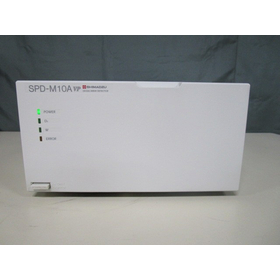
Photodiode array detector for high-performance liquid chromatography (HPLC)

<Used Analytical Equipment>

It is a photodiode array detector manufactured by Shimadzu. (S1746-00)

  • High Performance Liquid Chromatograph
  • Detector

Added to bookmarks

Bookmarks list

Bookmark has been removed

Bookmarks list

You can't add any more bookmarks

By registering as a member, you can increase the number of bookmarks you can save and organize them with labels.

Free membership registration

[Case Study] Advantages of Charged Particle Detectors in SEC Analysis

HPLC method achieving high-sensitivity quantitative analysis without complex preprocessing: Introducing quantitative know-how for quality control.

This application note introduces the analysis of polymer compounds using size exclusion chromatography (SEC) with the Vanquish Charged-Aerosol Detector (CAD). The CAD has approximately 100 times the sensitivity compared to a differential refractive index detector (RI) and is a versatile detector capable of accurately detecting semi-volatile and non-volatile components. Its wide dynamic range and excellent stability make it ideal for analyzing molecular weight distributions. This document discusses the detection of calibration standard samples and calibration curves, comparisons of sensitivity, and changes in retention time due to sample concentration, using polystyrene samples to compare RI and explain the characteristics and advantages of CAD. 【Features】 ■ High sensitivity detection: CAD achieves approximately 100 times the sensitivity compared to RI ■ Wide dynamic range: Accurately measures samples of diverse molecular weights ■ Detection in the polymer range: Effectively detects polymers with molecular weights up to 400,000 ■ Low concentration measurement: Minimal concerns about carryover or column loading even at low concentrations ■ Stability: Provides rapid stabilization and consistent results

Added to bookmarks

Bookmarks list

Bookmark has been removed

Bookmarks list

You can't add any more bookmarks

By registering as a member, you can increase the number of bookmarks you can save and organize them with labels.

Free membership registration

Multi-Angle Light Scattering (MALS) Detector DAWN Series

High-precision measurement of absolute molecular weight in the range of hundreds to hundreds of millions Da for the characterization of polymers, proteins, and nanoparticles!

The DAWN series measures the molecular weight and size of macromolecules such as proteins with high precision, using multi-angle light scattering (MALS) without the need for calibration curves created from standard substances. It can be connected to HPLC and UPLC, enabling a wide range of applications. 【Features】 - DAWN (18-angle detector) offers high sensitivity and wide-range measurement. - A diverse lineup including DAWN8 (8-angle detector), miniDAWN (3-angle detector), microDAWN (UPLC-compatible model), and UltraDAWN (process-compatible model). - Automated cell cleaning with built-in ultrasonic cleaner COMET. - Equipped with a dynamic light scattering (DLS) module, allowing measurements from a radius of 0.5 nm (optional). - Real-time display of system status, with troubleshooting guidance functionality. By clicking [Send], you agree that the information provided on this site will be used and processed by Waters in accordance with Waters' Terms of Use and Privacy Notice. Terms of Use and Privacy Notice www.waters.com/legalandprivacy

  • Analytical Equipment and Devices
  • High Performance Liquid Chromatograph
  • Detector

Added to bookmarks

Bookmarks list

Bookmark has been removed

Bookmarks list

You can't add any more bookmarks

By registering as a member, you can increase the number of bookmarks you can save and organize them with labels.

Free membership registration

UV/VIS detector

Very flexible and compact design! The flow cell is easily accessible and can be quickly replaced.

The "UV/VIS Detector 40D" is a spectrophotometer for routine IC/HPLC applications, including high-speed IC/LC methods. The "BlueShadow Detector 40D" is equipped with a deuterium lamp that covers a wavelength range of 190 to 750 nm. The flow cell can be selected from a wide range for analytical or preparative IC/LC applications, with flow rates from 10 μL/min to 10 L/min. 【Features】 ■ Very flexible and compact design ■ Equipped with a deuterium lamp covering the wavelength range of 190 to 750 nm ■ Can be controlled via ClarityChrom software, touchscreen (standalone operation), LAN, RS-232, and analog input/output ■ Flow cell is easily accessible and can be replaced very quickly *For more details, please refer to the PDF document or feel free to contact us.

Added to bookmarks

Bookmarks list

Bookmark has been removed

Bookmarks list

You can't add any more bookmarks

By registering as a member, you can increase the number of bookmarks you can save and organize them with labels.

Free membership registration

Features and Principles of the Corona Charged Particle Detector (CAD)

Here is an example comparing the analysis results of catechin standard solutions using CAD and UV detectors.

The Corona Charged Aerosol Detector (CAD) detects components after they have been separated by HPLC and nebulized, followed by solvent removal. Therefore, volatile substances cannot be detected, but everything else is subject to detection. In CAD, particles are given a charge, and by measuring the amount of that charge, an area value corresponding to the amount of the component is obtained. In the case of a UV detector, the area value can vary significantly depending on the component, even at the same concentration, but in CAD, the difference in area values is about 10%. 1. Non-volatile and semi-volatile substances can be detected even if they do not have UV absorption. 2. Consistent responsiveness is obtained depending on the weight of the substance, allowing for semi-quantitative analysis even without standard samples. 3. High sensitivity detection is possible regardless of chemical structure (detection limits are around several hundred pg to several ng). 4. Gradient analysis is possible.

  • B0259-2.jpg
  • B0259-3.jpg
  • B0259-4.jpg
  • B0259-5.jpg
  • Contract Analysis
  • Contract measurement
  • Detector

Added to bookmarks

Bookmarks list

Bookmark has been removed

Bookmarks list

You can't add any more bookmarks

By registering as a member, you can increase the number of bookmarks you can save and organize them with labels.

Free membership registration

[Analysis Case] Simple Quantitative Analysis of Sugars

This is an example of a simple quantitative analysis of seven types of sugars converted to glucose equivalents using an evaporative light scattering detector (ELSD).

Sugars come in many types, and quantitative analysis to determine the sugar content in samples using standard substances for each type can become complicated, involving various tasks from pretreatment to measurement and analysis. Here, we introduce a case where an evaporative light scattering detector (ELSD) was used to simply quantify seven types of sugars by converting them to glucose equivalents. 【Analysis Samples】 Standard substances: 7 types of sugars (galactose, glucose, sucrose, trehalose, fructose, maltose, lactose) Samples: Commercial vegetable juices A and B, lactic acid bacteria drinks 【Analysis Method】 A mixture of the seven types of sugar standard substances was prepared, and HPLC-ELSD measurement was conducted. Using the conversion quantitative method based on glucose equivalents allows for a straightforward quantification of sugars in the samples. This method is effective when wanting to confirm the approximate concentration of sugars contained in various samples related to bio-manufacturing, such as food and beverages, cell and microbial culture media, and culture solutions.

Added to bookmarks

Bookmarks list

Bookmark has been removed

Bookmarks list

You can't add any more bookmarks

By registering as a member, you can increase the number of bookmarks you can save and organize them with labels.

Free membership registration

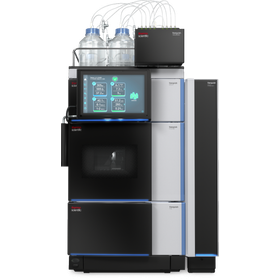
Vanquish Charged Particle Detector (CAD)

Active in the chemical industry! Avoid missing non-volatile compounds.

This product is a universal charged particle detector that measures various analytes with consistent responsiveness. Its wide dynamic range allows for high-sensitivity detection. It is utilized for the detection and quantification of compounds that are difficult to measure with UV detectors in various fields such as food, pharmaceuticals, and materials science. 【Features】 - Simple and intuitive operability - Compatible with UHPLC/HPLC - Easy switching function for parallel detection (such as MS) - Allows changing the mobile phase from volatile to non-volatile without removing the detector from the system - Wide flow range (0.01 to 2.0 ml/min) *For more details, please refer to the PDF document or feel free to contact us.

Added to bookmarks

Bookmarks list

Bookmark has been removed

Bookmarks list

You can't add any more bookmarks

By registering as a member, you can increase the number of bookmarks you can save and organize them with labels.

Free membership registration

Sievers M9 SEC DOC Detector

Determining the molecular weight distribution to understand the characteristics of dissolved organic matter in water.

●Measurement of organic substances that cannot be detected by UV ●Higher sensitivity than differential refractive index detector (RI) The Sievers TOC Analyzer M9 SEC is a detector for organic substances separated by molecular weight using a GPC/SEC system. It is capable of measuring organic substances that do not absorb UV light (such as alcohols and polysaccharides) with higher sensitivity than a differential refractive index detector (RI). Application examples: Measurement of refractory organic substances in environmental water, optimization of membrane treatment for wastewater, management of activated carbon injection amounts, measurement of precursor substances for disinfection by-products, quality control of pharmaceuticals, cosmetics, and plastics.

  • Water quality testing
  • Detector

Added to bookmarks

Bookmarks list

Bookmark has been removed

Bookmarks list

You can't add any more bookmarks

By registering as a member, you can increase the number of bookmarks you can save and organize them with labels.

Free membership registration

Electrochemical Detector "ECD-700"

We provide not only the reliability, high sensitivity, and maintainability of domestic ECD manufacturers, but also further expandability.

The "ECD-700" is a highly reliable amperometric electrochemical detector for HPLC that prevents electrode clogging, allowing for long-term stable use. It enables ultra-sensitive measurements of dopamine at 30 fg (femtograms). Additionally, no tools are required for electrode detachment and maintenance. It also features a wide range of options, including multi-channel measurements and pre-electrolysis measurements. 【Features】 ■ Excellent sensitivity and stability due to our electrochemical detector technology ■ Easy maintenance ■ Higher operational rate due to reduced likelihood of troubles ■ Amperometric cell (1 unit), constant voltage mode ■ The working electrode can be selected from standard graphite, pure graphite, glassy carbon, platinum, gold, and silver ■ Access to the working electrode is very easy *For more details, please download the PDF or feel free to contact us.

  • Other electronic measuring instruments
  • Other electric meters
  • Other measurement, recording and measuring instruments
  • Detector

Added to bookmarks

Bookmarks list

Bookmark has been removed

Bookmarks list

You can't add any more bookmarks

By registering as a member, you can increase the number of bookmarks you can save and organize them with labels.

Free membership registration

Optical detector for UPLC

A detector for LC that excels in sensitivity, stability, and ease of use - compatible with sharp peaks obtained from UPLC.

Waters offers a comprehensive portfolio of detection technologies for UPLC/UHPLC analysis. This enables the analysis of a wide range of compounds. Each detector comes with several selectable options, such as flow cells and nebulizers, suitable for the separation scale you are using. 【Features】 - A newly designed dedicated group of detectors to detect sharp peaks obtained from UPLC - Detector cells that minimize diffusion 【Lineup】 - ACQUITY UPLC ELS Detector (ELSD) - ACQUITY UPLC RI Detector - ACQUITY UPLC and ACQUITY Premier FLR Detectors - ACQUITY UPLC PDA Detector - ACQUITY UPLC and ACQUITY Premier PDA eLambda Detectors - ACQUITY UPLC and ACQUITY Premier Tunable UV Detectors

Added to bookmarks

Bookmarks list

Bookmark has been removed

Bookmarks list

You can't add any more bookmarks

By registering as a member, you can increase the number of bookmarks you can save and organize them with labels.

Free membership registration

[Case Study] Analysis of Lipid Nanoparticles (LNP) Using Charged Particle Detectors

The consistent responsiveness of charged particle detectors enables an effective approach to evaluating the lipid components of LNPs and profiling impurities.

The Charged Aerosol Detector (CAD) is a highly versatile liquid chromatography detector capable of detecting all non-volatile and semi-volatile compounds. In particular, it can sensitively detect compounds that do not absorb UV light, such as lipid nanoparticles (LNPs). Additionally, the consistent responsiveness of the CAD allows for accurate assessment of the relative amounts of each lipid component. Furthermore, it is suitable for monitoring impurities and degradation products, in addition to evaluating the composition of LNPs. This application note presents examples of constructing a fast and robust UHPLC method using the Thermo Scientific Accucore C30 LC column to separate and evaluate lipid components contained in two different formulations, as well as an example using the Thermo Scientific Hypersil GOLD C8 column to effectively profile lipid components and their impurities present in raw materials. For this analysis, we used the bio-compatible Thermo Scientific Vanquish Flex and Thermo Scientific Vanquish Horizon UHPLC systems.

Added to bookmarks

Bookmarks list

Bookmark has been removed

Bookmarks list

You can't add any more bookmarks

By registering as a member, you can increase the number of bookmarks you can save and organize them with labels.

Free membership registration

Understand in 3 minutes! How to choose a detector for HPLC! Presentation of explanatory materials available.

How to choose a detector for HPLC? A thorough explanation based on a comparison table of the main detectors! Free basic knowledge materials available.

Chromatography is a separation technique, and by appropriately combining it with detectors that can detect the separated analytes, quantitative analysis becomes possible. Detectors need to be selected considering applicable compounds, sensitivity, selectivity, and other factors. This document provides a clear summary of the fundamentals of separation in liquid chromatography (LC), detectors, and principles. It is recommended for those who are learning HPLC for the first time, those who want to review from the basics, and those looking for materials useful for in-house training. [Contents (partial)] ■ Introduction ■ HPLC Equipment ■ Separation in HPLC ■ Detection *For more details, please download the PDF or feel free to contact us.

  • Analytical Equipment and Devices
  • Detector

Added to bookmarks

Bookmarks list

Bookmark has been removed

Bookmarks list

You can't add any more bookmarks

By registering as a member, you can increase the number of bookmarks you can save and organize them with labels.

Free membership registration

RI Detector RefractoMax Series

A new model of the essential item for sugar analysis and polymer analysis, the RI detector (refractive index detector), has arrived!

- A lineup of four models from fractionation to ultra-high-speed liquid chromatography - High temperature stability due to unique design - Low noise, low drift

  • Analytical Equipment and Devices
  • Detector

Added to bookmarks

Bookmarks list

Bookmark has been removed

Bookmarks list

You can't add any more bookmarks

By registering as a member, you can increase the number of bookmarks you can save and organize them with labels.

Free membership registration

What is a UV-Vis absorbance detector? Free explanatory materials are currently available.

Thorough Explanation of UV-Visible Absorbance Detectors: A Clear and Detailed Explanation of the Differences Between VWD and DAD! Free Basic Knowledge Materials Available!

Many organic compounds analyzed by HPLC have absorption in the ultraviolet-visible region. Therefore, ultraviolet-visible absorbance detectors are the most widely used in HPLC. A deuterium discharge lamp (D2 lamp) is used as the light source, but a tungsten lamp may also be used in conjunction to measure absorption in the visible region with high sensitivity. This document provides a clear summary of the basics of separation in liquid chromatography (LC), detectors, and principles. It is recommended for those who are learning HPLC for the first time, those who want to review from the basics, and those looking for materials useful for in-house training. [Contents (partial)] ■ Introduction ■ HPLC Equipment ■ Separation in HPLC ■ Detection *For more details, please download the PDF or feel free to contact us.

  • Analytical Equipment and Devices
  • Detector

Added to bookmarks

Bookmarks list

Bookmark has been removed

Bookmarks list

You can't add any more bookmarks

By registering as a member, you can increase the number of bookmarks you can save and organize them with labels.

Free membership registration

[Case Study] Characterization of Lipid Components in LNP Formulations Using LC-CAD

Simplifying sample pretreatment with high-sensitivity CAD, achieving rapid and accurate identification of lipid components and molar ratio evaluation.

The development and quality control of LNP formulations require rapid and accurate identification of lipid components and evaluation of molar ratios. This technical document introduces a method for efficiently quantifying the concentration and molar ratio of each lipid in LNP formulations. The Charged Aerosol Detector (CAD) is a versatile detector for liquid chromatography that can detect all non-volatile and semi-volatile compounds. It is particularly sensitive for detecting compounds that do not absorb UV light, such as LNPs. Furthermore, by leveraging the CAD's high sensitivity, consistent responsiveness, and wide dynamic range, we aim to simplify sample preparation and facilitate method development. Additionally, by using the Thermo Scientific Accucore C30 LC column, we can effectively separate lipid components and other excipients in LNP formulations in a short time. This has also confirmed that the measurement results align well with the theoretical molar ratio%. 【Features】 ■ Rapid and accurate identification of lipid components and evaluation of molar ratios ■ Compliance support with Thermo Scientific Chromeleon CDS software ■ Effective separation with Accucore C30 LC column ■ Measurement results that align well with theoretical molar ratio%

Added to bookmarks

Bookmarks list

Bookmark has been removed

Bookmarks list

You can't add any more bookmarks

By registering as a member, you can increase the number of bookmarks you can save and organize them with labels.

Free membership registration

Understand in 3 minutes! What is a differential refractive index detector? Free explanatory materials available.

What is a differential refractive index detector used in HPLC? A comprehensive and easy-to-understand explanation based on a comparison table with other detectors! Free foundational knowledge materials available!

The differential refractive index detector (RID) detects the difference in refractive index of the eluent from the column containing the mobile phase and analytes. It can be used for the detection of all compounds, but its sensitivity is not very good, estimated to be less than 1/1000 of that of a UV-Vis detector. It can detect compounds that do not have UV-visible absorption or fluorescence, making it useful for detecting sugars and synthetic polymers. This document provides a clear summary of the fundamentals of liquid chromatography (LC), detectors, and principles. It is recommended for those who are learning HPLC for the first time, those who want to review from the basics, and those looking for materials useful for in-house training. [Contents (partial)] ■ Introduction ■ HPLC Equipment ■ Separation in HPLC ■ Detection *For more details, please download the PDF or feel free to contact us.

  • Analytical Equipment and Devices
  • Detector

Added to bookmarks

Bookmarks list

Bookmark has been removed

Bookmarks list

You can't add any more bookmarks

By registering as a member, you can increase the number of bookmarks you can save and organize them with labels.

Free membership registration

Understand in 3 minutes! What is a fluorescence detector? Free explanatory materials available.

What is a fluorescence detector used in HPLC? A thorough explanation based on a comparison table with other detectors! Basic knowledge materials are available for free!

When light is applied, electrons are excited, and the phenomenon of light emission when the excited electrons return to the ground state is called fluorescence. Substances that emit fluorescence are referred to as fluorescent materials, and such compounds can be detected using fluorescence detectors (FLD). The wavelengths of the excitation light and fluorescence are specific to the fluorescent material, making FLDs superior in sensitivity and selectivity compared to UV-Vis detectors. This document provides a clear summary of the basics of separation in liquid chromatography (LC), detectors, and principles. It is recommended for those who are newly learning HPLC, those who want to review from the basics, and those looking for materials useful for in-house training. [Contents (partial)] ■ Introduction ■ HPLC Equipment ■ Separation in HPLC ■ Detection *For more details, please download the PDF or feel free to contact us.

  • Analytical Equipment and Devices
  • Detector

Added to bookmarks

Bookmarks list

Bookmark has been removed

Bookmarks list

You can't add any more bookmarks

By registering as a member, you can increase the number of bookmarks you can save and organize them with labels.

Free membership registration

Understand in 3 minutes! What is an evaporative light scattering detector? Free explanatory materials available.

What is an evaporative light scattering detector used in HPLC? A comprehensive explanation based on a comparison table with other detectors! Free basic knowledge materials available!

The evaporative light scattering detector (ELSD) detects the scattered light from particles of the analyte after evaporating and removing the mobile phase from the eluent coming from the column. Since the mobile phase must be volatile, mobile phases containing non-volatile salts such as phosphates cannot be used. Additionally, analytes that are highly volatile cannot be applied as they will evaporate along with the mobile phase. However, it is possible to detect compounds that do not have UV-Vis absorption or fluorescence. This document provides a clear summary of the fundamentals of liquid chromatography (LC), detectors, and principles. It is recommended for those who are newly learning HPLC, those who want to review from the basics, and those looking for materials useful for in-house training. [Contents (partial)] ■ Introduction ■ HPLC Equipment ■ Separation in HPLC ■ Detection *For more details, please download the PDF or feel free to contact us.

  • Analytical Equipment and Devices
  • Detector

Added to bookmarks

Bookmarks list

Bookmark has been removed

Bookmarks list

You can't add any more bookmarks

By registering as a member, you can increase the number of bookmarks you can save and organize them with labels.

Free membership registration

What is VWD? Free explanatory materials are being offered.

Thorough Explanation of One of the UV-Visible Absorbance Detectors, VWD: A Clear Comparison with DAD! Free Basic Knowledge Materials Available!

VWD spectrally analyzes the light from the light source using a grating, converts it into monochromatic light, and then measures the absorbance in a flow cell. Since detection is performed at a single wavelength, it is possible to switch wavelengths using a time program for simultaneous analysis of multiple components when the maximum absorption of each analyte differs. This document provides a clear summary of the fundamentals of liquid chromatography (LC), detectors, and principles. It is recommended for those who are newly learning HPLC, those who want to review from the basics, and those looking for materials useful for in-house training. [Contents (partial)] ■ Introduction ■ HPLC Equipment ■ Separation in HPLC ■ Detection *For more details, please download the PDF or feel free to contact us.

  • Analytical Equipment and Devices
  • Detector

Added to bookmarks

Bookmarks list

Bookmark has been removed

Bookmarks list

You can't add any more bookmarks

By registering as a member, you can increase the number of bookmarks you can save and organize them with labels.

Free membership registration

What is DAD? Free explanatory materials are currently being offered.

A thorough explanation of one of the UV-visible absorbance detectors, DAD. We will also clearly explain the differences with VWD! Basic knowledge materials are available for free.

DAD, unlike VWD, irradiates the cell with light from the light source without spectrally analyzing it. The light that passes through the cell is spectrally analyzed and detected by a device with an array of photodiodes (photodiode array). It is possible to record the UV-Vis spectrum of the eluent from the column. Therefore, simultaneous multi-wavelength detection, peak purity testing, and comparison with the UV-Vis spectrum of standard substances can be performed, making the peak identification capability superior to that of VWD. This document provides a clear summary of the fundamentals of separation in liquid chromatography (LC), detectors, and principles. It is recommended for those who are newly learning HPLC, those who want to review from the basics, and those looking for materials useful for in-house training. [Contents (partial)] ■ Introduction ■ HPLC Equipment ■ Separation in HPLC ■ Detection *For more details, please download the PDF or feel free to contact us.

  • Analytical Equipment and Devices
  • Detector

Added to bookmarks

Bookmarks list

Bookmark has been removed

Bookmarks list

You can't add any more bookmarks

By registering as a member, you can increase the number of bookmarks you can save and organize them with labels.

Free membership registration