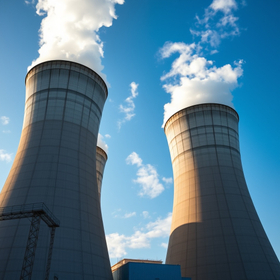
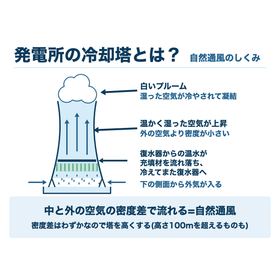
A massive cooling tower of a power plant with a waist in the middle. This explains the mechanism of air flow without fans and how to dispose of the heat from the warmed cooling water.
The large tower often seen in photos of overseas power plants, which has a wide base and a narrow middle, is called a natural draft cooling tower. It looks like a chimney, but it is not a facility that emits exhaust gases from burning fuel; rather, it is a facility designed to cool heated cooling water from power generation using the atmosphere.
■ Why do power plants need to cool?
In nuclear power plants, steam that has finished turning the turbines is sent to a condenser, where it is cooled by cooling water and returned to water. At this time, a large amount of cooling water is required, and the cooling water absorbs heat and warms up.
■ How do Japan's nuclear power plants cool?
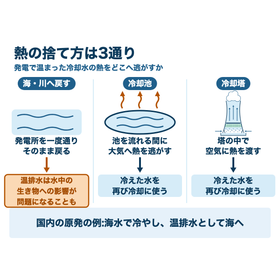
In domestic nuclear power plants, seawater is used as cooling water, and the warmed seawater is returned to the sea as warm discharge. The cooling water goes through the power plant and then directly returns to the sea.
■ What do power plants far from the sea do?
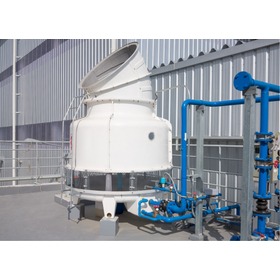
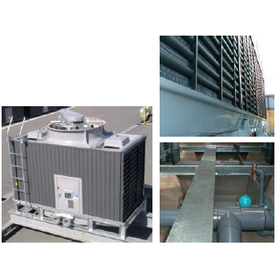
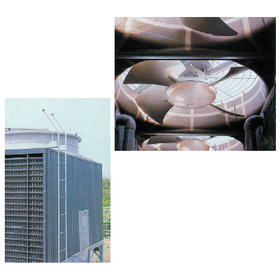
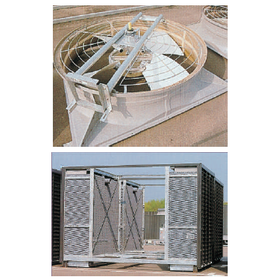
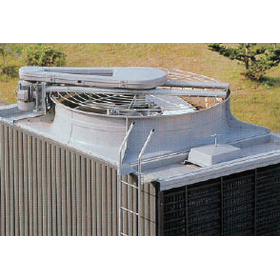
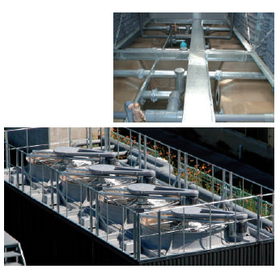
In addition to returning heat to the sea or rivers, there are cooling ponds and cooling towers. In cooling ponds, warm water loses heat to the atmosphere as it flows through the pond, while in cooling towers, heat is transferred to the air inside the tower. In both cases, the cooled water is reused for cooling. On the other hand, warm discharge can sometimes raise concerns about its impact on aquatic life. Please feel free to consult with us first.