We have compiled a list of manufacturers, distributors, product information, reference prices, and rankings for particle.
ipros is IPROS GMS IPROS One of the largest technical database sites in Japan that collects information on.

particle Product List and Ranking from 45 Manufacturers, Suppliers and Companies | IPROS GMS

Last Updated: Aggregation Period:Feb 18, 2026~Mar 17, 2026
This ranking is based on the number of page views on our site.

particle Manufacturer, Suppliers and Company Rankings

Last Updated: Aggregation Period:Feb 18, 2026~Mar 17, 2026
This ranking is based on the number of page views on our site.

  1. Polysphere Co., Ltd. Ibaraki//others
  2. フジミインコーポレーテッド Gifu//Electronic Components and Semiconductors
  3. OsakaSodaCO.,LTD. Development&Commercialization Div. Hyogo//Chemical
  4. 4 レンゴー 本社 Osaka//Paper and pulp
  5. 5 大東化成工業 Osaka//others

particle Product ranking

Last Updated: Aggregation Period:Feb 18, 2026~Mar 17, 2026
This ranking is based on the number of page views on our site.

  1. 200nm Particle Size Calibration Standard 'Uni-spheres' Polysphere Co., Ltd.
  2. Silver nanoparticles for low temperature and low pressure/no pressure sintering. OsakaSodaCO.,LTD. Development&Commercialization Div.
  3. White fused alumina particles WA フジミインコーポレーテッド
  4. Plant-derived biodegradable spherical particles 'CELLULOBEADS' 大東化成工業
  5. 4 Plate-shaped alumina particles PWA フジミインコーポレーテッド

particle Product List

61~90 item / All 100 items

Displayed results

[Information] On the Powder Characteristics of Ruthenium Oxide

Images comparing particle shape and size using SEM at magnifications of 50,000x and 100,000x are included.

This document introduces the "Powder Characteristics of Ruthenium Oxide." In the section "Summary of the Comparison of Various RuO2 Nanoparticles," we present tables based on SEM and TEM observation results, categorizing them by powder type and our processed products A/B. Additionally, we have included comparisons of particle shape and size using SEM, along with photographs, so please take a moment to read through it. [Contents] ■ Summary of the Comparison of Various RuO2 Nanoparticles ■ Comparison of Particle Shape and Size Using SEM (magnification 50,000x / 100,000x) ■ Differences in Particle State Based on Our Grinding Method: SEM Comparison ■ Comparison of Particle Shape and Size of Various Companies Using TEM ■ Comparison of Particle Shape and Size Using TEM *For more details, please refer to the PDF document or feel free to contact us.

  • Other polymer materials
  • particle

Added to bookmarks

Bookmarks list

Bookmark has been removed

Bookmarks list

You can't add any more bookmarks

By registering as a member, you can increase the number of bookmarks you can save and organize them with labels.

Free membership registration

[Data] Catalog of Low Melting Point Silver Particles

A catalog featuring the size and characteristics of "silver submicron particles for low-temperature sintering" and "silver plate-like particles for low-temperature sintering."

This document introduces "low melting point silver particles." It includes the size, characteristics, applications, and photos of "submicron silver particles for low-temperature sintering" and "plate-shaped silver particles for low-temperature sintering." Additionally, as supplementary data, we have included SEM images of the sintering state at 300°C, so please take a look. [Contents] ■ Submicron silver particles for low-temperature sintering ■ Plate-shaped silver particles for low-temperature sintering ■ Supplementary data *For more details, please refer to the PDF document or feel free to contact us.

  • Other polymer materials
  • particle

Added to bookmarks

Bookmarks list

Bookmark has been removed

Bookmarks list

You can't add any more bookmarks

By registering as a member, you can increase the number of bookmarks you can save and organize them with labels.

Free membership registration

Samples will be given to 10 people: Zirconia Nanoparticles 'Zirconeo'

Ideal for high refractive index materials and molding materials! Zirconia nanoparticles developed using supercritical technology. Samples available for 10 people only!

The zirconia nanoparticles "Zirconeo Series" are nanosized zirconia particles developed using Aitec's supercritical hydrothermal synthesis method. They excel in compatibility and transparency when mixed with resins, making them suitable for high refractive index materials and molding materials. We also provide zirconia nanoparticle dispersions in powder form or as dispersions in water or organic solvents. The transparent dispersion containing zirconia particles under 10nm shows excellent compatibility with UV-curable resins. 【Features】 ■ Particle size is below 10nm ■ Main crystal structure is tetragonal ■ Specific surface area is over 200 square meters/g ■ Samples can be provided in either powder or dispersion form ~ Free sample giveaway ongoing! ~ * Customers wishing to receive zirconia samples should download the catalog, fill out the questionnaire, and return it via fax. * This offer is on a first-come, first-served basis and will end once we reach 10 participants. * For more details, please download the catalog or contact us directly.

  • Other polymer materials
  • Other optical parts
  • particle

Added to bookmarks

Bookmarks list

Bookmark has been removed

Bookmarks list

You can't add any more bookmarks

By registering as a member, you can increase the number of bookmarks you can save and organize them with labels.

Free membership registration

Nano Meal Corporation Business Introduction

Do you have any troubles with "nano"?

The advent of nanoscale materials has made it possible for materials science to connect directly with biology, optics, and other fields. Photonic crystals and structural colors found in birds and insects are good examples of this. Until now, we have dealt with various materials such as semiconductors, carbon materials, metals, oxides, and polymers. In addition to these, we hope to leverage our experience in synthesizing uniformly sized "polystyrene nanoparticles" to help solve your challenges and contribute to product development. For more details, please contact us via email.

  • Other polymer materials
  • Other physicochemical equipment
  • particle

Added to bookmarks

Bookmarks list

Bookmark has been removed

Bookmarks list

You can't add any more bookmarks

By registering as a member, you can increase the number of bookmarks you can save and organize them with labels.

Free membership registration

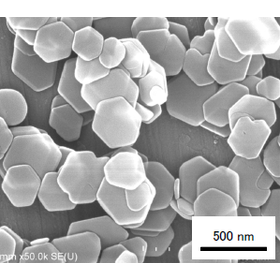
Plate-like particles "titanium phosphate" for fillers, slip agents, and paint additives.

Refractive index 1.79; high white degree plate-like particles 'Titanium Phosphate' have no photocatalytic activity and do not decompose organic matter! (Development product)

We have successfully synthesized a completely new plate-like particle, "Titanium Phosphate," with a refractive index of 1.79, high whiteness, and controlled aspect ratio. Titanium Phosphate does not decompose organic matter due to its lack of photocatalytic activity. It possesses characteristics unique to plate-like particles, such as slip properties. The developed high-whiteness plate-like Titanium Phosphate maintains its plate-like shape regardless of particle size and is characterized by uniform particle diameter and thickness. Particle size control is possible from 0.2 to 5 μm, ranging from submicron to several micrometers. *Surface treatment is also available. Please consult us. 【Features】 High aspect ratio, high whiteness, slip properties, low friction, ion exchange capacity, organic matter adsorption capacity, photocatalytic inactivity, glossiness 【Expected Applications】 Fillers, slip improvement materials, additives for paints, catalysts, optical films, etc.

Added to bookmarks

Bookmarks list

Bookmark has been removed

Bookmarks list

You can't add any more bookmarks

By registering as a member, you can increase the number of bookmarks you can save and organize them with labels.

Free membership registration

Spherical composite particles made from submicron and single micron raw materials.

Granulation processing of fine powders into spherical particles with excellent fluidity. In addition to single compositions, it is also possible to achieve uniform spherical particle formation with multiple compositions. Various filler applications.

Microparticles have advantages such as high surface area and reactivity, but they often face challenges in fluidity due to issues like agglomeration. Our company utilizes spray granulation technology to create spherical granules, providing powders that maintain the characteristics of microparticles while ensuring high fluidity. In the thermal spraying materials where we have extensive experience, we have provided composite powders made from various materials such as ceramics, metals, and resins. The reasons for choosing spherical composite powders for thermal spraying include the ability to achieve both reactivity (fusibility) and fluidity, as well as the capability to supply different materials like ceramics and metals uniformly dispersed within the granules. Our Features: - We own all processes from granulation to sintering, classification, and analysis inspection equipment, allowing us to provide total solutions tailored to our customers' challenges. - We have obtained JIS Q9100 certification for thermal spraying materials aimed at the aerospace industry. - We have a strong track record of deliveries to the semiconductor industry, which requires high-quality management. Beyond thermal spraying applications, there is a growing demand for various composite particles, including metals and ceramics, as materials and fillers for 3D printers. We are committed to providing solutions with spherical composite powders, so please feel free to contact us.

Added to bookmarks

Bookmarks list

Bookmark has been removed

Bookmarks list

You can't add any more bookmarks

By registering as a member, you can increase the number of bookmarks you can save and organize them with labels.

Free membership registration

Plate-shaped alumina particles PWA

These are alumina particles with a high aspect ratio and a purity of 99.0% or higher. They are also suitable as fillers for electrical insulation and wear resistance!

PWA is a high-quality alumina powder composed of plate-like crystals with an Al2O3 purity of 99.0% or higher. Alumina is excellent in heat resistance and electrical insulation, and it is chemically inert, unaffected by acids or alkalis. It also has a hardness second only to silicon carbide. For this reason, it is expected to be used as a filler material (filling material, heat dissipation (thermal conductivity)) aimed at providing insulation and wear resistance. Our plate-like alumina has the following features: 1) Unique shape: high aspect ratio plate-like 2) Lineup: average particle size ranging from 3µm to 30µm 3) Sharp particle size distribution: our proprietary classification technology [Expected Applications] - Filler material: providing insulation and wear resistance - Providing low aggressiveness to the counterpart - Providing optical properties (such as light diffusion)

Added to bookmarks

Bookmarks list

Bookmark has been removed

Bookmarks list

You can't add any more bookmarks

By registering as a member, you can increase the number of bookmarks you can save and organize them with labels.

Free membership registration

[Data] High-resolution particle size measurement and nanoparticle classification using Liqui Scan.

High-resolution measurement from single nanometers using particle classification methods. Nano-classification extraction is also possible! 【*Demo units available for loan】

This document provides information on high-resolution particle size measurement and nanoparticle classification using 'Liqui Scan', handled by Tokyo Dylec Corporation. 'Liqui Scan' is a scanning nanoparticle measurement device with a measurable particle size range from 2.5nm to 1000nm (1μm). It displays the concentration for each particle size in a polydisperse sample, offering high reliability as a particle number concentration measurement device. 【Contents (partial)】 ■ What can be done with the differences in measurement principles between LiquiScan and DLS ■ Detailed introduction of SMPS scanning nanoparticle measurement device (from 2.5nm) ■ Classification principle of DMA ■ Principle of water-type condensation particle counter WCPC ■ Frequently asked questions about mobility diameter evaluation, etc. *For more details, please refer to the PDF document or feel free to contact us. We also offer demo unit rentals.

  • Other measurement, recording and measuring instruments
  • particle

Added to bookmarks

Bookmarks list

Bookmark has been removed

Bookmarks list

You can't add any more bookmarks

By registering as a member, you can increase the number of bookmarks you can save and organize them with labels.

Free membership registration

Ultra-low density conductive material! Nickel/copper coated hollow PAN particles.

Incredibly lightweight! Ultra-low density conductive material with hollow PAN particles as the core.

This is a microparticle coated with copper and nickel on the surface of hollow PAN particles, based on our unique microparticle processing technology. It can be primarily used in electromagnetic wave shielding films, conductive adhesives, conductive pastes, and more. <Features> - Low-density conductive particles with excellent conductivity - Sharp particle size distribution compared to metal particles - Very low sedimentation rate of particles when mixed with solvent binders Additionally, we can provide customization based on your requests, such as particle size, metal coating amount, and surface treatment agents. *For more details, please contact us or download and view the catalog.

  • 無題2.png
  • Other metal materials
  • particle

Added to bookmarks

Bookmarks list

Bookmark has been removed

Bookmarks list

You can't add any more bookmarks

By registering as a member, you can increase the number of bookmarks you can save and organize them with labels.

Free membership registration

Hydroxyapatite "Apamed" <spherical>

Excellent biocompatibility! It is possible to adjust the particle size and particle size distribution.

"Apamed" <spherical> is a spherical particle manufactured from high-purity calcium. Utilizing the excellent biocompatibility and bioaffinity of hydroxyapatite, it can be used as a raw material for medical devices. Additionally, we can adjust the particle size and particle size distribution according to customer needs, and control granule strength through heat treatment, so please feel free to consult us. [Applications] ■ Raw materials for medical devices ■ Artificial bones ■ Artificial dental roots ■ Injectable implant materials ■ DDS carriers, etc. *For more details, please refer to the PDF materials or feel free to contact us.

  • Other polymer materials
  • particle

Added to bookmarks

Bookmarks list

Bookmark has been removed

Bookmarks list

You can't add any more bookmarks

By registering as a member, you can increase the number of bookmarks you can save and organize them with labels.

Free membership registration

Mechanism of adhesion of 【Nano Titapro】

Strongly bonded in atomic state with powerful force! Introducing the mechanism of titanium particle adhesion.

Titanium nanoparticles, when released from water, attempt to return to their original state, strongly attracting each other on the surface of the material (object) and forming quantum bonds with that material (object). As long as the substrate surface does not change (such as peeling or wear), they will maintain functionality over the long term. In the PDF document below, we introduce this using diagrams. Please feel free to download and take a look. *For more details, please refer to the PDF document or feel free to contact us.*

  • Cleaning agents
  • others
  • particle

Added to bookmarks

Bookmarks list

Bookmark has been removed

Bookmarks list

You can't add any more bookmarks

By registering as a member, you can increase the number of bookmarks you can save and organize them with labels.

Free membership registration

Silver nanoparticles

Silver powder that achieves world-class conductivity and low-temperature sintering characteristics.

Attention semiconductor and circuit board designers! Are you looking to enhance the conductivity of your products and reduce the sintering temperature? There are silver nanoparticles that exhibit remarkable performance in semiconductors and circuit boards, which are increasingly demanding higher performance. Introducing "TOSFINE" from Tokusen Industries. "TOSFINE" is produced using our unique particle manufacturing technology, which processes each particle into a flake shape, resulting in silver powder that combines the handling properties of flakes with the characteristics of nanoparticles. "TOSFINE" boasts high conductivity and high mirror-like finish under dry conditions due to its highly smooth surface. 【Features】 - Achieves high conductivity and heat dissipation with single crystal flakes. - Exhibits sintering properties at low temperatures (120-200°C). - Realizes high conductivity even under dry conditions due to its high surface smoothness. - Offers a uniform particle size distribution thanks to our unique manufacturing method. - We can propose particle sizes and surface treatments tailored to your applications.

  • Other metal materials
  • particle

Added to bookmarks

Bookmarks list

Bookmark has been removed

Bookmarks list

You can't add any more bookmarks

By registering as a member, you can increase the number of bookmarks you can save and organize them with labels.

Free membership registration

Silver nanoparticles "KM120"

Particle size is 0.15 to 0.3 μm! Introducing silver powder that achieves world-class low-temperature sinterability!

We would like to introduce our silver nanoparticles 'KM120'. The particle shape is polyhedral, with a specific surface area of 1.5 to 2.5 m²/g and a tap density of 3.0 to 4.5 g/cm³. It achieves world-class low-temperature sinterability. Additionally, the surface treatment includes coatings with hexanoic acid, lauric acid, palmitic acid, stearic acid, and oleic acid. 【Characteristics (partial)】 ■ Particle shape: Polyhedral ■ Particle size (μm): 0.15 to 0.3 ■ Specific surface area (m²/g): 1.5 to 2.5 ■ Tap density (g/cm³): 3.0 to 4.5 ■ TG <N2> (%): 0.1 to 0.3 *You can download the English version of the catalog. *For more details, please refer to the PDF materials or feel free to contact us.

  • Other metal materials
  • particle

Added to bookmarks

Bookmarks list

Bookmark has been removed

Bookmarks list

You can't add any more bookmarks

By registering as a member, you can increase the number of bookmarks you can save and organize them with labels.

Free membership registration

Silver nanoparticles 'LM1'

The particle shape is flake shape + polyhedron, and the specific surface area is 0.5 to 1.5 m²/g! Silver powder specialized for adhesion!

We would like to introduce our silver nanoparticles 'LM1'. The surface treatment is coated with hexanoic acid, lauric acid, palmitic acid, stearic acid, and oleic acid. The particle size ranges from 0.7 to 1.3 μm, with a thickness of ≦100 nm and a tap density of 2.0 to 4.0 g/cm³. 【Characteristics (partial)】 ■ Particle shape: Flake shape + polyhedral ■ Particle size (μm): 0.7 to 1.3 ■ Thickness (nm): ≦100 ■ Specific surface area (m²/g): 0.5 to 1.5 ■ Tap density (g/cm³): 2.0 to 4.0 * You can download the English version of the catalog. * For more details, please refer to the PDF document or feel free to contact us.

  • Other metal materials
  • particle

Added to bookmarks

Bookmarks list

Bookmark has been removed

Bookmarks list

You can't add any more bookmarks

By registering as a member, you can increase the number of bookmarks you can save and organize them with labels.

Free membership registration

Silver nanoparticles "M13"

The particle shape is flake-shaped! The tap density is 1.5 to 3.0 g/cm3, and the specific surface area is 0.6 to 1.6 m2/g!

We would like to introduce our silver nanoparticles 'M13' that we handle. The shipping form is powder. The dispersible solvents include water, EtOH, DPM, C, EG, CA, TP, BC, TPM, and BCA. As for the characteristics, the particle size ranges from 1.0 to 3.0 μm, and the thickness is between 40 to 60 nm. 【Characteristics (partial)】 ■ Particle shape: Flake shape ■ Particle size (μm): 1.0 to 3.0 ■ Thickness (nm): 40 to 60 ■ Specific surface area (m²/g): 0.6 to 1.6 ■ Tap density (g/cm³): 1.5 to 3.0 * You can download the English version of the catalog. * For more details, please refer to the PDF materials or feel free to contact us.

  • Other metal materials
  • particle

Added to bookmarks

Bookmarks list

Bookmark has been removed

Bookmarks list

You can't add any more bookmarks

By registering as a member, you can increase the number of bookmarks you can save and organize them with labels.

Free membership registration

Silver nanoparticles 'M27'

Surface coating with hexanoic acid, lauric acid, palmitic acid, stearic acid, and oleic acid!

We would like to introduce our silver nanoparticles 'M27'. The particle shape is flake, with a particle size of 2.0 to 7.0 μm and a thickness of 60 to 100 nm. The specific surface area is 0.5 to 1.5 m²/g, and the tapped density is 1.5 to 3.0 g/cm³. Additionally, the electrical resistivity is 3.8 μΩ·cm (after sintering). 【Characteristics (partial)】 ■ Particle shape: Flake ■ Particle size (μm): 2.0 to 7.0 ■ Thickness (nm): 60 to 100 ■ Specific surface area (m²/g): 0.5 to 1.5 ■ Tapped density (g/cm³): 1.5 to 3.0 *You can download the English version of the catalog. *For more details, please refer to the PDF materials or feel free to contact us.

  • Other metal materials
  • particle

Added to bookmarks

Bookmarks list

Bookmark has been removed

Bookmarks list

You can't add any more bookmarks

By registering as a member, you can increase the number of bookmarks you can save and organize them with labels.

Free membership registration

Silver nanoparticles "M612"

The dispersible solvents include water, EtOH, DPM, C, EG, CA, TP, BC, TPM, and BCA!

We would like to introduce our silver nanoparticles 'M612' that we handle. The particle shape is flake, and the particle size ranges from 6.0 to 12.0 μm, with a thickness of 60 to 100 nm. The surface treatment consists of surface coating with hexanoic acid, lauric acid, palmitic acid, stearic acid, and oleic acid. 【Characteristics (partial)】 ■ Particle shape: Flake ■ Particle size (μm): 6.0 to 12.0 ■ Thickness (nm): 60 to 100 ■ Specific surface area (m²/g): 0.5 to 1.5 ■ Tapped density (g/cm³): 1.5 to 3.0 * You can download the English version of the catalog. * For more details, please refer to the PDF materials or feel free to contact us.

  • Other metal materials
  • particle

Added to bookmarks

Bookmarks list

Bookmark has been removed

Bookmarks list

You can't add any more bookmarks

By registering as a member, you can increase the number of bookmarks you can save and organize them with labels.

Free membership registration

200nm Particle Size Calibration Standard 'Uni-spheres'

[Made in Japan] Traceable particle size calibration standard particles from AIST (National Institute of Advanced Industrial Science and Technology). These particles have a very narrow particle size distribution and do not contain surfactants.

"Uni-spheres" are newly developed particle size calibration standard particles based on soap-free polymerization technology cultivated in the development of latex for in vitro diagnostic reagents. They are uniform, spherical polystyrene-based latex particles that can be used for the calibration and precision management of particle size measurement devices, as well as for the validation of particle size measurement methods. The particle size is determined using the particle size calibration service of the National Metrology Institute of Japan (NMIJ) and is traceable to the International System of Units (SI). 【Specifications】 ■ Form: Aqueous dispersion of polystyrene particles (containing 0.5 mg/ml of sodium azide) ■ Volume: 10 ml ■ Solid concentration: 10 mg/ml ■ CV value (reference): 1.0% ■ Density (reference): 1.0540 g/cm3 ■ Particle mass (reference): 4.916 fg *For more details, please download the PDF or feel free to contact us.

  • Other research reagents
  • particle

Added to bookmarks

Bookmarks list

Bookmark has been removed

Bookmarks list

You can't add any more bookmarks

By registering as a member, you can increase the number of bookmarks you can save and organize them with labels.

Free membership registration

Plant-derived biodegradable spherical particles 'CELLULOBEADS'

Very high biodegradability, spherical cellulose that meets diverse needs.

"CELLULOBEADS" are spherical cellulose particles that are biodegradable. With the rising natural trend in the cosmetics industry and the global regulation of microplastic beads, they are increasingly gaining attention as products that meet the needs of an environmentally conscious era. We offer a wide range of particle sizes, from larger particles used in facial cleansers to smaller particles that provide a pleasant feel and soft focus effect in makeup products. Additionally, we use controlled wood as raw material, contributing to a sustainable society. [Features] ■ 100% cellulose (plant-derived) as the main component ■ Very high biodegradability and marine biodegradability (OECD301F/ASTM D6691) ■ Use of controlled wood raw materials ■ A rich lineup that meets diverse needs ■ Flexibility similar to PMMA ■ Also available in oleophilic surface treatment grades ■ Easy to use ■ Development started in 2002, industrialized in 2004 *For more details, please download the PDF or feel free to contact us.

  • Other polymer materials
  • particle

Added to bookmarks

Bookmarks list

Bookmark has been removed

Bookmarks list

You can't add any more bookmarks

By registering as a member, you can increase the number of bookmarks you can save and organize them with labels.

Free membership registration

Functional enhancement of reactive dispersion plating using nanoparticles and examples of research on dispersion plating.

★ A clear explanation of recent research using nanoparticles, starting from the basics of dispersion plating! ★ What is the technology for imparting functionality through composite plating (dispersion plating)?

【Speaker】Ichiro Koiwa, Faculty of Engineering, Kanto Gakuin University, Department of Material Life Science 【Venue】Tekuno Kawasaki, Room 5 【Date and Time】December 13, 2010 (Monday) 10:30 AM - 4:30 PM For those considering checking details or applying, please use the URL below ▼ http://ec.techzone.jp/products/detail.php?product_id=1239

  • Company:AndTech
  • Price:10,000 yen-100,000 yen
  • Technical Seminar
  • particle

Added to bookmarks

Bookmarks list

Bookmark has been removed

Bookmarks list

You can't add any more bookmarks

By registering as a member, you can increase the number of bookmarks you can save and organize them with labels.

Free membership registration

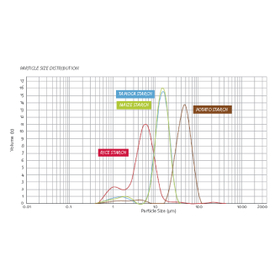
Cosmetic additives: natural particles for loose powder and baby powder.

Natural tapioca imparts a unique texture and oil-absorbing properties to products when used in powdered cosmetics such as makeup.

Natural tapioca is a starch derived from cassava. Oil absorption capacity: 0.5ml/g (vs talc 0.43ml/g) (using jojoba oil) Particle size: 15μm (particle size distribution is very sharp) Certification: COSMOS

  • 由来の異なるスターチの粒度分布データ.jpg
  • Cosmetic materials and raw materials
  • Other pharmaceutical intermediates and cosmetic ingredients
  • Other medical supplies and cosmetic manufacturing materials
  • particle

Added to bookmarks

Bookmarks list

Bookmark has been removed

Bookmarks list

You can't add any more bookmarks

By registering as a member, you can increase the number of bookmarks you can save and organize them with labels.

Free membership registration

Small Room of Nanomaterials: Clear Structural Color Due to Black Carbon Addition (1)

Here is an example of using secondary particles mixed with black particles to create a more distinct structural color.

This is an example of using secondary particles mixed with black particles (carbon black) to achieve a more distinct structural color while controlling the aggregation of silica colloid particles. It seems that without adding NaCl, a dull, whitish color was obtained. However, by adding a small amount of carbon black, the white light due to scattering decreased, making the structural color more clearly visible. Furthermore, when magnetic iron powder was added, the secondary particles moved and gathered in response to the magnetic field. *For more detailed information, please refer to the related links. Feel free to contact us for further inquiries.*

  • others
  • particle

Added to bookmarks

Bookmarks list

Bookmark has been removed

Bookmarks list

You can't add any more bookmarks

By registering as a member, you can increase the number of bookmarks you can save and organize them with labels.

Free membership registration

Biodegradable spherical cellulose particles "Viscopearl"

Spherical cellulose particles that have biodegradability not only in soil but also in seawater, making them suitable as alternative materials for plastic micro-particles!

"Biscopal" offers a wide range of products with particle sizes from 3μm to 4mm, suitable for various applications. - Particle size 3μm to 50μm: cosmetic ingredients, resin additives, ink and paint additives, light diffusers, matting agents, etc. - Particle size 200μm to 700μm: scrubbing agents, ceramic pore-forming agents, resin additives, abrasives, etc. - Particle size 2mm to 4mm: carriers for fragrances and pharmaceuticals, carriers for microbial immobilization, etc. 【Certifications Obtained】 - Products certified with the international certification "OK biodegradable MARINE," proving biodegradability in seawater. - Biomass Mark certified products (No. 230126) with 100% biomass content. - Products made from raw materials certified by FSC(R) for forest environmental conservation (FSC-C119241). *For more details, please refer to the PDF document or feel free to contact us.*

  • Other polymer materials
  • Organic Natural Materials
  • particle

Added to bookmarks

Bookmarks list

Bookmark has been removed

Bookmarks list

You can't add any more bookmarks

By registering as a member, you can increase the number of bookmarks you can save and organize them with labels.

Free membership registration

Adopted in various fields such as electromagnetic materials and semiconductors! Silver nanoparticles.

This is a silver powder that achieves high conductivity and low-temperature sintering characteristics. We are currently offering a document that includes a lineup overview!

Attention semiconductor and circuit board designers! Are you looking to increase the conductivity of your products and reduce sintering temperatures? There are silver nanoparticles that demonstrate remarkable performance in semiconductors and circuit boards, which are increasingly demanding high performance. Introducing "TOSFINE" from Toxen Industries. "TOSFINE" is created through our unique particle manufacturing technology, which processes each particle into a flaky shape, resulting in silver powder that combines the handling properties of flakes with the characteristics of nanoparticles. "TOSFINE" boasts high conductivity and high mirror-like finish under dry conditions due to its high surface smoothness. 【Features】 - Achieves high conductivity and heat dissipation through single crystal flakes. - Exhibits sintering properties under low-temperature conditions (120-200°C). - Realizes high conductivity even under dry conditions due to its high surface smoothness. - Has a uniform particle size distribution thanks to our unique manufacturing method. - We can propose particle sizes and surface treatments tailored to your specific applications.

  • Other metal materials
  • particle

Added to bookmarks

Bookmarks list

Bookmark has been removed

Bookmarks list

You can't add any more bookmarks

By registering as a member, you can increase the number of bookmarks you can save and organize them with labels.

Free membership registration

[Made in Japan] Particle Size Calibration Standard Particles 200nm 'Uni-spheres'

For the calibration of measuring instruments! Traceable particle size calibration standard particles from AIST. These particles have a very narrow particle size distribution and do not contain surfactants.

"Uni-spheres" are spherical polystyrene-based latex particles with excellent uniformity, suitable for calibration and precision management of particle size measurement devices, as well as for validating particle size measurement methods. The particle size is determined using the particle size calibration service of the National Metrology Institute of Japan (NMIJ) and is traceable to the International System of Units (SI). 【Specifications】 ■ Form: Aqueous dispersion of polystyrene particles (containing 0.5 mg/ml of sodium azide) ■ Volume: 10 ml ■ Solid concentration: 10 mg/ml *For more details, please download the PDF or feel free to contact us.

  • Other research reagents
  • particle

Added to bookmarks

Bookmarks list

Bookmark has been removed

Bookmarks list

You can't add any more bookmarks

By registering as a member, you can increase the number of bookmarks you can save and organize them with labels.

Free membership registration

[Research Material] Global Market for Nanoparticles - Metals & Metal Oxides

World Market for Nanoparticles - Metals & Metal Oxides: Gold Nanoparticles, Silver Nanoparticles, Iron Oxide Nanoparticles, Alumina Nanoparticles, Gadolinium Oxide Nanoparticles ...

This research report (Global Nanoparticles - Metal & Metal Oxides Market) investigates and analyzes the current status and outlook for the global market of nanoparticles - metals & metal oxides over the next five years. It includes information on the overview of the global nanoparticles - metals & metal oxides market, trends of major companies (sales, selling prices, market share), market size by segment, market size by major regions, and distribution channel analysis. The segments by type in the nanoparticles - metals & metal oxides market include gold nanoparticles, silver nanoparticles, iron oxide nanoparticles, alumina nanoparticles, gadolinium oxide nanoparticles, and others. The segments by application include in vivo imaging, targeted drug delivery, proton beam therapy, in vitro assays, cell & phantom imaging, and others. The regional segments are divided into North America, the United States, Europe, Asia-Pacific, Japan, China, India, South Korea, Southeast Asia, South America, the Middle East, and Africa to calculate the market size of nanoparticles - metals & metal oxides. It also covers the market share of major companies in the nanoparticles - metals & metal oxides market, product and business overview, ...

  • Other services
  • particle

Added to bookmarks

Bookmarks list

Bookmark has been removed

Bookmarks list

You can't add any more bookmarks

By registering as a member, you can increase the number of bookmarks you can save and organize them with labels.

Free membership registration

[Research Material] Global Market for Barium Titanate Nanoparticles

World Market for Barium Titanate Nanoparticles: Injection-Hydrolysis, Peptide-Assisted Precipitation, Hydrothermal/Solvothermal Synthesis, Pyrolysis, Electronics, PTC S...

This research report (Global Barium Titanate Nanoparticles Market) investigates and analyzes the current status and outlook for the global market of barium titanate nanoparticles over the next five years. It includes information on the overview of the global barium titanate nanoparticles market, trends of major companies (sales, selling prices, market share), market size by segment, market size by major regions, and distribution channel analysis. The market segments by type include injection-hydrolysis, peptide-assisted precipitation, hydrothermal/solvothermal synthesis, and pyrolysis, while the segments by application cover electronics, PTC thermistors, ceramics, optical devices, composite reinforcement, and others. The regional segments are categorized into North America, the United States, Europe, Asia-Pacific, Japan, China, India, South Korea, Southeast Asia, South America, the Middle East, and Africa to calculate the market size of barium titanate nanoparticles. It also includes the market share of major companies in barium titanate nanoparticles, product and business overviews, and sales performance.

  • Other services
  • particle

Added to bookmarks

Bookmarks list

Bookmark has been removed

Bookmarks list

You can't add any more bookmarks

By registering as a member, you can increase the number of bookmarks you can save and organize them with labels.

Free membership registration

[Research Material] World Market for Metal Oxide Nanoparticles

Global Market for Metal Oxide Nanoparticles: Aluminum Oxide, Silicon Dioxide, Titanium Dioxide, Others, Electronics & Optics, Energy & Environment, Manufacturing, ...

This research report (Global Metal Oxide Nanoparticles Market) investigates and analyzes the current status and outlook for the global market of metal oxide nanoparticles over the next five years. It includes information on the overview of the global metal oxide nanoparticles market, trends of major companies (sales, selling prices, market share), market size by segment, market size by major regions, and distribution channel analysis. The market segments by type include aluminum oxide, silicon dioxide, titanium dioxide, and others, while the segments by application focus on electronics & optics, energy & environment, manufacturing, and medical & cosmetics. The regional segments are categorized into North America, the United States, Europe, Asia-Pacific, Japan, China, India, South Korea, Southeast Asia, South America, the Middle East, and Africa to calculate the market size of metal oxide nanoparticles. The report also includes the market share of major companies in the metal oxide nanoparticles sector, product and business overviews, and sales performance.

  • Other services
  • particle

Added to bookmarks

Bookmarks list

Bookmark has been removed

Bookmarks list

You can't add any more bookmarks

By registering as a member, you can increase the number of bookmarks you can save and organize them with labels.

Free membership registration

[Research Material] The Global Market for Cerium Oxide Nanoparticles

World Market for Cerium Oxide Nanoparticles: Over 99.9%, Over 99%, Biomedical, Energy, Others

This research report (Global Cerium Oxide Nanoparticle Market) investigates and analyzes the current status and outlook for the global cerium oxide nanoparticle market over the next five years. It includes information on the overview of the global cerium oxide nanoparticle market, trends of major companies (sales, selling prices, market share), market size by segment, market size by major regions, and distribution channel analysis. The market segments by type focus on those with over 99.9% and over 99%, while the segments by application cover biomedical, energy, and others. The regional segments calculate the market size of cerium oxide nanoparticles by dividing them into North America, the United States, Europe, Asia-Pacific, Japan, China, India, South Korea, Southeast Asia, South America, the Middle East, and Africa. It also includes the market share of major companies in cerium oxide nanoparticles, product and business overviews, and sales performance.

  • Other services
  • particle

Added to bookmarks

Bookmarks list

Bookmark has been removed

Bookmarks list

You can't add any more bookmarks

By registering as a member, you can increase the number of bookmarks you can save and organize them with labels.

Free membership registration