1~13 item / All 13 items
Displayed results
Filter by category

Added to bookmarks
Bookmarks listBookmark has been removed
Bookmarks listYou can't add any more bookmarks
By registering as a member, you can increase the number of bookmarks you can save and organize them with labels.
Free membership registration
Contact this company
Inquiry FormBefore making an inquiry
Download Profile1~13 item / All 13 items
Filter by category

In order to achieve a decarbonized society, research and practical application are advancing for "Solid Oxide Fuel Cells," abbreviated as "SOFC," which are next-generation energy technologies with high power generation efficiency. SOFCs, which operate at high temperatures and possess fuel diversity, are being developed worldwide as an essential technology for realizing a carbon-neutral society. On the other hand, many may have questions such as, "What is the difference from SOEC?" and "What are the advantages and disadvantages?" This article will provide a clear explanation of the basic knowledge of SOFCs, the differences from SOEC, their advantages and disadvantages, and specific applications. Additionally, from the unique perspective of Miyahara Industries, which specializes in the manufacturing and processing of insulation materials, we will discuss the role and importance of insulation materials that support the high-temperature environment of SOFCs. If you are considering the introduction of SOFCs or looking for insulation materials for SOFCs and SOECs, please use this as a reference. *For detailed content of the column, you can view it through the related links. For more information, feel free to contact us.
Added to bookmarks
Bookmarks listBookmark has been removed
Bookmarks listYou can't add any more bookmarks
By registering as a member, you can increase the number of bookmarks you can save and organize them with labels.
Free membership registration
The process of "melting," which involves heating and melting materials, is an important step that affects the stability of chemical composition, the quality of the molten metal, and the moldability and workability in subsequent processes. Due to significant differences in temperature control, energy efficiency, and quality stability depending on the melting conditions and the type of furnace, there is a strong demand for the selection of melting furnace types and the optimization of operating conditions. There are combustion furnaces and electric furnaces for melting, each with clear differences in heating principles and control. In particular, melting using electric furnaces is progressing in fields that require higher quality melting due to the ability to achieve precise temperature management and atmosphere control. This article organizes and explains the basic concepts of melting and the role of melting furnaces. Additionally, it discusses the differences between combustion furnaces and electric furnaces, the expected roles and challenges of electric furnace melting, and the technical points to consider when designing and selecting melting furnaces. *For detailed content of the column, please refer to the related links. For more information, feel free to contact us.*
Added to bookmarks
Bookmarks listBookmark has been removed
Bookmarks listYou can't add any more bookmarks
By registering as a member, you can increase the number of bookmarks you can save and organize them with labels.
Free membership registration
One of the options for insulation materials used in industrial furnaces and heating equipment in high-temperature environments is "ceramic fiber insulation." Ceramic fiber has been used for many years as a high-temperature insulation material due to its excellent heat resistance and insulating properties, and it is still adopted in many industrial fields today. However, since there are various types of insulation materials, many people may wonder, "Is ceramic fiber really the right choice?" when making their selection. In this article, we will summarize and explain the basic knowledge of ceramic fiber insulation, including its features, applications, advantages, and disadvantages. Please use this as a reference to avoid making mistakes when choosing insulation materials suitable for high-temperature equipment. *For detailed content of the column, you can view it through the related links. For more information, please feel free to contact us.*
Added to bookmarks
Bookmarks listBookmark has been removed
Bookmarks listYou can't add any more bookmarks
By registering as a member, you can increase the number of bookmarks you can save and organize them with labels.
Free membership registration
In industrial settings, how to control thermal energy is an extremely important issue that directly relates to reducing production costs and extending the lifespan of equipment. One of the solutions that has gained attention in recent years is "high-performance insulation materials." High-performance insulation materials, which excel in thermal insulation performance compared to conventional insulation materials, not only block heat but also provide various benefits such as effective use of space due to their thinness and reduction of CO2 emissions. This article will clearly explain the basic knowledge about industrial high-performance insulation materials, including their definitions and characteristics, as well as key points to consider when selecting high-performance insulation materials. In today's world, where energy conservation and carbon neutrality are required, please use this as a reference when considering appropriate insulation solutions. *For detailed content of the column, please refer to the related links. For more information, feel free to contact us.*
Added to bookmarks
Bookmarks listBookmark has been removed
Bookmarks listYou can't add any more bookmarks
By registering as a member, you can increase the number of bookmarks you can save and organize them with labels.
Free membership registration
In achieving stable temperature management and energy conservation in industrial furnaces, the "thermal conductivity" of insulation materials is one of the most fundamental and important indicators. On the other hand, there are many types of insulation materials, so it is not uncommon for on-site personnel to struggle with the criteria for selection. Therefore, this article will clearly explain the basics of thermal conductivity in industrial insulation materials, as well as the key points to consider for practical application. If you are aiming to improve furnace performance and reduce costs, please refer to this as a guide. *For detailed content of the column, you can view it through the related links. For more information, please feel free to contact us.*
Added to bookmarks
Bookmarks listBookmark has been removed
Bookmarks listYou can't add any more bookmarks
By registering as a member, you can increase the number of bookmarks you can save and organize them with labels.
Free membership registration
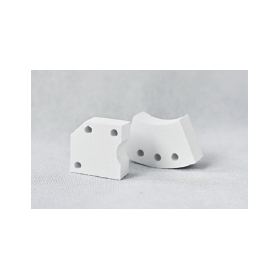
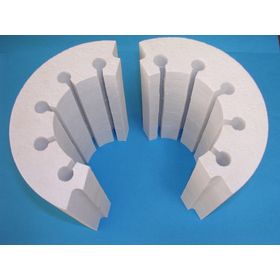
Our company is an expert in the processing of heat-resistant and insulating materials, providing appropriate selections and precision machining of refractory and heat-resistant materials (for low to high temperatures) according to customer needs in various industrial heat treatment applications. Our insulating materials are used in various applications, including wall insulation for electric furnace heaters, insulation and protective materials for analytical instruments involving heat treatment, as well as insulation materials used in other household appliances and semiconductor equipment. We also handle high-performance insulating materials that exhibit ideal performance at temperatures up to around 1000°C. By utilizing high-performance insulating materials, we can maintain high insulation performance even in cases where there are space limitations in the furnace, which is effective from both safety and energy-saving perspectives. 【We can solve the following issues】 - I want to process insulating materials to fit the shape of the furnace. - I want to select the optimal insulating material according to my company's conditions. - I want to improve insulation performance to achieve energy savings. - I would like to have insulating materials manufactured and processed for prototypes of heat treatment equipment. - I want to consider the balance between insulation performance and cost for both prototype and mass production cases. In addition to the above, we welcome various inquiries related to "insulation," "heat resistance," and "fire resistance," so please feel free to contact us.
Added to bookmarks
Bookmarks listBookmark has been removed
Bookmarks listYou can't add any more bookmarks
By registering as a member, you can increase the number of bookmarks you can save and organize them with labels.
Free membership registrationWe use non-asbestos heat-resistant and wear-resistant felt, making it particularly suitable for work on high-temperature surfaces.
Added to bookmarks
Bookmarks listBookmark has been removed
Bookmarks listYou can't add any more bookmarks
By registering as a member, you can increase the number of bookmarks you can save and organize them with labels.
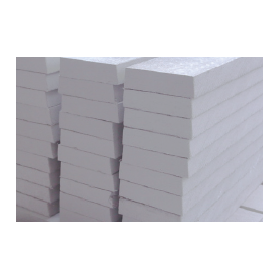
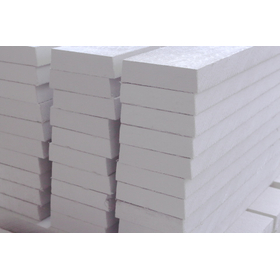
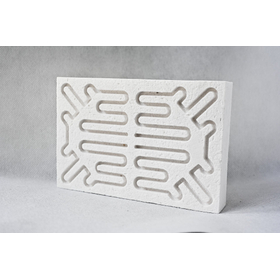
Free membership registrationWe provide ceramic fiber boards, alumina boards, silica boards, and calcium silicate boards, which are used as refractory insulation materials for various industrial kilns and furnaces, in various shapes to meet your needs.
Added to bookmarks
Bookmarks listBookmark has been removed
Bookmarks listYou can't add any more bookmarks
By registering as a member, you can increase the number of bookmarks you can save and organize them with labels.
Free membership registrationIf you want to use high-performance insulation materials with a thermal conductivity lower than still air but the cost does not match, please contact us. We will provide high-value-added insulation materials (TIM) to fit your budget.
Added to bookmarks
Bookmarks listBookmark has been removed
Bookmarks listYou can't add any more bookmarks
By registering as a member, you can increase the number of bookmarks you can save and organize them with labels.
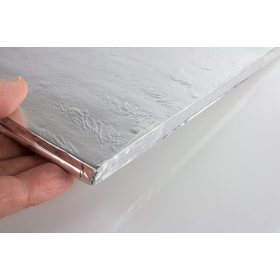
Free membership registrationHigh-performance insulation material (WDS) is an ideal insulation material that exhibits the best performance among insulation materials that can be used from -190°C to 1100°C. It has a thermal conductivity lower than that of still air and is considerate of the environment and human health. There are two types of water-repellent specifications: one with a water-repellent agent coating and various laminated processing types. For more details, please contact us or refer to the catalog.
Added to bookmarks
Bookmarks listBookmark has been removed
Bookmarks listYou can't add any more bookmarks
By registering as a member, you can increase the number of bookmarks you can save and organize them with labels.
Free membership registrationCRX Retort Heater/Flexible Heater can be custom-made in any size, and since it uses high-purity ceramics, it does not emit toxic gases. The maximum operating temperature is 1200°C. Its flexible structure allows for various applications. For more details, please contact us or refer to the catalog.
Added to bookmarks
Bookmarks listBookmark has been removed
Bookmarks listYou can't add any more bookmarks
By registering as a member, you can increase the number of bookmarks you can save and organize them with labels.
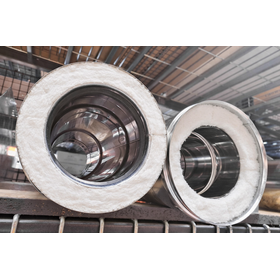
Free membership registrationThis is a thermal insulation, cooling, and condensation prevention material that protects pipes, valves, flanges, and equipment, and allows for easy attachment and detachment. It also helps improve the working environment and can be reused multiple times. Additionally, a version with high-performance insulation material (WDS) is available, providing excellent energy-saving effects. For more details, please contact us or refer to the catalog.
Added to bookmarks
Bookmarks listBookmark has been removed
Bookmarks listYou can't add any more bookmarks
By registering as a member, you can increase the number of bookmarks you can save and organize them with labels.
Free membership registrationFireproof and heat-resistant packing, as well as high-performance fiber products, are packings used around furnace equipment, requiring tensile strength. We offer ceramic fiber tapes, ceramic fiber round and square ropes, silica fiber tapes, and more. Please inquire about sizes and varieties. For more details, please contact us or refer to our catalog.
Added to bookmarks
Bookmarks listBookmark has been removed
Bookmarks listYou can't add any more bookmarks
By registering as a member, you can increase the number of bookmarks you can save and organize them with labels.
Free membership registration