181~188 item / All 188 items
Displayed results
Filter by category

Added to bookmarks
Bookmarks listBookmark has been removed
Bookmarks listYou can't add any more bookmarks
By registering as a member, you can increase the number of bookmarks you can save and organize them with labels.
Free membership registration
Contact this company
Inquiry FormBefore making an inquiry
Download Profile181~188 item / All 188 items
Filter by category

In the semiconductor industry, accurate understanding of equipment information and prompt maintenance response are crucial for the stable operation of specialized equipment in clean rooms. Particularly for equipment without existing drawings, confirming the structure and identifying necessary parts can be time-consuming, increasing the burden of maintenance tasks. Orizuru 3D provides an environment where equipment information can be intuitively grasped from 3D data, supporting the acceleration of maintenance responses and parts verification. 【Usage Scenarios】 - Procurement of parts for aging equipment in clean rooms - Identification of parts when drawings are not available - Arrangement of parts from 3D data 【Benefits of Implementation】 - Elimination of the need for 2D drawing creation, leading to more efficient procurement operations - Reduction in parts procurement time - Contribution to the stable operation of equipment
Added to bookmarks
Bookmarks listBookmark has been removed
Bookmarks listYou can't add any more bookmarks
By registering as a member, you can increase the number of bookmarks you can save and organize them with labels.
Free membership registration
In a food factory, stable operation of equipment is essential for maintaining product quality and productivity. Rapid procurement of parts and accurate information management are crucial elements in the maintenance operations of a food factory. In particular, there are challenges related to the time and cost involved in procuring parts for aging equipment and identifying parts when there are no drawings available. Orizuru 3D addresses these challenges by quickly obtaining the necessary information from 3D data and streamlining the parts procurement process. 【Use Cases】 - Procurement of parts for aging equipment - Identification of parts when there are no drawings - Arrangement of parts from 3D data 【Benefits of Implementation】 - Elimination of the need for 2D drawing creation, leading to more efficient procurement operations - Reduction in parts procurement time - Contribution to stable operation of equipment
Added to bookmarks
Bookmarks listBookmark has been removed
Bookmarks listYou can't add any more bookmarks
By registering as a member, you can increase the number of bookmarks you can save and organize them with labels.
Free membership registration
In the manufacturing industry, it is essential to operate multiple core business processes such as production planning, process management, inventory management, quality control, and cost management in a coordinated manner. However, when information is dispersed across departments, issues such as delays in progress tracking, inventory shortages or surpluses, delays in responding to quality issues, and a lack of visibility into costs are likely to arise. ERP is a core system that centralizes this information, supporting real-time information sharing and rapid decision-making. By enabling flexible implementation tailored to customer needs and business flows, it contributes to improved productivity, cost reduction, enhanced quality, and better adherence to delivery deadlines. 【Usage Scenarios】 - Progress management of production planning and manufacturing processes - Optimization of inventory management and material procurement - Quality control and rapid response to defects - Cost management and visibility of profitability 【Benefits of Implementation】 - Increased productivity - Cost reduction - Improved quality - Enhanced adherence to delivery deadlines
Added to bookmarks
Bookmarks listBookmark has been removed
Bookmarks listYou can't add any more bookmarks
By registering as a member, you can increase the number of bookmarks you can save and organize them with labels.
Free membership registration
In quality management within the manufacturing industry, it is important to maintain and improve quality and ensure traceability throughout the entire manufacturing process, from product planning and design. Particularly during design changes or when manufacturing issues arise, prompt and accurate information sharing and response are required. Core Concept Technology × aras INNOVATOR supports the resolution of these challenges through PLM implementation. By centralizing data and ensuring seamless information flow, it achieves reduced lead times, rapid reflection of design changes, integrated management of BOM, and optimization of production planning. 【Usage Scenarios】 - Streamlining the product quality management process - Accelerating design change management - Strengthening information collaboration with the manufacturing site 【Benefits of Implementation】 - Early detection and response to quality issues - Improvement in product quality - Cost reduction
Added to bookmarks
Bookmarks listBookmark has been removed
Bookmarks listYou can't add any more bookmarks
By registering as a member, you can increase the number of bookmarks you can save and organize them with labels.
Free membership registration
In the energy industry, equipment maintenance is essential for maintaining stable operation of facilities, which requires planned maintenance, prompt repair responses, and optimization of parts management. Particularly for large-scale equipment such as plants and power stations, managing design information, parts information, and maintenance history in a decentralized manner can lead to delays in response and variations in maintenance quality. Core Concept Technology × Aras Innovator centralizes design information, parts information, and maintenance history related to equipment, supporting the efficiency of maintenance operations. This contributes to reducing the risk of equipment downtime, optimizing maintenance costs, and improving safety. 【Use Cases】 - Preventive maintenance of plant equipment - Regular inspections of power station equipment - Maintenance management of energy supply infrastructure 【Implementation Effects】 - Reduction of equipment downtime risk - Optimization of maintenance costs - Improvement of safety
Added to bookmarks
Bookmarks listBookmark has been removed
Bookmarks listYou can't add any more bookmarks
By registering as a member, you can increase the number of bookmarks you can save and organize them with labels.
Free membership registration
In the construction industry, in addition to cost management for each project, it is necessary to manage multiple tasks in coordination, such as budget management, performance management, understanding outsourcing and labor costs, and confirming the financial status of ongoing projects. However, if information is dispersed across departments or projects, it may lead to delays in understanding costs, overlooking deteriorating financial conditions, and delays in management decisions. ERP is a core system that supports accurate cost management and rapid decision-making in the construction industry by centralizing such information and visualizing the financial status and budget vs. actual conditions for each project. By enabling flexible implementation that aligns with customer needs and business flows, it contributes to the visualization of profitability, cost reduction, and expedited management decisions. 【Use Cases】 - Financial management by project - Comparative analysis of budget and actual performance - Cost management of materials, labor, and outsourcing - Profitability management of ongoing projects 【Benefits of Implementation】 - Visualization of profitability by project - Achievement of cost reduction - Acceleration of management decisions - Reduction of budget overrun risks
Added to bookmarks
Bookmarks listBookmark has been removed
Bookmarks listYou can't add any more bookmarks
By registering as a member, you can increase the number of bookmarks you can save and organize them with labels.
Free membership registration
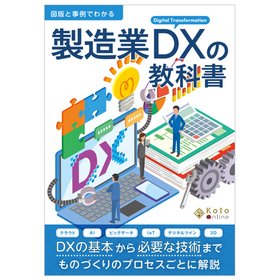
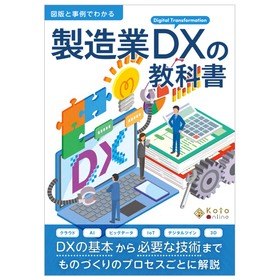
In the electronic equipment industry, there is a demand for the efficiency of various processes such as design data management, simulation, prototyping, and evaluation in design support. In particular, a quick response to design changes and the reduction of design errors are crucial. This document explains the overview and necessity of DX (Digital Transformation) in the manufacturing industry and supports problem-solving in the design process. 【Usage Scenarios】 - Version management of design data - Utilization of simulations - Streamlining of prototyping and evaluation processes 【Benefits of Implementation】 - Shortening of design periods - Improvement of design quality - Cost reduction
Added to bookmarks
Bookmarks listBookmark has been removed
Bookmarks listYou can't add any more bookmarks
By registering as a member, you can increase the number of bookmarks you can save and organize them with labels.
Free membership registration
In the machine tool industry, remote monitoring is crucial for understanding the operational status of machines in real-time and for early detection of anomalies. This enables a reduction in downtime and an improvement in production efficiency. This document explains the overview and necessity of DX (Digital Transformation) in the manufacturing industry, as well as what can be achieved through manufacturing DX. It provides a detailed explanation of the differences between DX and IT implementation, examples of smart factory concepts, and the reasons why manufacturing DX is necessary. It also includes examples of improved traceability due to the introduction of DX, making it easy to reference. Please take a look. 【Usage Scenarios】 - Remote monitoring of machine tool operational status - Early response through anomaly detection - Improvement of production efficiency 【Effects of Implementation】 - Real-time understanding of machine operational status - Reduction of downtime through early detection of anomalies - Increase in productivity
Added to bookmarks
Bookmarks listBookmark has been removed
Bookmarks listYou can't add any more bookmarks
By registering as a member, you can increase the number of bookmarks you can save and organize them with labels.
Free membership registration