iPROS Manufacturing
  • Search for products by classification category

    • Electronic Components and Modules
      Electronic Components and Modules
      60423items
    • Machinery Parts
      Machinery Parts
      75302items
    • Manufacturing and processing machinery
      Manufacturing and processing machinery
      101279items
    • Scientific and Physics Equipment
      Scientific and Physics Equipment
      35867items
    • Materials
      Materials
      37367items
    • Measurement and Analysis
      Measurement and Analysis
      55140items
    • Image Processing
      Image Processing
      15243items
    • Control and Electrical Equipment
      Control and Electrical Equipment
      53790items
    • Tools, consumables, and supplies
      Tools, consumables, and supplies
      64967items
    • Design and production support
      Design and production support
      12518items
    • IT/Network
      IT/Network
      44508items
    • Office
      Office
      14005items
    • Business support services
      Business support services
      24916items
    • Seminars and Skill Development
      Seminars and Skill Development
      6466items
    • Pharmaceutical and food related
      Pharmaceutical and food related
      32316items
    • others
      74255items
  • Search for companies by industry

    • Manufacturing and processing contract
      7333
    • others
      4994
    • Industrial Machinery
      4416
    • Machine elements and parts
      3297
    • Other manufacturing
      2882
    • IT/Telecommunications
      2552
    • Trading company/Wholesale
      2512
    • Industrial Electrical Equipment
      2305
    • Building materials, supplies and fixtures
      1816
    • software
      1642
    • Electronic Components and Semiconductors
      1563
    • Resin/Plastic
      1496
    • Service Industry
      1455
    • Testing, Analysis and Measurement
      1125
    • Ferrous/Non-ferrous metals
      984
    • environment
      698
    • Chemical
      631
    • Automobiles and Transportation Equipment
      566
    • Printing Industry
      510
    • Information and Communications
      459
    • Consumer Electronics
      412
    • Energy
      327
    • Rubber products
      314
    • Food Machinery
      307
    • Optical Instruments
      277
    • robot
      274
    • fiber
      250
    • Paper and pulp
      227
    • Pharmaceuticals and Biotechnology
      168
    • Electricity, Gas and Water Industry
      166
    • Warehousing and transport related industries
      147
    • Glass and clay products
      140
    • Food and Beverage
      129
    • CAD/CAM
      123
    • retail
      108
    • Medical Devices
      103
    • Educational and Research Institutions
      102
    • Ceramics
      98
    • wood
      88
    • Transportation
      82
    • Petroleum and coal products
      63
    • Medical and Welfare
      62
    • Shipbuilding and heavy machinery
      51
    • Aviation & Aerospace
      47
    • Fisheries, Agriculture and Forestry
      41
    • equipment
      33
    • Public interest/special/independent administrative agency
      31
    • Research and development equipment and devices
      28
    • Materials
      26
    • self-employed
      24
    • Government
      23
    • Mining
      17
    • Finance, securities and insurance
      13
    • cosmetics
      13
    • Individual
      10
    • Restaurants and accommodations
      9
    • Police, Fire Department, Self-Defense Forces
      7
    • Laboratory Equipment and Consumables
      4
    • Raw materials for reagents and chemicals
      3
    • Contracted research
      3
  • Special Features
  • Ranking

    • Overall Products Ranking
    • Overall Company Ranking
Search for Products
  • Search for products by classification category

  • Electronic Components and Modules
  • Machinery Parts
  • Manufacturing and processing machinery
  • Scientific and Physics Equipment
  • Materials
  • Measurement and Analysis
  • Image Processing
  • Control and Electrical Equipment
  • Tools, consumables, and supplies
  • Design and production support
  • IT/Network
  • Office
  • Business support services
  • Seminars and Skill Development
  • Pharmaceutical and food related
  • others
Search for Companies
  • Search for companies by industry

  • Manufacturing and processing contract
  • others
  • Industrial Machinery
  • Machine elements and parts
  • Other manufacturing
  • IT/Telecommunications
  • Trading company/Wholesale
  • Industrial Electrical Equipment
  • Building materials, supplies and fixtures
  • software
  • Electronic Components and Semiconductors
  • Resin/Plastic
  • Service Industry
  • Testing, Analysis and Measurement
  • Ferrous/Non-ferrous metals
  • environment
  • Chemical
  • Automobiles and Transportation Equipment
  • Printing Industry
  • Information and Communications
  • Consumer Electronics
  • Energy
  • Rubber products
  • Food Machinery
  • Optical Instruments
  • robot
  • fiber
  • Paper and pulp
  • Pharmaceuticals and Biotechnology
  • Electricity, Gas and Water Industry
  • Warehousing and transport related industries
  • Glass and clay products
  • Food and Beverage
  • CAD/CAM
  • retail
  • Medical Devices
  • Educational and Research Institutions
  • Ceramics
  • wood
  • Transportation
  • Petroleum and coal products
  • Medical and Welfare
  • Shipbuilding and heavy machinery
  • Aviation & Aerospace
  • Fisheries, Agriculture and Forestry
  • equipment
  • Public interest/special/independent administrative agency
  • Research and development equipment and devices
  • Materials
  • self-employed
  • Government
  • Mining
  • Finance, securities and insurance
  • cosmetics
  • Individual
  • Restaurants and accommodations
  • Police, Fire Department, Self-Defense Forces
  • Laboratory Equipment and Consumables
  • Raw materials for reagents and chemicals
  • Contracted research
Special Features
Ranking
  • Overall Products Ranking
  • Overall Company Ranking
  • privacy policy
  • terms of service
  • About Us
  • Careers
  • Advertising
  1. Home
  2. Electronic Components and Semiconductors
  3. ニッポー
  4. Product/Service List
Electronic Components and Semiconductors
  • Added to bookmarks

    Bookmarks list

    Bookmark has been removed

    Bookmarks list

    You can't add any more bookmarks

    By registering as a member, you can increase the number of bookmarks you can save and organize them with labels.

    Free membership registration

ニッポー

EstablishmentNovember 28, 1964
capital10000Ten thousand
number of employees113
addressSaitama/Kawaguchi-shi/2-13-20 Kawaguchi
phone048-253-2788
  • Special site
  • Official site
last updated:Jun 18, 2026
ニッポーlogo
  • Contact this company

    Inquiry Form
  • Before making an inquiry

    Download Profile
  • Company information
  • Products/Services(74)
  • catalog(42)
  • news(0)

ニッポー Product Lineup

  • category

1~45 item / All 74 items

Displayed results

Filter by category

Control board Control board
Temperature and humidity controller Temperature and humidity controller
IoT Cloud Development IoT Cloud Development
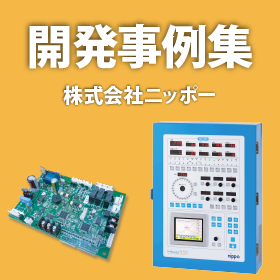
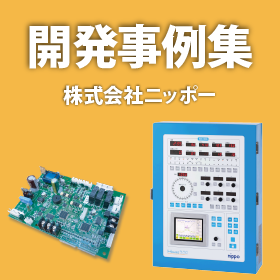
Nippo's development case study Nippo's development case study
Nippo Column Nippo Column
Technical documentation Technical documentation
農業用コントローラ 農業用コントローラ
class="retina-image"

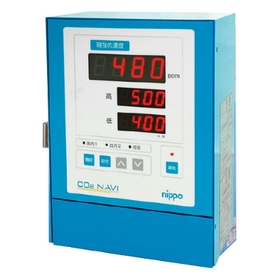
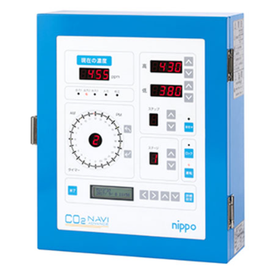
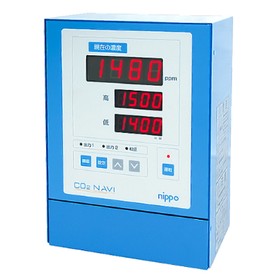
Ventilation-type Carbon Dioxide Controller 'CO2NAVI'

Divide the day into up to four stages, allowing for the switching of target concentrations based on the time of day!

"CO2NAVI" is a ventilation-type carbon dioxide controller that regulates the CO2 concentration in mushroom cultivation rooms to a set level. With two output points, it can be used for various applications. Thanks to its accurate measurements and quick response, it helps prevent oxygen deficiency and contributes to increased yield and quality. Additionally, by managing CO2 concentration (numerically), it reduces unnecessary ventilation and cuts down on heating and cooling costs. 【Features】 ■ High-precision sensors measure the correct concentration and reduce unnecessary ventilation ■ Four-stage concentration setting method for managing appropriate levels ■ High reliability and stability through automatic calibration ■ Packed with convenient features *For more details, please download the PDF or feel free to contact us.

  • controller
  • Other gas concentration meters

Added to bookmarks

Bookmarks list

Bookmark has been removed

Bookmarks list

You can't add any more bookmarks

By registering as a member, you can increase the number of bookmarks you can save and organize them with labels.

Free membership registration

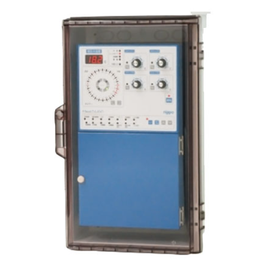
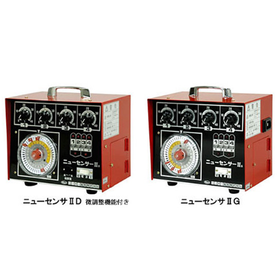
4-stage variable temperature thermo "New Sensor II"

Using a thermistor that is smaller than a grain of rice, it has good thermal conductivity and responds sensitively to temperature changes within 0.5℃!

The "New Sensor II" is a four-stage temperature control thermostat that can finely and automatically adjust the temperature in a greenhouse according to a four-step program. It divides the 24 hours into four steps and controls heating or cooling devices to maintain the target temperature for each time period at the set temperature. Additionally, it allows for program time settings by inserting a timer pin. 【Features】 ■ Four-stage temperature setting method ■ High-sensitivity temperature sensor ■ Easy analog setting ■ Simple time setting *For more details, please download the PDF or feel free to contact us.

  • controller
  • Other Thermometers

Added to bookmarks

Bookmarks list

Bookmark has been removed

Bookmarks list

You can't add any more bookmarks

By registering as a member, you can increase the number of bookmarks you can save and organize them with labels.

Free membership registration

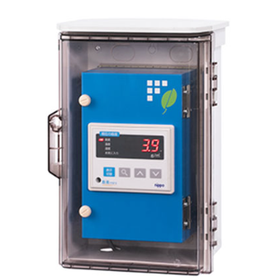
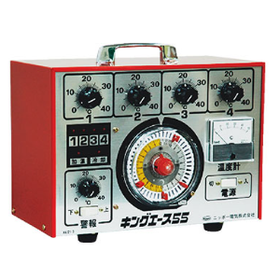
4-stage variable temperature thermo "King Ace 55"

Fully automatic temperature control system that precisely and completely regulates the temperature inside the greenhouse according to a programmed schedule!

The "King Ace 55" is a four-stage variable temperature thermostat that divides 24 hours into four steps and controls heating or cooling devices to maintain the desired temperature. It uses a thermistor with a temperature-sensitive element smaller than a grain of rice, which minimizes heat conduction leakage and responds sensitively to temperature changes within 0.5°C. Additionally, it is equipped with a built-in low and high-temperature alarm system (with upper and lower limit switching) that accurately detects unexpected abnormal temperatures, preventing issues before they occur. 【Features】 ■ Four-stage temperature setting method ■ Sensitive response to temperature changes within 0.5°C ■ Temperature alarm function ■ Easy analog temperature setting ■ Easy time setting *For more details, please download the PDF or feel free to contact us.

  • controller
  • Other Thermometers

Added to bookmarks

Bookmarks list

Bookmark has been removed

Bookmarks list

You can't add any more bookmarks

By registering as a member, you can increase the number of bookmarks you can save and organize them with labels.

Free membership registration

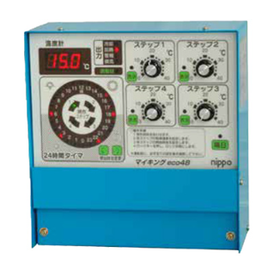
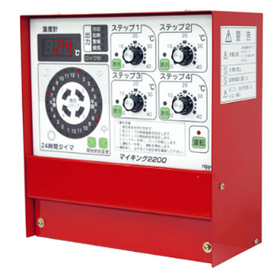
4-stage variable temperature thermo "Myking 2200"

To prevent accidental operation, the lock key section is covered by an operation cover.

The "Myking 2200" is a digital 4-step temperature control thermostat that divides 24 hours into 4 segments and controls heating or cooling devices to maintain the desired temperature. In addition to being able to control three positions, it can record minimum and maximum temperatures. Even during a power outage, the time remains accurate, ensuring that automatic control is not affected. It also has a function to monitor abnormal temperatures due to malfunctions in heating and cooling devices and will issue an alarm. 【Features】 ■ Lock function to prevent incorrect setting changes ■ Timing operation with power outage compensation (for 1 month) ■ Abnormal temperature alarm function with independent upper and lower limit settings ■ Maximum/minimum temperature recording function (for the current day + past 7 days) ■ Various additional functions can be added as options *For more details, please download the PDF or feel free to contact us.

  • controller
  • Other Thermometers

Added to bookmarks

Bookmarks list

Bookmark has been removed

Bookmarks list

You can't add any more bookmarks

By registering as a member, you can increase the number of bookmarks you can save and organize them with labels.

Free membership registration

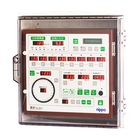
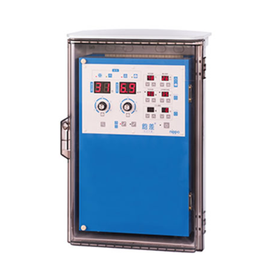
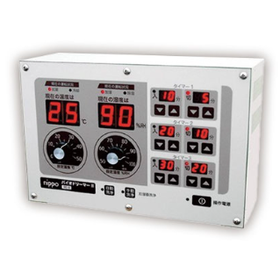
Mushroom cultivation device "Biodreamer II"

In addition to temperature and humidity control, it has three built-in timer outputs! It can control ventilation fans, circulation fans, lighting, and more.

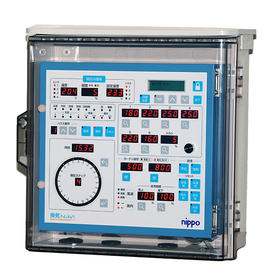
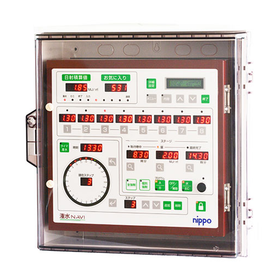
"BioDreamer II" is a controller specialized for plant factories, capable of integrated control of temperature, humidity, lighting, alarms, and more, all from a single unit. The temperature and humidity settings utilize intuitive analog knobs for operation, and the display features a large screen with a character height of 25mm, enhancing visibility and making it easy to understand from a distance. Additionally, compared to control panels using conventional sequencers, it allows for reductions in development and material costs. 【Features】 ■ Composite control ■ Easy operation ■ Easy to read ■ Cost reduction *For more details, please download the PDF or feel free to contact us.

  • controller
  • Other Thermometers
  • Other Hygrometers

Added to bookmarks

Bookmarks list

Bookmark has been removed

Bookmarks list

You can't add any more bookmarks

By registering as a member, you can increase the number of bookmarks you can save and organize them with labels.

Free membership registration

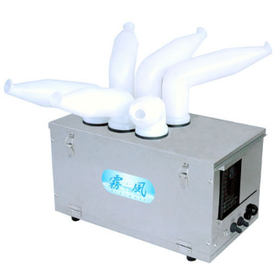
Ultrasonic Humidifier Mist Wind FOG6 (Type 6)

Can be humidified with more mist! Easily replaceable without tools, and excellent maintainability.

The "Ultrasonic Humidifier Mist Wind FOG6 (Type 6)" is a type 6 ultrasonic humidifier capable of spraying fine mist over a wide area. It is available in both stationary and hanging types. Additionally, it can be used for spraying deodorizing and disinfecting liquids (such as hypochlorous acid water). Moreover, compared to nozzle types, it produces a very fine mist that reaches into narrow spaces between shelves and other installation areas. 【Features】 ■ Fine mist ■ Automatic water supply function ■ Automatic cleaning function ■ Wide area spraying ■ Ultrasonic mist generation *For more details, please download the PDF or feel free to contact us.

  • Humidification device

Added to bookmarks

Bookmarks list

Bookmark has been removed

Bookmarks list

You can't add any more bookmarks

By registering as a member, you can increase the number of bookmarks you can save and organize them with labels.

Free membership registration

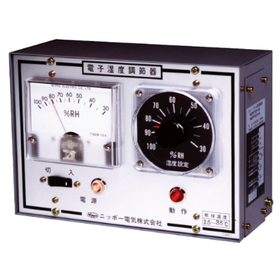
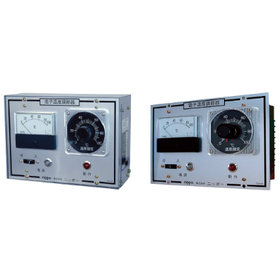
Analog Humidity Controller "HC Series"

Easy to see with a large analog display! You can set it just by turning the knob.

The "HC Series" is an analog humidity controller that uses two temperature sensors to display relative humidity. It features an output that controls to maintain the desired humidity and utilizes a thermistor wet-bulb type humidity controller. It offers a distinctive analog display and can be linked with the ultrasonic humidifier Mist Wind series. Additionally, it employs sensors that are highly accurate and resistant to damage even in high-temperature environments. 【Features】 ■ Easy-to-read analog display ■ Simple settings ■ Utilizes wet-bulb sensors *For more details, please download the PDF or feel free to contact us.

  • controller
  • Other Hygrometers

Added to bookmarks

Bookmarks list

Bookmark has been removed

Bookmarks list

You can't add any more bookmarks

By registering as a member, you can increase the number of bookmarks you can save and organize them with labels.

Free membership registration

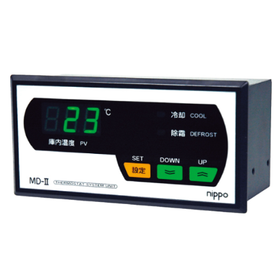
Defrost Temperature Controller MD-II Thermostat System Unit

The defrost cycle can be set in 10-minute increments, and the defrost time can be set in 1-minute increments! You can also set the drainage time.

The "MD-II Thermostat System Unit" is a dedicated two-position temperature controller for refrigeration and freezing, equipped with a built-in microcontroller. In addition to the ability to select delay conditions for dF display, it features a freezer protection timer function and allows for internal temperature correction, which helps to reduce the causes of failures in refrigeration and freezing units. Communication functionality can be added as an option. There is also a model available with a "defrost end temperature sensor." 【Features】 ■ Fine time settings are possible ■ More flexible refrigeration and freezing control ■ Expanded options and models *For more details, please download the PDF or feel free to contact us.

  • controller
  • Other Thermometers

Added to bookmarks

Bookmarks list

Bookmark has been removed

Bookmarks list

You can't add any more bookmarks

By registering as a member, you can increase the number of bookmarks you can save and organize them with labels.

Free membership registration

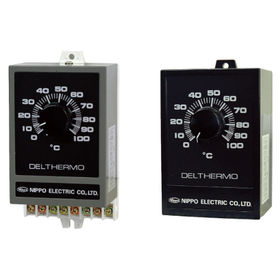
Analog Temperature Controller "FC Series"

Depending on the application, you can choose from four types: 0℃ to 100℃ / 0℃ to 50℃ / -30℃ to 30℃ / 0℃ to 150℃!

The "FC Series" is an analog temperature controller recommended for temperature management in agriculture, aquaculture, boiler rooms, and underfloor heating. You can switch the power and control output ON/OFF with the power switch. Additionally, it can be easily operated with a knob, allowing anyone to set the temperature effortlessly. Furthermore, since it uses an analog meter, the settings and displays are clear at a glance. 【Features】 ■ Easy to operate ■ Settings and displays are clear at a glance ■ Selectable temperature range *For more details, please download the PDF or feel free to contact us.

  • controller
  • Other Thermometers

Added to bookmarks

Bookmarks list

Bookmark has been removed

Bookmarks list

You can't add any more bookmarks

By registering as a member, you can increase the number of bookmarks you can save and organize them with labels.

Free membership registration

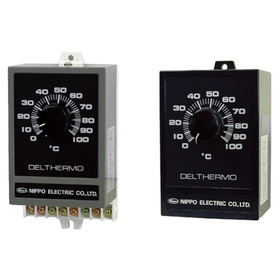
Analog Temperature Controller "DT Series"

You can easily set the temperature with the knob, making it simple for anyone to operate!

The "DT Series" is an analog temperature controller that allows temperature settings using an easy-to-operate knob. You can choose from four different temperature ranges, making it suitable for a wide range of applications including agriculture, aquaculture, boilers, and underfloor heating. Since temperature settings can be adjusted with a knob, anyone can operate it easily. 【Features】 ■ Easy operation ■ Selectable temperature ranges *For more details, please download the PDF or feel free to contact us.

  • controller
  • Other Thermometers

Added to bookmarks

Bookmarks list

Bookmark has been removed

Bookmarks list

You can't add any more bookmarks

By registering as a member, you can increase the number of bookmarks you can save and organize them with labels.

Free membership registration

Temperature and Humidity Controller "DT Series"

Suitable for a wide range of applications such as agriculture, aquaculture, boilers, and floor heating!

The "DT Series" is an analog temperature controller that allows for temperature settings using an easy-to-operate knob. You can choose from four different temperature ranges, making it suitable for a wide range of applications including agriculture, aquaculture, boilers, and floor heating. Please feel free to contact us when you need assistance. 【Features】 ■ Easy operation ■ Selectable temperature ranges *For more details, please refer to the related links or feel free to contact us.

  • Temperature and Humidity Control

Added to bookmarks

Bookmarks list

Bookmark has been removed

Bookmarks list

You can't add any more bookmarks

By registering as a member, you can increase the number of bookmarks you can save and organize them with labels.

Free membership registration

[Information] What is PWM Control? Explanation of its Features, Main Applications, and Implementation Points

Achieve high-precision control while minimizing energy loss! A comparison table with other methods is also included.

This document is a technical material that explains the mechanism of PWM (Pulse Width Modulation) control, its main applications, and key points for implementation. It includes an explanation of the power adjustment mechanism, the generation of pseudo AC voltage, and a comparison table with other methods, along with easy-to-understand illustrations of implementation examples in heaters and drones. Please make use of this information when considering PCB development or industrial equipment development utilizing PWM control. 【Contents (partial)】 ■ What is PWM control ■ Mechanism of power adjustment ■ Generation of pseudo AC voltage by PWM ■ Why PWM control is used ■ Comparison with other methods *For more details, please download the PDF or feel free to contact us.

  • Circuit board design and manufacturing

Added to bookmarks

Bookmarks list

Bookmark has been removed

Bookmarks list

You can't add any more bookmarks

By registering as a member, you can increase the number of bookmarks you can save and organize them with labels.

Free membership registration

[Information] The Mechanism and Features of OLED (Organic EL)

From the structure and mechanism of light emission to recommended applications! A clear explanation of the basics of organic EL.

This document is a technical material that explains the mechanism, advantages, and disadvantages of OLED (Organic EL). It includes the basic structure of organic EL elements and the mechanism of light emission, as well as comparisons with various display devices such as LCDs and LED displays. It comprehensively covers control methods, color representation, and recommended applications. Please make use of it. [Contents (partial)] ■ What is OLED (Organic EL) ■ Structure and light emission mechanism of organic EL elements ■ Comparison of various display devices ■ Advantages and disadvantages ■ Control methods ■ Color representation methods *For more details, please download the PDF or feel free to contact us.

  • LCD display
  • Organic EL

Added to bookmarks

Bookmarks list

Bookmark has been removed

Bookmarks list

You can't add any more bookmarks

By registering as a member, you can increase the number of bookmarks you can save and organize them with labels.

Free membership registration

Presentation of materials: Explanation of the development process and key points of wireless communication systems.

Leave the development of wireless communication systems to us! We handle everything from circuit board development and communication circuits to wireless circuits and backend cloud/software development seamlessly!

This document provides a detailed explanation of the development process and key points of wireless communication systems. The development of wireless communication systems benefits from a comprehensive understanding of the entire development process, facilitating smoother collaboration with development partners and leading to the realization of higher quality systems. 【Contents】 ■ Increasing demand for wireless communication systems ■ Overview of wireless communication systems ■ Main wireless modules ■ Development process of wireless communication systems \Free helpful materials available/ For more details, please view the PDF data from "Catalog Download." We also welcome any questions or consultations regarding board development, so feel free to contact us.

  • Communications

Added to bookmarks

Bookmarks list

Bookmark has been removed

Bookmarks list

You can't add any more bookmarks

By registering as a member, you can increase the number of bookmarks you can save and organize them with labels.

Free membership registration

Development case of greenhouse environmental control panels for facility horticulture *Gift of development case collection

Combining a variety of sensors with an intuitive control panel. We have developed an environmental control panel that balances ease of use with precise control. We can provide consistent support across software, hardware, and mechanics!

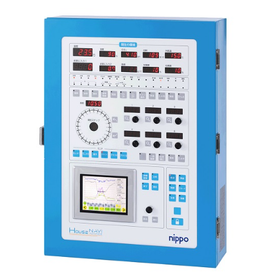
Examples utilizing technologies such as communication control (RS232C, RS485), CO2 concentration, and solar radiation sensing. We will introduce examples of mechanism design for environmental control panels for facility horticulture, as well as product planning, design, and circuit design. The integrated environmental control panel that manages the environment inside the facility horticulture house creates a conducive environment for crop growth by measuring and controlling temperature, humidity, CO2, and solar radiation using various sensors. The surface panel features an intuitive touch panel for easy operation, knobs that provide a tactile feel, and an LED display with good visibility, all designed for ease of use in the field. [Surface Panel Features] ■ Intuitive touch panel for easy operation ■ Tactile knobs ■ LED display with good visibility For more details, please view the PDF data from "Catalog Download." We also welcome any questions or inquiries regarding various circuit board developments, so please feel free to contact us.

  • Circuit board design and manufacturing
  • Temperature and Humidity Control
  • Other air environment control

Added to bookmarks

Bookmarks list

Bookmark has been removed

Bookmarks list

You can't add any more bookmarks

By registering as a member, you can increase the number of bookmarks you can save and organize them with labels.

Free membership registration

[Information] Development Process and Examples of IoT × Cloud Systems

Leave your IoT and cloud system needs to us! We handle everything from circuit board development, communication circuits, and wireless circuits to cloud development seamlessly.

This document provides a detailed explanation of the development process and case studies of IoT × cloud systems. IoT × cloud systems can be utilized for various purposes, and by outsourcing development, it is possible to leverage unique skills and know-how. Our company not only has extensive experience in circuit board development but also possesses expertise in providing solutions that combine IoT devices and cloud systems. If you are considering the development of IoT × cloud systems, please leave it to us. [Contents (partial)] ■ Current status of IoT adoption ■ What IoT × cloud systems can achieve ■ Flow of IoT × cloud system development ■ Advantages of outsourcing development ■ "Three perspectives" for successful outsourcing *Currently offering helpful materials* For more details, please view the PDF data from "Catalog Download." We also welcome any questions or consultations regarding circuit board development, so feel free to contact us.

  • Circuit board design and manufacturing
  • Other contract services

Added to bookmarks

Bookmarks list

Bookmark has been removed

Bookmarks list

You can't add any more bookmarks

By registering as a member, you can increase the number of bookmarks you can save and organize them with labels.

Free membership registration

Integrated production of design, manufacturing, inspection, and shipping! Development of printed circuit boards <Case study collection available>

Water temperature controllers for aquaculture and environmental control panels for facility horticulture. We are broadly developing areas such as printed circuit board manufacturing and IoT cloud system construction!

Our company provides a comprehensive range of services, from the manufacturing of printed circuit boards to the construction of IoT cloud systems. Additionally, we have established a system capable of supporting development in a wide range of fields, including embedded software development, hardware development, and mechanical design (mechanical, sheet metal, and enclosures). In this document, we will introduce selected examples of our developed products that can assist our customers in their considerations, showcasing the technical capabilities and development achievements we have cultivated over more than 60 years across various fields. The categories are diverse, including logistics, food and kitchen, physical and chemical, and agriculture, forestry, and fisheries, so please take a look! 【Highlighted Case Studies】 ■ Temperature controller for refrigerated vehicles ■ Water temperature controller for fish farming ■ Environmental control panel for facility horticulture, etc. \ We are currently offering a collection of development case studies / For more details, please view the PDF data from "Catalog Download." We also welcome any questions or consultations regarding circuit board development, so feel free to contact us.

  • Circuit board design and manufacturing
  • controller
  • Temperature and Humidity Control

Added to bookmarks

Bookmarks list

Bookmark has been removed

Bookmarks list

You can't add any more bookmarks

By registering as a member, you can increase the number of bookmarks you can save and organize them with labels.

Free membership registration

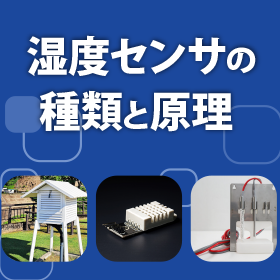
[Useful Materials Available] Explanation of Types and Mechanisms of Humidity Sensors

We offer a wide range of solutions from "dry and wet bulb sensors" that are strong in high humidity environments to "polymer sensors." For inquiries about high-precision humidity management, please leave it to Nippo!

A humidity sensor is a device that measures the humidity contained in the air. It is used in various fields, from general household applications such as air conditioners and humidifiers to agriculture, industry, and healthcare. Since the methods of measuring humidity and their accuracy vary, it is necessary to choose one that suits the intended purpose. \Free helpful materials available/ For more details, please view the PDF data from "Catalog Download." We also welcome any questions or inquiries regarding circuit board development, so feel free to contact us.

  • Sensors

Added to bookmarks

Bookmarks list

Bookmark has been removed

Bookmarks list

You can't add any more bookmarks

By registering as a member, you can increase the number of bookmarks you can save and organize them with labels.

Free membership registration

[Column] What is Impedance? Differences from Resistance, Measurement Methods, and Precautions

What is impedance? Introducing the differences from resistance, measurement methods, and precautions! Leave circuit design and printed circuit board design and development to Nippo!

Impedance is a quantity that indicates "electrical resistance" in an electrical circuit. Unlike the resistance in direct current (DC) circuits, it serves as an important indicator of the relationship between voltage and current in alternating current (AC) circuits. Resistance has the characteristic of converting electrical energy into heat and indicates the ratio of voltage to current in DC circuits. On the other hand, impedance indicates the ratio of voltage to current in AC circuits and is a complex quantity that includes not only resistance but also reactance and inductance. ■ Measurement Methods and Precautions To measure impedance, specialized equipment such as an impedance analyzer or an LCR meter is used. By using these devices, you can accurately grasp the impedance characteristics and reactance components for each frequency. When measuring, it is important to be aware of the effects of parasitic inductance and capacitance. Especially at high frequencies, errors are likely to occur, so the arrangement of cables and shielding treatment becomes crucial. Additionally, if the calibration of the measuring instrument itself is insufficient, errors can be amplified, making regular adjustments and management essential for improving reliability. Our company provides comprehensive support from circuit design to printed circuit board implementation. Please feel free to contact us.

  • Resistors

Added to bookmarks

Bookmarks list

Bookmark has been removed

Bookmarks list

You can't add any more bookmarks

By registering as a member, you can increase the number of bookmarks you can save and organize them with labels.

Free membership registration

[Column] What are Gerber Data and BOM? About Their Roles and Relationships

What is the Gerber data necessary for circuit board manufacturing? Introducing its role, format, and creation process! Leave the implementation and assembly of circuit boards to Nippo!

Gerber data refers to the standard format design data used during circuit board manufacturing. Its main role is to convey the layout information of the circuit board, indicating wiring patterns, pad positions, and the arrangement of vias (through holes) to ensure that manufacturing machines can process it accurately. On the other hand, a BOM (Bill of Materials) is a data list that compiles all the component information to be mounted on the circuit board, accurately conveying details such as component types, part numbers, quantities, and placement information. When outsourcing circuit board assembly, it is important to check the Gerber data requirements in advance and prepare an accurate BOM. Since Gerber data communicates the design information of the circuit board and the BOM details the electronic components to be mounted, ensuring consistency between the two leads to smooth production and cost reduction. If you are considering outsourcing circuit board assembly and manufacturing, please feel free to contact us. We will provide proposals tailored to your needs.

  • Circuit board design and manufacturing

Added to bookmarks

Bookmarks list

Bookmark has been removed

Bookmarks list

You can't add any more bookmarks

By registering as a member, you can increase the number of bookmarks you can save and organize them with labels.

Free membership registration

[Column] Basic Knowledge of Control Panels! Explanation of Typical Device Examples and Component Parts

What role does a control panel play? Here are some representative device examples and components! / Leave application development and ODM board development to Nippo! /

A control panel is a device that houses electrical components and equipment wired together in a box to control machinery in factories or building facilities. It serves the purpose of collectively operating the controlled devices and displaying their status. The components include a metal cabinet, switches, indicator lights, wiring, coolers, breakers, electromagnetic relays (which switch based on received electrical signals), inverters (which control motor speed), and PLCs (Programmable Logic Controllers, which control the movement of equipment and machinery according to predetermined sequences and conditions). Examples of typical devices are as follows: ◆ Building air conditioning systems Controls multiple coolers to appropriately manage temperature and humidity within a building. ◆ Factory production lines Controls motors that change the speed of conveyor belts and alerts with indicator lights in case of machine abnormalities. ◆ Elevators Controls the motors that move the elevator up and down and reads and displays the pressed switch. Our company utilizes the know-how gained from circuit board development across various fields to undertake application development in diverse areas. If you are interested, please feel free to contact us.
  • Control Panel

Added to bookmarks

Bookmarks list

Bookmark has been removed

Bookmarks list

You can't add any more bookmarks

By registering as a member, you can increase the number of bookmarks you can save and organize them with labels.

Free membership registration

Technical Information: Technology Methods and Selection of Touch Panels!

Explaining the key points for choosing touch panel technologies and applications! [With comparison table] Comprehensive support from enclosures and circuit boards to software, hardware, and mechanics!

In recent years, the transition from physical switches to touch panels has been progressing, with an increasing number of adoption examples not only in consumer devices like smartphones but also in industrial equipment. Touch panels allow for operation through graphical icons and menus, making them easier to use compared to traditional physical buttons, and they excel in "intuitive operability." Additionally, there are benefits such as: - The ability to customize the display screen according to usage methods and processes - The overall compactness of the device … and more. Touch panels have various characteristics depending on their technological methods, so selecting the right one based on application is key. This document provides detailed information on: ■ Benefits of adopting touch panels ■ Main technological methods of touch panels ■ How to choose a touch panel ■ Examples of touch panel implementation Please take a look! *In some cases, other options may be more appropriate depending on the application. In addition to touch panels, there are options for screen displays using PCs/tablets or 7-segment displays, so if you are considering planning or development, feel free to consult with us.

  • Touch Panel
  • FPD/Touch Panel

Added to bookmarks

Bookmarks list

Bookmark has been removed

Bookmarks list

You can't add any more bookmarks

By registering as a member, you can increase the number of bookmarks you can save and organize them with labels.

Free membership registration

[Column] What are the differences between circuit design and mechanical design? An explanation of CAD software and features.

What is the difference between circuit design and mechanical design? Introducing CAD software and features! Proven results in multiple fields. Leave electrical and electronic circuit and PCB design to Nippo!

"Circuit design" and "mechanical design" are essential and important processes in product development. Circuit design involves the design of printed circuit boards using analog circuits and microcontrollers, while mechanical design requires casing design and structural design, each influencing the performance of the product. ■ Circuit Design This refers to the design of printed circuit boards and circuits used within electronic devices, primarily aiming to realize necessary functions by utilizing analog and digital circuits. This includes the design of signal processing and control functions using operational amplifiers and microcontrollers. ■ Mechanical Design This process involves designing the appearance and structure of the product, including casing design and structural design, shaping the final form of the product from various perspectives such as durability, aesthetics, and manufacturability. It is often conducted as part of mechanical design, characterized by consideration of not only functionality but also the overall user experience and safety of the product. The two main differences are that circuit design focuses on the design of electronic internal functions, while mechanical design emphasizes physical shapes and responses to external environments. A commonality is that the creativity and ideas of engineers are indispensable. At Nippo, we offer a wide range of services from electrical and electronic circuit design to printed circuit board design. Please feel free to consult with us.
  • Circuit board design and manufacturing

Added to bookmarks

Bookmarks list

Bookmark has been removed

Bookmarks list

You can't add any more bookmarks

By registering as a member, you can increase the number of bookmarks you can save and organize them with labels.

Free membership registration

[Column] What is Carbon Neutrality? Differences from Decarbonization and Current Challenges

What is carbon neutrality? Differences from decarbonization, current challenges, specific initiatives, and practical examples.

Carbon neutrality refers to reducing greenhouse gas emissions and offsetting the remaining amount through forest absorption or carbon capture technologies to achieve "net zero." In Japan, the expansion of renewable energy and the introduction of energy-saving technologies are being promoted, but challenges such as low energy self-sufficiency and dependence on fossil fuels remain. Meanwhile, around the world, countries, including the EU, are actively announcing roadmaps and promoting the adoption of renewable energy and electric vehicles (EVs). As specific initiatives, companies are advancing the manufacturing of products utilizing renewable energy and the establishment of delivery systems using low-carbon fuels. For example, a logistics company has reported reducing fuel consumption through optimized delivery routes. Additionally, automobile manufacturers are accelerating the development of EVs and fuel cell vehicles, working towards the decarbonization of vehicles. The products produced by our company demonstrate energy efficiency in the market. For instance, in facility horticulture, temperature management for heating using heavy oil boilers is achieved with less fuel. In products for facility equipment, significant reductions in energy usage are realized through the use of computer control and communication technologies.

  • Energy efficient utilization system

Added to bookmarks

Bookmarks list

Bookmark has been removed

Bookmarks list

You can't add any more bookmarks

By registering as a member, you can increase the number of bookmarks you can save and organize them with labels.

Free membership registration

[Column] What is the Role of Solder Resist? Introducing Its Importance, Types, and Characteristics

What is the role of solder resist? Introducing its importance, types, and characteristics! / Leave the design, development, and manufacturing of printed circuit boards to Nippo! /

Solder resist is an ink or film-like protective material applied to the surface of printed circuit boards (PCBs) that serves to protect the circuits on the substrate. During the soldering process, there is a risk of short circuits due to solder bridges, but the presence of solder resist prevents shorts between circuits, thereby enhancing the reliability of the product. It also effectively protects the substrate from moisture and chemicals, contributing to corrosion prevention. There are two types of solder resist: "liquid type" and "film type." < Liquid Type > This type involves applying ink-like material using screen printing or spraying, making it suitable for complex-shaped substrates. Many products contain components with high heat resistance and chemical resistance tailored to specific applications, characterized by flexibility during the assembly process. < Film Type > The film type involves adhering sheet-like resist to the substrate and curing it with UV light. It allows for uniform and high-precision application, making it suitable for fine patterns and high-density substrates. A benefit is that there are fewer processes using release agents, resulting in a clean finish. Nippo conducts the design, development, and manufacturing of printed circuit boards. Please feel free to contact us.

  • Printed Circuit Board

Added to bookmarks

Bookmarks list

Bookmark has been removed

Bookmarks list

You can't add any more bookmarks

By registering as a member, you can increase the number of bookmarks you can save and organize them with labels.

Free membership registration

[Column] What is an LCD (Liquid Crystal Display)? Basic Knowledge and Manufacturing Process

What is an LCD (Liquid Crystal Display)? Introducing basic knowledge and the manufacturing process! Leave the design, development, and cloud construction of printed circuit boards to Nippo!

LCD is a display that utilizes the light-transmitting properties of a special substance called liquid crystal. Its operating principle involves adjusting the amount of light as it passes through the liquid crystal layer by applying voltage to the liquid crystal molecules, thereby displaying images in various colors. The manufacturing process of LCDs can be broadly divided into two parts: cell production and module assembly. In cell production, thin-film transistors (TFT) are formed on a glass substrate, color filters are bonded, and liquid crystals are injected to create the cells that form the basis of the panel. In module assembly, polarizing plates, backlight units, driver ICs, and other components are combined with the cells to finalize the LCD. The selection of liquid crystal panels varies significantly based on the product's application and user needs, with the following being important selection criteria: ◆ Response speed: Is it suitable for videos and games? ◆ Contrast ratio: Is the depth and three-dimensionality of the image prioritized? ◆ Brightness: Is outdoor visibility or readability in dark places prioritized? Nippo offers a wide range of services from the design, development, and manufacturing of printed circuit boards to cloud infrastructure construction. Please feel free to contact us.

  • LCD display

Added to bookmarks

Bookmarks list

Bookmark has been removed

Bookmarks list

You can't add any more bookmarks

By registering as a member, you can increase the number of bookmarks you can save and organize them with labels.

Free membership registration

[Column] What is Ethernet? Basic Elements, Advantages, and Challenges

What is Ethernet? Introducing its basic elements, advantages, and challenges! Numerous achievements in various fields! Leave board and cloud system development to Nippo!

Ethernet is a communication standard used in LANs for connecting computers to a network for data communication. LAN refers to a network that connects devices within a specific area, and Ethernet technology is used to build it. The basic components that make up Ethernet are as follows: - Cables: Wiring used to physically connect devices within the network. - Adapters: Devices used to connect computers or devices to the network. - Converters: Devices used to convert different types of network cables or signals. - Frames: The basic unit for sending and receiving data over the network. The advantages of the Ethernet communication standard include the standardization of cables, allowing for efficient communication between multiple devices. It enables high-speed and stable communication, making it possible to quickly transfer large files, and is characterized by its high reliability and security. At Nippo, we offer a wide range of services, including circuit design, printed circuit board design, development, manufacturing, control systems, and cloud construction. If you have any interest, please feel free to contact us.

  • LAN/Optical cable

Added to bookmarks

Bookmarks list

Bookmark has been removed

Bookmarks list

You can't add any more bookmarks

By registering as a member, you can increase the number of bookmarks you can save and organize them with labels.

Free membership registration

[Column] The Mechanism and Operating Principles of Light Sensors: Introduction to Types and Examples of Use.

What are the mechanisms and operating principles of light sensors? Introducing various types and usage examples! Numerous achievements in multiple fields! Leave the development of circuit boards and sensors to Nippo!

A light sensor is a device that detects light and converts it into an electrical signal. The basic mechanism involves detecting incoming light and converting it into an electrical signal through various responses at a part called the "light-receiving element," depending on the intensity and wavelength of the light. The operating principle of a light sensor is to detect various information based on the magnitude of the current generated when light hits the light-receiving element. In the case of a photodiode being used as the light-receiving element, when light is incident, photons generate and separate electrons and holes within the semiconductor, producing a current in the external circuit. Since the current changes in proportion to the intensity of the light, it is possible to measure the strength of the light electrically. Light sensors are widely applied in various fields. Here are some specific examples: ● Industrial field: Quality control of products and position detection on automated lines ● Medical field: Pulse oximeters that measure oxygen concentration in the blood, imaging diagnostic devices that utilize light ● Daily life: Automatic doors, brightness adjustment of smartphone screens, automatic lighting of car headlights, etc. At Nippo, we also have a track record of developing light sensors for agricultural use that utilize photodiodes. You can leave the circuit board development to Nippo. Case design is also possible.

  • Sensors

Added to bookmarks

Bookmarks list

Bookmark has been removed

Bookmarks list

You can't add any more bookmarks

By registering as a member, you can increase the number of bookmarks you can save and organize them with labels.

Free membership registration

[Column] What is Flux? An Introduction to Its Types, Roles, and Usage

What is flux? An introduction to its types, roles, and usage! Numerous achievements in various fields! Leave the design and development of electrical and electronic circuits to Nippo!

Flux is an essential solvent for achieving good soldering. It removes surface contaminants such as metal oxides (oxidation films) and ensures reliable bonding. The main roles of flux are as follows: 1. Cleaning Dissolving or reducing oxides and other contaminants on metal surfaces to clean them. 2. Reducing surface tension Weakening the surface tension of molten solder so that it spreads and adheres to the base material surface (promoting wetting of the base material surface). 3. Preventing oxidation Quickly covering the cleaned metal surface to prevent (re)oxidation. Furthermore, flux comes in three main forms: liquid, powder, or solid/paste, and it is necessary to select the appropriate type based on the solder type and soldering conditions. Nippo leverages its strengths in high quality and high reliability to provide a wide range of services from the design and development of electrical and electronic circuits to the design, development, and manufacturing of printed circuit boards, as well as the construction of control systems. If you are interested, please feel free to contact us.

  • Circuit board design and manufacturing

Added to bookmarks

Bookmarks list

Bookmark has been removed

Bookmarks list

You can't add any more bookmarks

By registering as a member, you can increase the number of bookmarks you can save and organize them with labels.

Free membership registration

[Column] What is a Control System? Examples of Use, Types, and Points to Consider When Requesting Development

What is a control system? Introducing types, usage examples, and points to consider when requesting development! Numerous achievements in various fields! Leave the development and construction of control systems to Nippo!

A control system is a system that manages the operation of machines to ensure they function according to design and planning. It is installed in many machines and facilities, ranging from large infrastructure facilities to everyday items like cars. This time, we will introduce control systems, which are gaining attention due to the expansion of markets such as 5G and robotics. There are several types of control systems. <Logical Control> This type of control system is used for operations that require stopping and executing. It receives information from input devices such as switches and sensors and performs control actions based on that information. <Feedback Control> This system detects the results of a machine's actions through sensors and performs control, providing feedback to the operation. It is a type of automatic control that compares the target value with the output, allowing the machine to repeatedly turn on and off to approach the target value. There are three points to consider when ordering a control system: 1. Organize the requirements your company needs. 2. Check the track record and areas of expertise of the development company. 3. Ensure there are no unclear points in the estimate. Nippo develops and builds control systems, offering services from pre-development research to development and after-support. Please feel free to contact us.

  • Instrumentation and Control Systems

Added to bookmarks

Bookmarks list

Bookmark has been removed

Bookmarks list

You can't add any more bookmarks

By registering as a member, you can increase the number of bookmarks you can save and organize them with labels.

Free membership registration

[Column] What is Soldering? An Introduction to the Steps and Methods

What is soldering? Introducing the steps and methods! Proven results in various fields! Leave the design, development, manufacturing of printed circuit boards, and control system construction to Nippo!

"Soldering" refers to the process of joining metal materials using solder without melting the base material, by allowing a lower melting point alloy (solder) to flow into the joint. The quality of soldering affects the failure and lifespan of electronic devices, so it is not an exaggeration to say that it is supported by soldering technology. For soldering printed circuit boards, two main methods are used: "wave soldering" and "reflow soldering." <Soldering Methods> - Wave Soldering: This method involves passing a circuit board on a conveyor belt over a solder pot filled with pre-melted solder, which is then sprayed onto the board for soldering. - Reflow Soldering: In this method, solder (in paste form) is pre-applied to the soldering points, and then re-melted using heat sources such as infrared, hot air, hot plates, or lasers for soldering. In recent years, automation of soldering has advanced, and "automatic soldering machines" are being utilized. Nippo has its own equipment, such as automatic component insertion machines and chip mounters, and is enhancing its manufacturing capabilities to accommodate the miniaturization and high density of electronic components. Please feel free to contact us.

  • Circuit board design and manufacturing

Added to bookmarks

Bookmarks list

Bookmark has been removed

Bookmarks list

You can't add any more bookmarks

By registering as a member, you can increase the number of bookmarks you can save and organize them with labels.

Free membership registration

[Column] What is Web API Integration? Important Considerations for Design and Choosing Integration Partners

What is WebAPI integration? Introducing points to consider in design and how to choose integration partners! / Leave cloud services and system development to Nippo! /

An API is an interface that connects software, programs, and web services, serving as a means for different software components and services to communicate with each other and share functionalities. It is widely used behind the scenes of social networking services and websites for various purposes. By implementing an API, your company's services or programs can be utilized by other companies as well. For example, with membership sites, you no longer need to enter personal information every time for registration, inputting shipping information on e-commerce sites, or using payment services on e-commerce sites. ◆ Points to consider in design - Version compatibility - Security measures - Access restrictions - Latency and performance In API integration, the functionality provided by external services is used, and the system specifications depend on the API provider. Therefore, if there is a malfunction on the provider's server, your company will not be able to address it. Coordination with the integration partner will be necessary, so choose a partner that can adequately respond to any potential issues. Nippo offers development of cloud services. If you have any interest, please feel free to contact us.

  • EAI/ETL/WEB application server

Added to bookmarks

Bookmarks list

Bookmark has been removed

Bookmarks list

You can't add any more bookmarks

By registering as a member, you can increase the number of bookmarks you can save and organize them with labels.

Free membership registration

[Column] What is EMS? About its advantages and disadvantages.

What is EMS? Introducing the advantages and disadvantages! Proven results in various fields! Leave electronic device production outsourcing to Nippo!

EMS stands for Electronic Manufacturing Services, which refers to a service that undertakes the production of electronic devices for multiple companies without having its own brand. EMS companies, which receive requests from electronic device manufacturers and others, are involved from the early stages of product design and undertake everything from design and prototyping to manufacturing and maintenance services on behalf of client companies. This allows companies to delegate the development and manufacturing of their own products to EMS providers, enabling them to concentrate their management resources on core business activities. EMS is widely used in communication devices, industrial equipment, and other areas, and is suitable for products that require advanced technology and strict quality standards. <Advantages of EMS> - Cost reduction - Ability to avoid risks in advance <Disadvantages of EMS> - Inability to give direct instructions on-site - Difficulty in delineating responsibilities and time-consuming responses in case of trouble Nippo continues to focus on high-quality and reliable product development with high added value. We offer support with our technical capabilities and proposal skills tailored to your needs, so if you are considering outsourcing electronic device production, please feel free to consult with us.

  • EMS

Added to bookmarks

Bookmarks list

Bookmark has been removed

Bookmarks list

You can't add any more bookmarks

By registering as a member, you can increase the number of bookmarks you can save and organize them with labels.

Free membership registration

[Column] What is a Smart Factory? Benefits and Current Challenges

What is a smart factory? Introducing the benefits and current challenges! Leave application development to Nippo!

A smart factory is generally a factory that manages operations based on digital data by utilizing advanced technologies such as IoT, AI, and big data processing. If realized, it can improve business processes and produce high-quality products at low cost and in a short period. Unlike traditional manufacturing, which relies on automation through machines like robots, smart factories focus on the collection and utilization of data. A significant feature is the ability to review the entire business process and automatically analyze accurate workflows to enhance operational efficiency on the production floor. ■ Benefits of Implementation 1. Visualization of on-site conditions 2. Reduction of workforce on-site and appropriate safety measures 3. Skill inheritance ■ Challenges 1. Slow penetration of digitalization 2. Loss of initiatives aimed at pursuing management effectiveness The introduction of a smart factory is a means, not an end. Its main aim is to attract talented personnel, create new production methods, and lead to high profitability and growth. For companies to smoothly advance implementation, it is crucial to understand the current challenges of existing factories, which allows them to narrow down the actions that need to be taken.

  • Other factory equipment and parts

Added to bookmarks

Bookmarks list

Bookmark has been removed

Bookmarks list

You can't add any more bookmarks

By registering as a member, you can increase the number of bookmarks you can save and organize them with labels.

Free membership registration

[Column] What is a CO2 Sensor? Mechanism and Operating Principle

What is a CO2 sensor? Introducing its mechanism and operating principle! / Leave the design of electrical and electronic circuits, and printed circuit boards to Nippo! /

A CO2 sensor is a device used to measure the concentration of carbon dioxide gas. It helps monitor the amount of CO2 gas released into the external environment and contributes to improving energy efficiency and ensuring indoor comfort. The general operating principles of CO2 sensors are mainly of two types: ◆ Chemical Sensor This method obtains gas concentration by utilizing "redox reactions." The electrical characteristics of the sensor (such as resistance and capacitance) change due to CO2 gas, and the concentration of CO2 gas is calculated from this change. ◆ NDIR: Non-Dispersive Infrared Method This method utilizes the characteristic that "molecules absorb infrared light at specific wavelengths." It measures how much light is absorbed and calculates the CO2 gas concentration based on that information. Currently, "NDIR-type CO2 sensors" are mainstream due to their high sensitivity and stability. Within NDIR-type CO2 sensors, there are different principles, including: - Single light source single wavelength method - Dual light source single wavelength method - Single light source dual wavelength method Nippo offers a wide range of services, from the design of electrical and electronic circuits to the design of printed circuit boards. If you have any interest, please feel free to contact us!

  • Other Sensors

Added to bookmarks

Bookmarks list

Bookmark has been removed

Bookmarks list

You can't add any more bookmarks

By registering as a member, you can increase the number of bookmarks you can save and organize them with labels.

Free membership registration

[Column] What is the principle of LED light emission? An explanation of color representation methods.

What is the principle of LED light emission? An explanation of color representation! / Leave electrical and electronic circuit and control board development to Nippo! /

An LED is a semiconductor device that emits light when an electric current passes through it. Due to reasons such as low power consumption, long lifespan, and the absence of ultraviolet and infrared rays, lighting fixtures using LEDs have become widespread. An LED is formed by joining two types of semiconductors: "p-type semiconductor" and "n-type semiconductor." The p-type semiconductor has a high concentration of holes (positive charge carriers), while the n-type semiconductor has a high concentration of electrons (negative charge carriers). ■ Flow of the LED Light Emission Principle 1. Apply a forward voltage to the LED. 2. When voltage is applied, the "holes" in the LED move towards the "n-type semiconductor" side, and the "electrons" move towards the "p-type semiconductor" side. 3. At the junction of the p-type and n-type semiconductors, holes and electrons combine, generating light energy and causing the LED to emit light. Thus, the light emission of an LED is a mechanism where electrical energy is directly converted into light within the semiconductor. The color of the light emitted by an LED varies depending on the semiconductor materials that make up the LED. The wavelength of the light produced differs based on the compounds used in each semiconductor, allowing for the combination of compounds to express different colors. At Nippo, we offer a wide range of services from electrical and electronic circuit design to printed circuit board design. Please feel free to contact us.

  • LED fluorescent lamp

Added to bookmarks

Bookmarks list

Bookmark has been removed

Bookmarks list

You can't add any more bookmarks

By registering as a member, you can increase the number of bookmarks you can save and organize them with labels.

Free membership registration

[Column] What is Etching? Explanation of Two Types of Methods and Their Advantages and Disadvantages

What is etching? We will explain two types of methods along with their advantages and disadvantages! / Leave the design of electrical and electronic circuits, as well as printed circuit boards, to Nippo! /

In semiconductor manufacturing, a processing precision at the nanometer (nm) level is required, which involves a process called "etching" to process thin films formed on substrates. Etching is a process that utilizes chemical reactions (corrosive effects) of chemicals or ions to shape the thin films (such as oxide films) formed on the substrate into desired shapes. It can be broadly divided into two types: "wet etching" and "dry etching." ■ Wet Etching This method involves immersing the semiconductor substrate in an acidic or alkaline solution to remove unwanted thin films. Advantages: Low cost and high productivity Disadvantages: Not suitable for fine processing (It is used in some processes such as coarse processing or complete removal of thin films.) ■ Dry Etching This method exposes the semiconductor substrate to reactive ion gas or plasma gas to remove unwanted thin films. Advantages: High processing precision Disadvantages: Higher cost and prone to damage Nippo offers a wide range of services from the design of electrical and electronic circuits to the design of printed circuit boards. We can provide proposals tailored to our customers' needs, so please feel free to consult with us.

  • Other semiconductors

Added to bookmarks

Bookmarks list

Bookmark has been removed

Bookmarks list

You can't add any more bookmarks

By registering as a member, you can increase the number of bookmarks you can save and organize them with labels.

Free membership registration

[Column] What is the difference between hardware and software? Characteristics and specific examples.

What is the difference between hardware and software? We will introduce their characteristics and specific examples! We have a proven track record in product development across various fields! For product development inquiries, please contact Nippo!

This time, we will introduce what hardware and software are. Hardware refers to the physical components that have a tangible presence, such as the computer itself and the display, which can be seen as 'physical enclosures.' In analogy to the human body, it can be compared to 'the parts that perform actions,' like arms and legs. Software refers to the instructions and content that enable hardware to operate, written in a language that computers can understand (programming languages), which instructs the computer to function. Operating systems (OS) and applications that run on computers and smartphones are classified as software. Software is not physically visible, and in analogy to the human body, it can be compared to 'commands from the brain.' Below are specific examples of hardware: ◆ Input devices ◆ Storage devices ◆ Control/processing devices ◆ Output devices Below are specific examples of software: ◆ OS (Operating System) ◆ Application software Our company utilizes over 60 years of expertise in circuit board development to undertake product development in various fields. Please feel free to contact us!

  • Software (middle, driver, security, etc.)

Added to bookmarks

Bookmarks list

Bookmark has been removed

Bookmarks list

You can't add any more bookmarks

By registering as a member, you can increase the number of bookmarks you can save and organize them with labels.

Free membership registration

[Column] What is Combustion Control (Gas Combustion)? Functions and Examples of Use

What is combustion control? An explanation of its functions, usage examples, and safety measures! Proven track record with kitchen equipment manufacturers! For inquiries regarding gas combustion control, contact Nippo!

Combustion control (gas combustion) refers to the management of gas burning safely, and it is utilized in kitchen equipment and hot water supply systems. Since gas leaks can lead to fires or explosions, gas combustion control boards are equipped with functions that prioritize safety. To conduct combustion control safely, the following functions are necessary: ◆ The ability to ignite reliably and adjust the air-to-fuel ratio ◆ Ensuring that gas does not leak into the room after combustion stops ◆ Ease of checking for gas leaks *The above are just some of the functions. The "combustion control board" that manages gas combustion is used in various combustion devices across different fields that utilize gas. For example, it is installed inside fryers used in restaurants for frying food. When frying, if the temperature is too high, the food will burn, and if it is too low, it will not cook through, so it is necessary to maintain an appropriate temperature consistently. By using a gas combustion board to control the oil temperature, anyone can produce fried food of the same quality. At Nippo, we welcome inquiries and proposals regarding gas combustion control tailored to our customers' applications. Please feel free to contact us.

  • Control Panel

Added to bookmarks

Bookmarks list

Bookmark has been removed

Bookmarks list

You can't add any more bookmarks

By registering as a member, you can increase the number of bookmarks you can save and organize them with labels.

Free membership registration

[Column] What is a Float Switch? Mechanism of Operation and How to Use It

What is a float switch? Introducing its mechanism and usage! Proven results in various fields!\For control board development, go to Nippo!/

A float switch is a type of level switch that operates in response to changes in liquid level, using a float ball that floats on the surface of the liquid. Due to its simple structure, it is used in many places such as apartments, buildings, and factories. ■ Mechanism of Operation Inside the float, there is a magnet, and when the float approaches the reed switch, the contacts of the reed switch close, allowing the electrical circuit to conduct. Conversely, when the float moves away from the reed switch, the contacts of the reed switch open, cutting off the electrical circuit. By detecting the position of the float, which moves up and down according to the displacement of the liquid surface, the water level in the tank can be monitored. ■ Usage A stem (core rod) is fixed to the bottom or top of the tank, and it is connected to the electrical wires drawn from the reed switch. This electrical signal is used to control submersible pumps or valves. Recently, there are services that allow remote monitoring of the water level in tanks located in distant places via a web server, enabling users to understand the tank's condition from an office without having to visit the site. Our company applies the above technology and is engaged in development across various fields. Please feel free to contact us.

  • Liquid level control/level switch

Added to bookmarks

Bookmarks list

Bookmark has been removed

Bookmarks list

You can't add any more bookmarks

By registering as a member, you can increase the number of bookmarks you can save and organize them with labels.

Free membership registration

[Development Case] Environmental Control Panel for Facility Horticulture Greenhouses

Examples utilizing technologies such as communication control (RS232C, RS485) and CO2 concentration and solar radiation sensing.

We would like to introduce examples of the mechanical design of environmental control panels for greenhouse horticulture, as well as product planning, design, and circuit design. The integrated environmental control panel that manages the environment inside the greenhouse measures and controls temperature, humidity, CO2, and sunlight using various sensors, creating an environment conducive to crop growth. The surface panel combines an intuitive touch panel for easy operation, knobs that provide a tactile feel, and highly visible LED displays, resulting in a design that is user-friendly in the field. [Surface Panel Features] ■ Intuitive touch panel for easy operation ■ Tactile knobs ■ Highly visible LED display *For more details, please download the PDF or feel free to contact us.

  • Circuit board design and manufacturing
  • Temperature and Humidity Control
  • Other air environment control

Added to bookmarks

Bookmarks list

Bookmark has been removed

Bookmarks list

You can't add any more bookmarks

By registering as a member, you can increase the number of bookmarks you can save and organize them with labels.

Free membership registration

[Development Case] Water Temperature Controller for Fish Farming Tanks

Introducing development examples such as sheet metal and surface sheet design, circuit board design, and software design.

We would like to introduce a case where we developed a "Water Temperature Controller for Aquaculture." It controls heaters, coolers, circulation pumps, etc., maintaining a stable environment in the tank. Since devices such as pumps and high-capacity heaters are connected, design tailored to the load characteristics is required. Additionally, it is designed to comply with the Electrical Appliance and Material Safety Law (PSE). 【Main technologies and know-how used】 ■ Temperature control (heater) ■ Motor control (internal fan) ■ Water level control (steam generation device) ■ Environmental resistance (heat, oil smoke) *For more details, please download the PDF or feel free to contact us.

  • Circuit board design and manufacturing
  • controller
  • Temperature and Humidity Control

Added to bookmarks

Bookmarks list

Bookmark has been removed

Bookmarks list

You can't add any more bookmarks

By registering as a member, you can increase the number of bookmarks you can save and organize them with labels.

Free membership registration

[Development Case] Autoclave (Sterilizer) Controller

Designed to comply with the standard (EMC: Electromagnetic Compatibility)! Development examples using technologies such as electrode-type water level control.

We would like to introduce a case study of the development of an "Autoclave (Sterilizer) Controller" at our company. Steam and gas sterilizers, widely used in the medical and food sectors, require high reliability. In particular, noise countermeasures require extensive experience and know-how, and are designed to comply with standards (EMC: Electromagnetic Compatibility). [Development Details] ■ Circuit Design ■ PCB Design ■ Software Design ■ Surface Sheet Design *For more details, please download the PDF or feel free to contact us.

  • Circuit board design and manufacturing
  • Temperature and Humidity Control
  • High pressure steam sterilizer (autoclave)

Added to bookmarks

Bookmarks list

Bookmark has been removed

Bookmarks list

You can't add any more bookmarks

By registering as a member, you can increase the number of bookmarks you can save and organize them with labels.

Free membership registration

[Development Case] Convection Oven Controller

Designed to withstand high-temperature environments! Examples of circuit design, PCB design, and software design development.

We would like to introduce a case where we developed a convection oven controller. The convection oven, which can perform various cooking methods, is equipped with programming functions to achieve many cooking patterns. It measures and controls multiple temperature points, such as internal temperature and core temperature. The controller is often placed near the heat source and is designed to withstand high-temperature environments. 【Main technologies and know-how used】 ■ Temperature control (heaters) ■ Motor control (internal fan) ■ Water level control (steam generation device) ■ Environmental resistance (heat and oil smoke) *For more details, please download the PDF or feel free to contact us.

  • Circuit board design and manufacturing
  • controller
  • Steam convection oven

Added to bookmarks

Bookmarks list

Bookmark has been removed

Bookmarks list

You can't add any more bookmarks

By registering as a member, you can increase the number of bookmarks you can save and organize them with labels.

Free membership registration

[Column] What is PWM Control? Explanation of Principles and Use Cases

What is PWM control? Explanation of principles and usage examples! Proven results in various fields! Leave application development to Nippo!

Currently, motors are widely used in precision equipment fields such as computers and HDDs. We will introduce the principles and examples of use of the technology called "PWM control," which is used for motor control. PWM is one method of controlling power using semiconductors. It is a type of pulse density modulation (PDM), and a PDM with a constant frequency is called PWM. PWM can be controlled by repeating the ON and OFF of a switch, and this high-speed switching generates a pulse waveform. By changing the duration of the pulses, it controls the power supplied to the load. PWM control has excellent controllability. For example, by controlling the rotation speed of a cooling fan motor, the speed can be adjusted in response to the temperature of the object being cooled, thereby controlling the cooling performance. (Without control, the rotation speed remains constant, which can lead to excessive cooling even at low loads.) Additionally, there is the advantage of increased quietness, as the minimum rotation speed is achieved at low loads, reducing the noise generated by the rotation. Our company applies various technologies and offers application development in a variety of fields. Please feel free to contact us.

  • Embedded applications for mobile phones and PDAs

Added to bookmarks

Bookmarks list

Bookmark has been removed

Bookmarks list

You can't add any more bookmarks

By registering as a member, you can increase the number of bookmarks you can save and organize them with labels.

Free membership registration
Prev 12 Next
  • 金属・化学・窯業 食品・医薬品などの ほぐし・解砕 ふるい分けがこれ一台 解砕機構付き佐藤式振動ふるい機 つばさ デモ実施中!
    • Contact this company

      Inquiry Form
    • Before making an inquiry

      Download Profile

    Products

    • Search for Products

    Company

    • Search for Companies

    Special Features

    • Special Features

    Ranking

    • Overall Products Ranking
    • Overall Company Ranking

    support

    • site map
    IPROS
    • privacy policy Regarding external transmission of information
    • terms of service
    • About Us
    • Careers
    • Advertising
    COPYRIGHT © 2001-2026 IPROS CORPORATION ALL RIGHTS RESERVED.
    Please note that the English text on this page is automatically translated and may contain inaccuracies.