1~45 item / All 211 items
Displayed results
Filter by category

Added to bookmarks
Bookmarks listBookmark has been removed
Bookmarks listYou can't add any more bookmarks
By registering as a member, you can increase the number of bookmarks you can save and organize them with labels.
Free membership registration
Contact this company
Inquiry Form1~45 item / All 211 items
Filter by category
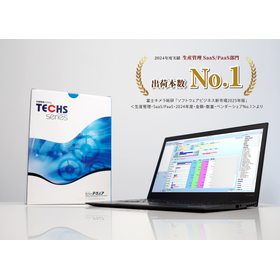
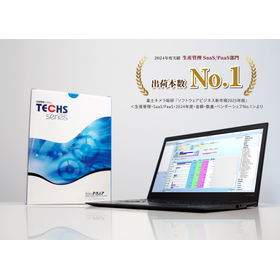
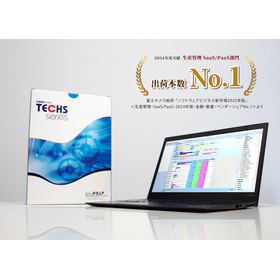
The TECHS series is a production management system developed for small and medium-sized manufacturing companies. It centralizes progress management, cost management, purchasing management, and inventory management, supporting the visualization of manufacturing sites and improving profitability. ■ Achieve real-time progress management Understand the status from order receipt to manufacturing and shipping in real-time. Visualizing on-site progress and delays contributes to improving delivery compliance rates. ■ Visualize profits through cost management Automatically aggregate costs by production number or project. This can be utilized for budget management and profit analysis, supporting rapid decision-making for revenue improvement. ■ Streamline purchasing and inventory operations Centralize ordering, purchasing, and inventory management to prevent order omissions and arrangement errors. Understand inventory status in real-time to prevent stockouts and achieve optimal inventory levels. ■ Gradually promote manufacturing DX By combining a wealth of options such as smartphone performance collection, scheduling, AI similar drawing search, and equipment operation monitoring, it is possible to promote DX tailored to the site. ■ Choose products according to business type We offer "TECHS-BK" for small-lot, multi-variety parts processing industries and "TECHS-S NOA" for custom order-type machinery and equipment manufacturers, enabling operations tailored to the industry. Please feel free to consult us for the efficiency of production management and profit improvement.
Added to bookmarks
Bookmarks listBookmark has been removed
Bookmarks listYou can't add any more bookmarks
By registering as a member, you can increase the number of bookmarks you can save and organize them with labels.
Free membership registration
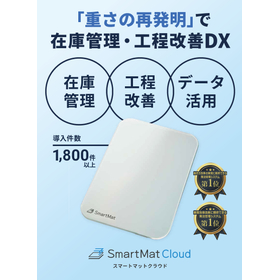
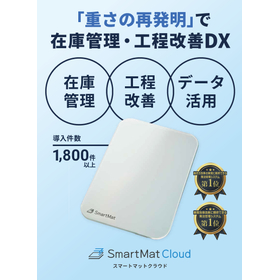
In the food service industry, maintaining the freshness of ingredients and proper inventory management are emphasized for both quality and cost. Particularly for ingredients with significant daily fluctuations in procurement and usage, accurately understanding the actual inventory is essential. Manual inventory checks not only require time and effort but also carry the risk of incorrect orders due to human error and losses from expired products. Smart Mat Cloud automatically measures the weight of ingredients placed on the smart mat and records it in real-time to the cloud. This allows for constant accurate tracking of actual inventory and reduces the burden of inventory tasks. Additionally, by sending email notifications when inventory levels fall below a set threshold, it helps ensure timely ordering and contributes to preventing stockouts and excess inventory. 【Usage Scenarios】 - Inventory management of ingredients in refrigerators and room temperature storage - Management of remaining preparation materials and seasonings - Streamlining ordering processes 【Benefits of Implementation】 - Reduction of food waste - Labor-saving in ordering tasks - Improved accuracy in inventory management
Added to bookmarks
Bookmarks listBookmark has been removed
Bookmarks listYou can't add any more bookmarks
By registering as a member, you can increase the number of bookmarks you can save and organize them with labels.
Free membership registration
In the automotive industry, accurate inventory management of parts produced in small quantities and a wide variety, as well as quick inventory counting, are required. Particularly when there are many types of parts and storage locations are dispersed, manually checking quantities visually and recording them by hand not only takes time and effort but also carries the risk of human error. This can lead to production line stoppages due to stockouts or increased costs due to excess inventory. Smart Mat Cloud utilizes IoT scales and the cloud to automatically measure weight simply by placing parts on a smart mat, enabling real-time inventory tracking to address these challenges. 【Use Cases】 - Real-time inventory checks in each parts storage area - Inventory management for dispersed warehouses and storage locations - Automatic measurement associated with parts in and out 【Benefits of Implementation】 - Significant reduction in inventory counting labor - Prevention of stockouts and excess inventory through accurate real-time inventory tracking - Improved operational efficiency through remote inventory status checks
Added to bookmarks
Bookmarks listBookmark has been removed
Bookmarks listYou can't add any more bookmarks
By registering as a member, you can increase the number of bookmarks you can save and organize them with labels.
Free membership registration
In the energy industry, reliable management of maintenance parts is essential to maintain the stable operation of equipment. It is particularly important to ensure that necessary parts are always stored in appropriate quantities so that a quick response can be made in the event of unexpected troubles. A shortage of parts can lead to equipment downtime and potentially impact business continuity. Smart Mat Cloud contributes to solving these challenges by automatically measuring and recording the inventory of maintenance parts, achieving real-time visualization. 【Usage Scenarios】 - Storage locations for maintenance parts at power plants, substations, and facilities - Management of consumables and replacement parts at on-site offices - Inventory checks at remote material storage sites 【Benefits of Implementation】 - Reduction of opportunity loss due to shortages of maintenance parts - Significant reduction in inventory counting labor - Streamlining of ordering processes through visualization of inventory status - Establishment of a rapid parts supply system in the event of unexpected troubles
Added to bookmarks
Bookmarks listBookmark has been removed
Bookmarks listYou can't add any more bookmarks
By registering as a member, you can increase the number of bookmarks you can save and organize them with labels.
Free membership registration
In the field of research and development, accurate inventory management of reagents is essential to enhance the precision and efficiency of experiments. In particular, managing rare reagents and those with expiration dates can lead to delays in experiments and increased costs. Smart Mat Cloud enables real-time inventory tracking by automatically measuring the weight of reagents placed on the smart mat and recording it in the cloud. This helps prevent stockouts and excess inventory of reagents, contributing to the efficiency of research and development operations and cost reduction. 【Usage Scenarios】 - Reagent shelves in laboratories - Reagent management in storage cabinets - Inventory tracking of frequently used reagents - Management of reagents that require expiration date tracking 【Benefits of Implementation】 - Real-time inventory tracking of reagents - Reduction of labor for inventory tasks - Prevention of experiment interruptions due to stockouts - Cost reduction from excess inventory - Improved efficiency in research and development
Added to bookmarks
Bookmarks listBookmark has been removed
Bookmarks listYou can't add any more bookmarks
By registering as a member, you can increase the number of bookmarks you can save and organize them with labels.
Free membership registration
In the medical and pharmaceutical industry, accurate inventory management is essential for maintaining the quality of pharmaceuticals and ensuring supply stability. This is particularly crucial for medications that require temperature control or have defined expiration dates, as real-time inventory tracking and identifying appropriate ordering timings are vital for stable supply and quality assurance for patients. Inadequate inventory management can lead to degradation of pharmaceuticals and opportunity losses due to stockouts. Smart Mat Cloud supports the resolution of these challenges by automating inventory management, stocktaking, and ordering processes for pharmaceuticals using IoT scales and the cloud. 【Use Cases】 - Real-time tracking of inventory levels at pharmaceutical storage locations - Visualization of inventory levels for medications requiring expiration date management - Efficient management of small quantities of diverse pharmaceutical stocks 【Benefits of Implementation】 - Reduction of opportunity losses due to stockouts of pharmaceuticals - Decreased risk of quality degradation and storage space pressure from excess inventory - Reduction of labor hours in stocktaking and prevention of human errors - Streamlining of ordering processes and alleviation of burdens on staff
Added to bookmarks
Bookmarks listBookmark has been removed
Bookmarks listYou can't add any more bookmarks
By registering as a member, you can increase the number of bookmarks you can save and organize them with labels.
Free membership registration
In parts management for the manufacturing industry, maintaining a state where the necessary parts are reliably available on-site when needed is essential for improving production line operating rates. Particularly in environments with small-batch production of various types and frequent part changes, accurate inventory tracking and appropriate ordering timing are key to preventing production stoppages due to stockouts and cost increases due to excess inventory. Smart Mat Cloud supports solving these challenges by automating inventory management, stocktaking, and ordering processes using IoT scales and the cloud. 【Usage Scenarios】 - Real-time inventory management of parts on the production line - Streamlining stocktaking operations in warehouses - Visualization of diverse parts inventory - Optimizing ordering timing through stockout alerts 【Benefits of Implementation】 - Reduced risk of production line stoppages due to parts shortages - Optimization of storage costs by reducing excess inventory - Significant reduction in stocktaking labor hours - Labor-saving in ordering processes and prevention of human errors - Contribution to improved production planning through inventory data visualization
Added to bookmarks
Bookmarks listBookmark has been removed
Bookmarks listYou can't add any more bookmarks
By registering as a member, you can increase the number of bookmarks you can save and organize them with labels.
Free membership registration
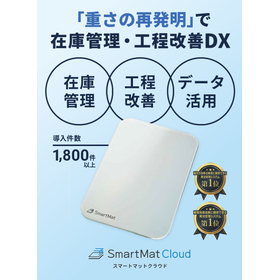
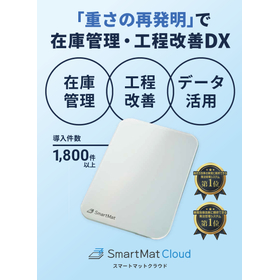
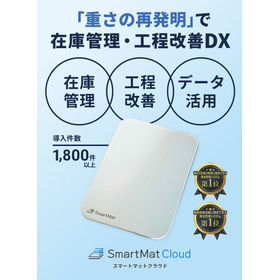
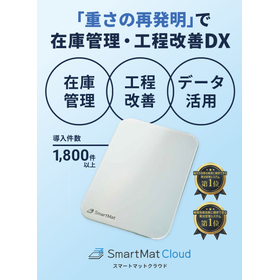
Smart Mat Cloud is an inventory management system that utilizes IoT weight scales and the cloud to automate inventory management, stocktaking, and ordering operations. ■ Automatic management by simply placing inventory By placing inventory on the Smart Mat, weight is automatically measured and recorded in the cloud. You can grasp the actual inventory in real-time. ■ Significant reduction in stocktaking operations It reduces manual quantity confirmation and data entry tasks, greatly decreasing the labor required for stocktaking. You can also check inventory in remote warehouses or storage locations from afar. ■ Prevention of stockouts and excess inventory When the inventory level falls below a set value, an email notification is sent. This helps you understand the appropriate ordering timing and contributes to preventing stockouts and excess inventory. ■ Real inventory data that can be used for on-site improvements The real inventory data collected 24/7 is visualized to support the review of reorder points, inventory optimization, and improvements in production planning, promoting digital transformation (DX). If you are considering improving the efficiency of inventory management operations in manufacturing sites or warehouses, please feel free to contact us.
Added to bookmarks
Bookmarks listBookmark has been removed
Bookmarks listYou can't add any more bookmarks
By registering as a member, you can increase the number of bookmarks you can save and organize them with labels.
Free membership registration
In the museum industry, accurately tracking the location of valuable exhibits and preventing potential loss is extremely important. The recording of exhibit movements and temporary storage locations tends to become complicated, making precise management challenging. Additionally, manually verifying each item during inspections or movements requires a significant amount of time and effort. Our RFID equipment management system, SAM, addresses these issues by simply reading RFID tags attached to the exhibits, enabling efficient and accurate management. 【Usage Scenarios】 - Confirming the location of exhibits - Managing the movement history of exhibits - Managing temporary storage locations - Conducting inspections of exhibits 【Benefits of Implementation】 - Real-time tracking of exhibit locations - Reduced risk of loss - Decreased labor for inventory and inspection tasks - Improved management accuracy
Added to bookmarks
Bookmarks listBookmark has been removed
Bookmarks listYou can't add any more bookmarks
By registering as a member, you can increase the number of bookmarks you can save and organize them with labels.
Free membership registration
In the automotive industry's parts management, accurate inventory tracking and rapid picking are required. Particularly, as the production of a wide variety of small quantities and the complexity of the supply chain increase, issues such as lost parts or incorrect shipments directly lead to production delays and increased costs. In response to these challenges, our RFID equipment management system, SAM, streamlines inventory and location management by reading RFID tags attached to parts in bulk, thereby improving the accuracy of parts management and enhancing operational efficiency. 【Usage Scenarios】 - Parts inventory management within factories - Parts location management in warehouses - Parts verification before shipment - Traceability management of defective parts 【Benefits of Implementation】 - Reduction in inventory counting time - Prevention of parts loss - Improvement in management accuracy - Reduction in picking errors - Optimization through visualization of inventory
Added to bookmarks
Bookmarks listBookmark has been removed
Bookmarks listYou can't add any more bookmarks
By registering as a member, you can increase the number of bookmarks you can save and organize them with labels.
Free membership registration
In libraries, accurate management of collections and efficient inventory work are required. In particular, accurately grasping a large number of collections and preventing loss is essential for improving user convenience and streamlining library operations. Manual inventory takes time and carries the risk of human error. SAM addresses these challenges by utilizing RFID technology, contributing to the efficiency and accuracy of collection management tasks. 【Usage Scenarios】 - Inventory work of collections - Verification of collection locations - Search for lost books and materials - Registration of new books and materials 【Benefits of Implementation】 - Reduction of inventory time - Easier understanding of collection locations - Decrease in loss risk - Improvement in management task accuracy
Added to bookmarks
Bookmarks listBookmark has been removed
Bookmarks listYou can't add any more bookmarks
By registering as a member, you can increase the number of bookmarks you can save and organize them with labels.
Free membership registration
In the logistics industry, accurate inventory management and swift stocktaking are essential for improving operational efficiency and customer satisfaction. Especially when dealing with vast warehouses and numerous items, visual checks and manual recording not only consume time and effort but also carry the risk of human error. This can lead to overstocking, understocking, or loss of inventory, resulting in potential opportunity losses and increased management costs. The RFID asset management system SAM utilizes RFID tags to address these challenges. 【Usage Scenarios】 - Inventory counting of stock items, pallets, and containers within the warehouse - Inspection tasks during shipping and receiving - Tracking of moving equipment and assets - Locating easily lost equipment 【Benefits of Implementation】 - Reduction in stocktaking time - Real-time understanding of inventory information - Decreased risk of loss - Improved accuracy in asset management
Added to bookmarks
Bookmarks listBookmark has been removed
Bookmarks listYou can't add any more bookmarks
By registering as a member, you can increase the number of bookmarks you can save and organize them with labels.
Free membership registration
In medical institutions, accurate management of expensive and precise medical equipment is required. The inability to locate equipment or failure to grasp usage status can lead to delays in providing appropriate medical care to patients and may result in the risk of loss or theft of equipment. Additionally, regular inventory tasks require a significant amount of time and effort, placing a burden on healthcare professionals. The RFID equipment management system SAM addresses these challenges by streamlining the inventory and location management of medical devices and achieving visibility in asset management, thereby supporting the establishment of a safe and reliable medical care system. 【Usage Scenarios】 - Confirming the location of medical equipment in wards and various departments - Managing used and unused equipment in the operating room - Ensuring traceability for equipment that requires sterilization and disinfection - Asset management and loss prevention for high-value medical equipment 【Effects of Implementation】 - Significant reduction in inventory time for medical equipment - Real-time tracking of equipment locations, reducing the risk of loss - Reduced burden on healthcare professionals due to improved management accuracy - Strengthened compliance through enhanced visibility in asset management
Added to bookmarks
Bookmarks listBookmark has been removed
Bookmarks listYou can't add any more bookmarks
By registering as a member, you can increase the number of bookmarks you can save and organize them with labels.
Free membership registration
In the manufacturing industry, accurate management of tools, parts, and jigs used on the production line is essential for maintaining production efficiency and quality. Particularly, when the movement between processes and the usage status are not adequately monitored, there is a risk of delays and quality degradation due to rework or loss. Our RFID equipment management system, SAM, addresses these challenges by utilizing RFID technology to streamline inventory and location management of equipment and assets, contributing to improved accuracy in process tracking. 【Usage Scenarios】 - Location management of tools and jigs used on the production line - Tracking the movement of production parts and materials between processes - Management of IT equipment and facility assets 【Benefits of Implementation】 - Prevention of loss and rapid discovery of equipment used in processes - Improved traceability through visualization of equipment location and movement history - Reduction of inventory work time and enhancement of management accuracy
Added to bookmarks
Bookmarks listBookmark has been removed
Bookmarks listYou can't add any more bookmarks
By registering as a member, you can increase the number of bookmarks you can save and organize them with labels.
Free membership registration
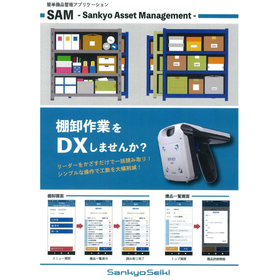
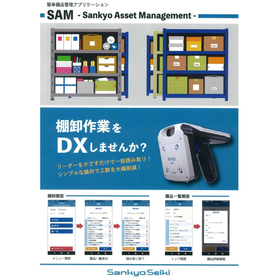
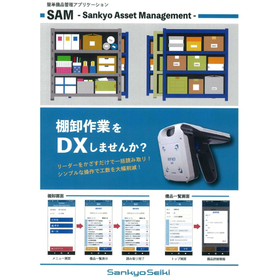
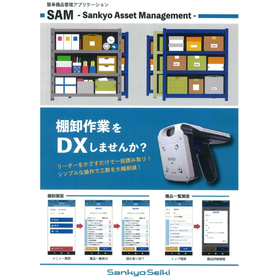
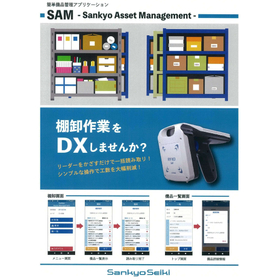
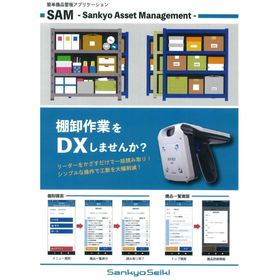
SAM (Sankyo Asset Management) is an RFID-based equipment management system that streamlines inventory and location management of equipment and assets. By simply reading the RFID tags attached to the equipment, inventory and location management can be easily performed. ■Significant Reduction in Inventory Time Since RFID tags can be read in bulk, there is no need to check each item individually, greatly reducing the labor involved in inventory tasks. ■Visualization of Equipment Location By managing the installation locations and movement history of equipment, it is easy to understand where everything is located. This contributes to preventing loss and improving management accuracy. ■Reduction of Human Errors Automatic reading with RFID prevents manual input errors and counting mistakes, achieving accurate asset management. ■Streamlining Asset Management Operations In addition to equipment management, it can be expanded to a wide range of operations such as inventory management of manufacturing parts and tool management. If you are considering streamlining your asset management operations or digitizing your inventory tasks, please feel free to contact us.
Added to bookmarks
Bookmarks listBookmark has been removed
Bookmarks listYou can't add any more bookmarks
By registering as a member, you can increase the number of bookmarks you can save and organize them with labels.
Free membership registration
In medical device manufacturing, reducing noise is extremely important for accurately capturing patients' biometric information. This is especially true for devices that handle weak signals, such as electroencephalograms (EEGs), where external electromagnetic waves and internal device noise can affect measurement accuracy. Effectively suppressing these noises and obtaining reliable data is crucial for the quality of diagnosis and treatment. Our EEG common-mode rejection ratio tester, 'CMRR3.0E', has been designed to address the challenges of noise control in the development of such medical devices. 【Usage Scenarios】 - CMRR measurement of EEGs - Evaluation of system noise - Verification of noise control measures during the development phase 【Benefits of Implementation】 - Improved measurement accuracy - Shortened development time - Enhanced product reliability
Added to bookmarks
Bookmarks listBookmark has been removed
Bookmarks listYou can't add any more bookmarks
By registering as a member, you can increase the number of bookmarks you can save and organize them with labels.
Free membership registration
In the pharmaceutical industry, tablet inspection requires accurately capturing fine foreign substances and defects to maintain product quality. Particularly in situations where direct contact with the inspection subject is difficult or when working in limited spaces, it is crucial to obtain high-resolution images while maintaining an appropriate observation distance. Our long working distance lens system, the 'SS-LWD Series,' addresses these challenges, enabling clear observation even from a distance. 【Application Scenarios】 - Surface inspection of tablets - Confirmation of foreign substance contamination - Verification of packaging conditions 【Benefits of Implementation】 - Improved inspection accuracy - Enhanced work efficiency - Reduced contamination risk through non-contact inspection
Added to bookmarks
Bookmarks listBookmark has been removed
Bookmarks listYou can't add any more bookmarks
By registering as a member, you can increase the number of bookmarks you can save and organize them with labels.
Free membership registration
In the field of research and development, it is essential to observe minute objects in detail, leading to new discoveries and technological innovations. Particularly for delicate samples or objects that require measurement and processing, the ability to conduct high-resolution observations without bringing the lens close is crucial. To accurately understand and analyze the state of an object without touching it, an observation system that can provide clear images even at long working distances is indispensable. The "SS-LWD Series" is a microscope system that enables high-resolution observation even when the distance from the object is significantly increased. It is suitable for use in environments where the lens cannot be brought close or in constrained settings, and it is equipped with dedicated tubes compatible with various high-magnification lenses. 【Usage Scenarios】 - Non-contact observation of delicate samples - Observation during the assembly and inspection of precision instruments - Analysis and evaluation of fine structures - Remote observation and monitoring 【Benefits of Implementation】 - Reduced risk of sample damage - Improved work efficiency - Acquisition of more detailed data - Response to diverse observation needs
Added to bookmarks
Bookmarks listBookmark has been removed
Bookmarks listYou can't add any more bookmarks
By registering as a member, you can increase the number of bookmarks you can save and organize them with labels.
Free membership registration
In the textile industry, fabric inspection requires high-precision observation of the fabric's details to accurately identify defects. It is particularly important to be able to detect subtle thread irregularities and weaving inconsistencies without directly touching the fabric or from a distance. Traditional observation methods necessitate bringing the lens close, which poses challenges such as the risk of damaging the fabric and limited workspace. Our long working distance lens system, the 'SS-LWD Series,' enables high-precision observation even from a significant distance, addressing these issues. 【Usage Scenarios】 - Inspection of thread breaks, dirt, and weaving inconsistencies on the fabric surface - Observation of fabric edges and complex structural areas - Use in environments with limited inspection space 【Benefits of Implementation】 - Reduced risk of damaging the fabric - Realization of extensive and detailed inspections - Improved work efficiency
Added to bookmarks
Bookmarks listBookmark has been removed
Bookmarks listYou can't add any more bookmarks
By registering as a member, you can increase the number of bookmarks you can save and organize them with labels.
Free membership registration
In the automotive industry, component inspection requires the ability to observe details accurately in order to maintain product quality. This is especially important for parts with complex shapes or areas that are difficult to approach with a lens during inspection, where it is crucial to secure a sufficient observation distance while obtaining clear images. This helps prevent overlooking fine scratches and defects, contributing to the improvement of product reliability. The long working distance lens system "SS-LWD Series" is a product that meets these on-site needs. 【Application Scenarios】 - Inspection of narrow spaces or intricate components - Observation required without touching the inspection target - Rapid quality verification on production lines 【Benefits of Implementation】 - Improved inspection accuracy - Reduction of defective products due to oversight - Enhanced work efficiency
Added to bookmarks
Bookmarks listBookmark has been removed
Bookmarks listYou can't add any more bookmarks
By registering as a member, you can increase the number of bookmarks you can save and organize them with labels.
Free membership registration
In the semiconductor manufacturing industry, fine inspection requires high-resolution observation without touching the object. Particularly in the inspection of delicate semiconductor components, work is expected to be conducted in environments where it is difficult or impossible to bring the lens close. Precise inspection in such situations is essential for maintaining product quality and improving yield. The long working distance lens system 'SS-LWD Series' enables high-resolution observation while maintaining distance from the object, addressing these challenges. 【Usage Scenarios】 - Fine inspection in environments where the lens cannot be brought close - Inspection of delicate semiconductor components - Observation work in limited spaces 【Benefits of Implementation】 - Enables high-resolution observation without touching the object - Contributes to maintaining quality and improving yield - Addresses constraints of the working environment
Added to bookmarks
Bookmarks listBookmark has been removed
Bookmarks listYou can't add any more bookmarks
By registering as a member, you can increase the number of bookmarks you can save and organize them with labels.
Free membership registration
In the aerospace field, extremely high safety standards are required, making abnormal detection and predictive maintenance essential. Particularly, even slight changes in precise manufacturing processes or operations can impact the safety and reliability of products. Therefore, it is crucial to capture early signs of equipment abnormalities to prevent troubles before they occur. The AI abnormal detection and equipment diagnosis system CX-D addresses these challenges by continuously monitoring equipment data with AI, instantly detecting anomalies to support enhanced safety and stable operations. 【Usage Scenarios】 - Abnormal detection in aircraft parts manufacturing lines - Operational monitoring of space equipment development and testing facilities - Reducing downtime through predictive maintenance of critical equipment - Identifying abnormal factors in quality control processes 【Benefits of Implementation】 - Reduction of risks associated with unexpected equipment shutdowns - Stabilization of product quality and improvement of reliability - Optimization of maintenance costs - Support for compliance with safety standards
Added to bookmarks
Bookmarks listBookmark has been removed
Bookmarks listYou can't add any more bookmarks
By registering as a member, you can increase the number of bookmarks you can save and organize them with labels.
Free membership registration
In the electricity and gas industry, the stable operation of infrastructure and continuous supply are extremely important. Unexpected equipment failures can have widespread effects and may cause serious problems in maintaining social infrastructure. Therefore, it is essential to detect abnormal signs in equipment early and prevent troubles before they occur. The AI anomaly detection and equipment diagnosis system CX-D continuously monitors equipment data with AI, instantly detecting signs of anomalies, thereby reducing the risk of sudden equipment failures and contributing to the maintenance of stable supply. [Usage Scenarios] - Monitoring abnormal signs in power generation equipment, substation equipment, and gas supply equipment - Rapid situation assessment through remote monitoring - Early detection of signs before equipment troubles occur [Benefits of Implementation] - Reduction of supply interruption risks due to equipment troubles - Maintenance of stable operation of infrastructure - Increased efficiency through planned maintenance
Added to bookmarks
Bookmarks listBookmark has been removed
Bookmarks listYou can't add any more bookmarks
By registering as a member, you can increase the number of bookmarks you can save and organize them with labels.
Free membership registration
In the food industry, hygiene management on the manufacturing line is extremely important to ensure product safety. Minor changes in temperature, humidity, and foreign matter contamination can lead to a decline in product quality and an increased risk of food poisoning. To prevent these risks in advance and maintain a stable production system, it is necessary to quickly detect early signs of equipment abnormalities and respond promptly. The AI anomaly detection and equipment diagnosis system CX-D contributes to solving these challenges by continuously monitoring equipment data with AI and instantly detecting signs of anomalies. 【Usage Scenarios】 - Anomaly detection of temperature and humidity sensor data on the manufacturing line - Monitoring of equipment vibrations that could lead to foreign matter contamination - Real-time monitoring of the operational status of cleaning and sterilization equipment - Detection of fluctuations in equipment parameters that could cause quality defects 【Benefits of Implementation】 - Maintenance and improvement of hygiene management standards - Stabilization of product quality and reduction of defect rates - Prevention of production losses due to unexpected equipment downtime - Implementation of planned maintenance through predictive maintenance - Strengthening of compliance related to food safety
Added to bookmarks
Bookmarks listBookmark has been removed
Bookmarks listYou can't add any more bookmarks
By registering as a member, you can increase the number of bookmarks you can save and organize them with labels.
Free membership registration
In the plant industry, preventing production losses due to stable operation of equipment and unexpected shutdowns is considered crucial for business continuity. Particularly in plant equipment with complex structures, overlooking subtle signs of abnormalities can lead to the risk of large-scale failures or operational stoppages. Therefore, there is a demand for the introduction of predictive maintenance that detects equipment anomalies early and conducts planned maintenance. The AI anomaly detection and equipment diagnosis system CX-D supports the realization of predictive maintenance by automatically learning and monitoring abnormal signs of equipment through AI, addressing these challenges in plants. 【Usage Scenarios】 - Early detection of abnormal signs in plant equipment - Prevention of unexpected equipment shutdowns - Identification of factors causing quality defects - Optimization of equipment maintenance plans 【Benefits of Implementation】 - Reduction of production losses by preventing equipment troubles - Optimization of maintenance costs through predictive maintenance - Improvement of overall plant operational rates - Contribution to quality stabilization
Added to bookmarks
Bookmarks listBookmark has been removed
Bookmarks listYou can't add any more bookmarks
By registering as a member, you can increase the number of bookmarks you can save and organize them with labels.
Free membership registration
In the pharmaceutical industry, strict management of the manufacturing process is required to ensure the quality and safety of pharmaceuticals. In particular, abnormalities in manufacturing equipment can lead to a decline in product quality or a halt in the production line, making it crucial to detect signs of such issues early and prevent them from occurring from a quality assurance perspective. The AI anomaly detection and equipment diagnosis system CX-D learns from the normal operating data of the equipment and detects signs of abnormalities in real-time, thereby reducing the risk of unexpected equipment failures and quality defects, and contributing to the maintenance of a stable production system. 【Use Cases】 - Early detection of signs of equipment abnormalities on the production line - Continuous monitoring of the operating status of equipment related to quality - Identification of factors causing defects and utilization in improvement activities - Support for compliance with regulations in pharmaceutical manufacturing 【Benefits of Implementation】 - Reduction of downtime on the production line - Stabilization and improvement of product quality - Realization of planned maintenance through predictive maintenance - Increased efficiency in quality assurance operations
Added to bookmarks
Bookmarks listBookmark has been removed
Bookmarks listYou can't add any more bookmarks
By registering as a member, you can increase the number of bookmarks you can save and organize them with labels.
Free membership registration
In the semiconductor industry, as miniaturization and high integration progress, maintaining product quality and yield is extremely important. In particular, subtle abnormalities or changes in manufacturing processes can directly lead to the occurrence of defective products and may result in a decrease in yield. Early detection and response to these abnormalities are essential for improving production efficiency and reducing costs. The AI anomaly detection and equipment diagnosis system CX-D detects signs of equipment abnormalities in real-time and supports yield improvement. 【Usage Scenarios】 - Anomaly detection in semiconductor manufacturing equipment - Monitoring subtle equipment changes - Identifying causes of quality defects - Reducing the risk of yield decline 【Benefits of Implementation】 - Improved yield through reduction of defective products - Mitigation of unexpected equipment downtime - Enhanced production efficiency through quality stabilization - Optimization of equipment maintenance costs
Added to bookmarks
Bookmarks listBookmark has been removed
Bookmarks listYou can't add any more bookmarks
By registering as a member, you can increase the number of bookmarks you can save and organize them with labels.
Free membership registration
In the steel industry, the stable operation of large and complex equipment is essential for maintaining productivity. In particular, equipment in harsh environments is prone to unexpected failures, which can directly lead to production line stoppages and a decline in product quality. Capturing early signs of equipment anomalies and conducting planned maintenance is key to stable operations and cost reduction. The AI anomaly detection and equipment diagnosis system CX-D strongly supports predictive maintenance by instantly detecting equipment abnormalities. 【Usage Scenarios】 - Monitoring abnormal signs of key equipment in steel plants (such as rolling mills and melting furnaces) - Reducing opportunity losses due to unexpected stoppages in production lines - Detecting changes in equipment conditions before quality defects occur - Streamlining regular inspections and optimizing maintenance plans 【Benefits of Implementation】 - Reducing the risk of production stoppages due to equipment failures - Achieving planned maintenance through predictive maintenance - Improving equipment operating rates and productivity - Reducing unexpected repair costs - Stabilizing product quality
Added to bookmarks
Bookmarks listBookmark has been removed
Bookmarks listYou can't add any more bookmarks
By registering as a member, you can increase the number of bookmarks you can save and organize them with labels.
Free membership registration
In the automotive industry, stable operation of production lines and high production efficiency are required. Unexpected equipment stoppages and quality defects directly lead to delays in production plans and increased costs, making it important to prevent these risks in advance. Continuous monitoring and anomaly detection using AI contribute to solving these challenges. The AI anomaly detection and equipment diagnosis system CX-D captures early signs of equipment anomalies and supports the prevention of sudden stoppages and quality degradation. 【Use Cases】 - Early detection of equipment anomalies in automotive parts manufacturing lines - Real-time monitoring of production line operating conditions - Identification and improvement of factors causing quality defects 【Benefits of Implementation】 - Reduction of production line downtime - Improvement of production efficiency - Stabilization of product quality
Added to bookmarks
Bookmarks listBookmark has been removed
Bookmarks listYou can't add any more bookmarks
By registering as a member, you can increase the number of bookmarks you can save and organize them with labels.
Free membership registration
In the chemical industry, ensuring stable plant operations and employee safety is the top priority. Particularly in facilities that handle complex processes and hazardous materials, unexpected anomalies without warning pose risks that can lead to serious accidents or production halts. To mitigate these risks and maintain safe operations, it is essential to detect abnormal signs in equipment early and prevent issues before they arise. The AI anomaly detection and equipment diagnosis system CX-D was developed to meet the safety needs of the chemical industry. 【Usage Scenarios】 - Monitoring abnormal signs in key equipment at chemical plants - Reducing accident risks through anomaly detection in reactors, pumps, and piping - Early detection of equipment changes that could lead to quality issues - Ensuring employee safety and stable plant operations 【Benefits of Implementation】 - Reduced accident risks through early detection of equipment anomalies - Decreased production losses by preventing sudden equipment shutdowns - Achieving planned maintenance through predictive maintenance - Maintaining a safe operating environment and enhancing employee peace of mind
Added to bookmarks
Bookmarks listBookmark has been removed
Bookmarks listYou can't add any more bookmarks
By registering as a member, you can increase the number of bookmarks you can save and organize them with labels.
Free membership registration
In the manufacturing industry, it is essential to detect equipment abnormalities early to maintain product quality and ensure stable production, thereby preventing the occurrence of quality defects. In particular, overlooking the operational status of the production line and subtle changes in equipment can directly lead to an increase in defective products and a decrease in production efficiency. The AI anomaly detection and equipment diagnosis system CX-D contributes to the prevention of quality defects by having AI learn normal operational data of the equipment and detecting signs of abnormalities in real-time. 【Usage Scenarios】 - Investigating the causes of quality defects in the production line - Monitoring for signs of quality deterioration due to subtle changes in equipment - Rapid identification of causes and implementation of countermeasures when defects occur 【Benefits of Implementation】 - Improved yield due to reduced quality defects - Shortened time for identifying causes when defects occur - Maintenance of stable product quality
Added to bookmarks
Bookmarks listBookmark has been removed
Bookmarks listYou can't add any more bookmarks
By registering as a member, you can increase the number of bookmarks you can save and organize them with labels.
Free membership registration
CX-D is an equipment diagnostic system that realizes data collection, visualization, AI anomaly detection, and condition diagnosis all in one device. ■ AI automatically detects signs of equipment anomalies The AI automatically learns from data during normal operation and monitors changes and signs of anomalies in real-time, contributing to the prevention of unexpected shutdowns and quality defects. ■ Easy implementation without programming It can connect to various equipment such as PLCs, robots, sensors, and NC machine tools. It can be implemented without the need for program development. ■ Visualization of equipment status The real-time dashboard visualizes equipment conditions and operational status. It can be accessed from a web browser, allowing for monitoring from both the field and the office. ■ Supports predictive maintenance and quality improvement In addition to monitoring signs of equipment failure, it can also be used for analyzing causes of defects and diagnosing equipment conditions. It enables simultaneous promotion of equipment maintenance and quality improvement. If you are considering improving equipment maintenance efficiency or implementing predictive maintenance, please feel free to contact us.
Added to bookmarks
Bookmarks listBookmark has been removed
Bookmarks listYou can't add any more bookmarks
By registering as a member, you can increase the number of bookmarks you can save and organize them with labels.
Free membership registration
In the food service industry, standardization of operations in store management and the resulting improvement in operational efficiency are required. In particular, eliminating variations in daily cooking procedures, customer service responses, cleaning, and hygiene management among different stores and staff members is essential for maintaining consistent service quality, which in turn enhances customer satisfaction and establishes brand image. However, simply developing manuals and conducting training may not be sufficient for standardization that reflects the realities of the field or for the establishment of continuous improvement. The on-site improvement DX platform GEMBA strongly supports operational standardization by visualizing the conditions on-site and streamlining improvement activities. 【Usage Scenarios】 - Visualization of work procedures and hygiene management items on store layout diagrams - Registration and sharing of standardized procedures for cooking, customer service, cleaning, etc. - Real-time management of daily business progress and improvement activities - Use as training materials for new staff 【Effects of Implementation】 - Standardization of operations leading to uniform service quality - Increased efficiency in work instructions and confirmations on-site - Reduction of management tasks using paper media and Excel - Promotion of information sharing among staff and establishment of a business improvement cycle
Added to bookmarks
Bookmarks listBookmark has been removed
Bookmarks listYou can't add any more bookmarks
By registering as a member, you can increase the number of bookmarks you can save and organize them with labels.
Free membership registration
In the agricultural sector, there is a demand for the efficiency and productivity improvement of various on-site activities such as field management, equipment maintenance, and safety management. In particular, understanding the work conditions on vast farmlands and multiple facilities, confirming the operational status of equipment, and maintaining a safe working environment are crucial factors that directly impact yield and quality. However, managing this information centrally and grasping it in real-time is not easy. Our platform, GEMBA, supports solving these challenges by aggregating this information on the farm layout diagram and achieving intuitive visualization. 【Usage Scenarios】 - Management of work progress by field - Management of equipment operational status and maintenance history - Understanding the status of irrigation and greenhouse facilities - Recording and managing pesticide and fertilizer applications - Safety management and training history of workers 【Benefits of Implementation】 - Real-time understanding of the overall farm situation to support rapid decision-making - Reduction of work duplication and waste, optimizing human resources - Preventing unexpected failures through predictive maintenance of equipment, improving operational rates - Promoting improvement activities using past data through the digitization of work records - Reducing accident risks through thorough safety management
Added to bookmarks
Bookmarks listBookmark has been removed
Bookmarks listYou can't add any more bookmarks
By registering as a member, you can increase the number of bookmarks you can save and organize them with labels.
Free membership registration
In the real estate industry, there is a demand for understanding the condition of properties and streamlining management tasks. Particularly when managing multiple properties, it is crucial to accurately grasp each situation and respond quickly. By centrally managing repair histories and inspection records of properties and sharing them among responsible parties, it is expected to prevent delays and oversights in operations, leading to improved customer satisfaction. GEMBA supports the resolution of these challenges by intuitively understanding the on-site situation and streamlining management tasks. 【Usage Scenarios】 - Recording and managing inspection and repair histories of properties - Managing inquiry response histories from tenants - Managing work progress for each property - Recording cleaning and maintenance tasks 【Benefits of Implementation】 - Rapid understanding and sharing of property information - Time savings through the efficiency of management tasks - Strengthened collaboration among responsible parties - Improved service quality
Added to bookmarks
Bookmarks listBookmark has been removed
Bookmarks listYou can't add any more bookmarks
By registering as a member, you can increase the number of bookmarks you can save and organize them with labels.
Free membership registration
In the medical and nursing care industry, there is a demand for efficient daily operations and accurate information management to provide high-quality care to patients and users. Particularly, quickly grasping the situation on-site and taking appropriate actions is essential for maintaining and improving service quality. However, paper-based records and information management across multiple systems can create inefficiencies and potentially encroach on the time that should be devoted to care tasks. The on-site improvement DX platform GEMBA addresses these challenges by simultaneously achieving visibility of the site and operational efficiency, thereby supporting the provision of higher quality medical and nursing care services. 【Usage Scenarios】 - Equipment inspection and maintenance records within facilities - Establishment and operation of safety management systems - Progress management of cleaning and hygiene management - Streamlining of inventory and goods management - Facilitation of information sharing among staff 【Effects of Implementation】 - Rapid identification of issues through visibility of on-site operations - Reduction of management tasks by moving away from paper media - Real-time information sharing through direct input from smartphones and tablets - Continuous operational improvements based on accumulated data - Reduction of staff burden and promotion of focus on care tasks
Added to bookmarks
Bookmarks listBookmark has been removed
Bookmarks listYou can't add any more bookmarks
By registering as a member, you can increase the number of bookmarks you can save and organize them with labels.
Free membership registration
In the energy industry, planned and prompt equipment maintenance is required for stable operation and longevity of facilities. Particularly in complex equipment configurations and extensive facilities, understanding the on-site situation and managing maintenance history can pose challenges. If appropriate maintenance is not conducted, there is a risk of production stoppages due to unexpected failures or a decrease in safety. The on-site improvement DX platform GEMBA utilizes factory layout diagrams to centrally manage equipment maintenance activities, simultaneously achieving visibility on-site and improving operational efficiency, thus supporting the resolution of these challenges. 【Usage Scenarios】 - Equipment maintenance planning and implementation for plants and power stations - Digitization of inspection records and history management - Early detection and response to equipment anomalies - Progress management and sharing of maintenance work 【Benefits of Implementation】 - Increased efficiency of equipment maintenance operations - Reduction of downtime through predictive maintenance - Accumulation and inheritance of maintenance know-how - Improvement of on-site safety
Added to bookmarks
Bookmarks listBookmark has been removed
Bookmarks listYou can't add any more bookmarks
By registering as a member, you can increase the number of bookmarks you can save and organize them with labels.
Free membership registration
In the construction industry, accurately grasping the progress of projects and sharing it among stakeholders is considered crucial for preventing delays and managing costs. Particularly, with multiple sites and processes occurring simultaneously, real-time information sharing and swift decision-making are required. Inability to accurately understand the site conditions can lead to rework and inefficient resource allocation. The site improvement DX platform GEMBA intuitively captures the progress of the site and supports operational efficiency. 【Usage Scenarios】 - Real-time understanding of construction site progress - Management of progress status with responsible personnel for each process - Direct input from smartphones and tablets on-site - Early detection of progress delay risks 【Benefits of Implementation】 - Rapid situation understanding through the "visualization" of site progress - Increased operational efficiency by reducing paper forms and Excel transcription tasks - Accelerated decision-making through real-time information sharing among stakeholders - Reduced project delay risks through improved accuracy in progress management
Added to bookmarks
Bookmarks listBookmark has been removed
Bookmarks listYou can't add any more bookmarks
By registering as a member, you can increase the number of bookmarks you can save and organize them with labels.
Free membership registration
In the logistics industry, there is a demand for optimizing delivery routes, sharing information on-site among drivers, and improving work efficiency. In particular, delays in daily delivery operations and irregular responses on-site can impact customer satisfaction and operational costs. It is important to grasp the on-site situation in real-time and support quick decision-making to address these challenges. The on-site improvement DX platform GEMBA contributes to solving these issues in logistics operations. 【Usage Scenarios】 - Progress management of delivery routes - Collection of on-site information from drivers - Strengthening collaboration between locations - Communication of work instructions 【Effects of Implementation】 - Reduction in delivery time - Decrease in fuel costs - Alleviation of driver burden - Improvement in customer satisfaction - Overall increase in operational productivity
Added to bookmarks
Bookmarks listBookmark has been removed
Bookmarks listYou can't add any more bookmarks
By registering as a member, you can increase the number of bookmarks you can save and organize them with labels.
Free membership registration
In quality control within the manufacturing industry, maintaining and improving product quality, as well as quickly identifying causes and implementing measures when defects occur, are essential. Particularly, efficiently managing quality-related issues and improvement activities on-site and sharing them across the organization is crucial for continuous quality improvement. However, recording on paper and aggregating data in Excel can take time for information sharing and analysis, potentially hindering prompt responses. The on-site improvement DX platform GEMBA addresses these challenges by providing intuitive situational awareness on factory layouts and streamlining improvement activities, thereby supporting the efficiency and visibility of quality management tasks. 【Usage Scenarios】 - Registration and management of quality issues on factory layout diagrams - Real-time tracking of the progress of quality improvement activities - Accumulation of cause analysis and countermeasure history when defects occur - Progress management and improvement of 4S and 5S activities 【Benefits of Implementation】 - Increased efficiency and reduced labor in quality management tasks - Rapid identification of issues through visualization of on-site quality conditions - Sharing of know-how and technical succession through the accumulation of improvement activity history - Promotion of continuous efforts towards quality enhancement
Added to bookmarks
Bookmarks listBookmark has been removed
Bookmarks listYou can't add any more bookmarks
By registering as a member, you can increase the number of bookmarks you can save and organize them with labels.
Free membership registration
At construction sites, the transportation of materials requires handling heavy items and working in limited spaces. In particular, safe and efficient material transportation is a crucial issue directly linked to adhering to deadlines and reducing the burden on workers. Traditional forklift operations have relied on human resources and the skills of workers. Roboware utilizes AMR and AGV systems capable of transporting heavy items up to 1.5 tons, providing a logistics DX solution that automates material transportation tasks at construction sites. This is expected to lead to labor savings and improved logistics efficiency. 【Usage Scenarios】 - Transportation of construction materials between fixed points - Transportation of components within the site - Transporting materials from storage areas to work areas 【Benefits of Implementation】 - Labor savings in heavy item transportation tasks - Contribution to improved work efficiency and shortened construction periods - Reduction of worker burden and enhancement of safety - Implementation that leverages existing layouts
Added to bookmarks
Bookmarks listBookmark has been removed
Bookmarks listYou can't add any more bookmarks
By registering as a member, you can increase the number of bookmarks you can save and organize them with labels.
Free membership registration
In the energy industry, the transportation of equipment parts such as plants and power stations requires the safe and reliable handling of heavy and large components. Particularly, working in limited spaces and complex layouts, as well as ensuring the safety of workers, are significant challenges. Improper transportation increases the risk of accidents and can lead to production line stoppages or delays. Roboware addresses these challenges by utilizing AMRs and AGVs capable of transporting heavy loads of up to 1.5 tons. 【Use Cases】 - Inter-process transportation of large equipment parts within plants - Transportation of maintenance parts within power stations - Transporting heavy batteries and transformers 【Benefits of Implementation】 - Reduction of worker burden and improvement of safety in heavy load transportation - Cost reduction through the automation of forklift operations - Improvement of logistics efficiency through route optimization - Maintenance of productivity through stable operation 24/7, 365 days a year
Added to bookmarks
Bookmarks listBookmark has been removed
Bookmarks listYou can't add any more bookmarks
By registering as a member, you can increase the number of bookmarks you can save and organize them with labels.
Free membership registration
In the retail industry, there is a demand for reducing the burden on workers and improving efficiency in the large-scale movement of inventory within stores and warehouses. In particular, handling heavy items can pose challenges for ensuring worker safety and facilitating quick restocking and movement of products. Roboware utilizes AMRs and AGVs capable of transporting heavy items up to 1.5 tons to help address these challenges. 【Usage Scenarios】 - Moving pallets and shelves within the warehouse - Transporting products during restocking at stores - Improving efficiency in picking operations - Automating sorting tasks 【Benefits of Implementation】 - Reduction in the need for forklift operations - Enhanced efficiency in logistics operations - Decreased burden on workers and improved safety - Increased productivity through 24-hour operation
Added to bookmarks
Bookmarks listBookmark has been removed
Bookmarks listYou can't add any more bookmarks
By registering as a member, you can increase the number of bookmarks you can save and organize them with labels.
Free membership registration
In the steel industry, the safe and efficient transportation of heavy steel materials is essential for improving productivity and reducing the burden on workers. In particular, forklift operations are common for inter-process transportation within factories and for transporting materials from storage areas, but issues such as labor shortages and ensuring worker safety have become challenges. Roboware offers a logistics DX solution that automates these transportation tasks using AMRs and AGVs capable of handling loads up to 1.5 tons. 【Use Cases】 - Inter-process transportation of steel materials within factories - Transportation of steel materials from storage areas to various processes - Steel material transportation linked with picking operations - Movement of steel materials in sorting tasks 【Benefits of Implementation】 - Reduction of forklift operations - Increased efficiency in steel transportation and shortened lead times - Enhanced worker safety and improved working conditions - Increased productivity through 24/7 operation
Added to bookmarks
Bookmarks listBookmark has been removed
Bookmarks listYou can't add any more bookmarks
By registering as a member, you can increase the number of bookmarks you can save and organize them with labels.
Free membership registration
In the food and beverage industry, a stable supply of raw materials and resources, as well as efficient transportation in a hygienic environment, are required. In particular, the transportation of heavy raw materials places a significant burden on workers, and labor shortages are often a challenge. Additionally, it is important to reduce the risk of foreign matter contamination and maintain quality. Roboware contributes to solving these challenges as a logistics DX solution that automates transportation tasks in factories and logistics sites by utilizing AMRs and AGVs capable of handling heavy loads of up to 1.5 tons. 【Usage Scenarios】 - Transporting raw materials from the warehouse to the production line - Transporting materials from the production line to storage locations - Automating picking operations - Improving the efficiency of sorting tasks 【Benefits of Implementation】 - Reducing the burden on workers in heavy load transportation - Addressing labor shortages and reducing manpower - Improving productivity through the efficiency of transportation tasks - Reducing human errors and enhancing safety - Ensuring thorough hygiene management and reducing the risk of foreign matter contamination
Added to bookmarks
Bookmarks listBookmark has been removed
Bookmarks listYou can't add any more bookmarks
By registering as a member, you can increase the number of bookmarks you can save and organize them with labels.
Free membership registration