46~58 item / All 58 items
Displayed results
Filter by category

Added to bookmarks
Bookmarks listBookmark has been removed
Bookmarks listYou can't add any more bookmarks
By registering as a member, you can increase the number of bookmarks you can save and organize them with labels.
Free membership registration
Contact this company
Inquiry Form46~58 item / All 58 items
Filter by category
We would like to introduce a case where we successfully mass-produced a beauty brush with a complex three-dimensional shape that was deemed impossible to mold. This product features a special three-dimensional skeleton structure that manufacturers both domestically and internationally had given up on, stating that "the mold structure is too complex for mass production." By applying the advanced mold design know-how cultivated through high-difficulty in-mold processes to general molding, we constructed a special mold structure that clears complex undercuts. We succeeded in mass-producing products for major brands. 【Case Overview】 ■ Challenges Faced: The mold structure for the beauty brush with a special three-dimensional skeleton structure was too complex for mass production. ■ Solution: We applied advanced mold design know-how to general molding and constructed a special mold structure that clears complex undercuts. ■ Value Created: Successfully mass-produced products for major brands without compromising the designer's design. *For more details, please download the PDF or feel free to contact us.
Added to bookmarks
Bookmarks listBookmark has been removed
Bookmarks listYou can't add any more bookmarks
By registering as a member, you can increase the number of bookmarks you can save and organize them with labels.
Free membership registration
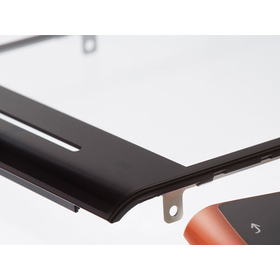
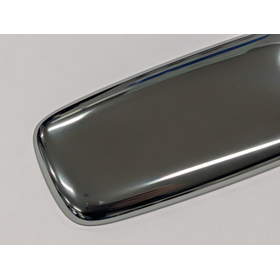
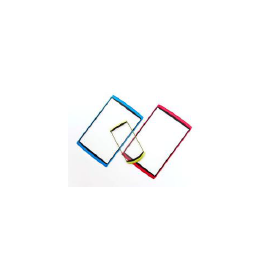
We would like to introduce a case study that addresses the challenges of narrow bezels and waterproofing in smart devices through glass inserts and in-mold technology. In this case, there was a challenge that narrow bezels and waterproofing could not be guaranteed with conventional tape adhesion. Therefore, we developed a special mold mechanism and adhesive technology that completely integrates fragile glass and resin within the mold. This achieved a seamless, fully sealed structure without the need for tape, as well as larger screen sizes. [Case Overview] ■ Challenges Faced: Narrow bezels and waterproofing in smart devices could not be guaranteed with conventional tape adhesion. ■ Solution: Developed a special mold mechanism and adhesive technology that completely integrates glass and resin within the mold. ■ Value Created: Achieved a seamless, fully sealed structure without the need for tape and larger screen sizes. *For more details, please download the PDF or feel free to contact us.
Added to bookmarks
Bookmarks listBookmark has been removed
Bookmarks listYou can't add any more bookmarks
By registering as a member, you can increase the number of bookmarks you can save and organize them with labels.
Free membership registration
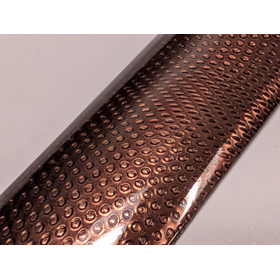
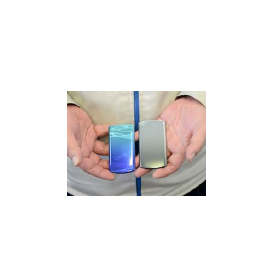
We would like to introduce a case study of tin vapor deposition in-mold, which achieves both radio communication and a metallic appearance. In this case, there was a dilemma of wanting to apply a luxurious metallic decoration, but traditional aluminum vapor deposition would block the device's radio waves. Therefore, we established a new decoration method that utilizes the characteristics of "discontinuous vapor deposition films" that allow radio waves to pass through. This has resulted in a highly transparent metallic exterior that does not interfere with 5G communication or wireless charging. 【Case Overview】 ■ Challenges Faced: Traditional aluminum vapor deposition blocks the device's radio waves ■ Solution: A new decoration method that leverages the characteristics of "discontinuous vapor deposition films" that allow radio waves to pass through ■ Value Created: Achieved a highly transparent metallic exterior for communication devices that does not hinder 5G communication or wireless charging *For more details, please download the PDF or feel free to contact us.
Added to bookmarks
Bookmarks listBookmark has been removed
Bookmarks listYou can't add any more bookmarks
By registering as a member, you can increase the number of bookmarks you can save and organize them with labels.
Free membership registration
We will introduce a case that resolved the polarization distortion (retardation) associated with the enlargement of transparent panels in the automotive industry. The resolution of the inevitable polarization distortion resulting from the enlargement of transparent panels posed a challenging requirement that our company had no prior expertise in. In response, we fundamentally re-evaluated our existing know-how and established and implemented new solutions such as retardation elimination technology (STAR treatment) to overcome this challenge. 【Case Overview】 ■ Challenge Faced: Elimination of polarization distortion (retardation) due to the enlargement of transparent panels ■ Solution: Newly established and implemented retardation elimination technology (STAR treatment) ■ Value Created: Demonstrated problem-solving ability by creating new methods and treatments to achieve customer objectives *For more details, please download the PDF or feel free to contact us.
Added to bookmarks
Bookmarks listBookmark has been removed
Bookmarks listYou can't add any more bookmarks
By registering as a member, you can increase the number of bookmarks you can save and organize them with labels.
Free membership registration
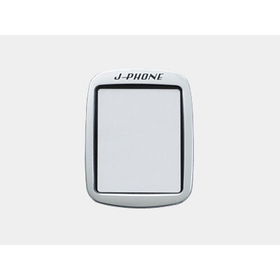
We would like to introduce a case where we solved the challenges of enhancing the clarity of LCD screens and achieving dual-sided decoration using our uniquely developed "Double In-Mold Method (W-IMD)." Traditionally, post-processing to enhance the clarity of LCD screens had low yield rates, becoming a barrier to mass production. Additionally, there were conflicting demands for advanced dual-sided decoration in some products. Our company enabled simultaneous decoration on both sides by adopting a reverse-thinking approach of drilling holes in the film and pouring in resin, thus achieving mass production of high-value-added products. 【Case Overview】 ■ Challenges Faced: Post-processing to enhance the clarity of LCD screens had low yield rates, becoming a barrier to mass production. ■ Solution: Independently developed the "Double In-Mold Method (W-IMD)" to enable simultaneous decoration on both sides. ■ Value Created: Achieved mass production of high-value-added products, including camera-equipped mobile phones. *For more details, please download the PDF or feel free to contact us.
Added to bookmarks
Bookmarks listBookmark has been removed
Bookmarks listYou can't add any more bookmarks
By registering as a member, you can increase the number of bookmarks you can save and organize them with labels.
Free membership registration
A film (in-mold foil) with a pre-printed design is sandwiched between molds, and resin is poured in. The heat and pressure of injection molding simultaneously transfer the design during the molding process. Unlike methods that apply decoration after molding, this molding technique efficiently achieves a more beautiful exterior design, developed in 1973 by Yoshida Technoworks, pioneering the world. Building on this in-mold molding, we have evolved our technology to include double in-mold, which decorates both the surface and the back of the molded product simultaneously. We also have tin vapor-deposited in-mold that expresses a beautiful metallic feel without interfering with radio waves, indium in-mold, and two-color in-mold that utilizes the texture of plastic and vibrant colors to enable deep decoration. Additionally, we have developed various in-mold molding techniques, such as glass insert in-mold, which enhances adhesion and waterproofing by integrally molding glass and resin. For the development story, please check the URL below! *For more details, please refer to the PDF or feel free to contact us.
Added to bookmarks
Bookmarks listBookmark has been removed
Bookmarks listYou can't add any more bookmarks
By registering as a member, you can increase the number of bookmarks you can save and organize them with labels.
Free membership registration
To all those involved in medical devices, Do you have these challenges? □ Want to shut out viruses and bacteria from touch panels that are touched by fingers □ Want to add antibacterial properties to medical device monitors □ Looking for a hygienic touch panel that is resistant to dirt Introducing challenges and solutions! [Challenge] When cutting large quantities of glass plates, slight dimensional variations occur, which can create small gaps and steps when fitted into plastic or metal bezels. [Solution] By using glass insert in-mold forming, we can eliminate the gaps and steps between the glass and the bezel. This will remove gaps and steps where bacteria can easily enter, resulting in hygienic and safe monitors and touch panels. *For more details, please refer to the PDF or feel free to contact us.
Added to bookmarks
Bookmarks listBookmark has been removed
Bookmarks listYou can't add any more bookmarks
By registering as a member, you can increase the number of bookmarks you can save and organize them with labels.
Free membership registration
【Customer Development Needs】 We were requested to insert metal parts to improve the assembly compatibility with the casing body in LCD panels for mobile devices. 【More Specific Requirements】 1. We would like you to insert nuts for screws during the molding process to securely hold them on the back of the in-mold transfer molded product. 2. Since the resin frame of the Glass Insert Molding (GIM) is thin and cannot achieve a fitting structure, we want to insert sheet metal simultaneously to enhance assembly compatibility with the casing. 【Our Proposal】 1. We developed an automatic feeder device that identifies the front and back of the nuts for insertion, and in conjunction with the in-mold transfer method, we proposed an LCD panel with decorative features and back-mounted nuts. 2. We proposed a GIM method with sheet metal inserts, partially hollowing out SUS sheet metal to allow the molded resin to fill in and securely hold the narrow frame. 【Customer Evaluation】 1. Thanks to the strong nuts inserted into the decorative LCD window, we received positive feedback from various mobile device manufacturers regarding improved assembly compatibility with the casing body. 2. We successfully addressed the need to balance the narrow frame design of GIM with assembly compatibility with the casing body, receiving high praise from users.
Added to bookmarks
Bookmarks listBookmark has been removed
Bookmarks listYou can't add any more bookmarks
By registering as a member, you can increase the number of bookmarks you can save and organize them with labels.
Free membership registration
【Customer Development Needs】 We received a request to minimize the bezel by integrating the display glass and resin frame through one-shot molding, in order to maximize the display without changing the size of the mobile device. 【More Specific Requirements】 There was a demand to enhance the precision of the glass insert, minimize the bonding area to the utmost, and ensure waterproofing. 【Our Proposal】 We jointly developed a binder printing that bonds with resin on the back of the glass along with decorative design, which is fused using the heat of the molded resin. We ensured quantitative management of the bonding strength and guaranteed waterproof performance through airtightness testing with specialized equipment. Utilizing the advantages of our in-mold transfer technology, we established a method where "the transfer does not occur on the glass but does on the resin frame," allowing for frame decoration during molding. 【Customer Evaluation】 We were able to provide a product with a narrow bezel and no gaps or steps between the glass and frame, which has been adopted by set manufacturers both domestically and internationally. Additionally, we received requests for not only flat glass inserts but also "bent glass" inserts, which were also adopted.
Added to bookmarks
Bookmarks listBookmark has been removed
Bookmarks listYou can't add any more bookmarks
By registering as a member, you can increase the number of bookmarks you can save and organize them with labels.
Free membership registration
**Customer Development Needs** We received a request to propose a new in-vehicle CID (Center Information Display) cover for vehicle OEM manufacturers, designed in a dome-shaped 3D format that cannot be achieved with glass bending, and to include optical processing and design elements. **More Specific Requirements** To approach the quality of a high-grade glass cover, the front side was required to have an AR (Anti-Reflection) coating, AFP (Anti-Fingerprint) coating, and a hard coat, while the back side needed a hard coat for outgassing prevention from molded resin, along with decorative design elements. **Our Proposal** We proposed inserting a hard coat sheet with AR/AFP on the surface and believed that the requirements could be met through in-mold transfer on the back side. We established a hybrid molding method that combines both elements and supplied the product. **Customer Evaluation** The product was able to achieve a shape that is impossible to process with bent glass while incorporating low reflection and anti-fingerprint features, resulting in great satisfaction. Based on the adoption of this for the customer's promotional in-vehicle CID module front cover, proposal activities to vehicle OEMs have commenced.
Added to bookmarks
Bookmarks listBookmark has been removed
Bookmarks listYou can't add any more bookmarks
By registering as a member, you can increase the number of bookmarks you can save and organize them with labels.
Free membership registration
**Customer Development Needs** We received an inquiry from a customer regarding a cover panel for in-car navigation with a unique 3D shape for exhibition purposes. **More Specific Requirements** The customer requested decorative embellishments on the back side of the cover panel to create a sense of "depth." **Our Proposal** Utilizing our double in-mold technology (which involves placing two films in the mold and performing simultaneous double-sided transfer decoration during shaping), we were able to perform simultaneous transfer decoration on both sides of the U-shaped panel, accommodating shapes that are difficult for secondary processing. Additionally, we applied our unique treatment to eliminate resin orientation distortion in the window area, making it compatible with polarized sunglasses. **Customer Feedback** We provided a prototype product, successfully participated in the exhibition, and received significant positive feedback, leading to an increase in concrete business negotiations and customer satisfaction. *You can view the catalog and case studies via "PDF Download."*
Added to bookmarks
Bookmarks listBookmark has been removed
Bookmarks listYou can't add any more bookmarks
By registering as a member, you can increase the number of bookmarks you can save and organize them with labels.
Free membership registration
**Customer Development Needs** We received a development offer for a business card case using our unique technology from a product planning company. **More Specific Requirements** They requested to use a special gimmick found in cosmetic compact containers for the main body and to apply separate gradients on both sides of the top part using a double in-mold technique. **Our Proposal** Leveraging our know-how in cosmetic compact design and manufacturing, we created a unique hookless opening and closing mechanism that appeals to men. The top part, which serves as the face of the product, employs a double in-mold technique, featuring a sense of depth with gradients and metallic embellishments. We developed a business card case that allows for infinite color variations through the combination of colored resin materials on the front and back of the top part. **Customer Evaluation** Since its launch in 2013, we have increased the color variations and sold over 40,000 units in total (as of the end of March 2021). In addition to general sales, we have numerous OEM achievements in collaboration with companies, including laser processing of characters and other designs on the top part.
Added to bookmarks
Bookmarks listBookmark has been removed
Bookmarks listYou can't add any more bookmarks
By registering as a member, you can increase the number of bookmarks you can save and organize them with labels.
Free membership registration
**Customer Development Needs** We received a request from a customer dealing with glasses and sunglasses for a proposal for eyewear frames with decorative features that are not conventional. **More Specific Requirements** They requested a decoration that is covered by resin, rather than traditional methods like transfer or painting. **Our Proposal** We applied our development technology of "inserting transfer decorative molded products to encapsulate the transfer decoration" to explore sheets that can withstand the material requirements for eyewear frames. We proposed the idea of "inserting sheet insert molded products again to encapsulate the decorative sheet in resin." The decoration was implemented on the sheets using methods such as inkjet printing and vapor deposition, and we repeatedly prototyped to ensure it could withstand insert molding, ultimately achieving the specifications. **Customer Evaluation** Not only were we able to create a design for glasses with decorations that are completely sealed from external exposure and free from concerns about deterioration, but we also received high praise after exhibiting at a global eyewear and sunglasses trade show.
Added to bookmarks
Bookmarks listBookmark has been removed
Bookmarks listYou can't add any more bookmarks
By registering as a member, you can increase the number of bookmarks you can save and organize them with labels.
Free membership registration