1~45 item / All 46 items
Displayed results
Filter by category

Added to bookmarks
Bookmarks listBookmark has been removed
Bookmarks listYou can't add any more bookmarks
By registering as a member, you can increase the number of bookmarks you can save and organize them with labels.
Free membership registration
Contact this company
Inquiry Form1~45 item / All 46 items
Filter by category
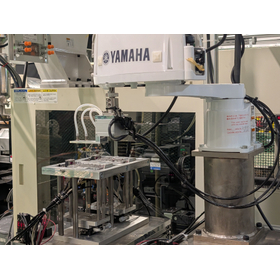
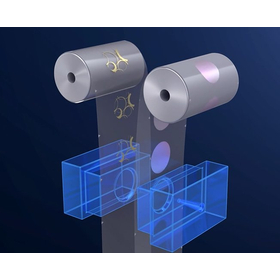
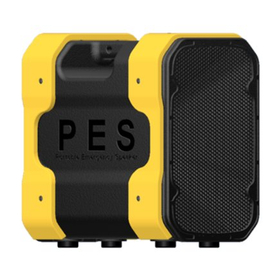
In sheet metal insert molding, if the front and back of the sheet metal are mistakenly set during molding, it can lead to serious issues such as functional defects, appearance defects, and mold damage. A system that relies on manual setup and visual confirmation cannot completely prevent human errors during long hours of mass production. At Yoshida Techno Works, we have developed an in-house dedicated robot for the automatic transport of sheet metal to molds for mass production of exterior panels for electronic cigarettes, establishing a method that incorporates front and back detection cameras along the transport route. Sheet metal that is judged as NG (not good) by the camera's front and back determination is automatically eliminated, ensuring that only correctly oriented sheet metal is inserted into the mold. By integrating automatic transport and front/back detection, we achieve zero misinsertion while maintaining the pace of mass production. We also accommodate customization of robots and jigs according to the shape and size of the sheet metal.
Added to bookmarks
Bookmarks listBookmark has been removed
Bookmarks listYou can't add any more bookmarks
By registering as a member, you can increase the number of bookmarks you can save and organize them with labels.
Free membership registration
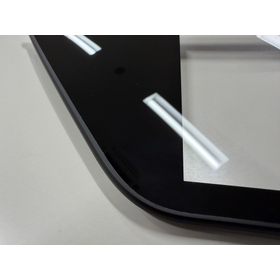
In glass insert molding (GIM), even within standard values, variations in the thickness of the glass material can affect compatibility with the mold, leading to uneven molding pressure, glass breakage, and appearance defects. Yoshida Technoworks has established a method for mass production of GIM for Kyocera's JA83, where the thickness of the glass is classified in increments of 0.02mm, and rank management is implemented through weight selection. Furthermore, by associating the glass rank with the molding conditions for each mold number, variations within the same material are absorbed by the molding conditions, ensuring stable mass production quality. This method is particularly effective in improving yield for GIM products that use thin glass (1mm or less).
Added to bookmarks
Bookmarks listBookmark has been removed
Bookmarks listYou can't add any more bookmarks
By registering as a member, you can increase the number of bookmarks you can save and organize them with labels.
Free membership registration
In vehicle-mounted CID (Center Information Display), it is required that the appearance of the molded resin frame surrounding the GIM glass matches the appearance of the housing (metal and paint). However, tuning the molded product to match the matte texture of aluminum die-cast or painted housings is quite challenging, and if there are discrepancies in appearance, a high-quality design cannot be achieved. Yoshida Techno Works has finely adjusted the gloss, texture, and color tone of IMD foil decoration, successfully achieving the tuning to match the matte appearance of the CID housing with the appearance of the molded frame in the DNP F40GIM (vehicle prototype). Through the combined optimization of film grade, molding conditions, and mold texture, stable appearance matching is realized even in mass production.
Added to bookmarks
Bookmarks listBookmark has been removed
Bookmarks listYou can't add any more bookmarks
By registering as a member, you can increase the number of bookmarks you can save and organize them with labels.
Free membership registration
In glass insert molding (GIM), if the insertion position of the glass into the mold varies, it can lead to various molding troubles such as uneven resin filling, glass misalignment, sealing defects, and appearance issues. Yoshida Techno Works has developed and adopted a unique insertion method that incorporates a centering mechanism on the glass insert platform, allowing for precise positioning using guide pins when inserting the glass into the mold. This method eliminates variations in position during manual glass insertion and ensures stable insertion accuracy across all mass-produced units. We have established this method in the mass production of DL35 (GIM products) for Sharp, significantly reducing molding defects caused by glass positioning issues.
Added to bookmarks
Bookmarks listBookmark has been removed
Bookmarks listYou can't add any more bookmarks
By registering as a member, you can increase the number of bookmarks you can save and organize them with labels.
Free membership registration
In smartphone and automotive display panels, an anti-fingerprint (AFP) function that minimizes the visibility of fingerprints is required; however, coating processes after molding can lead to increased steps and risks of poor adhesion. Yoshida Technoworks has established a method to impart AFP functionality simultaneously with molding by incorporating water and oil repellent components into the surface film (surface foil) in the double in-mold process. Since the coating process is unnecessary, this achieves simplification of subsequent processes and cost reduction, while the surface foil is integrated with the resin, providing excellent adhesion and abrasion resistance. There is a track record of mass production applied to BC7/VG4 cover lenses, and the formulation of the water and oil repellent components in the surface foil can be customized according to your requirements.
Added to bookmarks
Bookmarks listBookmark has been removed
Bookmarks listYou can't add any more bookmarks
By registering as a member, you can increase the number of bookmarks you can save and organize them with labels.
Free membership registration
Large, thin-walled cover lenses and resin panels are prone to warping and distortion during the cooling process after molding, which can lead to assembly defects and appearance issues. Traditional sampling three-dimensional measurements made it difficult to guarantee the entire production. Yoshida Techno Works has developed a dedicated measurement fixture with multiple non-contact displacement sensors to quantitatively acquire and manage coordinate data (warping amount) for all molded products. The measurement data is recorded and stored on a lot basis and is also used for feedback to optimize molding conditions. This initiative has significantly reduced the risk of defective products with shape issues leaking out and has eradicated assembly defects in subsequent processes.
Added to bookmarks
Bookmarks listBookmark has been removed
Bookmarks listYou can't add any more bookmarks
By registering as a member, you can increase the number of bookmarks you can save and organize them with labels.
Free membership registration
In cover lenses and automotive exterior panels, light stability that prevents yellowing and appearance deterioration due to long-term UV exposure is required. Yoshida Techno Works has established a method to incorporate UV-absorbing components into the surface film (surface foil) in the double in-mold process, granting light stability functionality simultaneously with molding. Since post-molding painting and coating processes are unnecessary, we achieve process reduction and cost reduction while passing light stability tests. In addition to our application results for BC7/VG4 cover lenses for Fujitsu Plastics/Rhythm Shoei, we also have a track record of proposing and passing tests for weather-resistant foils for automotive parts (K0F) for Honda Motor Co. The formulation of UV-absorbing components and film selection can be customized according to product requirements and testing standards.
Added to bookmarks
Bookmarks listBookmark has been removed
Bookmarks listYou can't add any more bookmarks
By registering as a member, you can increase the number of bookmarks you can save and organize them with labels.
Free membership registration
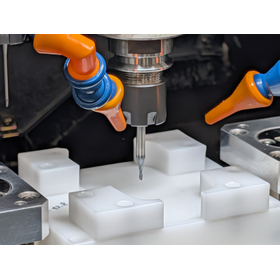
In the mass production of optical products such as cover lenses, the cutting labor time for post-processing can become a bottleneck in the manufacturing lead time. Yoshida Techno Works has introduced a high-speed cutting machine (Joker) dedicated to resin products, achieving a quick startup. Compared to conventional general-purpose machining equipment, it significantly improves cutting speed and establishes a consistent production system with the molding line. This allows for the reduction of processing labor time and the rationalization of manufacturing lead time, thereby establishing a stable supply system for mass-produced products. We have also accumulated in-house know-how for setting up tools and conditions to maintain cutting precision while keeping up with mass production pace, supporting a quick transition to mass production during the launch of new models.
Added to bookmarks
Bookmarks listBookmark has been removed
Bookmarks listYou can't add any more bookmarks
By registering as a member, you can increase the number of bookmarks you can save and organize them with labels.
Free membership registration
Are you struggling with the adhesive strength of glass falling below standard values during the bonding process after GIM (Glass In-Mold) molding, affecting the stability of mass production quality? Applying adhesive to the side (cross-section) of the glass can lead to variability in uniformity due to the complex shape, often resulting in insufficient bonding area, which is a common cause of inadequate strength. Our company has introduced a dedicated robot capable of uniformly applying adhesive around the entire circumference of the glass side, precisely controlling the amount, position, and speed of application to stabilize the bonding area and quality. As a result, we have successfully resolved adhesive strength issues for GIM waterproof products at the mass production quality level. We look forward to consultations from manufacturers seeking to improve the waterproof performance and adhesive reliability of glass-integrated molded products.
Added to bookmarks
Bookmarks listBookmark has been removed
Bookmarks listYou can't add any more bookmarks
By registering as a member, you can increase the number of bookmarks you can save and organize them with labels.
Free membership registration
In precision machining products, there is a strict tolerance requirement of ±0.05mm, and there is a risk of overlooking defects in sampling inspections, making it challenging to establish a system for 100% assurance. Using general equipment and standard inspection flows is not realistic for managing high-precision tolerances, and there are many cases where we cannot meet the quality demands of major manufacturers. Our company has established a 100% measurement flow for ±0.05mm tolerance products through continuous improvement of dedicated jigs and in-house design and manufacturing of measuring instruments specialized for 100% assurance. By producing measuring instruments in-house, we keep costs down while achieving high measurement reproducibility unique to dedicated designs. We support 100% quality assurance for precision parts, optical components, and high-precision electronic components, meeting the strict quality standards of major manufacturers.
Added to bookmarks
Bookmarks listBookmark has been removed
Bookmarks listYou can't add any more bookmarks
By registering as a member, you can increase the number of bookmarks you can save and organize them with labels.
Free membership registration
Are you facing issues with frequent glass breakage and instability in mass production using 3D curved glass in insert molding? Since the curvature of curved glass slightly differs for each product, the mismatch with the mold curvature creates localized overloading, leading to breakage. Our company has established a unique management method that measures the curvature of curved glass for all units, databases the data, and quantitatively analyzes the differences from the mold curvature. By directly feeding back the measurement data into mold adjustments, we significantly reduce the risk of breakage and achieve stable mass production. We also have a proven track record in solving breakage issues for curved glass used in high-end smartphones, making us ideal for manufacturers aiming for stable production of high-precision 3D molded products such as curved displays and wearable components.
Added to bookmarks
Bookmarks listBookmark has been removed
Bookmarks listYou can't add any more bookmarks
By registering as a member, you can increase the number of bookmarks you can save and organize them with labels.
Free membership registration
In glass insert molding, are you struggling with issues where glass or molds break due to individual differences (thickness variations) even within specifications? Even with standardized insert glass, minute dimensional differences are unavoidable, and molding them as is can lead to excessive pressing force, increasing the risk of breakage. Our company has designed and implemented a unique mechanism that automatically adjusts the interior of the mold in response to the individual thickness variations of the insert components. By consistently maintaining appropriate pressing strength, we prevent breakage of both glass and molds, significantly improving yield and equipment utilization rates. This is the ideal solution for manufacturers facing challenges in the stable production of high-quality glass insert molded products, such as those used in smartphones, tablets, and automotive parts.
Added to bookmarks
Bookmarks listBookmark has been removed
Bookmarks listYou can't add any more bookmarks
By registering as a member, you can increase the number of bookmarks you can save and organize them with labels.
Free membership registration
Are you struggling to achieve both a reduction in polarization distortion (retardation) and shape accuracy in the manufacturing of resin panels for automotive and industrial displays? In general annealing processes, distortion is often removed at the cost of panel shape deformation, making it challenging to meet both precise dimensional requirements and quality standards simultaneously. Our company has uniquely established STAR treatment conditions that effectively reduce retardation while minimizing shape deformation. Additionally, we design and manufacture specialized tools to properly hold the panels during processing. This combination allows us to achieve mass production that meets the quality standards for precision panels. We look forward to consulting with manufacturers facing quality challenges in display panels for automotive, industrial, and medical devices.
Added to bookmarks
Bookmarks listBookmark has been removed
Bookmarks listYou can't add any more bookmarks
By registering as a member, you can increase the number of bookmarks you can save and organize them with labels.
Free membership registration
As manufacturers struggle with the quality issue of increased residual stress during the molding process, which leads to rainbow-colored distortions (retardation) visible through polarized sunglasses as the size of transparent panels increases, our uniquely developed "STAR treatment" is a technology that fundamentally suppresses residual stress by comprehensively controlling multiple molding parameters such as gate temperature, holding pressure, and injection conditions. Since it does not require changes in materials or modifications to molds, it can resolve issues while utilizing existing equipment and design assets. This technology achieves stable quality at mass production levels for applications with stringent optical properties, such as automotive displays, smartphones, and PC resin panels for tablets. We hope that manufacturers aiming to reduce non-conforming lots in polarized inspections, curb customer complaints, and improve yield will find this technology beneficial.
Added to bookmarks
Bookmarks listBookmark has been removed
Bookmarks listYou can't add any more bookmarks
By registering as a member, you can increase the number of bookmarks you can save and organize them with labels.
Free membership registration
Conventional speakers diffuse sound over a wide area, making it difficult to deliver sound only to people in specific locations within exhibition facilities and commercial spaces. By adopting super-directional speaker (parametric speaker) technology, we have built a system that delivers sound exclusively to specific areas or individuals. Through acoustic characteristic evaluation and adjustments, we have achieved selective sound transmission to designated areas. This contributes to immersive audio experiences, such as audio guides in front of exhibits in museums and exhibition facilities, promotional sound in stores, and individual audio in hospital waiting rooms.
Added to bookmarks
Bookmarks listBookmark has been removed
Bookmarks listYou can't add any more bookmarks
By registering as a member, you can increase the number of bookmarks you can save and organize them with labels.
Free membership registration
The collaboration project for the heating device required a small lot, diverse variety, and short delivery times. Due to frequent user complaints from another manufacturer, there was a demand for both quality and supply stability. Leveraging the strength of mass-producing the base product, we combined inkjet printing and painting processes on the base to accommodate a variety of products with short lead times. We eliminated the user complaints that were prevalent with another manufacturer and established a supply chain capable of short delivery times. By designing processes to minimize the lead time for switching product varieties, we achieved stable supply of exterior parts necessary for small-lot production of collaboration and limited edition products.
Added to bookmarks
Bookmarks listBookmark has been removed
Bookmarks listYou can't add any more bookmarks
By registering as a member, you can increase the number of bookmarks you can save and organize them with labels.
Free membership registration
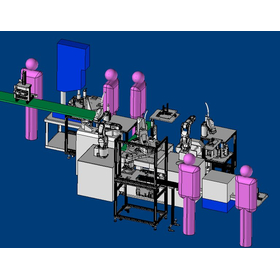
There are only a limited number of suppliers capable of designing and manufacturing automated lines optimized for customer-specific molding processes, leading to difficulties in procurement. From the initial estimation stage, we present conceptual drawings and ladder diagrams (which is rare among other companies) and make proposals from multiple angles to meet customer requests. After careful negotiations by a specialized technical team, we design and develop automated assembly, processing, and inspection lines that work in conjunction with molding machines from scratch. With an unparalleled automated machine sales service in the molding industry, we gain customer trust through conceptual proposals from the estimation stage.
Added to bookmarks
Bookmarks listBookmark has been removed
Bookmarks listYou can't add any more bookmarks
By registering as a member, you can increase the number of bookmarks you can save and organize them with labels.
Free membership registration
The realization of the click sensation for electronic cigarette components, which was consulted by a major tobacco brand, was considered impossible by other companies (in China). Achieving the click sensation required precise thickness adjustments, but relying solely on injection molding resulted in dimensional variations that made it difficult. We adjusted the thickness after molding using a special cutting machine for secondary processing to achieve the click sensation. To address the variations in processing thickness caused by dimensional variations in molding, we designed and manufactured dedicated jigs in-house to resolve the issue. By providing a consistent response from molding to secondary processing, we enable mass production of electronic device components with a precise click mechanism that cannot be achieved by other companies.
Added to bookmarks
Bookmarks listBookmark has been removed
Bookmarks listYou can't add any more bookmarks
By registering as a member, you can increase the number of bookmarks you can save and organize them with labels.
Free membership registration
The complex-shaped components of major cosmetic brands were projects that multiple companies, both domestic and international, had declined, stating that "the structure is too complicated." It was also difficult to realize using the material (elastomer), and it was necessary to meet the high design requirements unique to the cosmetics industry. By applying the mold structure know-how cultivated in high-level industries such as home appliances, automobiles, and communication equipment, we proposed and constructed a mold structure that could be mass-produced. We successfully achieved the mass production of products for major cosmetic brands while fully realizing the designers' designs. Even for difficult-shaped components that other companies have declined, we positively consider and propose solutions.
Added to bookmarks
Bookmarks listBookmark has been removed
Bookmarks listYou can't add any more bookmarks
By registering as a member, you can increase the number of bookmarks you can save and organize them with labels.
Free membership registration
There are few decoration variations for materials other than resin (metal, glass, CFRP/GFRP), and traditional TOM molding has issues with the substrate becoming too thick and concerns about high transfer temperatures affecting the fabric (risk of deformation). We established the VSS method, which applies in-mold technology to transfer only the ink layer. By combining a dedicated stretchable transfer foil with our unique overheating steam heating method, we achieved transfer at low temperatures and in a short time. We have also resolved the thickness issues of TOM molding, enabling thinner designs. We have a track record of final adjustments for commercialization in global brand laptops and will mass-produce high-quality 3D decorations for metal, carbon, and glass.
Added to bookmarks
Bookmarks listBookmark has been removed
Bookmarks listYou can't add any more bookmarks
By registering as a member, you can increase the number of bookmarks you can save and organize them with labels.
Free membership registration
Even if the functions of anti-reflective (AR), anti-glare (AG), and anti-fingerprint (AFP) can be achieved using the IML method, it was structurally impossible to balance them with a high-design aesthetic that takes advantage of the depth of transparent resin. Additionally, there was a problem with the printing layer affecting the color of the LCD backlight in the HIDDEN decoration on the back side. We established a hybrid molding method that inserts an optical function sheet (AR/AG/AFP compatible IML sheet) on the surface and applies in-mold decoration on the back side. By adopting the special printing technology of a major printing manufacturer, we achieved HIDDEN decoration that does not affect the color development of the LCD. We simultaneously realize the functionality of anti-reflective, anti-glare, and anti-fingerprint with a high-design aesthetic that has depth in a single panel.
Added to bookmarks
Bookmarks listBookmark has been removed
Bookmarks listYou can't add any more bookmarks
By registering as a member, you can increase the number of bookmarks you can save and organize them with labels.
Free membership registration
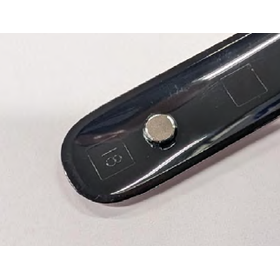
In the molding of magnetic inserts for heating devices, the risk of incorrect insertion of the magnets' front and back sides and polarity, as well as the magnetic influence on the molds, had been a cause of mass production troubles. We developed an in-house automatic transport robot that utilizes the polarity of the magnets to prevent incorrect insertion, and we adopted special mold steel that is not affected by magnetism for the product components (cavity cores). We have achieved the elimination of mass production troubles related to magnetic inserts and zero defects from incorrect insertion. By in-house development of the automatic transport robot, we can flexibly build an automated line optimized for the customer's specific molding process.
Added to bookmarks
Bookmarks listBookmark has been removed
Bookmarks listYou can't add any more bookmarks
By registering as a member, you can increase the number of bookmarks you can save and organize them with labels.
Free membership registration
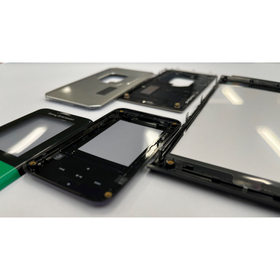
In the vehicle-mounted testing (heat cycle testing), a problem occurred where the glass detached from the molded resin frame, making it difficult to meet the quality standards for vehicle-mounted glass insert products. Additionally, it was necessary to match the matte appearance of the vehicle-mounted housing with that of the molded resin frame. We selected a filler-containing resin that minimizes molding shrinkage and confirmed its durability in heat cycle testing. We also conducted tuning to match the matte appearance of the CID housing with the in-mold foil decorative appearance of the molded resin frame, achieving application to vehicle-mounted CID cover panels and vehicle-mounted display frames.
Added to bookmarks
Bookmarks listBookmark has been removed
Bookmarks listYou can't add any more bookmarks
By registering as a member, you can increase the number of bookmarks you can save and organize them with labels.
Free membership registration
In glass insert molding (GIM) products, while waterproof guarantees are required, it has been difficult to establish a system for detecting and guaranteeing minute leaks at the interface between glass and resin for all products. We introduced an air leak testing machine, set threshold values for each product, and conducted 100% inspection. For products that failed the tests, we established a rework system to apply impregnation adhesive through additional processing. Furthermore, we improved structural waterproofing by enhancing glass positioning accuracy with centering on the insert glass support and guide pins. We have established a quality assurance system for all GIM waterproof products, which supports waterproof smartphone cover panels and more.
Added to bookmarks
Bookmarks listBookmark has been removed
Bookmarks listYou can't add any more bookmarks
By registering as a member, you can increase the number of bookmarks you can save and organize them with labels.
Free membership registration
In the glass bonding to the resin frame, it was not possible to achieve zero "gaps," and due to the dimensional variations in the glass, a seamless appearance could not be realized in the subsequent bonding process. We established a unique method that aligns the 3D shape of the glass with the shape of the mold for insert molding, simultaneously implementing metal inserts and in-mold decoration during the molding process. This method achieves the insertion of three different materials: glass, metal, and in-mold (decoration) in the same molding process. We developed a unique mold mechanism that absorbs the individual differences (dimensional variations) of the glass, realizing a seamless sealing structure without the need for tape and enabling larger screen sizes. There is a proven track record of being adopted in ultra-high-end premium smartphones.
Added to bookmarks
Bookmarks listBookmark has been removed
Bookmarks listYou can't add any more bookmarks
By registering as a member, you can increase the number of bookmarks you can save and organize them with labels.
Free membership registration
The issue of decreased antenna sensitivity in smartphones, Bluetooth devices, and in-vehicle devices when applying metallic decorative finishes was due to traditional plating and aluminum vapor deposition shielding the radio waves. By depositing tin (tin) in a discontinuous island-like manner at the nano level, we developed a unique deposition in-mold foil that maintains an electrically insulating state while visually emitting a uniform metallic luster. We established a new method that achieves a metallic appearance while allowing radio waves to pass through. This will be adopted in smartphone casings, Bluetooth-equipped devices, and automotive components, providing a high-transparency metallic exterior that does not interfere with radio waves in mass production.
Added to bookmarks
Bookmarks listBookmark has been removed
Bookmarks listYou can't add any more bookmarks
By registering as a member, you can increase the number of bookmarks you can save and organize them with labels.
Free membership registration
In cases where multiple decorative in-mold processes are performed on deep-drawn shapes, ensuring alignment accuracy between each cavity is technically challenging, and other companies have deemed such projects unfeasible. By independently developing a specialized multi-cavity mold structure and precisely designing the alignment mechanism for each cavity, we have successfully achieved mass production of deep-drawn multi-cavity in-mold products. We proactively tackle high-difficulty shapes and structures that other companies have declined, proposing and constructing mold structures that are capable of mass production. We cater to the manufacturing of high-design exterior components for beauty and healthcare devices, as well as smartphone-related products.
Added to bookmarks
Bookmarks listBookmark has been removed
Bookmarks listYou can't add any more bookmarks
By registering as a member, you can increase the number of bookmarks you can save and organize them with labels.
Free membership registration
As part of the product's carbon neutrality efforts, the use of recycled resin (PCR-PC) is required; however, there were concerns about its impact on the flowability and transfer quality specific to in-mold forming, making it difficult to balance environmental considerations with mass production quality. We explored and selected suppliers of PCR-PC resin suitable for in-mold forming and optimized the molding conditions (temperature, pressure, filling speed). After evaluating the materials (flowability, transfer quality, appearance quality) and confirming compatibility with the foil, we established a manufacturing system that simultaneously achieves mass procurement of environmentally friendly products and maintains in-mold quality with PCR-PC resin. We support decorative molding that meets sustainability requirements.
Added to bookmarks
Bookmarks listBookmark has been removed
Bookmarks listYou can't add any more bookmarks
By registering as a member, you can increase the number of bookmarks you can save and organize them with labels.
Free membership registration
In the exterior panel of heating devices, it was technically difficult to mass-produce designs that convey a sense of luxury and depth using only single-sided in-mold. We established a unique method that incorporates three-dimensional UV patterns into the in-mold transfer layer, achieving three-dimensional decoration simultaneously with injection molding. Despite being single-sided in-mold, we successfully mass-produced designs that convey a sense of depth and luxury, which have been adopted by major heating device manufacturers. As a technology that opens up new possibilities for in-mold decoration, it can also be applied to smartphone back covers and appliance control panels.
Added to bookmarks
Bookmarks listBookmark has been removed
Bookmarks listYou can't add any more bookmarks
By registering as a member, you can increase the number of bookmarks you can save and organize them with labels.
Free membership registration
Conventional light guide plates typically consist of a three-layer structure made up of two vapor-deposited plates (front and back) and a transparent plate, which has made the high number of components a bottleneck for thinness and space-saving. Additionally, the method of combining plate materials made it difficult to accommodate three-dimensional shapes, greatly restricting design flexibility. By applying double in-mold forming to the production of light guide plates, both sides of the vapor-deposited foil are transferred within the mold simultaneously during injection molding. This consolidates the conventional three-layer structure into a single molded product, achieving significant thinness and a reduction in the number of components. Leveraging the design freedom unique to injection-molded products, it can accommodate curved and complex shapes that were impossible with traditional methods. This contributes to the high design quality and space-saving of automotive ambient lighting and LED panels for home appliances.
Added to bookmarks
Bookmarks listBookmark has been removed
Bookmarks listYou can't add any more bookmarks
By registering as a member, you can increase the number of bookmarks you can save and organize them with labels.
Free membership registration
It was difficult to simultaneously apply anti-fingerprint (AFP), anti-glare (AG), anti-reflective (AR) coatings, and a sense of depth design to cover lenses for car navigation systems using conventional methods. Additionally, there was a demand to comply with outgassing regulations for automotive environments and to ensure durability in light resistance tests. We adopted a functional film that incorporates water-repellent and oil-repellent (AFP) components and UV-absorbing components into a double in-mold surface foil, achieving a sense of depth through graphic decoration on the back side. We established a quality assurance system by introducing non-contact displacement gauges for all products, allowing for quantitative management of 3D shapes (warpage) at multiple measurement points. We have simultaneously achieved passing light resistance tests, applying anti-fingerprint coatings, and conducting quantitative management of all products.
Added to bookmarks
Bookmarks listBookmark has been removed
Bookmarks listYou can't add any more bookmarks
By registering as a member, you can increase the number of bookmarks you can save and organize them with labels.
Free membership registration
In the home appliance industry, the contamination of floating particles during the AR processing stage has become a challenge that negatively affects yield rates. Improving yield is a crucial theme for operation panels, which significantly influence product quality. Additionally, there is a demand to achieve a design with transparency alongside surface treatment. In response to these challenges, our double in-mold method realizes dual-side decoration in a single injection molding process, contributing to yield improvement. 【Usage Scenarios】 * Operation panels for home appliances * Display panels requiring AR processing * Products that aim to balance design and functionality 【Benefits of Implementation】 * Improvement in yield during the AR processing stage * Enhancement of design quality * Streamlining of the manufacturing process
Added to bookmarks
Bookmarks listBookmark has been removed
Bookmarks listYou can't add any more bookmarks
By registering as a member, you can increase the number of bookmarks you can save and organize them with labels.
Free membership registration
We would like to introduce a case where we designed and developed an automatic assembly, processing, and inspection line from scratch to optimize production equipment. In building a dedicated line for stable mass production of molded products, we faced the challenge that general equipment manufacturers lacked the know-how for molding. In response, we presented "conceptual diagrams and ladder diagrams" from the planning stage and designed and developed the automatic assembly, processing, and inspection line itself, which is linked to the molding machine, from scratch. [Case Overview] ■ Challenges Faced: General equipment manufacturers lack molding know-how in building dedicated lines. ■ Solution: Designed and developed an automatic assembly, processing, and inspection line linked to the molding machine from scratch. ■ Value Created: Established a consistent quality assurance system from molding to assembly and developed a unique support system that also accommodates the external sales of standalone automatic machines. *For more details, please download the PDF or feel free to contact us.
Added to bookmarks
Bookmarks listBookmark has been removed
Bookmarks listYou can't add any more bookmarks
By registering as a member, you can increase the number of bookmarks you can save and organize them with labels.
Free membership registration
We would like to introduce a case where we successfully mass-produced a beauty brush with a complex three-dimensional shape that was deemed impossible to mold. This product features a special three-dimensional skeleton structure that manufacturers both domestically and internationally had given up on, stating that "the mold structure is too complex for mass production." By applying the advanced mold design know-how cultivated through high-difficulty in-mold processes to general molding, we constructed a special mold structure that clears complex undercuts. We succeeded in mass-producing products for major brands. 【Case Overview】 ■ Challenges Faced: The mold structure for the beauty brush with a special three-dimensional skeleton structure was too complex for mass production. ■ Solution: We applied advanced mold design know-how to general molding and constructed a special mold structure that clears complex undercuts. ■ Value Created: Successfully mass-produced products for major brands without compromising the designer's design. *For more details, please download the PDF or feel free to contact us.
Added to bookmarks
Bookmarks listBookmark has been removed
Bookmarks listYou can't add any more bookmarks
By registering as a member, you can increase the number of bookmarks you can save and organize them with labels.
Free membership registration
We would like to introduce a case study that addresses the challenges of narrow bezels and waterproofing in smart devices through glass inserts and in-mold technology. In this case, there was a challenge that narrow bezels and waterproofing could not be guaranteed with conventional tape adhesion. Therefore, we developed a special mold mechanism and adhesive technology that completely integrates fragile glass and resin within the mold. This achieved a seamless, fully sealed structure without the need for tape, as well as larger screen sizes. [Case Overview] ■ Challenges Faced: Narrow bezels and waterproofing in smart devices could not be guaranteed with conventional tape adhesion. ■ Solution: Developed a special mold mechanism and adhesive technology that completely integrates glass and resin within the mold. ■ Value Created: Achieved a seamless, fully sealed structure without the need for tape and larger screen sizes. *For more details, please download the PDF or feel free to contact us.
Added to bookmarks
Bookmarks listBookmark has been removed
Bookmarks listYou can't add any more bookmarks
By registering as a member, you can increase the number of bookmarks you can save and organize them with labels.
Free membership registration
We would like to introduce a case study of tin vapor deposition in-mold, which achieves both radio communication and a metallic appearance. In this case, there was a dilemma of wanting to apply a luxurious metallic decoration, but traditional aluminum vapor deposition would block the device's radio waves. Therefore, we established a new decoration method that utilizes the characteristics of "discontinuous vapor deposition films" that allow radio waves to pass through. This has resulted in a highly transparent metallic exterior that does not interfere with 5G communication or wireless charging. 【Case Overview】 ■ Challenges Faced: Traditional aluminum vapor deposition blocks the device's radio waves ■ Solution: A new decoration method that leverages the characteristics of "discontinuous vapor deposition films" that allow radio waves to pass through ■ Value Created: Achieved a highly transparent metallic exterior for communication devices that does not hinder 5G communication or wireless charging *For more details, please download the PDF or feel free to contact us.
Added to bookmarks
Bookmarks listBookmark has been removed
Bookmarks listYou can't add any more bookmarks
By registering as a member, you can increase the number of bookmarks you can save and organize them with labels.
Free membership registration
We will introduce a case that resolved the polarization distortion (retardation) associated with the enlargement of transparent panels in the automotive industry. The resolution of the inevitable polarization distortion resulting from the enlargement of transparent panels posed a challenging requirement that our company had no prior expertise in. In response, we fundamentally re-evaluated our existing know-how and established and implemented new solutions such as retardation elimination technology (STAR treatment) to overcome this challenge. 【Case Overview】 ■ Challenge Faced: Elimination of polarization distortion (retardation) due to the enlargement of transparent panels ■ Solution: Newly established and implemented retardation elimination technology (STAR treatment) ■ Value Created: Demonstrated problem-solving ability by creating new methods and treatments to achieve customer objectives *For more details, please download the PDF or feel free to contact us.
Added to bookmarks
Bookmarks listBookmark has been removed
Bookmarks listYou can't add any more bookmarks
By registering as a member, you can increase the number of bookmarks you can save and organize them with labels.
Free membership registration
We would like to introduce a case where we solved the challenges of enhancing the clarity of LCD screens and achieving dual-sided decoration using our uniquely developed "Double In-Mold Method (W-IMD)." Traditionally, post-processing to enhance the clarity of LCD screens had low yield rates, becoming a barrier to mass production. Additionally, there were conflicting demands for advanced dual-sided decoration in some products. Our company enabled simultaneous decoration on both sides by adopting a reverse-thinking approach of drilling holes in the film and pouring in resin, thus achieving mass production of high-value-added products. 【Case Overview】 ■ Challenges Faced: Post-processing to enhance the clarity of LCD screens had low yield rates, becoming a barrier to mass production. ■ Solution: Independently developed the "Double In-Mold Method (W-IMD)" to enable simultaneous decoration on both sides. ■ Value Created: Achieved mass production of high-value-added products, including camera-equipped mobile phones. *For more details, please download the PDF or feel free to contact us.
Added to bookmarks
Bookmarks listBookmark has been removed
Bookmarks listYou can't add any more bookmarks
By registering as a member, you can increase the number of bookmarks you can save and organize them with labels.
Free membership registration
A film (in-mold foil) with a pre-printed design is sandwiched between molds, and resin is poured in. The heat and pressure of injection molding simultaneously transfer the design during the molding process. Unlike methods that apply decoration after molding, this molding technique efficiently achieves a more beautiful exterior design, developed in 1973 by Yoshida Technoworks, pioneering the world. Building on this in-mold molding, we have evolved our technology to include double in-mold, which decorates both the surface and the back of the molded product simultaneously. We also have tin vapor-deposited in-mold that expresses a beautiful metallic feel without interfering with radio waves, indium in-mold, and two-color in-mold that utilizes the texture of plastic and vibrant colors to enable deep decoration. Additionally, we have developed various in-mold molding techniques, such as glass insert in-mold, which enhances adhesion and waterproofing by integrally molding glass and resin. For the development story, please check the URL below! *For more details, please refer to the PDF or feel free to contact us.
Added to bookmarks
Bookmarks listBookmark has been removed
Bookmarks listYou can't add any more bookmarks
By registering as a member, you can increase the number of bookmarks you can save and organize them with labels.
Free membership registration
To all those involved in medical devices, Do you have these challenges? □ Want to shut out viruses and bacteria from touch panels that are touched by fingers □ Want to add antibacterial properties to medical device monitors □ Looking for a hygienic touch panel that is resistant to dirt Introducing challenges and solutions! [Challenge] When cutting large quantities of glass plates, slight dimensional variations occur, which can create small gaps and steps when fitted into plastic or metal bezels. [Solution] By using glass insert in-mold forming, we can eliminate the gaps and steps between the glass and the bezel. This will remove gaps and steps where bacteria can easily enter, resulting in hygienic and safe monitors and touch panels. *For more details, please refer to the PDF or feel free to contact us.
Added to bookmarks
Bookmarks listBookmark has been removed
Bookmarks listYou can't add any more bookmarks
By registering as a member, you can increase the number of bookmarks you can save and organize them with labels.
Free membership registration
【Customer Development Needs】 We were requested to insert metal parts to improve the assembly compatibility with the casing body in LCD panels for mobile devices. 【More Specific Requirements】 1. We would like you to insert nuts for screws during the molding process to securely hold them on the back of the in-mold transfer molded product. 2. Since the resin frame of the Glass Insert Molding (GIM) is thin and cannot achieve a fitting structure, we want to insert sheet metal simultaneously to enhance assembly compatibility with the casing. 【Our Proposal】 1. We developed an automatic feeder device that identifies the front and back of the nuts for insertion, and in conjunction with the in-mold transfer method, we proposed an LCD panel with decorative features and back-mounted nuts. 2. We proposed a GIM method with sheet metal inserts, partially hollowing out SUS sheet metal to allow the molded resin to fill in and securely hold the narrow frame. 【Customer Evaluation】 1. Thanks to the strong nuts inserted into the decorative LCD window, we received positive feedback from various mobile device manufacturers regarding improved assembly compatibility with the casing body. 2. We successfully addressed the need to balance the narrow frame design of GIM with assembly compatibility with the casing body, receiving high praise from users.
Added to bookmarks
Bookmarks listBookmark has been removed
Bookmarks listYou can't add any more bookmarks
By registering as a member, you can increase the number of bookmarks you can save and organize them with labels.
Free membership registration
【Customer Development Needs】 We received a request to minimize the bezel by integrating the display glass and resin frame through one-shot molding, in order to maximize the display without changing the size of the mobile device. 【More Specific Requirements】 There was a demand to enhance the precision of the glass insert, minimize the bonding area to the utmost, and ensure waterproofing. 【Our Proposal】 We jointly developed a binder printing that bonds with resin on the back of the glass along with decorative design, which is fused using the heat of the molded resin. We ensured quantitative management of the bonding strength and guaranteed waterproof performance through airtightness testing with specialized equipment. Utilizing the advantages of our in-mold transfer technology, we established a method where "the transfer does not occur on the glass but does on the resin frame," allowing for frame decoration during molding. 【Customer Evaluation】 We were able to provide a product with a narrow bezel and no gaps or steps between the glass and frame, which has been adopted by set manufacturers both domestically and internationally. Additionally, we received requests for not only flat glass inserts but also "bent glass" inserts, which were also adopted.
Added to bookmarks
Bookmarks listBookmark has been removed
Bookmarks listYou can't add any more bookmarks
By registering as a member, you can increase the number of bookmarks you can save and organize them with labels.
Free membership registration
**Customer Development Needs** We received a request to propose a new in-vehicle CID (Center Information Display) cover for vehicle OEM manufacturers, designed in a dome-shaped 3D format that cannot be achieved with glass bending, and to include optical processing and design elements. **More Specific Requirements** To approach the quality of a high-grade glass cover, the front side was required to have an AR (Anti-Reflection) coating, AFP (Anti-Fingerprint) coating, and a hard coat, while the back side needed a hard coat for outgassing prevention from molded resin, along with decorative design elements. **Our Proposal** We proposed inserting a hard coat sheet with AR/AFP on the surface and believed that the requirements could be met through in-mold transfer on the back side. We established a hybrid molding method that combines both elements and supplied the product. **Customer Evaluation** The product was able to achieve a shape that is impossible to process with bent glass while incorporating low reflection and anti-fingerprint features, resulting in great satisfaction. Based on the adoption of this for the customer's promotional in-vehicle CID module front cover, proposal activities to vehicle OEMs have commenced.
Added to bookmarks
Bookmarks listBookmark has been removed
Bookmarks listYou can't add any more bookmarks
By registering as a member, you can increase the number of bookmarks you can save and organize them with labels.
Free membership registration
**Customer Development Needs** We received an inquiry from a customer regarding a cover panel for in-car navigation with a unique 3D shape for exhibition purposes. **More Specific Requirements** The customer requested decorative embellishments on the back side of the cover panel to create a sense of "depth." **Our Proposal** Utilizing our double in-mold technology (which involves placing two films in the mold and performing simultaneous double-sided transfer decoration during shaping), we were able to perform simultaneous transfer decoration on both sides of the U-shaped panel, accommodating shapes that are difficult for secondary processing. Additionally, we applied our unique treatment to eliminate resin orientation distortion in the window area, making it compatible with polarized sunglasses. **Customer Feedback** We provided a prototype product, successfully participated in the exhibition, and received significant positive feedback, leading to an increase in concrete business negotiations and customer satisfaction. *You can view the catalog and case studies via "PDF Download."*
Added to bookmarks
Bookmarks listBookmark has been removed
Bookmarks listYou can't add any more bookmarks
By registering as a member, you can increase the number of bookmarks you can save and organize them with labels.
Free membership registration
**Customer Development Needs** We received a development offer for a business card case using our unique technology from a product planning company. **More Specific Requirements** They requested to use a special gimmick found in cosmetic compact containers for the main body and to apply separate gradients on both sides of the top part using a double in-mold technique. **Our Proposal** Leveraging our know-how in cosmetic compact design and manufacturing, we created a unique hookless opening and closing mechanism that appeals to men. The top part, which serves as the face of the product, employs a double in-mold technique, featuring a sense of depth with gradients and metallic embellishments. We developed a business card case that allows for infinite color variations through the combination of colored resin materials on the front and back of the top part. **Customer Evaluation** Since its launch in 2013, we have increased the color variations and sold over 40,000 units in total (as of the end of March 2021). In addition to general sales, we have numerous OEM achievements in collaboration with companies, including laser processing of characters and other designs on the top part.
Added to bookmarks
Bookmarks listBookmark has been removed
Bookmarks listYou can't add any more bookmarks
By registering as a member, you can increase the number of bookmarks you can save and organize them with labels.
Free membership registration