46~90 item / All 102 items
Displayed results
Filter by category

Added to bookmarks
Bookmarks listBookmark has been removed
Bookmarks listYou can't add any more bookmarks
By registering as a member, you can increase the number of bookmarks you can save and organize them with labels.
Free membership registration
Contact this company
Inquiry FormBefore making an inquiry
Download Profile46~90 item / All 102 items
Filter by category

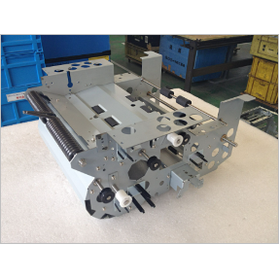
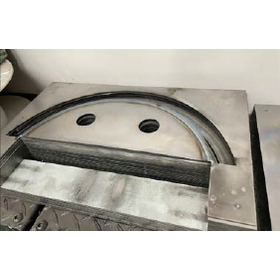
In the medical device industry, products that possess high airtightness and strength while maintaining high precision are in demand. Our precision sheet metal technology provides innovative solutions that meet these requirements. Utilizing advanced techniques in corner welding and R-bending, along with state-of-the-art equipment and a consistent production system, we flexibly respond to our customers' diverse needs. If you are facing challenges in manufacturing high-quality medical device components, please feel free to consult us. 【Features of Our Corner Welding Technology】 ■ Ensures high airtightness through material adhesion via arc welding ■ Minimizes distortion during welding by using dedicated jigs for products ■ Accommodates a variety of materials such as iron and stainless steel ■ Flexibly responds to a wide range of lot sizes from 1 to 100 pieces *For more details, please download the PDF or feel free to contact us.
Added to bookmarks
Bookmarks listBookmark has been removed
Bookmarks listYou can't add any more bookmarks
By registering as a member, you can increase the number of bookmarks you can save and organize them with labels.
Free membership registration
Our company solves the challenges of balancing mold manufacturing costs and processing accuracy in the manufacturing industry through integrated processing using custom molds, achieving high-quality and cost-effective sheet metal processing. With integrated processing technology utilizing custom molds, we realize sheet metal processing that balances high precision and low cost. Our flexible and consistent production system meets diverse industrial needs and addresses our customers' manufacturing challenges. We can also accommodate special shapes and processing, so please feel free to consult with us. [The Secrets of Custom Molds] - Simultaneous execution of punching and forming processes - Bending in the center and forming on both sides in a single step - Significant reduction in setup time and number of processes *For more details, please download the PDF or feel free to contact us.
Added to bookmarks
Bookmarks listBookmark has been removed
Bookmarks listYou can't add any more bookmarks
By registering as a member, you can increase the number of bookmarks you can save and organize them with labels.
Free membership registration
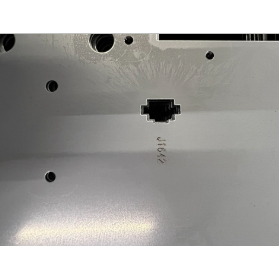
Our company provides printing services utilizing advanced laser technology, contributing to solving challenges such as cost reduction and quality maintenance in the manufacturing industry. Our laser printing service is an innovative solution that achieves a balance between cost reduction and quality assurance. If you are looking to enhance cost efficiency and improve productivity in the manufacturing of sheet metal products, please feel free to consult with us. 【Features of Laser Printing】 ■ Compatible materials: Supports metals such as iron and stainless steel ■ Lot size: Flexible support from 1 to 100 pieces ■ Precision: Printing is possible within general tolerance ranges ■ Cost efficiency: Achieves significant cost reduction compared to conventional methods ■ Equipment: Uses lasers mounted on turret punch presses to enable efficient production *For more details, please download the PDF or feel free to contact us.
Added to bookmarks
Bookmarks listBookmark has been removed
Bookmarks listYou can't add any more bookmarks
By registering as a member, you can increase the number of bookmarks you can save and organize them with labels.
Free membership registration
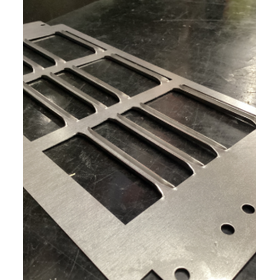
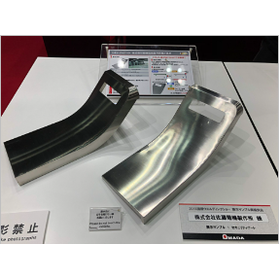
We would like to introduce a case of a bending technique that improves the processing accuracy of punching metal. In processing, achieving both high precision and quality is always a challenge. This is particularly true in stepped bending, where deterioration of flatness can become an issue. Our company provides solutions to this challenge. The feature of our bending processing technology is the use of dedicated molds for stepped bending. Through mold usage technology, advanced equipment, and a consistent production system, we efficiently provide high-quality products tailored to our customers' needs. **Advantages of Dedicated Stepped Bending Molds** - Processing is completed in one bend - High flatness is ensured - Stable quality is achieved - Improved production efficiency *For more details, please download the PDF or feel free to contact us.*
Added to bookmarks
Bookmarks listBookmark has been removed
Bookmarks listYou can't add any more bookmarks
By registering as a member, you can increase the number of bookmarks you can save and organize them with labels.
Free membership registration
This document is a handbook on the basics of sheet metal parts and enclosure design for product development and designers, as well as VA/VE cost reduction techniques. It includes "Basic Knowledge of Enclosures and Sheet Metal Processing," which introduces the types of knowledge necessary for designing sheet metal enclosures. Additionally, summaries are provided for each section, making it a user-friendly resource. We encourage you to read it. 【Contents (Excerpt)】 ■ Basic Knowledge of Enclosures and Sheet Metal Processing ■ Material Selection for Enclosures ■ Bending Processes ■ Welding and Joining ■ Painting and Surface Treatment of Enclosures *For more details, please download the PDF or feel free to contact us.
Added to bookmarks
Bookmarks listBookmark has been removed
Bookmarks listYou can't add any more bookmarks
By registering as a member, you can increase the number of bookmarks you can save and organize them with labels.
Free membership registration
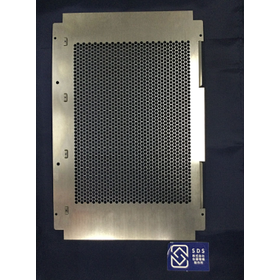
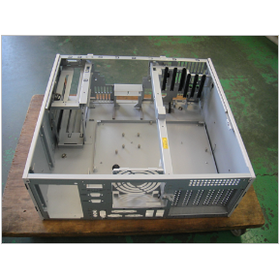
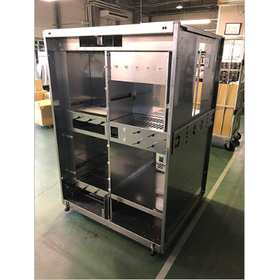
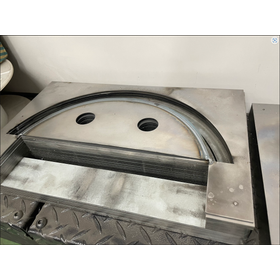
Our industrial computer chassis manufacturing service combines advanced equipment with a flexible production system to achieve both high quality and low cost. We can efficiently and quickly provide products tailored to our customers' needs. If you are having trouble with the manufacturing of industrial computer chassis, please feel free to consult us. We deliver high-quality products at competitive prices. 【Overview】 ■ Solutions to challenges in industrial computer chassis manufacturing ■ High-precision processing and quality control with advanced equipment ■ Flexible production system and efficient inventory management *For more details, please download the PDF or feel free to contact us.
Added to bookmarks
Bookmarks listBookmark has been removed
Bookmarks listYou can't add any more bookmarks
By registering as a member, you can increase the number of bookmarks you can save and organize them with labels.
Free membership registration
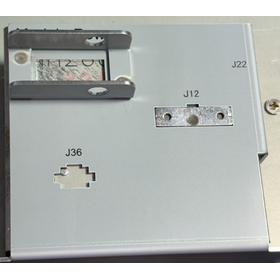
Sato Electric Manufacturing's production of movable platform fence components contributes to the improvement of safety at railway stations through high-precision sheet metal processing technology and an efficient production system. We provide consistent support from product development tailored to customer needs to mass production. If you have any issues with sheet metal processing related to railways, please feel free to consult us. 【Features】 ■ Manufacturing of movable platform fences that enhance safety at railway stations ■ High-precision, high-quality sheet metal processing technology ■ Optimizing delivery times and costs through an efficient production process ■ A consistent production system that meets diverse needs *For more details, please download the PDF or feel free to contact us.
Added to bookmarks
Bookmarks listBookmark has been removed
Bookmarks listYou can't add any more bookmarks
By registering as a member, you can increase the number of bookmarks you can save and organize them with labels.
Free membership registration
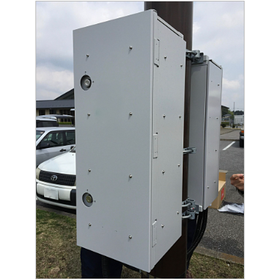
Sato Electric Manufacturing's disaster prevention wireless enclosures are equipped with high reliability and durability, capable of meeting diverse needs. With a consistent production system from design to manufacturing and high-quality product creation using advanced equipment, we contribute to enhancing the reliability of our customers' disaster prevention systems. For the creation of a safe and secure society, please consider our disaster prevention wireless enclosures. 【Features】 ■ Consistent provision from design to manufacturing of disaster prevention wireless enclosures ■ High-quality enclosure manufacturing that withstands harsh environments ■ Flexible response from small-batch production to mass production *For more details, please download the PDF or feel free to contact us.
Added to bookmarks
Bookmarks listBookmark has been removed
Bookmarks listYou can't add any more bookmarks
By registering as a member, you can increase the number of bookmarks you can save and organize them with labels.
Free membership registration
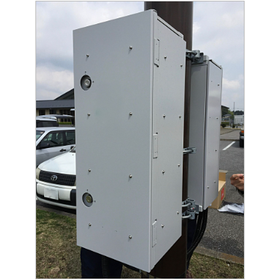
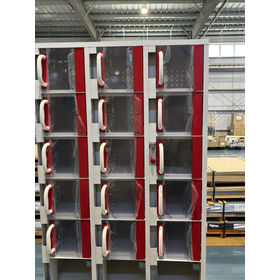
Sato Electric Manufacturing's storage enclosure production combines precision machining technology with a flexible production system, achieving both high quality and efficiency. Please pay attention to our technology, which contributes to the improvement of communication infrastructure reliability. For detailed information or inquiries about our products, please feel free to contact us. 【Features】 ■ Precision sheet metal technology supporting communication infrastructure ■ Enhanced reliability through high-precision machining ■ Production system that meets diverse needs ■ Optimal balance between cost and quality *For more details, please download the PDF or feel free to contact us.
Added to bookmarks
Bookmarks listBookmark has been removed
Bookmarks listYou can't add any more bookmarks
By registering as a member, you can increase the number of bookmarks you can save and organize them with labels.
Free membership registration
Introducing a high-quality character recognition device realized through precision processing of OCR enclosures. Our OCR enclosure manufacturing achieves high-quality and efficient product delivery through advanced equipment, high-level technical skills, and a consistent production system. Please feel free to contact us regarding the production of high-quality OCR enclosures that contribute to the performance improvement of character recognition devices. 【Features】 ■ Improved character recognition accuracy brought by advanced processing technology of OCR enclosures ■ High-quality OCR enclosures realized through precise bending processing technology ■ QCD improvement through consistent production from design to assembly ■ Capability to handle ultra-diverse small-lot production *For more details, please download the PDF or feel free to contact us.
Added to bookmarks
Bookmarks listBookmark has been removed
Bookmarks listYou can't add any more bookmarks
By registering as a member, you can increase the number of bookmarks you can save and organize them with labels.
Free membership registration
We would like to introduce the precision machining of semiconductor inspection equipment enclosures that our company conducts. In the manufacturing of semiconductor inspection equipment enclosures, we have achieved improvements in quality and efficiency through the introduction of automation, IT integration, innovative structural design, and one-stop production. Our technological capabilities and production system flexibly respond to the advanced demands of our customers and contribute to the development of the semiconductor industry. If you have any needs for precision sheet metal processing, please feel free to contact us. 【Features】 ■ Problem-solving through manufacturing technology for semiconductor inspection equipment enclosures ■ High-quality precision sheet metal processing brought about by automation and IT integration ■ Riveted structures that balance cost reduction and flexibility ■ Efficiency and quality assurance through one-stop production *For more details, please download the PDF or feel free to contact us.
Added to bookmarks
Bookmarks listBookmark has been removed
Bookmarks listYou can't add any more bookmarks
By registering as a member, you can increase the number of bookmarks you can save and organize them with labels.
Free membership registration
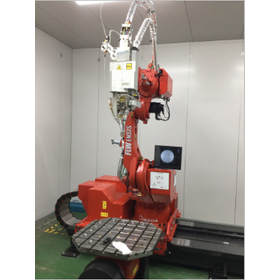
We would like to introduce our precision machining and welding technology for the exterior components of automatic ticket gates. Our manufacturing technology for automatic ticket gate exterior components is characterized by high precision, high efficiency, and a flexible production system. If you are looking for products that contribute to the safety and efficiency of the railway industry, please feel free to contact us. We also welcome inquiries about product samples and detailed specifications. [Overview] - Manufacturing of exterior components for automatic ticket gates that support the safety and convenience of railway users - High precision and efficiency brought by fiber laser robot welding - A flexible production system capable of accommodating small-batch production of various types *For more details, please download the PDF or feel free to contact us.
Added to bookmarks
Bookmarks listBookmark has been removed
Bookmarks listYou can't add any more bookmarks
By registering as a member, you can increase the number of bookmarks you can save and organize them with labels.
Free membership registration
We would like to introduce a case study of fiber laser processing for circular products that we conducted. With our fiber laser welding machine, high-speed and high-quality processing, which was previously difficult, is now possible for circular products. The welding time is overwhelmingly reduced compared to manual work. As a result, efficiency increases for mass-produced items, and cost reductions can be expected. 【Case Overview】 ■ Material: Stainless Steel ■ Lot: 1 to 100 pieces ■ Precision: Within general tolerance range *For more details, please download the PDF or feel free to contact us.
Added to bookmarks
Bookmarks listBookmark has been removed
Bookmarks listYou can't add any more bookmarks
By registering as a member, you can increase the number of bookmarks you can save and organize them with labels.
Free membership registration
Introducing the perspectives required for the design and sheet metal processing of EV charger enclosures. With the advancement of EV society, the design and manufacturing of EV charger enclosures require a multifaceted perspective and advanced sheet metal processing technology. To achieve a balanced realization of environmental considerations, safety, and mass production, comprehensive consideration from the design stage and collaboration with the manufacturing site are essential. As a foundation supporting the future mobility infrastructure, the evolution of sheet metal processing will continue to attract attention. [Overview] ■ The importance of enclosure design supporting the evolving EV society ■ Weather resistance and design adaptation to installation environments ■ Balancing safety and user considerations ■ Innovations for mass production compatibility and cost optimization *For more details, please download the PDF or feel free to contact us.
Added to bookmarks
Bookmarks listBookmark has been removed
Bookmarks listYou can't add any more bookmarks
By registering as a member, you can increase the number of bookmarks you can save and organize them with labels.
Free membership registration
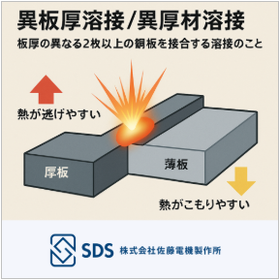
We would like to introduce examples of processing in our dissimilar thickness welding/dissimilar material welding. This technique is used in situations where materials of different thicknesses need to be integrated. By using thick plates in areas where strength is required and thin plates in areas where it is not, this technology is employed to make structures lightweight, cost-effective, and rational. At Sato Electric Manufacturing Co., Ltd., we utilize advanced fiber laser welding machines and a variety of equipment to cater to a wide range of fields, including semiconductor manufacturing equipment and medical devices. By overcoming the thermal imbalance caused by differences in plate thickness, we achieve rational and highly reliable product manufacturing. [Case Overview] ■ Materials: Iron, Aluminum, Stainless Steel ■ Lot Size: 1 to 100 pieces ■ Precision: Within general tolerance range *For more details, please download the PDF or feel free to contact us.
Added to bookmarks
Bookmarks listBookmark has been removed
Bookmarks listYou can't add any more bookmarks
By registering as a member, you can increase the number of bookmarks you can save and organize them with labels.
Free membership registration
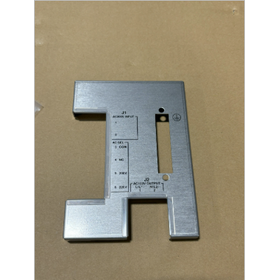
We would like to introduce examples of "silk screen printing" processing at our company. "Silk screen printing" is a method of printing designs, such as text, onto various products by pressing ink through a screen (plate). The ink adheres well, resulting in very clear prints. It is possible to print on various materials, and it is suitable for single-color or two-color printing. At our company, we offer silk screen printing, laser printing, and laser marking for printing. 【Case Overview】 ■ Material: Iron, Aluminum, Stainless Steel ■ Lot: 1 to 100 pieces ■ Precision: Within general tolerance range *For more details, please download the PDF or feel free to contact us.
Added to bookmarks
Bookmarks listBookmark has been removed
Bookmarks listYou can't add any more bookmarks
By registering as a member, you can increase the number of bookmarks you can save and organize them with labels.
Free membership registration
We would like to introduce examples of processing our base frames. We produce 90 lots at a time. By adding extra corners to attach vertically at the bend, we can achieve stable bending processing. Since these are used in medical devices, they must be accurately within dimensional tolerances. In this way, we are constantly devising ways to ensure stable production. 【Case Overview】 ■Material: QS-1 (SECC) t1.6mm ■Dimensions: 260×230 ■Processing Method: Bending *For more details, please download the PDF or feel free to contact us.
Added to bookmarks
Bookmarks listBookmark has been removed
Bookmarks listYou can't add any more bookmarks
By registering as a member, you can increase the number of bookmarks you can save and organize them with labels.
Free membership registration
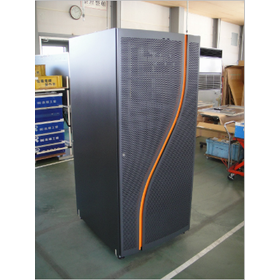
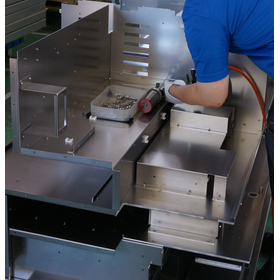
We would like to introduce a case study of our system control panel processing. This enclosure is used for information and communication equipment. We produce about 20 units each month, and it takes approximately one hour per unit for riveting, screw tightening, and assembly. The shape is not complicated, but since the outer cover is painted, we handle it carefully during assembly. Our company provides integrated production from blank processing to component assembly. 【Case Overview】 ■ Material: SECC ■ Plate Thickness: t0.8 to 1.6 ■ Size: 490×480×460mm ■ Processes: Riveting, Welding, Assembly, Painting *For more details, please download the PDF or feel free to contact us.
Added to bookmarks
Bookmarks listBookmark has been removed
Bookmarks listYou can't add any more bookmarks
By registering as a member, you can increase the number of bookmarks you can save and organize them with labels.
Free membership registration
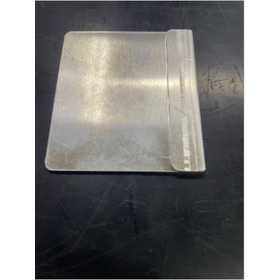
We would like to introduce a case of aluminum hemming bending conducted by our company. To bend the product without cracking, we use a special 1R mold (Yagen). The 1R mold mentioned here is a mold with a rounded end of 1 cm radius, as opposed to the typical V-shaped mold used during bending. By using the 1R special mold, the contact area with the material increases compared to the V-shaped mold, allowing for hemming bending without cracking. 【Case Overview】 ■ Material: Aluminum ■ Lot: 1 to 100 pieces ■ Precision: Within general tolerance range *For more details, please download the PDF or feel free to contact us.
Added to bookmarks
Bookmarks listBookmark has been removed
Bookmarks listYou can't add any more bookmarks
By registering as a member, you can increase the number of bookmarks you can save and organize them with labels.
Free membership registration
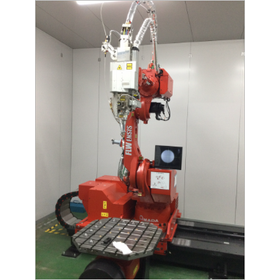
We would like to introduce examples of processing using our robotic fiber laser welding machine. The FLW-ENSISe, equipped with a new in-house developed oscillator, enables high-speed and high-quality welding. Thanks to ENSIS technology, it can flexibly handle fine welding as well as products with gaps, enhancing its adaptability. Advanced features such as AI-TAS and automatic nozzle gap adjustment improve operability and work efficiency, making it possible to address social challenges. 【Case Overview】 ■ Materials: Iron, Aluminum, Stainless Steel ■ Lot Size: 1 to 100 pieces ■ Precision: Within general tolerance range *For more details, please download the PDF or feel free to contact us.
Added to bookmarks
Bookmarks listBookmark has been removed
Bookmarks listYou can't add any more bookmarks
By registering as a member, you can increase the number of bookmarks you can save and organize them with labels.
Free membership registration
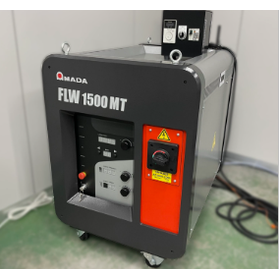
We would like to introduce examples of processing using our handheld fiber laser welding machine. Unlike robotic FLW, it allows for detailed welding and can reach areas that are inaccessible to robotic arms. Additionally, being portable means it can be used in various locations, enabling more stable welding. In addition to the expansion of the processing area due to the high output of the oscillator, the combination with advanced wobbling functionality has achieved wide-range welding processing. 【Case Overview】 ■ Materials handled by our company: SPCC (steel), SUS304, 430 (stainless steel), QS-1 (SECC), A5052 (aluminum) ■ Dimensions: Width 372 × Depth 690 × Height 659 mm ■ Output: 1500W ■ Year of introduction: 2022 *For more details, please download the PDF or feel free to contact us.
Added to bookmarks
Bookmarks listBookmark has been removed
Bookmarks listYou can't add any more bookmarks
By registering as a member, you can increase the number of bookmarks you can save and organize them with labels.
Free membership registration
We would like to introduce a case of manufacturing a metal rose at our company. The ordering company typically uses drawings provided by the customer for production, but this time we designed it from scratch and went through multiple prototypes. Additionally, we reduced burrs through laser cutting, adjusting the petals and stem while hammering, and performed bending processes. For welding, we used handheld laser processing to ensure that the petals and stem bloom beautifully. 【Case Overview】 ■ Material: Aluminum ■ Lot: 1 piece (single item) ■ Precision: Within general tolerance range *For more details, please download the PDF or feel free to contact us.
Added to bookmarks
Bookmarks listBookmark has been removed
Bookmarks listYou can't add any more bookmarks
By registering as a member, you can increase the number of bookmarks you can save and organize them with labels.
Free membership registration
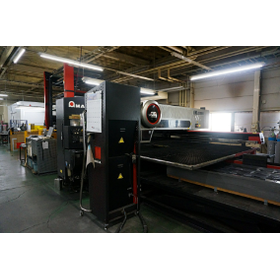
We would like to introduce examples of processing using our laser punch composite processing machine. The ZR turret/full flat table enables high-speed processing without scratches on the back side. In other words, it allows for high-speed processing without damaging the backside of the product. Additionally, the ID die ensures stable high-quality processing. It also serves to prevent mistakes in die setup. 【Case Overview】 ■ ZR turret/full flat table ■ New dust suction device ■ ID die ■ Truck dead zone-less die free location ■ MPT tap unit ■ Energy-saving mode *For more details, please download the PDF or feel free to contact us.
Added to bookmarks
Bookmarks listBookmark has been removed
Bookmarks listYou can't add any more bookmarks
By registering as a member, you can increase the number of bookmarks you can save and organize them with labels.
Free membership registration
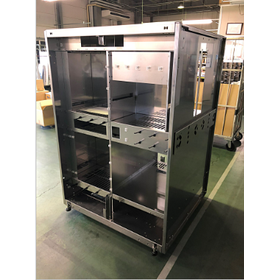
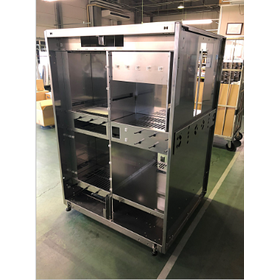
We would like to introduce a case study of the processing of our semiconductor inspection equipment enclosures. By reducing burr removal work through laser processing and automating operations such as bar rolling, tapping, and molding, we have shortened work time and improved quality. Furthermore, the adoption of a riveted structure that does not use welding has resulted in lower product distortion and cost reduction. The riveted structure takes up less space compared to welding and is easy to modify, allowing for the production of only the necessary quantities at the necessary times, even for large products. 【Case Overview】 ■ Material: SUS430-KD ■ Dimensions: 1070x1000x1600 ■ Processing Method: Riveting and Assembly *For more details, please download the PDF or feel free to contact us.
Added to bookmarks
Bookmarks listBookmark has been removed
Bookmarks listYou can't add any more bookmarks
By registering as a member, you can increase the number of bookmarks you can save and organize them with labels.
Free membership registration
We would like to introduce some of our processing examples. We have a wealth of examples, including aluminum hemming bending, silk printing, and system control panels. Please feel free to contact us when you need our services. 【Examples (partial)】 ■ Semiconductor inspection equipment casing ■ Laser punch composite processing machine ■ Sheet metal rose (all original from design) ■ Handheld fiber laser welding machine FLW1500MT ■ Robot fiber welding machine FLW-6000ENSISe *For more details, please download the PDF or feel free to contact us.
Added to bookmarks
Bookmarks listBookmark has been removed
Bookmarks listYou can't add any more bookmarks
By registering as a member, you can increase the number of bookmarks you can save and organize them with labels.
Free membership registration
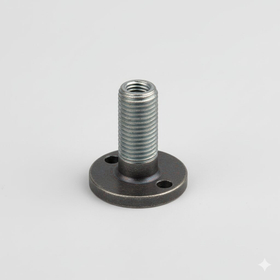
We would like to introduce a case study that achieved cost reduction by changing from welding studs to the riveting method. Previously, we used welding studs (stud welding), but the welding process required specialized equipment and skilled workers, which posed challenges in terms of production lead time and costs. We carefully examined the strength and specifications required for the product. As a result, we found that switching to riveting would not cause any issues, and it would lead to cost reduction through reduced man-hours and a decrease in defects occurring during welding, so we decided to make the change. [Case Overview] ■Before - The welding process required specialized equipment and skilled workers, which posed challenges in terms of production lead time and costs. ■After - Switching to riveting posed no issues and led to cost reduction through reduced man-hours and a decrease in defects occurring during welding. *For more details, please download the PDF or feel free to contact us.
Added to bookmarks
Bookmarks listBookmark has been removed
Bookmarks listYou can't add any more bookmarks
By registering as a member, you can increase the number of bookmarks you can save and organize them with labels.
Free membership registration
We would like to introduce a case where the transition from semi-automatic welding to riveting simultaneously improved quality and cost. In products assembled using semi-automatic welding, dimensional stability was affected by thermal influences during assembly and welding, leading to variations in quality. We proposed a change to a method of fastening with rivets, completely eliminating the welding process. By strictly managing the positional accuracy of the holes in each component required for riveting, we were able to stabilize dimensional accuracy. 【Case Overview】 ■Before - Dimensional stability was affected by thermal influences during assembly and welding, resulting in variations in quality. ■After - Dimensional accuracy of the product stabilized, leading to improved quality. - The reduction of the welding process also contributed to cost reduction through decreased man-hours. *For more details, please download the PDF or feel free to contact us.
Added to bookmarks
Bookmarks listBookmark has been removed
Bookmarks listYou can't add any more bookmarks
By registering as a member, you can increase the number of bookmarks you can save and organize them with labels.
Free membership registration
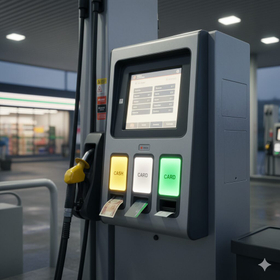
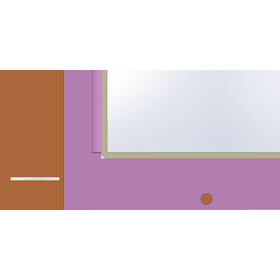
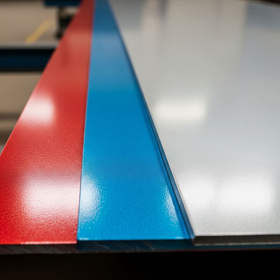
We would like to introduce a VA/VE case study for outdoor cabinets. Regarding the outdoor cabinets used for gasoline station payment machines, there was a need for cost reduction, shortened lead times, and conductivity due to the internal equipment emitting radio waves. To shorten the painting process after sheet metal processing, we proposed the use of pre-painted steel sheets called "View Coat." This eliminated the need for the painting process, resulting in a potential cost reduction of up to 30% and a shortened lead time. 【Case Overview】 ■Before - There was a need for cost reduction, shortened lead times, and conductivity for outdoor cabinets. ■After - The use of View Coat eliminated the previously essential painting process. - Achieved a cost reduction of up to 30% and shortened lead times. *For more details, please download the PDF or feel free to contact us.
Added to bookmarks
Bookmarks listBookmark has been removed
Bookmarks listYou can't add any more bookmarks
By registering as a member, you can increase the number of bookmarks you can save and organize them with labels.
Free membership registration
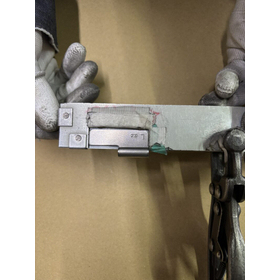
We would like to introduce a VA/VE case study of a positioning jig for sheet metal parts. In areas where the sheet metal parts needed to be perpendicular to the counterpart parts, they would slip underneath, leading to misalignment of the welding position and resulting in defects. Based on improvement suggestions from on-site workers, we created a jig with chamfered corners that clamps onto the counterpart parts, which helped prevent scratches during jig use and improved positioning accuracy. 【Case Overview】 ■Before - In areas where the sheet metal parts needed to be perpendicular to the counterpart parts, they would slip underneath, leading to misalignment of the welding position and resulting in defects. ■After - A jig with chamfered corners that clamps onto the counterpart parts was created. - This helped prevent scratches during jig use and improved positioning accuracy. *For more details, please download the PDF or feel free to contact us.
Added to bookmarks
Bookmarks listBookmark has been removed
Bookmarks listYou can't add any more bookmarks
By registering as a member, you can increase the number of bookmarks you can save and organize them with labels.
Free membership registration
We would like to introduce a VA/VE case study for a hinge positioning jig. Typically, the spot welding position of the hinge tends to shift, requiring about 20 minutes for correction work. Based on improvement suggestions from on-site workers, we changed the structure of the jig to be more precise and made the side claws longer, ensuring that the jig itself does not shift. As a result, we have redesigned the jig to eliminate the need for corrections. [Case Overview] ■Before - The spot welding position of the hinge tended to shift, taking about 20 minutes for correction work. ■After - Changed the structure to be more precise and made the side claws longer, ensuring that the jig itself does not shift. *For more details, please download the PDF or feel free to contact us.
Added to bookmarks
Bookmarks listBookmark has been removed
Bookmarks listYou can't add any more bookmarks
By registering as a member, you can increase the number of bookmarks you can save and organize them with labels.
Free membership registration
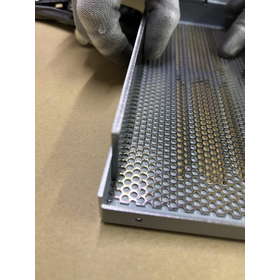
We would like to introduce a case where changing the R part of sheet metal to a corner part has achieved improved adhesion and cost reduction. In sheet metal processing, when the corner attachment part is both R and corner, the labor required for filling holes has been a cause of increased costs. By making design changes, we not only reduced processing labor but also achieved higher adhesion during production. 【Case Overview】 ■Before - When the corner attachment part is both R and corner, the labor required for filling holes has been a cause of increased costs. ■After - The design was changed so that the R part became a corner part. - In addition to reducing processing labor, we also achieved higher adhesion during production. *For more details, please download the PDF or feel free to contact us.
Added to bookmarks
Bookmarks listBookmark has been removed
Bookmarks listYou can't add any more bookmarks
By registering as a member, you can increase the number of bookmarks you can save and organize them with labels.
Free membership registration
Here is an example of the production of a layered-type fixture. Welding fixtures are necessary to securely fix the base material in a designated position and achieve accurate and reliable welding, but outsourcing made the costs high. By producing layered-type welding fixtures in-house, we achieved quality stability and shortened delivery times without incurring additional costs. 【Case Summary】 ■Before - The cost of welding fixtures was high due to outsourcing. ■After - By producing in-house, we achieved quality stability and shortened delivery times without incurring additional costs. *For more details, please download the PDF or feel free to contact us.
Added to bookmarks
Bookmarks listBookmark has been removed
Bookmarks listYou can't add any more bookmarks
By registering as a member, you can increase the number of bookmarks you can save and organize them with labels.
Free membership registration
We would like to introduce a case where clarifying the processing areas through laser marking has reduced defects. In the joining of parts and part processing, mistakes during processing and joining can inevitably occur. Our company eliminates errors and forgotten processes by marking the processing and joining areas with a laser. As a result, we have achieved a good product rate of 99.4%. [Case Overview] - By marking the processing and joining areas with a laser, we eliminate errors and forgotten processes. - We have achieved a good product rate of 99.4%. *For more details, please download the PDF or feel free to contact us.
Added to bookmarks
Bookmarks listBookmark has been removed
Bookmarks listYou can't add any more bookmarks
By registering as a member, you can increase the number of bookmarks you can save and organize them with labels.
Free membership registration
We would like to introduce a case where cost reduction was achieved by printing silk screen using a laser marker. Traditionally, silk screen printing was outsourced, which resulted in high costs. Additionally, the quality of the silk screen printing itself was not stable, and since plates were used, the transfer positions were limited. Therefore, we introduced machinery in-house and performed printing with a laser marker. By using a laser marker, we improved quality stability and eliminated the need for the plates that were necessary for silk screen printing. 【Case Overview】 ■Before - Silk screen printing was outsourced, leading to high costs. - The quality of the silk screen printing itself was not stable, and since plates were used, the transfer positions were limited. ■After - By in-sourcing the marker work in-house, we achieved cost reduction. - Quality stability improved, and the need for plates was eliminated. *For more details, please download the PDF or feel free to contact us.
Added to bookmarks
Bookmarks listBookmark has been removed
Bookmarks listYou can't add any more bookmarks
By registering as a member, you can increase the number of bookmarks you can save and organize them with labels.
Free membership registration
We would like to introduce a case where the chamfering process was automated with machinery, achieving stabilization of quality. In sheet metal processing, there are often times when chamfering of corners and edges is necessary. However, performing chamfering in the usual way can lead to increased time and costs due to manual processing. Therefore, our company proposed to carry out chamfering with machinery and implemented automation. We used a mold that creates a tapered cutting surface, and after processing, it was completed with laser machining. 【Case Overview】 ■Before - Performing chamfering in the usual way incurs time and costs due to manual processing. ■After - We proposed to carry out chamfering with machinery and implemented automation. - There were no instances of forgetting to chamfer, which also contributed to the stabilization of quality. *For more details, please download the PDF or feel free to contact us.
Added to bookmarks
Bookmarks listBookmark has been removed
Bookmarks listYou can't add any more bookmarks
By registering as a member, you can increase the number of bookmarks you can save and organize them with labels.
Free membership registration
We would like to introduce a case where we eliminated the need for deburring processes through our unique laser processing condition settings. We were processing stainless steel using laser processing, but the customer was handling deburring, which was taking both time and cost, leading them to consult us. As a result, we were able to configure our laser processing equipment and conditions to prevent burrs from occurring after processing. This achieved a reduction in both processing time and costs. 【Case Overview】 ■Before - The customer was handling deburring, which was taking both time and cost. ■After - Through our unique settings and processing conditions for the laser processing equipment, we were able to prevent burrs from occurring after processing. - Achieved reduction in processing time and costs. *For more details, please download the PDF or feel free to contact us.
Added to bookmarks
Bookmarks listBookmark has been removed
Bookmarks listYou can't add any more bookmarks
By registering as a member, you can increase the number of bookmarks you can save and organize them with labels.
Free membership registration
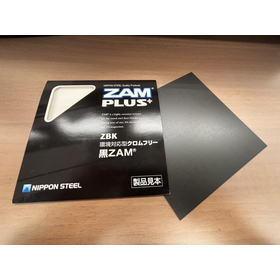
We would like to introduce a case where we adopted galvanized steel sheets (black ZAM) and shortened the painting process. In a request for the production of battery-related products, painting was required in the final process, but the client wanted to reduce costs as much as possible and consulted us from the design stage. Thanks to our proposal to switch to black ZAM material, painting became unnecessary, achieving cost reduction. Additionally, we were able to shorten the process, satisfying the customer. 【Case Overview】 ■Before - Painting was necessary in the final process, but cost reduction was desired. ■After - Painting became unnecessary, achieving cost reduction. - The process was also shortened. *For more details, please download the PDF or feel free to contact us.
Added to bookmarks
Bookmarks listBookmark has been removed
Bookmarks listYou can't add any more bookmarks
By registering as a member, you can increase the number of bookmarks you can save and organize them with labels.
Free membership registration
We would like to introduce a case where color-coated steel sheets were adopted, and the painting process was shortened. The painting process can be costly, so we received inquiries about reviewing it from the design stage to find ways to reduce costs. By eliminating the painting process, we achieved cost reduction and were able to provide stable delivery times and quality. 【Case Overview】 ■Before - In the production of covers for industrial computers, painting was necessary in the finishing process. ■After - By eliminating the painting process, we achieved cost reduction and were able to provide stable delivery times and quality. *For more details, please download the PDF or feel free to contact us.
Added to bookmarks
Bookmarks listBookmark has been removed
Bookmarks listYou can't add any more bookmarks
By registering as a member, you can increase the number of bookmarks you can save and organize them with labels.
Free membership registration
We would like to introduce a case where cost reduction was achieved by converting a welded structure to riveted joints. We received a request to manufacture a housing used in semiconductor manufacturing equipment, which was entirely welded together, resulting in high costs and long lead times. Therefore, we were consulted on whether there was a way to reduce costs and shorten the lead time from the design stage. We proposed a design that changed most of the welded joints to rivets. This not only led to a reduction in manufacturing costs and shortened lead times but also stabilized the quality. [Case Summary] ■Before - Consultation on whether there was a way to reduce costs and shorten lead times from the design stage. ■After - Proposed a design that changed most of the welded joints to rivets. - Achieved a reduction in manufacturing costs and shortened lead times, while also stabilizing quality. *For more details, please download the PDF or feel free to contact us.
Added to bookmarks
Bookmarks listBookmark has been removed
Bookmarks listYou can't add any more bookmarks
By registering as a member, you can increase the number of bookmarks you can save and organize them with labels.
Free membership registration
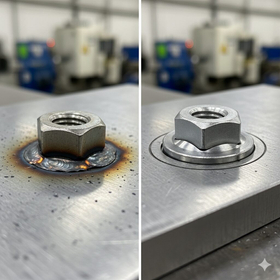
We would like to introduce a case where cost reduction was achieved by switching from welded nuts to rivets. A designer consulted us, saying, "The drawings indicate welded nuts, but is there a more efficient method?" After a detailed analysis of the strength and functionality required for the product, we found that changing from welded nuts to rivets would not pose any quality issues. Therefore, we proposed a change to the riveting method, which would reduce the welding process itself. [Case Overview] ■ Before - It was believed that there was room for improvement in the man-hours and costs associated with the welding process using the current welded nut method. ■ After - The elimination of the welding process led to a reduction in man-hours and achieved cost reduction. - Since the consultation was from the design stage, a smooth specification change was made possible. *For more details, please download the PDF or feel free to contact us.
Added to bookmarks
Bookmarks listBookmark has been removed
Bookmarks listYou can't add any more bookmarks
By registering as a member, you can increase the number of bookmarks you can save and organize them with labels.
Free membership registration
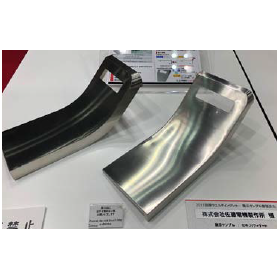
To achieve R bending while keeping costs down, we will introduce a case where the need for dedicated molds for R bending was eliminated through multiple R bends. In response to requests for R bending processing, it was necessary to have dedicated molds tailored to specific bending radii, which posed a challenge due to the high production costs. Therefore, by performing multiple bending processes without using dedicated molds, we were able to accommodate R bending. Although traces of the R bending remain, we reduced mold production costs and shortened processing time. We provided cost-effective R bending processing that met our customers' needs. With the elimination of the need for molds, investment in processing equipment can also be reduced. This allows for the use of general-purpose equipment, enabling the establishment of a flexible production system. [Challenges] - Dedicated molds tailored to specific bending radii are required for R bending processing requests. - Due to high production costs, we want to achieve R bending while keeping costs down. *For more details, please download the PDF or feel free to contact us.
Added to bookmarks
Bookmarks listBookmark has been removed
Bookmarks listYou can't add any more bookmarks
By registering as a member, you can increase the number of bookmarks you can save and organize them with labels.
Free membership registration
We would like to introduce a case where the use of laminated jigs improved prototype costs and lead times. Previously, we outsourced welding jigs used during welding to other companies, which was a factor in high costs. While jigs are essential for accurate and reliable welding, the outsourcing costs remained a continuous issue. By changing the process to manufacture laminated welding jigs in-house, we achieved stabilization of quality and reduction of lead times without incurring additional costs. We succeeded in improving efficiency and reducing costs through in-house production, thereby enhancing productivity. Our company is working on speeding up processing and reducing costs with laminated welding jigs, eliminating the high costs and long lead times associated with outsourcing traditional jig manufacturing, and enabling immediate response through in-house production. [Challenges] ■ Outsourcing welding jigs used during welding to other companies resulted in high costs. ■ While jigs are essential for accurate and reliable welding, outsourcing costs remained a continuous issue. *For more details, please download the PDF or feel free to contact us.
Added to bookmarks
Bookmarks listBookmark has been removed
Bookmarks listYou can't add any more bookmarks
By registering as a member, you can increase the number of bookmarks you can save and organize them with labels.
Free membership registration
We would like to introduce a case where the use of resin molds for prototype production significantly reduced costs and time during the early stages of development. In the case of single-item production and small-lot processing, there are many instances where mold production is necessary, resulting in a combination of mold costs and processing fees that lead to very high costs. In particular, the costs and time associated with molds during the prototype stage have been a significant burden, and improvements have been sought. Therefore, we propose the use of resin molds for prototype production. This approach allows us to reduce mold costs to less than half compared to metal molds. At the same time, we achieved shorter delivery times, enabling flexible responses for prototypes. While there are approaches such as layered molds for prototype molds, we recommend resin molds that can achieve shapes as close as possible to the original mold. [Challenges] ■ The combination of mold costs and processing fees results in very high costs. ■ In particular, the costs and time associated with molds during the prototype stage have been a significant burden, and improvements have been sought. *For more details, please download the PDF or feel free to contact us.
Added to bookmarks
Bookmarks listBookmark has been removed
Bookmarks listYou can't add any more bookmarks
By registering as a member, you can increase the number of bookmarks you can save and organize them with labels.
Free membership registration
We would like to introduce a case where we achieved cost-effective domestic production transfer even without drawings. When our customer considered transferring production from overseas to Japan, they faced challenges related to drawing management and information, such as discrepancies in the thickness and material specifications compared to Japanese standards, or the inability to locate the drawings themselves. Even in cases of differences in drawing specifications or when information is unclear, we created the necessary drawings to address the issues. While there may be a temporary increase in costs during the transition from overseas, we managed to suppress cost increases through appropriate design changes and procurement reviews, thereby supporting a smooth domestic transfer. Additionally, by simultaneously reviewing materials and processing methods, we provided proposals to minimize cost increases. [Challenges] - When considering the transfer of production from overseas to Japan, the thickness and material specifications of the drawings differ from those in Japan. - The drawings themselves cannot be found. *For more details, please download the PDF or feel free to contact us.
Added to bookmarks
Bookmarks listBookmark has been removed
Bookmarks listYou can't add any more bookmarks
By registering as a member, you can increase the number of bookmarks you can save and organize them with labels.
Free membership registration
We received a request to reduce the cost of rack attachments, and we would like to introduce a case where we proposed a paint-free solution to a customer, as manual powder coating on SPCC and SECC accounted for a large portion of their costs. The challenge was that the long and narrow parts were difficult to automate, leading to rising labor costs due to manual work. To address this, we changed the materials from SPCC and SECC to paint-free materials such as 430KD and 304KD, thereby reducing both the painting process and labor costs. This resulted in significant cost reductions and shortened lead times. [Challenges] - There was a request to reduce the cost of rack attachments, with manual powder coating (melamine) on SPCC and SECC accounting for a large portion of the costs. - The long and narrow parts were difficult to automate, leading to rising labor costs due to manual work. *For more details, please download the PDF or feel free to contact us.*
Added to bookmarks
Bookmarks listBookmark has been removed
Bookmarks listYou can't add any more bookmarks
By registering as a member, you can increase the number of bookmarks you can save and organize them with labels.
Free membership registration