- Publication year : 2026
1~7 item / All 7 items
Displayed results

Added to bookmarks
Bookmarks listBookmark has been removed
Bookmarks listYou can't add any more bookmarks
By registering as a member, you can increase the number of bookmarks you can save and organize them with labels.
Free membership registration
Contact this company
Inquiry Form1~7 item / All 7 items
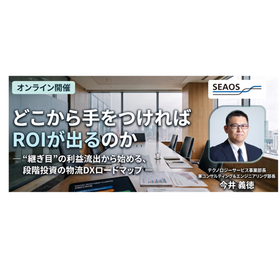
Even if the necessity of logistics DX is understood, a complete overhaul involves significant investment, time, and risk, and individual improvements tend to yield localized results. Many companies are unable to decide "where to start" between these two options. What is often overlooked are the transcription, verification, excess inventory, and opportunity losses that occur at the "joints" between departments and systems, such as order management, warehousing, and transportation. By starting with the major joints where profit leakage occurs and linking the recovered effects to the next investment, reform can progress without waiting for a complete overhaul. In this seminar, we will discuss the potential of data integration using AI, establish priorities for themes to tackle, and outline a roadmap for gradually recovering ROI. This will provide practical insights for those looking to organize the rationale for investment decisions in preparation for next year's plans and internal approvals. 【Recommended for】 - Those struggling with how to advance logistics DX between complete overhaul and minor improvements. - Those wanting to review data fragmentation and manual processes in order management, warehousing, and transportation. - Those wanting to create a prioritized and phased plan that can explain ROI. - Those looking to organize materials for investment decisions in preparation for next year's plans and approvals. 【Speaker】 Yoshinori Imai Director of Technology Services Division C.O.S. Corporation
Added to bookmarks
Bookmarks listBookmark has been removed
Bookmarks listYou can't add any more bookmarks
By registering as a member, you can increase the number of bookmarks you can save and organize them with labels.
Free membership registration
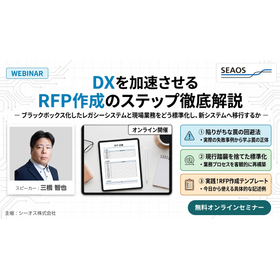
[Archive Distribution] How to Standardize Black Box Legacy Systems and Field Operations and Transition to a New System Legacy systems that have become black boxes after many years since their introduction. Amid urgent calls for renewal due to the "2025 Cliff" and the "Logistics 2024 Problem," many responsible individuals feel pressure with concerns like "I don't know how to write an RFP," "I'm worried about missing requirements," and "I can't afford to fail." In this seminar, we will thoroughly explain the "steps to create a successful RFP" to lead logistics DX to success. We will specifically discuss the standardization of operations that abandon current practices and data integration strategies. Additionally, we will introduce common pitfalls through actual failure cases. [Recommended for] - Logistics planners, IT system personnel, and DX promotion staff from shipper companies and logistics companies. - Those who are tasked with renewing black box legacy systems and feel pressure, or those who are anxious about "missing requirements" and "vendor selection." - Recommended for those seeking practical insights from writing a correct RFP to standardizing current operations, internal adjustments, and ROI calculation tips. [Speaker] Technology Services Division SI Department Manager Tomoya Mitsuhashi
Added to bookmarks
Bookmarks listBookmark has been removed
Bookmarks listYou can't add any more bookmarks
By registering as a member, you can increase the number of bookmarks you can save and organize them with labels.
Free membership registration
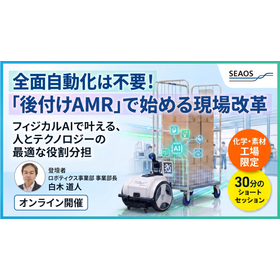
- "Transforming the Workplace Environment into a 'Factory Where Diverse Talent Shines'" In chemical and materials factories, the challenges of recruiting young talent and the aging of veteran workers are becoming more pronounced. Are you struggling with issues like "skilled workers being deprived of time due to transportation" and "the heavy labor of daily material transport making it difficult to employ seniors and women"? While it's easy to focus on the ultra-heavy items transported by heavy machinery within the factory, the daily "manual pushing and pulling of medium to light materials" is actually a hidden factor causing physical fatigue among workers and stagnation in core operations. In this session, we will explain a realistic solution approach that removes the harsh burdens on the site through "appropriate role distribution" among human hands, heavy machinery, and technology, rather than pursuing impractical full automation. Would you like to gain insights in this session on how to transform into a "human-friendly factory" where people are liberated from harsh tasks and can work safely and effectively for a long time? 【Recommended for those who:】 - Are concerned that skilled workers cannot focus on core tasks - Want to reduce the physical burden caused by manual pushing and pulling of medium to light materials - Aim to create an environment where diverse talent, including seniors and women, can work safely for a long time - Are considering how to improve the site with minimal costs while leveraging existing assets.
Added to bookmarks
Bookmarks listBookmark has been removed
Bookmarks listYou can't add any more bookmarks
By registering as a member, you can increase the number of bookmarks you can save and organize them with labels.
Free membership registration
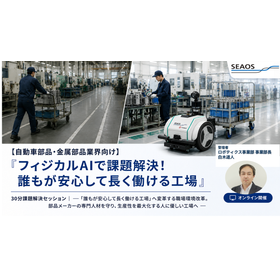
Transforming the workplace environment into a "factory where everyone can work safely and for a long time." Protecting specialized personnel in parts manufacturing and creating a people-friendly factory that maximizes productivity. In the automotive and metal parts factories, where raw material and labor costs are soaring and passing on prices is difficult, there is a demand for transformation that continues to generate profits with the minimum number of people. However, on the shop floor, the time of specialized personnel, who should be creating added value through setup, processing, and inspection, is being cut down by non-productive tasks such as transporting materials and moving between processes, leading to the challenge of not increasing the overall "productivity per hour" of the factory. Furthermore, the physical strain associated with moving is also a cause of fatigue on the shop floor and hinders the utilization of diverse personnel. In this session, we will explain a practical approach to eliminate "loss due to movement" without making large-scale capital investments and maximize the value of the specialized personnel currently present. [Recommended for those who:] - Have skilled operators leaving their stations to transport parts carts. - Want to reduce back pain and physical strain from pushing heavy container carts. - Want to create an environment where everyone on the shop floor, including seniors and women, can share tasks. - Want to avoid large-scale investments and improve by utilizing existing assets.
Added to bookmarks
Bookmarks listBookmark has been removed
Bookmarks listYou can't add any more bookmarks
By registering as a member, you can increase the number of bookmarks you can save and organize them with labels.
Free membership registration
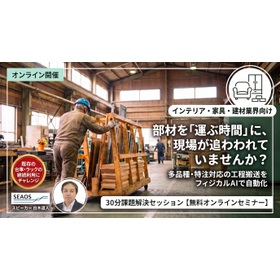
- Reforming the Workplace Environment of Interior, Furniture, and Building Material Factories to Become a "Chosen Factory" - In addition to rising raw material costs and the difficulty of passing on prices, there is a worsening labor shortage. Are you struggling with issues such as "the increase in transportation of materials between processes due to a variety of products and custom orders" and "the fatigue of the workplace caused by pushing heavy parts racks"? Even if you advance the automation of processing machines, if operators are overwhelmed by the "time spent transporting materials," the overall net operating rate of the factory will not improve. Furthermore, the harsh transportation tasks create a physical burden on the workplace, leading to early turnover and difficulties in hiring. In this seminar, we will introduce an approach to transforming into a "chosen factory" by eliminating the "transportation burden" without wasting existing cart and rack assets, allowing craftsmen and operators to focus on their core tasks. Would you like to grasp hints for creating a workplace that continues to enhance profits and productivity even with a small number of staff in this session? 【Recommended for the following people】 - Those whose workplaces are exhausted due to increased material transportation between processes as a result of diversification - Those troubled by turnover and labor shortages caused by the manual pushing of heavy parts racks - Those who want to reduce the dual role of operators in transportation and increase line operating rates
Added to bookmarks
Bookmarks listBookmark has been removed
Bookmarks listYou can't add any more bookmarks
By registering as a member, you can increase the number of bookmarks you can save and organize them with labels.
Free membership registration
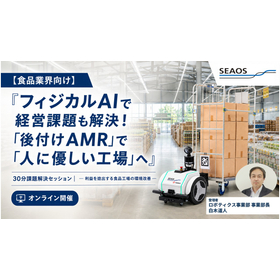
― Environmental Improvements in Food Factories to Generate Profit ― In addition to rising raw material costs and the difficulty of passing on prices, there is a worsening labor shortage. Are you struggling with issues like "Even when we post job openings, we can't attract people" or "We hire someone, but they leave right away"? Furthermore, on-site challenges include "Losing the recruitment competition to other industries," "The harsh working environment in low temperatures is exhausting the workforce," and "Operating with vacancies has become the norm." If we cannot secure and maintain the necessary workforce, there are limits to how much productivity can be improved. This seminar will unravel the structural causes behind the inability to attract and retain workers, remove the "burden" on the site without relying on massive capital investments, and introduce practical approaches to transform into a "factory of choice" where employees can work safely and comfortably for a long time. Would you like to gain insights on how to create a workplace that continues to generate profits with a small team even in tough conditions during this session? 【Recommended for】 - Those struggling with high turnover due to heavy labor and chronic labor shortages - Those who want to automate transportation tasks and allow employees to focus on core activities like quality control - Those looking to avoid costly replacements of specialized carts and floor renovations while keeping initial costs down
Added to bookmarks
Bookmarks listBookmark has been removed
Bookmarks listYou can't add any more bookmarks
By registering as a member, you can increase the number of bookmarks you can save and organize them with labels.
Free membership registration
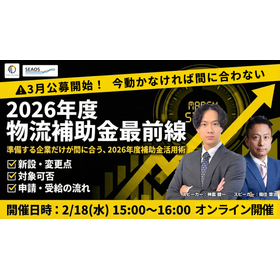
In the fiscal year 2028, subsidies for logistics-related capital investment will be significantly expanded. In addition to subsidies supporting labor-saving, automation, and digital transformation (DX), there will be systems to accommodate the construction of warehouses and logistics centers, as well as the introduction of material handling equipment, with large subsidies expected to reach up to 5 billion yen per project, greatly broadening the scope of utilization. Many subsidies will start accepting applications from March onward, making this the optimal time to begin preparations. On the other hand, many companies are uncertain about: - Which subsidies are available - What new systems or changes have been introduced this fiscal year - Whether their company qualifies (company size, eligible expenses) - The process and timeline from application to receipt of funds To address these concerns, we will welcome Mr. Kenichi Shinnou from Profit Consulting, who has an average acceptance rate of 89%, as a lecturer. He will systematically explain the overall picture of logistics-related subsidies, the latest information for fiscal year 2028, and important practical points. Recommended for companies that: - Are considering capital investment in logistics/warehousing/transportation - Want to promote labor-saving, automation, and DX - Are unsure about which subsidies they can use - Cannot determine if their company qualifies - Are anxious about the subsidy application process - Want to start with information gathering.
Added to bookmarks
Bookmarks listBookmark has been removed
Bookmarks listYou can't add any more bookmarks
By registering as a member, you can increase the number of bookmarks you can save and organize them with labels.
Free membership registration