iPROS Manufacturing
  • Search for products by classification category

    • Electronic Components and Modules
      Electronic Components and Modules
      58227items
    • Machinery Parts
      Machinery Parts
      73634items
    • Manufacturing and processing machinery
      Manufacturing and processing machinery
      98052items
    • Scientific and Physics Equipment
      Scientific and Physics Equipment
      33956items
    • Materials
      Materials
      36338items
    • Measurement and Analysis
      Measurement and Analysis
      53351items
    • Image Processing
      Image Processing
      14868items
    • Control and Electrical Equipment
      Control and Electrical Equipment
      51757items
    • Tools, consumables, and supplies
      Tools, consumables, and supplies
      63843items
    • Design and production support
      Design and production support
      12254items
    • IT/Network
      IT/Network
      42291items
    • Office
      Office
      13557items
    • Business support services
      Business support services
      32830items
    • Seminars and Skill Development
      Seminars and Skill Development
      5989items
    • Pharmaceutical and food related
      Pharmaceutical and food related
      27417items
    • others
      72231items
  • Search for companies by industry

    • Manufacturing and processing contract
      7344
    • others
      5011
    • Industrial Machinery
      4426
    • Machine elements and parts
      3280
    • Other manufacturing
      2879
    • IT/Telecommunications
      2542
    • Trading company/Wholesale
      2467
    • Industrial Electrical Equipment
      2310
    • Building materials, supplies and fixtures
      1812
    • software
      1636
    • Electronic Components and Semiconductors
      1561
    • Resin/Plastic
      1486
    • Service Industry
      1437
    • Testing, Analysis and Measurement
      1130
    • Ferrous/Non-ferrous metals
      977
    • environment
      704
    • Chemical
      630
    • Automobiles and Transportation Equipment
      560
    • Printing Industry
      509
    • Information and Communications
      452
    • Consumer Electronics
      419
    • Energy
      326
    • Rubber products
      313
    • Food Machinery
      303
    • Optical Instruments
      280
    • robot
      271
    • fiber
      251
    • Paper and pulp
      232
    • Electricity, Gas and Water Industry
      169
    • Pharmaceuticals and Biotechnology
      167
    • Warehousing and transport related industries
      146
    • Glass and clay products
      141
    • Food and Beverage
      130
    • CAD/CAM
      120
    • retail
      110
    • Educational and Research Institutions
      107
    • Medical Devices
      101
    • Ceramics
      96
    • wood
      89
    • Transportation
      83
    • Medical and Welfare
      63
    • Petroleum and coal products
      62
    • Shipbuilding and heavy machinery
      52
    • Aviation & Aerospace
      47
    • Fisheries, Agriculture and Forestry
      41
    • Public interest/special/independent administrative agency
      29
    • equipment
      29
    • self-employed
      24
    • Government
      21
    • Research and development equipment and devices
      20
    • Materials
      20
    • Mining
      17
    • Finance, securities and insurance
      13
    • Individual
      10
    • cosmetics
      10
    • Restaurants and accommodations
      9
    • Police, Fire Department, Self-Defense Forces
      7
    • Laboratory Equipment and Consumables
      3
    • Contracted research
      3
    • Raw materials for reagents and chemicals
      2
  • Special Features
  • Ranking

    • Overall Products Ranking
    • Overall Company Ranking
Search for Products
  • Search for products by classification category

  • Electronic Components and Modules
  • Machinery Parts
  • Manufacturing and processing machinery
  • Scientific and Physics Equipment
  • Materials
  • Measurement and Analysis
  • Image Processing
  • Control and Electrical Equipment
  • Tools, consumables, and supplies
  • Design and production support
  • IT/Network
  • Office
  • Business support services
  • Seminars and Skill Development
  • Pharmaceutical and food related
  • others
Search for Companies
  • Search for companies by industry

  • Manufacturing and processing contract
  • others
  • Industrial Machinery
  • Machine elements and parts
  • Other manufacturing
  • IT/Telecommunications
  • Trading company/Wholesale
  • Industrial Electrical Equipment
  • Building materials, supplies and fixtures
  • software
  • Electronic Components and Semiconductors
  • Resin/Plastic
  • Service Industry
  • Testing, Analysis and Measurement
  • Ferrous/Non-ferrous metals
  • environment
  • Chemical
  • Automobiles and Transportation Equipment
  • Printing Industry
  • Information and Communications
  • Consumer Electronics
  • Energy
  • Rubber products
  • Food Machinery
  • Optical Instruments
  • robot
  • fiber
  • Paper and pulp
  • Electricity, Gas and Water Industry
  • Pharmaceuticals and Biotechnology
  • Warehousing and transport related industries
  • Glass and clay products
  • Food and Beverage
  • CAD/CAM
  • retail
  • Educational and Research Institutions
  • Medical Devices
  • Ceramics
  • wood
  • Transportation
  • Medical and Welfare
  • Petroleum and coal products
  • Shipbuilding and heavy machinery
  • Aviation & Aerospace
  • Fisheries, Agriculture and Forestry
  • Public interest/special/independent administrative agency
  • equipment
  • self-employed
  • Government
  • Research and development equipment and devices
  • Materials
  • Mining
  • Finance, securities and insurance
  • Individual
  • cosmetics
  • Restaurants and accommodations
  • Police, Fire Department, Self-Defense Forces
  • Laboratory Equipment and Consumables
  • Contracted research
  • Raw materials for reagents and chemicals
Special Features
Ranking
  • Overall Products Ranking
  • Overall Company Ranking
  • privacy policy
  • terms of service
  • About Us
  • Careers
  • Advertising
  1. Home
  2. Information and Communications
  3. テクノプロ テクノプロ・IT社 システムソリューション事業部
  4. Product/Service List
Information and Communications
  • Added to bookmarks

    Bookmarks list

    Bookmark has been removed

    Bookmarks list

    You can't add any more bookmarks

    By registering as a member, you can increase the number of bookmarks you can save and organize them with labels.

    Free membership registration

テクノプロ テクノプロ・IT社 システムソリューション事業部

EstablishmentAugust 1995
addressKanagawa/Nishi-ku, Yokohama-shi/8th Floor, Tobu Yokohama No. 3 Building, 2-8-29 Kitakou,
phone045-287-1700
  • Special site
  • Official site
last updated:Oct 01, 2025
テクノプロ テクノプロ・IT社logo
  • Contact this company

    Contact Us Online
  • Before making an inquiry

    Download PDF
  • Company information
  • Products/Services(56)
  • catalog(43)
  • news(0)

テクノプロ テクノプロ・IT社 List of Products and Services

  • category

1~14 item / All 14 items

Displayed results

Filter by category

System consulting System consulting
System development System development
System operation and maintenance System operation and maintenance
Center operation Center operation
Offshore development Offshore development
Infrastructure development Infrastructure development
Audio solution Audio solution
Web solution Web solution
System

System operation and maintenance

We provide system operation and maintenance tailored to your business model, including help desk, on-site support, and resident support.

[Free Consultation] Manufacturing Industry DX Promotion Counseling Service

First of all, please feel free to consult with us!

Are you facing any of these concerns regarding system considerations? - Uncertainty about system development costs - Uncertainty about what can be requested - A feeling that there are many IT product sales pitches - Costs were higher than expected - Not knowing how to proceed at the planning stage 【Main Features】 ● We provide a quotation proposal in just 4 easy steps! STEP 1 - Inquiry STEP 2 - Fill out the hearing form STEP 3 - The person in charge will confirm the expected requirements STEP 4 - Quotation guidance Our company will visualize the current business flow, identify system issues, and propose the optimal system. We focus on customers in the manufacturing industry, developing systems tailored to management purposes in production activities to support our customers' DX (digital transformation) initiatives.

Added to bookmarks

Bookmarks list

Bookmark has been removed

Bookmarks list

You can't add any more bookmarks

By registering as a member, you can increase the number of bookmarks you can save and organize them with labels.

Free membership registration

Manufacturing DX Solution Services

We will solve the challenges in manufacturing industry digital transformation!

Our company specializes in system consulting and implementation for the manufacturing industry, allowing us to conduct current situation analysis, issue examination, and system restructuring. We support the introduction of various packages, functional improvements, and additions, as well as the promotion of overseas business. Please feel free to consult us about anything related to IT. An important aspect of advancing digital transformation (DX) is not to push everything forward at once, but rather to start small. We will provide proposals that allow you to gradually experience the effects and improve your company's IT literacy.

Added to bookmarks

Bookmarks list

Bookmark has been removed

Bookmarks list

You can't add any more bookmarks

By registering as a member, you can increase the number of bookmarks you can save and organize them with labels.

Free membership registration

Paperless Promotion: Low-Code Development for Manufacturing Sites

Let's dramatically improve work efficiency by promoting paperless operations!

This is an initiative to achieve cost reduction through improved work efficiency. We provide a system for digitizing and data-fying on-site forms. Let's efficiently promote paperless operations in the manufacturing industry by leveraging the benefits of digitalization. - Eliminate the need for paper records - Instantly grasp on-site conditions through real-time data analysis - Search documents by digitizing drawings and design documents - Easily access from smartphones and tablets

Added to bookmarks

Bookmarks list

Bookmark has been removed

Bookmarks list

You can't add any more bookmarks

By registering as a member, you can increase the number of bookmarks you can save and organize them with labels.

Free membership registration

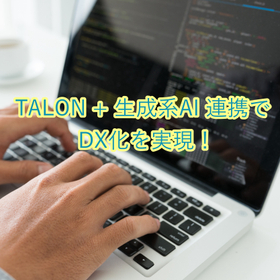
Achieve DX transformation with the low-code development tool "TALON" and AI integration!

"TALON" enables quick and flexible system development. By collaborating with generative AI, it strongly promotes the digital transformation of on-site operations, such as sales forecasting!

The cutting-edge low-code development tool "TALON" is an innovative platform that allows for the rapid and flexible construction of advanced business systems, provided you have knowledge of databases. With its intuitive UI and rich templates, system development can be done flexibly without complex coding. It alleviates the burden on IT departments and strongly promotes field-led digital transformation (DX). Additionally, by integrating with generative AI such as ChatGPT, it enables rapid and flexible realization of DX in the manufacturing industry, including sales forecasting and equipment downtime prediction. <TALON Features> ■ Ultra-fast development - Development possible in as little as 5 minutes! - Utilize industry-specific templates and a wealth of options to develop more advanced systems quickly. ■ Ultra-agile development - Develop while sharing images with users by viewing actual working screens. ■ Abundant services for integration - Integrates with over 100 external services. - Existing (legacy) databases can also be utilized. ■ Very cost-effective compared to other low-code tools - Starting from 500,000 yen (for 5 users). ■ Robust security - Complies with the IPA "How to Create a Safe Website (Revised 7th Edition)" as a standard.

Added to bookmarks

Bookmarks list

Bookmark has been removed

Bookmarks list

You can't add any more bookmarks

By registering as a member, you can increase the number of bookmarks you can save and organize them with labels.

Free membership registration

Quickly and flexibly develop systems with the low-code development tool "TALON"!

Complete system development in as little as 5 minutes! Inventory management systems for retail stores and production management systems for manufacturing can all be implemented with just "TALON"!

The cutting-edge low-code development tool "TALON" is an innovative platform that allows for the rapid development of advanced business systems, requiring only knowledge of databases (DB). With an intuitive UI and a wealth of templates, flexible system development is possible without complex coding. Additionally, seamless integration with other systems and robust security features are standard. With the ultra-fast development tool TALON, which combines speed, flexibility, and safety, we significantly reduce the burden on IT departments and strongly promote field-led digital transformation (DX). <TALON Features> ■ Ultra-fast Development - Development possible in as little as 5 minutes! - Quickly develop more advanced systems using industry-specific templates and a wide range of options. ■ Ultra-agile Development - Development can proceed while sharing images with users by viewing actual working screens. ■ Abundant Integration Services - Integrates with over 100 external services. - Existing (legacy) databases can also be utilized. ■ Very cost-effective compared to other low-code tools - Starting from 500,000 yen (for 5 users). ■ Strong Security - Complies with IPA's "How to Create a Safe Website (Revised 7th Edition)" as standard.

Added to bookmarks

Bookmarks list

Bookmark has been removed

Bookmarks list

You can't add any more bookmarks

By registering as a member, you can increase the number of bookmarks you can save and organize them with labels.

Free membership registration

All-cloud SaaS type

Leave the troubles of the manufacturing industry to UMSaaS!

We provide a SaaS-based all-cloud ERP that leverages extensive production management know-how. Would you like to tackle digital transformation (DX) with a SaaS service that starts with the necessary functions at the required scale? ~UMSaaS can solve the following issues~ - Unsure which ERP product is optimal for our company - Reliance on both core systems and Excel leading to individual dependency - High labor costs for OS and DB operations, along with high maintenance costs - Market ERP solutions have too many features, and we want to implement only the necessary functions gradually ↓↓↓ With the robust security of the globally proven Salesforce platform, it is possible to gradually implement the functions you need "now."

Added to bookmarks

Bookmarks list

Bookmark has been removed

Bookmarks list

You can't add any more bookmarks

By registering as a member, you can increase the number of bookmarks you can save and organize them with labels.

Free membership registration

What are the causes of "variability" that affect quality, and how can we minimize it as much as possible?

Variability in quality can significantly affect product performance. This article explores the causes of "variability" and methods to mitigate its impact.

Many companies struggle with "quality variation" on the manufacturing floor. Even with the same processes and materials, differences in products can occur—this is a challenge seen in many workplaces. The causes of variation can mainly be summarized into the following four plus additional factors: 1. Variation due to people Quality varies depending on the experience, attention, and understanding of procedures by the workers. Establishing standard operating procedures (SOP) and providing training are effective measures. 2. Variation due to equipment Wear and insufficient adjustments of machines can affect products. Regular maintenance and thorough preventive care lead to stable operations. 3. Variation due to materials The quality of raw materials and lot differences are also factors contributing to product quality variation. Strengthening incoming inspections and lot management is necessary. 4. Inadequacies in process management If processes and procedures are unclear or poorly managed, quality will not be stable. Utilizing process capability indices (Cp, Cpk) and statistical process control (SPC) is effective. In addition to these "4Ms," environmental factors such as temperature, humidity, and lighting also impact quality, so monitoring and managing the work environment is required. Significant quality variation can be controlled through "management." Visualizing the workplace and maintaining the PDCA cycle are the first steps toward stabilizing quality.

Added to bookmarks

Bookmarks list

Bookmark has been removed

Bookmarks list

You can't add any more bookmarks

By registering as a member, you can increase the number of bookmarks you can save and organize them with labels.

Free membership registration

Reasons Why Production Plans Don't Progress as Planned, No Matter How Many Measures Are Taken - Top 5

Even with thorough measures in place, disruptions in production planning can still occur. What are the reasons for this? Here are five main factors that can lead to the breakdown of plans, presented concisely!

In the manufacturing field, no matter how many measures are taken, there are times when things do not proceed as planned. This time, we will introduce five particularly impactful factors. 1. Fluctuations in demand and sudden changes in specifications Sudden additional orders or changes in specifications from customers can disrupt production plans. This is influenced by market changes and the trend towards shorter delivery times. 2. Re-manufacturing and rework due to quality defects When defects are found during the process or inspection, re-manufacturing or corrections become necessary. This is particularly likely to occur with complex products or initial lots, and even with strengthened quality control, it cannot be reduced to zero. 3. Delays from outsourcing and partner companies Delays in outsourced processing or parts supply can stall the entire process. Factors include capacity shortages, transportation troubles, and risks associated with overseas procurement. 4. Sudden equipment troubles Even with preventive maintenance, aging equipment or specialized machinery can experience unexpected failures. Complete prevention is difficult, and the ability to respond on-site is required. 5. Insufficient accuracy in production planning In low-volume, high-variety production, changing setups and transitions can take time, leading to deviations from the plan. Equipment downtime and underestimating on-site capacity can also impact planning. By anticipating these factors in advance, the impact can be minimized.

Added to bookmarks

Bookmarks list

Bookmark has been removed

Bookmarks list

You can't add any more bookmarks

By registering as a member, you can increase the number of bookmarks you can save and organize them with labels.

Free membership registration

Prepare for emergencies! The four major risks threatening the supply chain and their countermeasures.

Explaining the risks of the supply chain and BCP measures. Introducing ways to build a robust system to prepare for threats from the environment, geopolitics, economy, and security!

In the era of globalization and uncertainty, supply chain risk management influences a company's competitiveness. Four categories are particularly important: 1. Environmental Risks Natural disasters, climate change, and pandemics can lead to production halts and transportation restrictions. It is essential to establish a Business Continuity Plan (BCP), diversify locations, and secure safety stock in advance. When incidents occur, alternative sourcing, switching transportation methods, and reconstructing demand forecasts are crucial. 2. Geopolitical Risks Wars, economic sanctions, and trade friction hinder logistics and transactions. It is important to conduct country-specific risk analyses and diversify suppliers, and during crises, quickly explore alternative markets and legal responses. 3. Economic Risks Exchange rate fluctuations, rising raw material costs, and economic recessions affect costs and demand. Prepare with currency hedging and long-term contracts, and respond to occurrences by passing on costs and adjusting procurement volumes. 4. Security Risks Cyberattacks and the circulation of counterfeit goods undermine trust. Implementing a zero-trust approach and ensuring traceability are necessary, and during incidents, thorough responses from Computer Security Incident Response Teams (CSIRT) and information sharing are vital. The keywords are "diversification, forecasting, monitoring" + "rapid alternatives, information sharing, legal responses." Now is the time to build a robust and flexible supply chain and strengthen BCP to enhance corporate sustainability and competitiveness.

Added to bookmarks

Bookmarks list

Bookmark has been removed

Bookmarks list

You can't add any more bookmarks

By registering as a member, you can increase the number of bookmarks you can save and organize them with labels.

Free membership registration

The Importance of Sales Management in Manufacturing and Its Impact on Business Growth

Why is sales management essential in the manufacturing industry? This explains the reasons directly related to corporate growth, from sales confirmation to production efficiency improvement.

For the manufacturing industry, sales management is not just about managing orders and shipments; it is a crucial system that serves as the core of corporate management. This is because sales management is both a "system for confirming sales" and an "information infrastructure that connects production, inventory, purchasing, and finance." If the accuracy of this system is low, issues such as excess inventory, stockouts, delayed deliveries, and deteriorating cash flow can ripple throughout the entire company. First and foremost, sales management is directly linked to revenue assurance. Accurate order information supports billing and payment management, stabilizing cash flow. Additionally, since order data is reflected in production planning and inventory management, any errors can lead to increased costs and decreased customer satisfaction. Furthermore, sales management enhances customer responsiveness. Adherence to delivery dates and accurate shipments are achieved through the proper operation of sales management. Handling returns and complaints is also part of sales management and affects customer satisfaction. Moreover, sales data serves as the foundation for management decisions. Through sales analysis by product, region, and customer, it supports strategic decision-making. In other words, sales management is not merely administrative work; it is a management resource that enhances a company's competitiveness. For the manufacturing industry to achieve sustainable growth, it is essential to position sales management as an "information hub" and pursue accuracy and speed.

Added to bookmarks

Bookmarks list

Bookmark has been removed

Bookmarks list

You can't add any more bookmarks

By registering as a member, you can increase the number of bookmarks you can save and organize them with labels.

Free membership registration

How to improve sales management in the manufacturing industry and strengthen competitiveness with important KPIs.

Explaining the points for improving sales management in the manufacturing industry and important KPIs. What are the methods to enhance competitiveness through information centralization and automation?

Sales management in the manufacturing industry is a crucial system that influences revenue and customer satisfaction. However, challenges such as "delivery delays," "excess inventory," and "information fragmentation" are common on the ground, and clear metrics and initiatives are necessary for improvement. ● The first step in improvement is the centralization of information. By integrating and sharing data on orders, inventory, shipments, and invoicing in real-time, interdepartmental collaboration is strengthened. ERP and sales management systems serve as the foundation for this. ● Next is the standardization and automation of processes. Manual data entry and verification can lead to errors and cause delivery delays. The digitalization of EDI, automatic ordering, and invoicing processes significantly enhances accuracy and speed. To measure the effects of improvements, KPIs are essential. The following are representative indicators: - Delivery compliance rate: An important indicator of customer satisfaction - Inventory turnover rate: An indicator of inventory liquidity - Order processing time: A measure of business speed improvement - Sales forecast accuracy: An indicator that enhances the reliability of management planning By regularly monitoring these metrics and cycling through improvements, sales management evolves into a "strategic capability that supports management." To maintain competitiveness, it is essential for manufacturing companies to optimize sales management in a data-driven manner.

Added to bookmarks

Bookmarks list

Bookmark has been removed

Bookmarks list

You can't add any more bookmarks

By registering as a member, you can increase the number of bookmarks you can save and organize them with labels.

Free membership registration

Pressuring profits in the manufacturing industry! The trap of insufficient collaboration among the three departments of "sales, purchasing, and inventory."

Cannot confirm in real time! Three critical inconveniences caused by the lack of integration between "sales, purchasing, and inventory."

The biggest cause of pressure on manufacturing profits is the lack of coordination among "sales," "purchasing," and "inventory." When each department operates on separate systems or Excel, information is not shared in real-time, leading to a disconnect between departments. This disconnect causes three significant inconveniences that hinder companies. 1. Generation of unnecessary costs: When sales results and forecasts are not communicated to purchasing, procurement occurs that diverges from actual demand. As a result, excess inventory (dead stock) increases, tying up capital. Conversely, emergency procurement during stockouts incurs high transportation costs and purchase prices. 2. Decline in customer satisfaction: Sales often struggle to provide realistic delivery dates because they cannot immediately confirm accurate inventory levels or the expected arrival of raw materials (inventory/purchasing) at the time of order. This frequently leads to delivery delays, resulting in a loss of trust from customers. 3. Decrease in productivity: Information about stockouts or delays in arrivals is not shared in real-time with the production floor, leading to frequent revisions of production plans. This causes confusion on the shop floor and significantly reduces work efficiency and productivity. To break free from the costs of excess inventory and emergency procurement, let's centralize company-wide information and immediately establish a system where "inventory is at the right level, and delivery dates are reliable."

Added to bookmarks

Bookmarks list

Bookmark has been removed

Bookmarks list

You can't add any more bookmarks

By registering as a member, you can increase the number of bookmarks you can save and organize them with labels.

Free membership registration

GX is not just about environmental measures. The real reason companies should focus on it.

GX is an essential issue for management. Here’s a clear introduction to the reasons why we should tackle it now.

In response to the global trend of decarbonization, it is expected that Japan will see over 150 trillion yen in GX (Green Transformation) investments from both the public and private sectors over the next decade. So, why should companies focus on GX? Firstly, it is about compliance with regulations. Laws promoting GX and carbon pricing systems are being strengthened, and companies that delay their response face risks of penalties and market exit. Secondly, there is an advantage in fundraising. Companies that actively pursue GX receive high evaluations from investors through ESG investments and green bonds, allowing them to secure funds at lower costs. Thirdly, it enhances market competitiveness and brand value. Environmental considerations are becoming criteria for consumers and business partners, and responding to GX works to the advantage of acquiring customers and expanding overseas. Fourthly, it leads to cost reductions. The introduction of renewable energy and energy-saving technologies lowers long-term operational costs and alleviates the burden of carbon taxes and emissions trading. Finally, it creates new business opportunities. GX-related markets such as renewable energy, hydrogen, and EVs are rapidly growing, providing new revenue sources for companies. GX is not just an environmental measure; it is a survival strategy for companies. The key to future competitiveness lies in how quickly they engage in GX.

Added to bookmarks

Bookmarks list

Bookmark has been removed

Bookmarks list

You can't add any more bookmarks

By registering as a member, you can increase the number of bookmarks you can save and organize them with labels.

Free membership registration

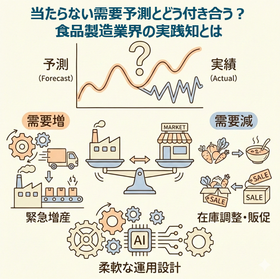
Unpredictable variant production. What is the real reason why demand forecasting is still necessary?

In the era of variant and variable production, accurately forecasting demand is challenging. Nevertheless, forecasting is essential because it serves a different role than before. What is its true value?

In today's world, where variant and variable production is mainstream, accurately "hitting" demand forecasts is almost impossible. There are limits to insisting on improving accuracy. Yet, why is forecasting still necessary? It is because forecasts serve as a "basis for decision-making" rather than "numbers to predict the future." For example, in response to a weather forecast of "30% chance of rain," someone who doesn't want to get wet will choose to carry an umbrella, while someone looking to reduce their load may decide not to. It is precisely because of the forecast that one can assess their risk tolerance. The same applies to production sites. Manufacturing always involves physical constraints (lead times), such as components that take months to procure or personnel arrangements that cannot be increased suddenly. It is the hypothesis of "demand is likely to increase next month" that enables "preparations in advance," such as placing advance orders or adjusting overtime shifts. Moreover, it is standard practice to capture forecasts not as points but as "ranges." Based on maximum, minimum, and intermediate forecast values, one can establish management decision-making axes, such as minimizing "waste loss" or avoiding "opportunity loss." In other words, the true value of modern demand forecasting lies not in hitting numerical targets but in providing a "basis for decision-making" in the face of an uncertain future.

Added to bookmarks

Bookmarks list

Bookmark has been removed

Bookmarks list

You can't add any more bookmarks

By registering as a member, you can increase the number of bookmarks you can save and organize them with labels.

Free membership registration
Prev 1 Next
  • ダマになりやすい粉体の解砕・ふるい分けにこれ一台で対応 解砕機構付き佐藤式振動ふるい機 つばさ 解砕機構のバリエーションや活用イメージを動画で公開中!
  • 義務化された熱中症対策に取り組む製造現場、工場、物流倉庫へ 排気熱風なく室温-4.1℃※の冷風を 工事不要で暑さ対策 気化式スポットクーラー ※環境条件…室温35℃/湿度50%/風量「中」
    • Contact this company

      Contact Us Online
    • Before making an inquiry

      Download PDF

    Products

    • Search for Products

    Company

    • Search for Companies

    Special Features

    • Special Features

    Ranking

    • Overall Products Ranking
    • Overall Company Ranking

    support

    • site map
    IPROS
    • privacy policy Regarding external transmission of information
    • terms of service
    • About Us
    • Careers
    • Advertising
    COPYRIGHT © 2001-2026 IPROS CORPORATION ALL RIGHTS RESERVED.
    Please note that the English text on this page is automatically translated and may contain inaccuracies.