- Publication year : 2026
1~3 item / All 3 items
Displayed results

Added to bookmarks
Bookmarks listBookmark has been removed
Bookmarks listYou can't add any more bookmarks
By registering as a member, you can increase the number of bookmarks you can save and organize them with labels.
Free membership registration
Contact this company
Inquiry Form1~3 item / All 3 items
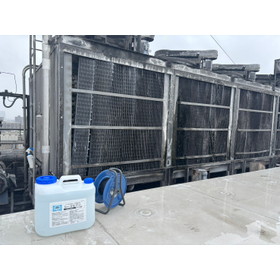
"The temperature of the cooling water is difficult to lower," "Pipes and strainers become clogged," "They get dirty again quickly even after cleaning." When these symptoms occur, looking only at the cooling tower itself will not reveal the cause. It is necessary to check the pipes through which the cooling water flows, the heat exchangers, pumps, and water quality management as well. In October 2026, water supply restrictions for industrial water were strengthened in the Takahashi River system in Okayama Prefecture. For facilities that use water, it is important to understand not only the cooling performance but also the amounts of makeup water and wastewater. However, water conservation and energy savings are separate metrics. Both should be measured and evaluated. Okayama Prefecture will implement a 15% water supply restriction for industrial water. You can read the continuation of the article at the following link on the Seven Corporation website: https://www.7seven7.jp/news/coolingtower-20261002/
Added to bookmarks
Bookmarks listBookmark has been removed
Bookmarks listYou can't add any more bookmarks
By registering as a member, you can increase the number of bookmarks you can save and organize them with labels.
Free membership registration
When washing parts and jigs in a factory, are you choosing cleaning agents solely based on whether "the dirt comes off"? When reviewing cleaning methods, it is important to confirm what the workers handle, how they handle it, and how much they handle, and to compare the quality after cleaning and the disposal of waste liquid. The Ministry of Health, Labour and Welfare presents the risk assessment of chemical substances as a procedure for understanding hazards and harmfulness, estimating risks, and considering and implementing reduction measures. When adopting new cleaning agents that contain target chemical substances or changing work methods, evaluations and necessary measures should be taken before starting use. Not all cleaning agents have the same legal obligations, so it is essential to first check the product and work conditions. Ministry of Health, Labour and Welfare "Q&A on Chemical Substance Measures" For more details, please see the following news article on our website! Chemical Substance Risk Assessment When Reviewing Factory Cleaning Agents | From Checking SDS to Testing Alternative Cleaners https://www.7seven7.jp/news/riskassesment-260929/
Added to bookmarks
Bookmarks listBookmark has been removed
Bookmarks listYou can't add any more bookmarks
By registering as a member, you can increase the number of bookmarks you can save and organize them with labels.
Free membership registration
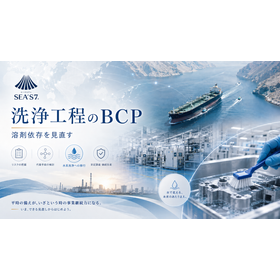
The situation in the Middle East continues to create uncertainty in the global energy and petrochemical supply chains. In the Strait of Hormuz, a critical energy transport hub, the volume of maritime traffic remains significantly below normal levels, leading to concerns about the stable supply of crude oil, naphtha, and petrochemical raw materials. We sincerely hope for a swift resolution to the conflicts and the return of peace and stability to the Middle East region. Even products that can typically be purchased reliably may face issues if there are disruptions in the supply of crude oil and naphtha, overseas logistics, domestic production, or inventory logistics, potentially leading to price increases and other problems. To avoid halting manufacturing lines, it is essential to consider not only key raw materials but also everyday auxiliary materials and cleaning agents as part of the Business Continuity Plan (BCP). The "BCP for Cleaning Processes" proposed by Seven Corporation may evoke the image of holding large inventories. However, what is truly important is to establish a state where "even if one product or one procurement route is halted, production can continue through alternative methods" from normal times.
Added to bookmarks
Bookmarks listBookmark has been removed
Bookmarks listYou can't add any more bookmarks
By registering as a member, you can increase the number of bookmarks you can save and organize them with labels.
Free membership registration