- Publication year : 2026
1~4 item / All 4 items
Displayed results

Added to bookmarks
Bookmarks listBookmark has been removed
Bookmarks listYou can't add any more bookmarks
By registering as a member, you can increase the number of bookmarks you can save and organize them with labels.
Free membership registration
Contact this company
Inquiry Form1~4 item / All 4 items

The APGC ion source equipped with the soft ionization method developed by Waters achieves high sensitivity and high selectivity compared to conventional EI methods, significantly expanding the scope of quantitative analysis using GC-MS. Furthermore, there is no decrease in sensitivity even when changing the carrier gas from helium to nitrogen, making it an effective measure against helium shortages. Additionally, it allows for the direct analysis of acetonitrile solutions after QuEChERS purification with low injection volumes, providing practical advantages such as improved efficiency in sample preparation and prevention of loss of low-boiling compounds. In this webinar, Waters' analytical chemists will introduce the features of APGC and its application in pesticide residue analysis, while also inviting customers who are active in the front lines of analytical work to share practical insights on simplifying sample preparation and reducing maintenance through increased sensitivity. ■ Target Audience Individuals engaged in high-sensitivity pesticide residue analysis using GC-MS, those considering the efficiency of sample preparation processes, and those interested in the use of alternative gases to helium. ■ Program Overview of the APGC ion source and explanation of comparisons and differences with the EI method; introduction of APGC features and examples of pesticide residue analysis from the user's perspective.
Added to bookmarks
Bookmarks listBookmark has been removed
Bookmarks listYou can't add any more bookmarks
By registering as a member, you can increase the number of bookmarks you can save and organize them with labels.
Free membership registration
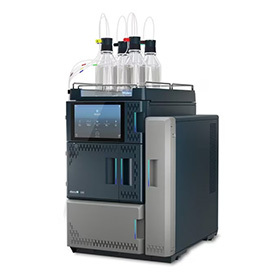
Waters offers a wide range of products related to liquid chromatography, including analytical columns, mass spectrometers, sample preparation products, and informatics. We will be holding a basic LC course for those who are just starting to use LC. This content is ideal for new employees, those using LC for the first time, and anyone who wants to review the basics of LC. Additionally, since it will be in a live webinar format, there will be real-time Q&A sessions during each session, so please feel free to participate and ask questions. Date: Please refer to the table below Time: 15:00 - 16:00 Location: Online Capacity: 1000 participants per session Participation fee: Free May 12, 2026 (Tuesday) Session 1: Basics of Chromatography May 19, 2026 (Tuesday) Session 2: Basics of LC Columns May 26, 2026 (Tuesday) Session 3: Basics of Sample Preparation June 2, 2026 (Tuesday) Session 4: Basics of LC-MS June 16, 2026 (Tuesday) Session 5: LC Basics Q&A Collection
Added to bookmarks
Bookmarks listBookmark has been removed
Bookmarks listYou can't add any more bookmarks
By registering as a member, you can increase the number of bookmarks you can save and organize them with labels.
Free membership registration
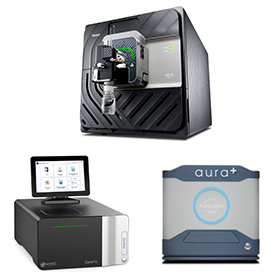
In the analysis of trace components such as pharmaceuticals, veterinary drugs, and additives contained in biological samples, solid-phase extraction (SPE) is essential for sample preparation. To achieve high-sensitivity and robust analysis, it is important to establish optimal SPE methods; however, method development and condition optimization require significant time and experience, and there is a strong demand for efficiency given the limited development resources. In this webinar, we will introduce specific approaches for constructing optimal solid-phase extraction methods in a short time, as well as strategies for speeding up development using the Andrew+ dispensing system, illustrated with real examples. The content will also be useful for those who are not considering the introduction of a dispensing machine, providing insights into the concepts of solid-phase extraction method development and efficiency improvements. ■ Program - Efficient solid-phase extraction method development - Easy automation of solid-phase extraction tasks ■ Recommended for - Those involved in bioanalysis in the pharmaceutical and food sectors - Those interested in improving the efficiency of solid-phase extraction
Added to bookmarks
Bookmarks listBookmark has been removed
Bookmarks listYou can't add any more bookmarks
By registering as a member, you can increase the number of bookmarks you can save and organize them with labels.
Free membership registration
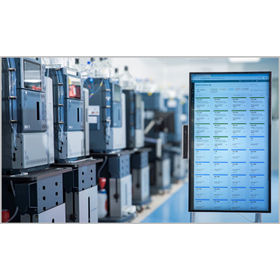
In April 2026, the announcement of the nineteenth revision of the Japanese Pharmacopoeia is scheduled. This revision is expected to apply the general testing method "<2.00> General Principles of Chromatography" for the first time to two items: "Dapagliflozin Propylene Glycol Hydrate" and "Dapagliflozin Propylene Glycol Tablets," which will be newly included. Therefore, in this webinar, we will first review the overview of "<2.00> General Principles of Chromatography." Based on that, we will explain the points for accelerating analysis methods utilizing the "changes in particle size and column length of the analytical column" permitted by this testing method, along with practical examples. Additionally, using the testing method for "Dapagliflozin Propylene Glycol Hydrate" as an example, we will also introduce countermeasures for items that may affect test results.
Added to bookmarks
Bookmarks listBookmark has been removed
Bookmarks listYou can't add any more bookmarks
By registering as a member, you can increase the number of bookmarks you can save and organize them with labels.
Free membership registration