- Publication year : 2026
1~3 item / All 3 items
Displayed results
Added to bookmarks
Bookmarks listBookmark has been removed
Bookmarks listYou can't add any more bookmarks
By registering as a member, you can increase the number of bookmarks you can save and organize them with labels.
Free membership registration
Contact this company
Contact Us Online1~3 item / All 3 items

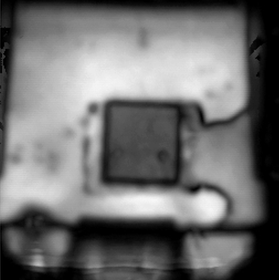
Here is an introduction to a case where the adhesive condition was observed through a metal plate using an ultrasonic microscope. The ultrasonic microscope can reveal internal information that cannot be confirmed from the appearance, as long as the ultrasonic waves can pass through the material. After reliability testing, we observed the condition of the adhesive remaining on the metal plate from the metal side in a sample where the chip had come off. Please refer to the PDF document for details and results of the observations.
Added to bookmarks
Bookmarks listBookmark has been removed
Bookmarks listYou can't add any more bookmarks
By registering as a member, you can increase the number of bookmarks you can save and organize them with labels.
Free membership registration
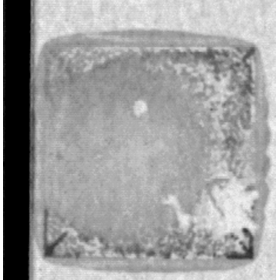
This is an introduction to the ultrasonic microscope observation of semiconductor packages conducted by our company. Due to storage conditions and mounting conditions, delamination may occur between the metal parts (die pad) and the package resin in semiconductor packages. Delamination inside the package is a defect that significantly affects product quality, but it cannot be detected through visual inspection. By using an ultrasonic microscope, we can clearly capture the internal structure of the package, contributing to reliability evaluation.
Added to bookmarks
Bookmarks listBookmark has been removed
Bookmarks listYou can't add any more bookmarks
By registering as a member, you can increase the number of bookmarks you can save and organize them with labels.
Free membership registration
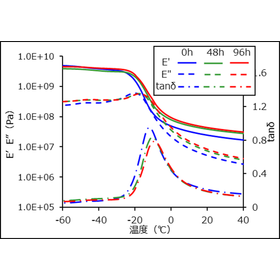
This paper introduces the evaluation of thermally degraded rubber using dynamic viscoelastic measurements. A constant temperature chamber capable of circulating air within the chamber was used as a suitable device for thermal degradation testing, and NBR rubber and EPDM rubber were heated at 100°C for a specified time. The changes in viscoelastic behavior due to heating time were investigated. For both types of rubber, as the heating time increased, the tanδ (= E"/E') peak shifted towards higher temperatures, and a decrease in peak value was observed. It is believed that the loss of rubber elasticity and the decrease in elastic modulus resulted in the shift of Tg towards higher temperatures. By measuring dynamic viscoelasticity, it becomes possible to confirm the changes in physical properties associated with material degradation and to gain insights into structural changes. Additionally, conducting other chemical analyses can clarify more specific changes in chemical structure.
Added to bookmarks
Bookmarks listBookmark has been removed
Bookmarks listYou can't add any more bookmarks
By registering as a member, you can increase the number of bookmarks you can save and organize them with labels.
Free membership registration