136~180 item / All 229 items
Displayed results
Filter by category

Added to bookmarks
Bookmarks listBookmark has been removed
Bookmarks listYou can't add any more bookmarks
By registering as a member, you can increase the number of bookmarks you can save and organize them with labels.
Free membership registration
Contact this company
Inquiry Form136~180 item / All 229 items
Filter by category

In the pharmaceutical industry's clinical trials, the accurate and rapid analysis of vast measurement data is directly linked to the speed and reliability of new drug development. Particularly, the process of efficiently integrating, analyzing, and visualizing binary data obtained from various measurement devices, as well as data in Excel and text formats, is a crucial factor that influences the quality of the trials. Inadequate data management and analysis can lead to incorrect conclusions, resulting in delays in development and increased costs. 'FlexPro' provides a solution that allows for a consistent execution of data import, analysis, visualization, and document creation with just a click of a button, supporting the efficiency and reliability of clinical trials. 【Use Cases】 - Collection and management of various measurement data in clinical trials - Data analysis and trend analysis for each subject - Evaluation of efficacy and safety through statistical analysis - Graphing of analysis results and report creation 【Benefits of Implementation】 - Reduction in time spent on data analysis - Improvement in the accuracy of analysis results - Increased efficiency in report creation tasks - Ensured traceability through centralized data management
Added to bookmarks
Bookmarks listBookmark has been removed
Bookmarks listYou can't add any more bookmarks
By registering as a member, you can increase the number of bookmarks you can save and organize them with labels.
Free membership registration
In the chemical industry, tracking reactions requires the accurate acquisition of experimental data and detailed analysis, which are essential for process optimization and quality control. Accurately understanding reaction rates, changes in product concentrations, and the behavior of by-products is key to efficient research and development as well as production management. Insufficient data analysis can lead to incorrect conclusions and inefficient processes. The measurement data analysis software "FlexPro" addresses these challenges by importing various data, including binary data from diverse measuring instruments, and executing advanced analysis and visualization with the click of a button. 【Usage Scenarios】 - Tracking the temporal changes of chemical reactions - Evaluating catalytic activity - Analyzing material balances - Optimizing process parameters 【Benefits of Implementation】 - Supporting the elucidation of reaction mechanisms - Efficient analysis and reporting of experimental data - Shortening the research and development cycle
Added to bookmarks
Bookmarks listBookmark has been removed
Bookmarks listYou can't add any more bookmarks
By registering as a member, you can increase the number of bookmarks you can save and organize them with labels.
Free membership registration
In the medical device industry, strict performance evaluations are required to ensure the safety and efficacy of products. Particularly, accurate analysis of measurement data during the development phase and quality control, along with clear summarization of the results, is essential for improving product reliability. Inadequate data analysis or report preparation can lead to delays in evaluation or incorrect judgments. The measurement data analysis software 'FlexPro' supports the performance evaluation of medical devices by consistently assisting with the import of various data, including binary data from diverse measuring instruments, and facilitating everything from advanced analysis to report creation. 【Usage Scenarios】 - Analysis of prototype data during the development phase - Performance comparison by lot in quality control - Preparation of data for submission to regulatory authorities - Exploration of new evaluation methods in research and development 【Benefits of Implementation】 - Reduction in analysis time and improvement in work efficiency - Acquisition of objective and highly reliable evaluation results - Reduction in man-hours through automation of report creation - Improvement in evaluation accuracy by accommodating various analysis methods
Added to bookmarks
Bookmarks listBookmark has been removed
Bookmarks listYou can't add any more bookmarks
By registering as a member, you can increase the number of bookmarks you can save and organize them with labels.
Free membership registration
In quality control within the manufacturing industry, accurate analysis of various measurement data obtained during the manufacturing process is essential to ensure product reliability, along with prompt improvements based on the results. Detailed data analysis is particularly crucial for identifying the causes of quality variation and defects, as well as implementing measures to prevent recurrence. However, efficiently processing and analyzing data output from a diverse range of measuring instruments is a time-consuming task that requires expertise. 'FlexPro' provides a solution that allows for a seamless execution of data import, analysis, visualization, and documentation creation with just a click of a button, supporting the efficiency and accuracy of quality management operations. 【Usage Scenarios】 - Real-time analysis of sensor data on the production line - Detailed analysis of product durability test data - Identification of causes of defects and trend analysis - Data-driven decision-making in quality improvement activities - Information sharing through standardized report creation 【Benefits of Implementation】 - Reduction in time spent on data analysis - Early detection of quality issues due to improved analysis accuracy - Promotion of improvement activities based on objective data - Increased efficiency in report creation tasks
Added to bookmarks
Bookmarks listBookmark has been removed
Bookmarks listYou can't add any more bookmarks
By registering as a member, you can increase the number of bookmarks you can save and organize them with labels.
Free membership registration
In the energy industry, particularly in improving power generation efficiency, accurate analysis of vast measurement data and the utilization of insights gained from it are essential. By analyzing the operational status of power generation equipment and environmental data in detail, optimizing energy conversion efficiency and reducing downtime through predictive maintenance become crucial. 'FlexPro' provides an intuitive and efficient data analysis environment to address these challenges and contributes to the improvement of power generation efficiency. 【Use Cases】 - Real-time analysis of operational data from power generation equipment (temperature, pressure, flow rate, etc.) - Forecasting power generation and efficiency analysis for renewable energy (solar, wind, etc.) - Detailed analysis of combustion efficiency and exhaust gas data - Predictive detection of equipment anomalies and optimization of maintenance planning 【Benefits of Implementation】 - Improvement in power generation efficiency and reduction of energy loss - Increased equipment utilization and reduced maintenance costs - Support for rapid decision-making based on data - Shortened report preparation time and improved operational efficiency
Added to bookmarks
Bookmarks listBookmark has been removed
Bookmarks listYou can't add any more bookmarks
By registering as a member, you can increase the number of bookmarks you can save and organize them with labels.
Free membership registration
In the aerospace field, vibration analysis is essential to ensure the safety and performance of aircraft. Particularly in testing and development under extreme conditions, it is necessary to accurately capture and analyze everything from subtle vibrations to complex resonance phenomena. Inadequate analysis can increase design risks and potentially impact reliability. The measurement data analysis software 'FlexPro' addresses these challenges by directly importing binary data from various measurement instruments and utilizing advanced analysis capabilities. 【Usage Scenarios】 - Structural vibration analysis of aircraft and rockets - Vibration data analysis in durability testing of engines and components - Environmental vibration simulation in outer space - Performance evaluation and risk reduction during the development phase 【Benefits of Implementation】 - Rapid import and analysis of vibration data - Visualization of phenomena through detailed graph creation - Utilization of specialized analysis functions such as FFT and order analysis - Increased efficiency through documentation of analysis results
Added to bookmarks
Bookmarks listBookmark has been removed
Bookmarks listYou can't add any more bookmarks
By registering as a member, you can increase the number of bookmarks you can save and organize them with labels.
Free membership registration
In the automotive industry, durability testing requires detailed analysis of a wide range of test data to ensure product reliability and safety. It is particularly important to detect subtle changes and anomalies early from the vast amounts of data generated during long-term testing, in order to identify product weaknesses. Inadequate analysis increases the risk of product quality deterioration and recalls. "FlexPro" addresses these challenges by consistently supporting everything from data import to analysis, visualization, and documentation. 【Use Cases】 - Analysis of long-term durability test data for automotive parts - Evaluation of vehicle test data under various environmental conditions - Analysis of complex test results involving vibration, temperature, humidity, etc. - Failure mode analysis and reliability assessment 【Benefits of Implementation】 - Time savings through rapid import and analysis of test data - Detailed data evaluation through diverse analysis functions - Increased efficiency in analysis tasks due to intuitive operability - Smooth sharing of results through reporting features
Added to bookmarks
Bookmarks listBookmark has been removed
Bookmarks listYou can't add any more bookmarks
By registering as a member, you can increase the number of bookmarks you can save and organize them with labels.
Free membership registration
"FlexPro" is application software that allows for simple graphing, analysis, and documentation of various measurement data on a computer. It supports binary data from a variety of measurement devices and data collection software, including common software like Excel. 【Features】 - Excellent graph creation capabilities - Supports various logger data formats https://www.hulinks.co.jp/software/da_visual/flexpro/section03_format - Allows waveform verification with markers in an oscilloscope-like manner - Capable of various processing and analysis, including digital filters, spectral analysis, and order analysis https://www.hulinks.co.jp/software/da_visual/flexpro/section02/section02_compare - Enables scriptless execution of diverse analyses through various analysis modules - Quickly search for data to analyze using index-based search - VBA-based scripting capabilities - Automation through powerful template functions - Strong report creation capabilities
Added to bookmarks
Bookmarks listBookmark has been removed
Bookmarks listYou can't add any more bookmarks
By registering as a member, you can increase the number of bookmarks you can save and organize them with labels.
Free membership registration
In the field of paleontology, particularly in fossil preservation, it is important to understand the geochemical conditions of the environment in which fossils were buried and formed, as well as the factors that influence their subsequent preservation state. To understand the stability of fossils and the processes of alteration, simulations of the water quality at the time, interactions with rocks, and chemical changes over time are required. Accurately analyzing these complex geochemical processes is essential for predicting the long-term preservation state of fossils and designing appropriate preservation environments. The 'GWB' geochemical modeling software provides advanced geochemical reaction simulation capabilities to address these challenges and supports researchers' intellectual creativity. [Application Scenarios] - Estimation of geochemical conditions in fossil formation environments - Analysis of fossil alteration and degradation mechanisms - Evaluation of chemical stability in fossil preservation environments - Paleoenvironment reconstruction through isotopic analysis [Effects of Implementation] - Improvement in the accuracy of research on fossil preservation - Support for predicting preservation states and formulating countermeasures - Creation of new discoveries and research themes
Added to bookmarks
Bookmarks listBookmark has been removed
Bookmarks listYou can't add any more bookmarks
By registering as a member, you can increase the number of bookmarks you can save and organize them with labels.
Free membership registration
In the field of oceanography, particularly in the study of sediment transport, understanding the interactions between water and sediments, as well as the accompanying chemical reactions, is crucial. Accurately grasping the chemical changes in sediment movement and deposition processes is essential for assessing and predicting marine environments. The 'GWB' geochemical modeling software simulates these complex geochemical reactions and supports the elucidation of sediment transport mechanisms. 【Application Scenarios】 - Modeling chemical reactions in seabed sediments - Analyzing material transport and chemical changes within sediments - Predicting the behavior of pollutants in marine environments 【Effects of Implementation】 - Visualization of chemical impacts in sediment transport processes - Improved accuracy of research data and reduced analysis time - Strengthening scientific approaches to marine environmental issues
Added to bookmarks
Bookmarks listBookmark has been removed
Bookmarks listYou can't add any more bookmarks
By registering as a member, you can increase the number of bookmarks you can save and organize them with labels.
Free membership registration
In the field of volcanology, particularly in the study of magma behavior, it is essential to accurately understand the complex geochemical reactions occurring underground. The processes leading to the generation, ascent, and eruption of magma are influenced by a variety of factors, including temperature, pressure, and the movement of materials, which interact with each other. Analyzing and predicting these phenomena in detail is extremely important for monitoring volcanic activity and developing disaster prevention plans. The 'GWB' geochemical modeling software provides advanced simulation capabilities to address these challenges and supports researchers' intellectual creativity. 【Application Scenarios】 - Thermodynamic equilibrium calculations of magma - Analysis of the behavior of volatile components in magma - Simulation of eruption scenarios - Modeling of hydrothermal alteration zones 【Effects of Implementation】 - Promotion of understanding the mechanisms of magma behavior - Improvement of eruption prediction accuracy - Increased efficiency and productivity in research and development - Discovery of new insights
Added to bookmarks
Bookmarks listBookmark has been removed
Bookmarks listYou can't add any more bookmarks
By registering as a member, you can increase the number of bookmarks you can save and organize them with labels.
Free membership registration
In coastal zone management, saltwater intrusion is a significant issue due to its impact on the quality of groundwater resources and ecosystems. To understand the mechanisms behind these problems and implement effective measures, it is essential to accurately grasp the interactions between groundwater flow and chemical reactions. Particularly, analysis that considers the complex chemical changes at the boundary between saltwater and freshwater, as well as the influence of geological structures, is indispensable. The 'GWB' geochemical modeling software provides advanced geochemical reaction simulation capabilities to address these challenges, supporting the elucidation of the mechanisms of saltwater intrusion and the formulation of countermeasures. 【Usage Scenarios】 - Assessment of the progression of groundwater salinization in coastal areas - Development of saltwater intrusion prediction models and scenario analysis - Prediction of the effects of groundwater recharge and pumping suppression measures - Interpretation of groundwater quality monitoring data 【Benefits of Implementation】 - Enables a quantitative understanding of the mechanisms of saltwater intrusion - Allows for the prediction of future saltwater intrusion risks and proactive measures - Contributes to the formulation of effective groundwater management strategies - Enhances the accuracy of environmental impact assessments
Added to bookmarks
Bookmarks listBookmark has been removed
Bookmarks listYou can't add any more bookmarks
By registering as a member, you can increase the number of bookmarks you can save and organize them with labels.
Free membership registration
In the field of geothermal energy, particularly in the analysis of hot water circulation, it is crucial to accurately understand the complex geochemical reactions occurring underground. The interaction of hot water with rocks and fluids alters the behavior of resources and the characteristics of reservoirs, impacting development efficiency and safety. Detailed simulation and prediction of these reactions are essential for sustainable geothermal development. The 'GWB' geochemical modeling software addresses these challenges and supports the evaluation and development of geothermal resources. 【Application Scenarios】 - Modeling the interaction between hot water and rocks in geothermal reservoirs - Predicting changes in chemical components associated with hot water circulation - Analyzing phenomena such as scale formation and corrosion - Risk assessment in geothermal development 【Benefits of Implementation】 - Improved understanding of hot water circulation processes - More accurate evaluation of geothermal resource potential - Optimization of development plans and risk reduction - Support for long-term reservoir management
Added to bookmarks
Bookmarks listBookmark has been removed
Bookmarks listYou can't add any more bookmarks
By registering as a member, you can increase the number of bookmarks you can save and organize them with labels.
Free membership registration
In the field of agriculture, particularly in soil improvement, it is essential to understand the chemical properties of soil and to devise optimal improvement strategies. Accurately grasping the balance of components and reaction processes in the soil is crucial for enhancing the growth environment of crops and achieving sustainable agriculture. Inappropriate soil improvement not only fails to yield the expected results but may also deteriorate the soil environment. The geochemical modeling software 'GWB' supports the resolution of these challenges by simulating chemical reactions in the soil and predicting the effects of soil improvement. 【Use Cases】 - Evaluation of soil component reactivity - Prediction of the effects of improvement materials - Assessment of impacts on groundwater 【Benefits of Implementation】 - Improved accuracy of soil improvement plans - Cost-effective selection of improvement materials - Reduction of environmental impact
Added to bookmarks
Bookmarks listBookmark has been removed
Bookmarks listYou can't add any more bookmarks
By registering as a member, you can increase the number of bookmarks you can save and organize them with labels.
Free membership registration
In the construction and civil engineering industry, particularly in the analysis of ground stability, it is essential to accurately understand the behavior of groundwater and the chemical reactions in the soil. These factors can potentially affect the long-term safety and durability of structures. Inadequate assessments carry the risk of unexpected ground subsidence or deterioration of structures. The 'GWB' geochemical modeling software provides information to evaluate ground stability by modeling the chemical behavior of groundwater and soil through geochemical reaction simulations to address these challenges. 【Application Scenarios】 - Assessment of the impact of groundwater and soil chemical reactions on ground stability - Prediction of groundwater flow and water quality changes associated with construction of structures - Evaluation of ground stability at waste disposal sites and contaminated sites 【Benefits of Implementation】 - Conducting assessments based on scientific evidence regarding ground stability - Reducing risks and contributing to safer structural designs - Improving the accuracy of environmental impact assessments
Added to bookmarks
Bookmarks listBookmark has been removed
Bookmarks listYou can't add any more bookmarks
By registering as a member, you can increase the number of bookmarks you can save and organize them with labels.
Free membership registration
In the design of disposal sites in the nuclear power industry, it is essential to accurately predict the long-term behavior of groundwater and rock formations, as well as to assess the risk of radioactive material dispersion. Understanding the complex chemical reactions and transport mechanisms of substances in the geological environment surrounding the disposal site is crucial for ensuring safety. Inadequate analysis may increase the uncertainty of long-term safety assessments. GWB is a geochemical reaction simulation software that addresses these challenges. 【Use Cases】 - Modeling groundwater flow and chemical reactions around disposal sites - Predicting the behavior of radioactive nuclides - Evaluating the long-term stability of geological environments 【Benefits of Implementation】 - Improved accuracy in risk assessment for disposal site design - Providing scientific evidence for compliance with safety standards - Increased efficiency in research and development
Added to bookmarks
Bookmarks listBookmark has been removed
Bookmarks listYou can't add any more bookmarks
By registering as a member, you can increase the number of bookmarks you can save and organize them with labels.
Free membership registration
In the environmental consulting industry, particularly in pollution dispersion forecasting, it is essential to accurately understand the behavior of chemical substances in groundwater and soil and to assess future dispersion risks. Detailed analysis of the movement and chemical reactions of pollutants serves as the foundation for effective countermeasure planning. The 'GWB' geochemical modeling software simulates these complex geochemical processes and supports highly accurate predictions. 【Use Cases】 - Prediction of the extent and speed of groundwater pollution dispersion - Analysis of soil pollution behavior - Evaluation of the interaction between groundwater and surface water - Modeling of the degradation and generation processes of pollutants - Prediction of the effectiveness of countermeasures 【Benefits of Implementation】 - Visualization of the mechanisms of pollution dispersion - Improved accuracy of risk assessment - Support for planning effective pollution remediation strategies - Provision of objective data for environmental assessments - Increased efficiency in consulting operations
Added to bookmarks
Bookmarks listBookmark has been removed
Bookmarks listYou can't add any more bookmarks
By registering as a member, you can increase the number of bookmarks you can save and organize them with labels.
Free membership registration
In the field of water resource management, accurate understanding of groundwater flow and the prediction of associated water quality changes are required. Particularly when evaluating the spread of groundwater contamination and its availability as a resource, detailed analysis that considers geochemical reaction processes is crucial. Inadequate analysis can increase the risk of over-exploitation of resources and environmental pollution. Our 'GWB' geochemical modeling software provides advanced simulation capabilities to address these challenges and supports more accurate water resource management. 【Use Cases】 - Prediction of groundwater contamination spread - Planning for sustainable use of groundwater resources - Safety assessment of geological disposal sites - Analysis of groundwater and surface water interactions 【Benefits of Implementation】 - Integrated analysis of groundwater flow and geochemical reactions - Improved accuracy in predicting future water quality changes - Development of appropriate management strategies based on risk assessment
Added to bookmarks
Bookmarks listBookmark has been removed
Bookmarks listYou can't add any more bookmarks
By registering as a member, you can increase the number of bookmarks you can save and organize them with labels.
Free membership registration
In the mining sector, particularly in the analysis of mineralization processes, it is essential to understand the complex chemical reaction processes underground and to elucidate the mechanisms of ore deposit formation. Accurate mineralization analysis is crucial for improving the efficiency of resource exploration and the precision of development planning. Inadequate analysis can lead to overlooked resources and increased development risks. GWB provides solutions to deepen the understanding of mineralization through geochemical modeling in response to these challenges. 【Application Scenarios】 - Analysis of the geochemical behavior of groundwater and rocks around ore deposits - Identification of chemical reaction pathways involved in mineralization - Estimation of temperature and pressure conditions in the mineralization process - Estimation of the age and origin of ore deposits using isotope data 【Benefits of Implementation】 - Improved exploration accuracy through elucidation of mineralization mechanisms - Enhanced accuracy in assessing resource potential - Optimization of development planning - Improved accuracy in environmental impact assessments
Added to bookmarks
Bookmarks listBookmark has been removed
Bookmarks listYou can't add any more bookmarks
By registering as a member, you can increase the number of bookmarks you can save and organize them with labels.
Free membership registration
In the evaluation of reservoirs in the oil and gas industry, it is essential to accurately understand the complex geochemical reactions underground and assess the potential of resources. Particularly, the behavior of fluids within the reservoir and the processes of mineral formation and dissolution significantly impact production rates and recovery factors, making detailed analysis indispensable. Inadequate evaluations can lead to errors in development plans or underestimation of resources. The geochemical modeling software 'GWB' provides advanced simulation capabilities to address these challenges and supports the improvement of reservoir evaluation accuracy. 【Use Cases】 - Modeling chemical reaction processes within reservoirs - Predicting the behavior of groundwater and hydrocarbons - Evaluating changes in reservoir characteristics due to mineral precipitation and dissolution - Assessing geochemical impacts in CO2 storage and geothermal development 【Benefits of Implementation】 - Improved accuracy in reservoir evaluation - Optimization of resource development plans - Enhanced risk assessment - Increased efficiency in research and development
Added to bookmarks
Bookmarks listBookmark has been removed
Bookmarks listYou can't add any more bookmarks
By registering as a member, you can increase the number of bookmarks you can save and organize them with labels.
Free membership registration
It is used in over 3,000 research sites in the fields of resource development and environmental studies worldwide. By introducing GWB, which features an immediately usable user interface, fully integrated graph functions, highly optimized algorithms, and advanced software architecture, you can efficiently handle all tasks in geochemical research, regardless of scale. It is also possible to generate phase diagrams and "true" activity diagrams, calculate stable isotope fractionation, set partial pressures, and model isotope transport. 【Three Editions】 ■ GWB Professional A package equipped with all the functions for earth science research. ■ GWB Standard An edition ideal for spreadsheets, diagrams, and multi-component reaction modeling. ■ GWB Essentials Performs basic tasks in geochemical modeling.
Added to bookmarks
Bookmarks listBookmark has been removed
Bookmarks listYou can't add any more bookmarks
By registering as a member, you can increase the number of bookmarks you can save and organize them with labels.
Free membership registration
In the cosmetics industry, understanding the molecular structure and interactions of the ingredients is crucial to ensure product quality and safety. Particularly when developing new ingredients or formulation techniques, it is necessary to accurately grasp the interactions between components to predict the stability and effectiveness of the products. CrystalMaker supports solving challenges in cosmetic formulation by visualizing molecular structures and simulating interactions between ingredients. 【Usage Scenarios】 * Analysis of molecular structures of cosmetic ingredients * Simulation of interactions between formulation components * Prediction of product stability and effectiveness 【Benefits of Implementation】 * Increased efficiency in formulation design * Reduced product development time * Improved product quality
Added to bookmarks
Bookmarks listBookmark has been removed
Bookmarks listYou can't add any more bookmarks
By registering as a member, you can increase the number of bookmarks you can save and organize them with labels.
Free membership registration
In the field of food science, it is essential to analyze the structure and composition of food in detail to maintain its quality and ensure safety. In particular, the crystal structure and molecular structure of food have a significant impact on its texture, shelf life, and flavor, making it important to accurately understand these structures. CrystalMaker contributes to food quality management by visualizing and analyzing the crystal and molecular structures of food. [Application Scenarios] - Analysis of the crystal structures of food additives and ingredients - Analysis of the relationship between food storage conditions and crystal structures - Elucidation of the relationship between food texture, flavor, and molecular structures [Effects of Implementation] - Understanding the mechanisms of food quality deterioration - Development of technologies to extend the shelf life of food - Development of new textures and flavors in food
Added to bookmarks
Bookmarks listBookmark has been removed
Bookmarks listYou can't add any more bookmarks
By registering as a member, you can increase the number of bookmarks you can save and organize them with labels.
Free membership registration
In the field of environmental science, particularly in the analysis of pollutants, it is essential to accurately understand the structure of substances. Detailed structural analysis at the molecular level is required for the identification of pollutants, prediction of their behavior, and formulation of countermeasures. CrystalMaker supports the resolution of these challenges by visualizing crystal and molecular structures. 【Application Scenarios】 - Structural analysis of pollutants in soil and water quality - Structural analysis of particulate matter in the atmosphere - Elucidation of the interactions between pollutants and the environment 【Effects of Implementation】 - Improved accuracy in the identification and behavior prediction of pollutants - Formulation of effective environmental measures - Promotion of visualization and sharing of research results
Added to bookmarks
Bookmarks listBookmark has been removed
Bookmarks listYou can't add any more bookmarks
By registering as a member, you can increase the number of bookmarks you can save and organize them with labels.
Free membership registration
In the energy sector, understanding the structure of materials is essential for the development of new materials and the improvement of existing ones. In particular, detailed analysis of crystal structures and molecular structures is required to grasp the properties of materials that influence energy efficiency. CrystalMaker efficiently visualizes these structures and accelerates research and development through property predictions using energy modeling tools. [Use Cases] - Development of new energy materials - Performance improvement of existing materials - Exploration of energy-efficient substances [Benefits of Implementation] - Enhanced understanding through visualization of material structures - Property predictions through energy modeling - Increased efficiency in research and development
Added to bookmarks
Bookmarks listBookmark has been removed
Bookmarks listYou can't add any more bookmarks
By registering as a member, you can increase the number of bookmarks you can save and organize them with labels.
Free membership registration
In semiconductor design, understanding the properties of materials and designing optimal structures is a crucial factor that influences product performance. In particular, to enhance the reliability and efficiency of semiconductor devices, it is necessary to accurately grasp the crystal structure and molecular structure of materials and base the design on them. Even slight differences in structure can significantly impact device performance, making visualization and detailed analysis of structures essential. CrystalMaker is designed to help semiconductor designers intuitively understand the structure of materials and apply that understanding to their designs. 【Usage Scenarios】 - Crystal structure analysis of semiconductor materials - Material selection in device design - Visualization of simulation results - Analysis of the relationship between structure and physical properties - Development of new materials 【Benefits of Implementation】 - Easier visual understanding of material structures - Streamlining of the design process - Reduction in product development time - Improved accuracy of performance predictions - Realization of innovative device designs
Added to bookmarks
Bookmarks listBookmark has been removed
Bookmarks listYou can't add any more bookmarks
By registering as a member, you can increase the number of bookmarks you can save and organize them with labels.
Free membership registration
In the study of chemical reactions, understanding the mechanisms of reactions and exploring efficient reaction conditions is important. In particular, it is necessary to visualize and analyze in detail the effects of crystal structures and molecular structures on reactions. CrystalMaker serves as a powerful tool for deepening the understanding of reactions by efficiently constructing and visualizing crystal and molecular structures. Through an interactive interface, users can manipulate structures and build models to understand complex material structures. This aids in the simulation of reactions and the optimization of reaction conditions. 【Use Cases】 - Elucidation of reaction mechanisms - Optimization of reaction conditions - Development of new materials 【Effects of Implementation】 - Enhanced understanding through visualization of reaction processes - Realization of efficient research and development - Improvement of research outcomes
Added to bookmarks
Bookmarks listBookmark has been removed
Bookmarks listYou can't add any more bookmarks
By registering as a member, you can increase the number of bookmarks you can save and organize them with labels.
Free membership registration
In the drug discovery industry, understanding the structure and function of compounds is essential for new drug development. In particular, accurate visualization of molecular structures aids in predicting drug efficacy and identifying drug discovery targets. CrystalMaker supports structural analysis in drug discovery research through molecular structure modeling and crystal structure construction. 【Use Cases】 - Structural analysis of drug discovery targets - Molecular structure modeling of compounds - Drug efficacy prediction through crystal structure visualization 【Benefits of Implementation】 - Increased efficiency in drug discovery research - Shortened new drug development timelines - Improved research outcomes
Added to bookmarks
Bookmarks listBookmark has been removed
Bookmarks listYou can't add any more bookmarks
By registering as a member, you can increase the number of bookmarks you can save and organize them with labels.
Free membership registration
In the field of materials science, analyzing crystal structures and molecular structures is essential for understanding the properties of substances. Particularly in the development of new materials and the enhancement of existing materials' performance, it is important to accurately grasp the relationship between structure and physical properties. CrystalMaker contributes to accelerating research and development by visualizing complex material structures and streamlining structural analysis. 【Use Cases】 * Modeling and visualization of crystal structures * Modeling of molecular structures and calculation of vibrational modes * Simulation of powder X-ray diffraction patterns 【Benefits of Implementation】 * Reduction of research time through efficient structural analysis * Improvement of research outcomes by promoting understanding of material properties * Flexible adaptation to environments through Win/Mac cross-platform support
Added to bookmarks
Bookmarks listBookmark has been removed
Bookmarks listYou can't add any more bookmarks
By registering as a member, you can increase the number of bookmarks you can save and organize them with labels.
Free membership registration
CrystalMaker is a tool for efficiently constructing and visualizing crystal structures. Through an interactively designed interface, you can manipulate specific parts while considering their relationship with the surroundings, and build models to understand complex material structures. 【Features】 ■ Go far beyond traditional crystallography software by dynamically manipulating visualized results and creating rotating animations. ■ The energy modeling tool allows you to minimize (relax) the energy of crystal structures, predict vibrational properties, and estimate various physical property values. ■ You can perform modeling of not only crystal structures but also molecular structures, as well as calculations for relaxation and vibrational modes. ■ The accompanying CrystalViewer is equipped with a carefully curated library of field-specific structures. ■ By using the powder diffraction software CrystalDiffract and the single crystal diffraction software SingleCrystal in conjunction, you can simulate powder diffraction patterns of crystal structures, as well as X-ray, neutron, and TEM diffraction patterns of single crystals.
Added to bookmarks
Bookmarks listBookmark has been removed
Bookmarks listYou can't add any more bookmarks
By registering as a member, you can increase the number of bookmarks you can save and organize them with labels.
Free membership registration
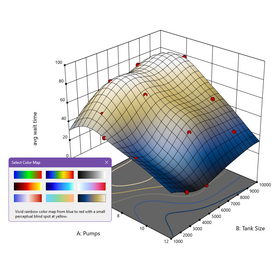
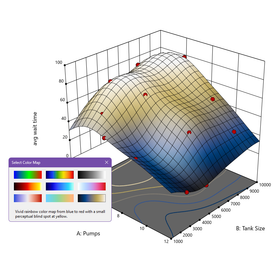
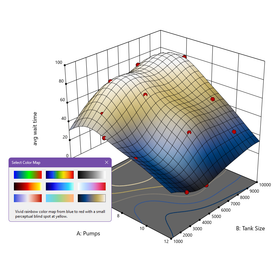
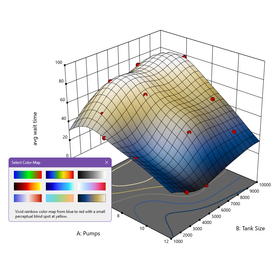
In the field of biotechnology process development, it is essential to find optimal conditions under complex interactions of many factors to achieve the desired quality and yield. Especially in the development of new pharmaceuticals and bio-materials, it is important to conduct experiments efficiently within limited resources to increase the probability of success. Inadequate experimental planning can lead to delays in development timelines, increased costs, and the risk of not achieving the expected results. The graphical experimental design method (DOE) "Design-Expert" contributes to solving these challenges by identifying important factors and supporting the optimal product composition and process layout. The ability to visually grasp response surfaces from various angles through a rotatable 3D plot makes it easier to understand complex relationships. [Usage Scenarios] - Factor screening for new bioprocesses - Optimization of existing processes - Evaluation of factor impacts in quality control - Parameter consideration during scale-up [Benefits of Implementation] - Reduction of development time - Decrease in experimental costs - Stabilization of processes and improvement of yield - Enhancement of product quality
Added to bookmarks
Bookmarks listBookmark has been removed
Bookmarks listYou can't add any more bookmarks
By registering as a member, you can increase the number of bookmarks you can save and organize them with labels.
Free membership registration
In the plastic industry, optimizing moldability is required to improve product quality and production efficiency. Since many factors, such as material properties, molding conditions, and mold design, influence moldability, it is important to efficiently evaluate these factors and find the optimal conditions. Improper condition settings can lead to the occurrence of defective products and increased production costs. The graphical design of experiments (DOE) tool 'Design-Expert' supports the planning and analysis of experiments based on scientific evidence to address these challenges and contribute to the improvement of moldability. 【Application Scenarios】 - Optimization of the mixing ratios of plastic materials and molding conditions (temperature, pressure, time, etc.) - Investigation and improvement of causes of molding defects (sink marks, warping, weld lines, etc.) - Evaluation of moldability in new material development - Stabilization of production processes and improvement of yield 【Effects of Implementation】 - Improvement in product quality due to enhanced moldability - Reduction of defective products and decrease in production costs - Shortening of development periods and efficient material and process development - Support for objective decision-making based on data
Added to bookmarks
Bookmarks listBookmark has been removed
Bookmarks listYou can't add any more bookmarks
By registering as a member, you can increase the number of bookmarks you can save and organize them with labels.
Free membership registration
In the paint industry, it is essential to optimize various factors in the formulation ingredients and manufacturing processes to maximize product performance. In particular, precisely controlling physical properties such as film durability, adhesion, and color tone directly impacts product quality and customer satisfaction. To efficiently and effectively improve these physical properties, it is crucial to identify important factors among a wide range of experimental conditions and establish optimal product compositions and manufacturing processes. The graphical design of experiments (DOE) tool, "Design-Expert," provides robust support for planning experiments based on scientific evidence and analyzing results, aiding in the realization of ideal physical property control. 【Application Scenarios】 - Optimization of formulation ingredients for improved paint durability - Examination of surface treatment conditions for enhanced adhesion - Stabilization of color tone and ensuring reproducibility - Streamlining manufacturing processes and reducing costs - Development of new functional paints 【Benefits of Implementation】 - Identification of critical factors enabling efficient experimentation - Detailed physical property analysis using response surface methodology and other techniques - Discovery of optimal product compositions and manufacturing processes - Reduction of development time and costs - Improvement and stabilization of product quality
Added to bookmarks
Bookmarks listBookmark has been removed
Bookmarks listYou can't add any more bookmarks
By registering as a member, you can increase the number of bookmarks you can save and organize them with labels.
Free membership registration
In the textile industry, improving the durability of materials is essential to maintain product quality and enhance market competitiveness. Strengthening resistance to various external factors such as wear during use, ultraviolet rays, and washing is crucial for extending product lifespan and increasing customer satisfaction. Inadequate durability testing and material selection can lead to early product deterioration and complaints. The graphical design of experiments (DOE) tool 'Design-Expert' supports the enhancement of textile product durability by identifying key factors and discovering optimal material compositions and processing conditions. 【Application Scenarios】 - Durability evaluation in new material development - Factor analysis for improving the durability of existing products - Optimization of processing conditions (temperature, pressure, time, etc.) - Consideration of composite material mixing ratios 【Benefits of Implementation】 - Efficient identification of key factors related to durability - Discovery of optimal material compositions and processing conditions - Reduction of development time and costs - Improvement of product reliability and strengthening of market competitiveness
Added to bookmarks
Bookmarks listBookmark has been removed
Bookmarks listYou can't add any more bookmarks
By registering as a member, you can increase the number of bookmarks you can save and organize them with labels.
Free membership registration
In the energy industry, there is a constant demand for improving product performance and streamlining manufacturing processes. Understanding the interactions of various factors and finding optimal conditions is crucial, especially when aiming to reduce energy consumption and maximize output. However, in complex processes where many factors are intertwined, an approach based on trial and error can be time-consuming and costly, leading to inefficiencies. "Design-Expert" addresses these challenges by supporting the planning and analysis of scientific and efficient experimental designs, enabling data-driven decision-making. 【Application Scenarios】 - Property evaluation in the development of new energy materials - Efficiency improvements in existing energy generation processes - Performance optimization of energy storage systems - Reduction of energy consumption in manufacturing processes 【Benefits of Implementation】 - Cost and time savings through a reduction in the number of experiments - Shortened development time by identifying key factors - Improved product performance and stabilization of processes - Promotion of objective decision-making based on data
Added to bookmarks
Bookmarks listBookmark has been removed
Bookmarks listYou can't add any more bookmarks
By registering as a member, you can increase the number of bookmarks you can save and organize them with labels.
Free membership registration
In the cosmetics industry, the evaluation of ingredient stability is emphasized to ensure product quality and safety. Accurately understanding the impact of environmental factors such as temperature, humidity, and light on product quality and predicting long-term stability is essential for gaining consumer trust. Inadequate stability evaluations can lead to product degradation and unexpected issues. "Design-Expert" supports everything from experimental design to result analysis, achieving efficient and accurate evaluations by visualizing the complex relationships between factors in stability assessments. [Usage Scenarios] - Evaluation of the relationship between ingredient ratios and stability - Analysis of the impact of storage conditions (temperature, humidity, light, etc.) on product stability - Data analysis for long-term stability predictions [Benefits of Implementation] - Reduction of time and costs associated with stability evaluations - Improvement of product quality and assurance of reliability - Shortening of the development cycle
Added to bookmarks
Bookmarks listBookmark has been removed
Bookmarks listYou can't add any more bookmarks
By registering as a member, you can increase the number of bookmarks you can save and organize them with labels.
Free membership registration
In the agricultural sector, it is necessary to consider various combinations of cultivation conditions and fertilizers to maximize crop yields. Particularly, to ensure stable yields while responding to climate change and variations in soil conditions, efficient and effective experimental designs are required. Inappropriate experimental designs can lead to wasted time and costs, potentially delaying the achievement of goals. The graphical design of experiments (DOE) tool 'Design-Expert' serves as a powerful tool to support efforts in maximizing yields by identifying key factors and discovering optimal cultivation conditions and fertilization designs. 【Application Scenarios】 - Optimization of fertilizer types and amounts - Examination of cultivation periods and densities - Evaluation of combinations of varieties and cultivation conditions - Verification of the effects of soil amendments 【Benefits of Implementation】 - Increased potential for yield improvement - Reduction of cultivation costs - Streamlining of experimental designs - Promotion of data-driven decision-making
Added to bookmarks
Bookmarks listBookmark has been removed
Bookmarks listYou can't add any more bookmarks
By registering as a member, you can increase the number of bookmarks you can save and organize them with labels.
Free membership registration
In the field of electronics, it is essential to understand the relationships between complex factors and to find optimal designs and manufacturing processes to improve product performance and ensure reliability. Especially as miniaturization and high functionality progress, even slight design changes or deviations in manufacturing conditions can significantly impact product performance. In response to these challenges, "Design-Expert" efficiently identifies key factors and supports the realization of ideal product configurations and process layouts. 【Use Cases】 - Property evaluation in new material development - Optimization of semiconductor manufacturing processes - Reliability testing of electronic components - Parameter tuning in circuit design 【Benefits of Implementation】 - Reduction in development time - Improvement in product performance - Decrease in defect rates - Cost reduction
Added to bookmarks
Bookmarks listBookmark has been removed
Bookmarks listYou can't add any more bookmarks
By registering as a member, you can increase the number of bookmarks you can save and organize them with labels.
Free membership registration
In the automotive industry's material development, it is important to optimize costs and manufacturing processes while meeting the required performance. Especially in the evaluation of new material properties and the improvement of existing materials, many factors interact in complex ways, necessitating efficient and comprehensive experimental planning. Inadequate experimental planning can lead to prolonged development periods and the risk of not achieving the expected performance. The graphical Design of Experiments (DOE) tool 'Design-Expert' assists in constructing experimental plans to identify critical factors and discover optimal material compositions and manufacturing processes. With a rotatable 3D plot, it allows for the examination of response surfaces from various angles, deepening the understanding of material properties. [Application Scenarios] - Evaluation of physical properties of new materials - Performance enhancement of existing materials - Optimization of manufacturing processes - Factor analysis aimed at cost reduction [Benefits of Implementation] - Shortened development periods - Reduced development costs - Improved material performance - Stabilization of product quality
Added to bookmarks
Bookmarks listBookmark has been removed
Bookmarks listYou can't add any more bookmarks
By registering as a member, you can increase the number of bookmarks you can save and organize them with labels.
Free membership registration
In the food industry, there is a constant demand for the pursuit of flavors that match consumer preferences and the development of new flavors. Particularly, accurately understanding the impact of multiple raw materials and manufacturing conditions on flavor and finding the optimal balance directly relates to the competitiveness of the product. Inadequate experimental designs can lead to variations in flavor or failure to achieve the desired effects. The graphical design of experiments (DOE) tool 'Design-Expert' helps identify important factors and supports the optimization of product formulations and manufacturing processes to maximize flavor. The rotatable 3D plot allows for a multifaceted visualization of flavor changes as response surfaces, deepening understanding. 【Application Scenarios】 - Optimization of ingredient ratios in the development of new flavors - Examination of manufacturing conditions (temperature, time, etc.) for flavor improvement of existing products - Analysis of interactions among multiple flavor components - Screening of trace components that influence flavor 【Benefits of Implementation】 - Shortened development time through efficient experimental design - Reduced flavor variability, achieving stable quality - Discovery of hidden factors that enhance flavor, contributing to product differentiation - Support for data-driven, objective decision-making
Added to bookmarks
Bookmarks listBookmark has been removed
Bookmarks listYou can't add any more bookmarks
By registering as a member, you can increase the number of bookmarks you can save and organize them with labels.
Free membership registration
In the chemical industry, exploring reaction conditions requires finding the optimal combination of multiple factors (such as temperature, pressure, and catalyst amount) to achieve the desired yield and purity. Since these factors interact in complex ways, trial-and-error exploration of conditions becomes a time-consuming and costly challenge. "Design-Expert" supports efficient and comprehensive experimental design and analysis to address these challenges, aiding in the discovery of optimal reaction conditions. 【Usage Scenarios】 - Optimization of conditions in the development of new reactions - Improvement of yields in existing processes - Suppression of by-products - Examination of conditions for scale-up 【Benefits of Implementation】 - Cost and time savings through a reduction in the number of experiments - Early discovery of desired reaction conditions - Improvement in product quality - Increased efficiency in research and development
Added to bookmarks
Bookmarks listBookmark has been removed
Bookmarks listYou can't add any more bookmarks
By registering as a member, you can increase the number of bookmarks you can save and organize them with labels.
Free membership registration
In the pharmaceutical industry, formulation optimization requires the establishment of ingredient combinations and manufacturing processes that maximize the effectiveness and stability of products. Finding optimal conditions, especially when multiple factors interact in complex ways, is directly linked to the efficiency and quality of product development. Inappropriate formulation design can lead to prolonged development periods and the risk of not achieving the expected effects. The graphical design of experiments (DOE) tool 'Design-Expert' contributes to solving these challenges by identifying critical factors and supporting the optimal product composition and ideal process configuration. 【Application Scenarios】 - Formulation consideration in new drug development - Improvement and stability enhancement of existing products - Optimization of manufacturing processes - Factor analysis in quality control 【Benefits of Implementation】 - Reduction of development time - Improvement in product quality - Cost reduction - High reproducibility in formulation design
Added to bookmarks
Bookmarks listBookmark has been removed
Bookmarks listYou can't add any more bookmarks
By registering as a member, you can increase the number of bookmarks you can save and organize them with labels.
Free membership registration
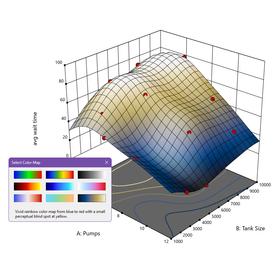
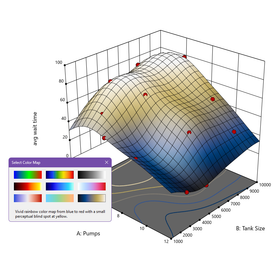
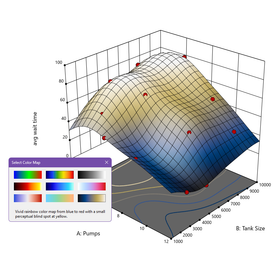
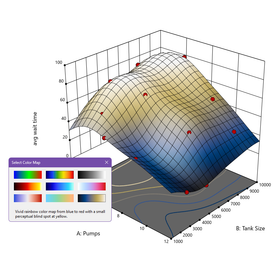
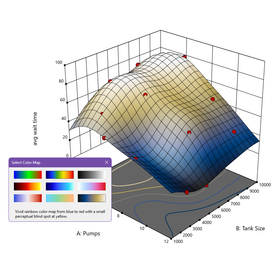
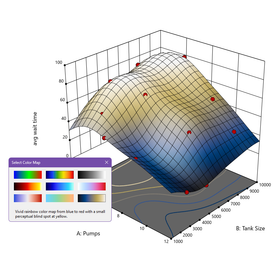
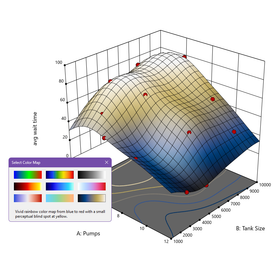
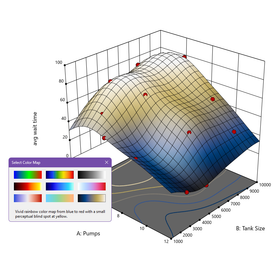
We assist in screening important factors, identifying optimal product configurations, and arranging ideal processes. Using a rotatable 3D plot, response surfaces can be easily displayed from any angle. It is useful in various scenarios such as experimental design, parameter optimization, and process optimization. 【Main Features】 - Level factor screening plans - Investigation of general factors - Response Surface Methodology (RSM) - Mixture design techniques - Combinations of process factors, mixture components, and categorical factors - Design and analysis of split plots - Logistic regression for binary data analysis
Added to bookmarks
Bookmarks listBookmark has been removed
Bookmarks listYou can't add any more bookmarks
By registering as a member, you can increase the number of bookmarks you can save and organize them with labels.
Free membership registration
In the field of geology, particularly in stratigraphic analysis, it is essential to accurately visualize the complex structures and data of strata and to express the analysis results clearly. Accurately graphing information such as the depth of strata, types of rocks, and ages, and sharing it in papers and reports is important for enhancing the quality of research. Inappropriate graphical representations can lead to misunderstandings of the data and undermine the reliability of the analysis results. SigmaPlot, as a specialized graphing software focused on science and technology, provides a wealth of features to accurately represent geological research findings. 【Usage Scenarios】 - Creation of stratigraphic cross-sections - Creation of bar charts - Creation of geological maps - Analysis of drilling data - Visualization of sedimentary structures 【Benefits of Implementation】 - Easier visual understanding of the structure and characteristics of strata - Ability to express complex data clearly - Improved quality of papers and presentation materials - Increased efficiency in data analysis Basic Operations of SigmaPlot (link to Hulinks page) https://www.hulinks.co.jp/software/sigmaplot/sigmaplot_bso_guide/
Added to bookmarks
Bookmarks listBookmark has been removed
Bookmarks listYou can't add any more bookmarks
By registering as a member, you can increase the number of bookmarks you can save and organize them with labels.
Free membership registration
In the field of engineering (mechanical and electrical), accurately and clearly visualizing experimental data and simulation results is essential for identifying issues and considering improvement measures. In particular, specialized graphing capabilities are required to read trends from complex datasets and provide objective evidence. Inadequate graph representations can lead to incorrect analyses and decision-making. SigmaPlot, as a specialized graphing software focused on science and technology, supports the accurate representation of research results. 【Usage Scenarios】 - Graphing experimental data - Visualizing simulation results - Creating performance evaluation reports - Preparing technical presentation materials 【Benefits of Implementation】 - Objective performance evaluation based on data - Early detection of issues and promotion of improvement measures - Clear information sharing with stakeholders - Increased efficiency in research and development Basic Operations of SigmaPlot (link to Hulinks page) https://www.hulinks.co.jp/software/sigmaplot/sigmaplot_bso_guide/
Added to bookmarks
Bookmarks listBookmark has been removed
Bookmarks listYou can't add any more bookmarks
By registering as a member, you can increase the number of bookmarks you can save and organize them with labels.
Free membership registration