

Control the temperature, chlorine partial pressure, and pressure to selectively separate Au, Cu, Sn, Fe, Ni, etc. through chlorination volatilization.
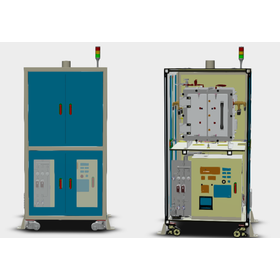
Urban mines contain a complex mixture of valuable metals and base metals such as Au, Cu, Sn, Fe, and Ni. When separating and recovering these through wet processing, challenges may arise related to the use of reagents, waste liquid treatment, pretreatment processes, and drying processes. Our small chlorine furnace can selectively separate and recover metal components by converting them into volatile chlorides through dry chlorination using Cl2/HCl, while controlling temperature, chlorine partial pressure, and pressure. For example, in the low-temperature range, easily volatile chlorides such as FeCl3 and SnCl4 can be removed first, and in the mid-temperature range, the separation of precious metals can be considered using the vapor pressure differences of AuCl3 and others. 【Features】 ■ Supports dry chlorination and chloride volatilization using Cl2/HCl ■ Allows for selective separation of multiple metals such as Au, Cu, Sn, Fe, and Ni ■ Accommodates staged processing with controlled temperature, chlorine partial pressure, and pressure ■ Reduces waste liquid and drying processes associated with wet processing ■ Enables exploration of urban mine recycling conditions with small sample sizes *For more details, please download the materials or contact us.
Inquire About This Product
basic information
■ Conversion of metal components to chlorides - Use Cl2 and HCl to convert Au, Cu, Sn, Fe, Ni, etc., into chlorides - Investigate separation conditions using the boiling points and vapor pressure differences of the generated chlorides ■ Control of temperature, chlorine partial pressure, and pressure - Pre-separate easily volatile components like FeCl3 and SnCl4 at low temperatures - Consider selective volatility of precious metal chlorides like AuCl3 at medium temperatures - Adjust volatilization behavior, reaction rates, and separability through pressure control ■ Differences from wet processing - Contributes to the reduction of reagent usage, waste liquid treatment, washing, and drying processes - Applicable to materials that are moisture-sensitive and composite materials - Can be utilized in the development of processes for recovering valuable metals from urban mines ■ Condition exploration in a small furnace - Compare temperature, gas types, concentrations, pressures, and times with small sample sizes - Based on test results, consider expansion to continuous processing and mass production furnace specifications * Specifications will be proposed according to the target materials, recovered metals, processing temperatures, gas types, and removal conditions.
Price information
*Please feel free to contact us for more details, as prices may vary depending on the equipment specifications.
Delivery Time
※*Please feel free to contact us for more details, as delivery times may vary depending on the equipment specifications.
Applications/Examples of results
**Applications** - Separation and recovery of Au, Cu, Sn, Fe, Ni, etc. from urban mines - Consideration of dry recycling for electronic substrates, plating materials, and metal scraps - Recovery of valuable metals from waste catalysts, electronic components, and composite materials - Stage separation of precious metals and base metals through chloride volatilization - Evaluation of the replacement from wet refining to dry processes - Assessment of the volatilization behavior, vapor pressure differences, and reaction temperature differences of metal chlorides - Small-scale chlorination tests in the research and development phase **For such challenges** - In wet processing, waste liquid, chemical management, and drying processes become issues - There is a desire to selectively separate specific metals from raw materials containing multiple metals - Confirmation of the volatilization behavior of chlorides such as Au, Sn, and Fe is desired - Consideration of dry processes for urban mine recycling is sought - Comparison of temperature, chlorine partial pressure, and pressure conditions with small sample sizes is needed - After confirming conditions in a test furnace, consideration for expansion to mass production furnaces and continuous furnaces is desired Even at a stage where the target materials, metals to be recovered, processing temperatures, gas concentrations, and decontamination conditions are not yet determined, consultations can be made according to the applications.
catalog(3)
Download All Catalogs
![[Data] Small Chlorine Furnace](https://image.mono.ipros.com/public/catalog/image/2116976/IPROS13049377807337376165.jpeg?w=120&h=170)

Company information

Our company integrates three technologies: "electricity," "equipment," and "chemistry," using our unique know-how to develop innovative heating furnaces and other equipment. We handle various electric furnaces (heating furnaces) such as carbon furnaces, multi-atmosphere furnaces, metal furnaces, and chlorine furnaces, leveraging our proprietary high-temperature electric furnace technology. We are not just an equipment manufacturer; we are a strategic development partner that supports innovative manufacturing with advanced heating, looking ahead to the standards of the next decade alongside our customers.


