

Organize the firing test conditions suitable for powder, substrates, jigs, and components.
In firing tests, the type of furnace, fixtures, containers, and recovery methods vary depending on "what is being fired." The points to be checked and the items to be evaluated differ for powders, substrates and plates, fixtures and parts, and molded bodies and pellets. For example, with powders, it is important to check for dispersibility, moisture absorption, and recovery methods; for substrates, warping, distortion, and in-plane temperature differences; for fixtures and parts, gas flow and dead spots; and for molded bodies, cracks, shrinkage, and contact marks. This document organizes the items to be checked before firing tests by sample type, considerations for selecting fixtures and containers, and perspectives for selecting furnace types in a list format. ■ For consideration of firing tests before equipment introduction ■ For organizing conditions of powders, substrates, fixtures, and parts ■ For initial considerations in selecting furnace types, fixtures, and containers
Inquire About This Product
basic information
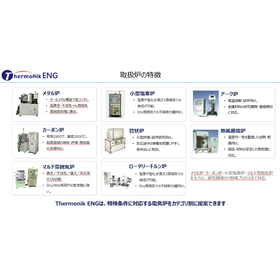
DL Data Publication Content ■Powder: Particle size, bulk density, dispersibility, hygroscopicity, filling amount, atmospheric exposure feasibility ■Substrates and Sheets: Size, thickness, warpage tolerance, in-plane temperature difference, support method ■Jigs and Parts: Material, shape, contaminants, corrosiveness, gas flow, dead spots ■Molds and Pellets: Cracking, shrinkage, strength, contact marks, sintering progress, holding time Scope of Consideration: ■Temperature: Low temperature range to 1200°C, 1800°C class, over 2000°C ■Atmosphere: Air, N₂, Ar, H₂, NH₃, O₂, vacuum, humidification, Cl₂, HCl, etc. ■Furnace Types: Multi-furnace, tubular furnace, metal furnace, carbon furnace, chlorine furnace, etc.
Price information
Estimates will be provided each time based on the contents of the firing test, type of furnace, jig specifications, and safety measures.
Delivery Time
※It varies depending on sample conditions, the necessity of jigs and containers, atmosphere, and safety measures.
Applications/Examples of results
Recommended for such considerations. ■ Firing tests for powders, substrates, jigs, components, molded bodies, and pellets ■ Condition exploration, furnace type selection, and jig/container selection before equipment installation ■ Evaluation of oxidation, reduction, nitriding, degassing, graphitization, chlorination reactions, etc. ■ Firing considerations in special atmospheres such as H₂, NH₃, O₂, humidified, vacuum, inert gases, Cl₂, HCl, etc. ■ Recovery methods after firing, warping/distortion, weight changes, impurity removal, exhaust gas confirmation Consultations at the initial stage of consideration, such as "Which furnace should this sample be fired in?" and "What kind of jigs/containers are needed?" are also possible.
catalog(1)
Download All Catalogs
Company information

Our company integrates three technologies: "electricity," "equipment," and "chemistry," using our unique know-how to develop innovative heating furnaces and other equipment. We handle various electric furnaces (heating furnaces) such as carbon furnaces, multi-atmosphere furnaces, metal furnaces, and chlorine furnaces, leveraging our proprietary high-temperature electric furnace technology. We are not just an equipment manufacturer; we are a strategic development partner that supports innovative manufacturing with advanced heating, looking ahead to the standards of the next decade alongside our customers.


![Hydrogen Burner - Large Capacity Package Gas Burner [BJ-H2 Burner]](https://image.mono.ipros.com/public/product/image/b68/2000903146/IPROS12019289977810136550.png?w=280&h=280)
![Hydrogen co-firing burner package gas burner [BJ-HM burner]](https://image.mono.ipros.com/public/product/image/2072948/IPROS8200428579151439853.png?w=280&h=280)