
Selection of furnace for N₂・Ar atmosphere sintering | Suitable for oxidation suppression and inert heat treatment

Organizing the gas types, substitution conditions, and furnace configuration to suppress oxidation.
Are you considering sintering and heat treatment with N₂・Ar atmosphere to suppress oxidation? Simply flowing inert gas is not sufficient to suppress oxidation. It is necessary to determine conditions that include the introduction of oxygen and moisture into the furnace, replacement procedures, gas flow rates, dew point, residual O₂, sample shape, jig material, and re-oxidation during cooling. Additionally, while N₂ is relatively low-cost and easy to use for general oxidation suppression, there is a possibility of nitriding or reactions depending on the material. Ar/He has low reactivity and is suitable for high-purity processing and high-temperature treatments, but it is important to consider gas costs, replacement amounts, and leak management. This document organizes the differentiation of gas types in N₂・Ar/He atmosphere sintering, furnace selection, and confirmation items such as dew point, residual O₂, and replacement procedures. ■ For oxidation suppression in N₂・Ar atmosphere ■ For sintering and heat treatment in inert atmosphere ■ For confirming the differentiation between N₂ and Ar/He ■ For organizing conditions of dew point, residual O₂, and replacement procedures ■ For sintering tests and furnace type selection before equipment installation
Inquire About This Product
basic information
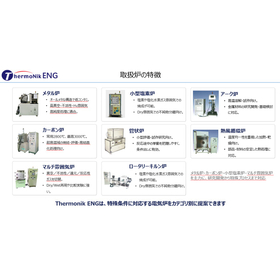
Publication Content: Points for Selecting a Furnace for N₂・Ar Atmosphere Sintering ■ Items to Confirm First Organize the extent to which oxidation should be suppressed, processing temperature, holding time, cooling conditions, sample shape, reactivity with N₂, dew point, residual O₂, replacement procedures, jig materials, exhaust and safety measures, and gas usage. ■ N₂ Atmosphere A relatively low-cost atmosphere that is easy to use for general inert sintering, oxidation prevention, and heat treatment. However, depending on the material, there is a possibility of nitriding and reactions, so it is necessary to confirm the processing temperature and reactivity with the material. ■ Ar/He Atmosphere An atmosphere with low reactivity, suitable for high-purity processing and high-temperature treatments. It is effective for high-purity processing of metals and ceramics, as well as ultra-high-temperature treatments, but considerations regarding gas costs, flow rates, replacement conditions, and leak management are important. Scope of Consideration at Thermonik ENG ■ Temperature Range: Consideration based on purpose up to 1200℃, 1800℃ class, and over 2000℃ ■ Furnace Configuration: Multi-atmosphere furnaces, tubular furnaces, metal furnaces, carbon furnaces, etc. ■ Evaluation Conditions: Organize flow rates, replacement, pressure, heating/cooling, and jig materials ■ Design Reflection: Expand test results into furnace dimensions, gas systems, exhaust, and safety measures.
Price information
Estimates will be provided each time based on test content, furnace type, gas type, and oxygen/moisture management level.
Delivery Time
※It varies depending on the type of furnace, temperature range, type of gas, flow rate, replacement conditions, dew point and residual O₂ management, internal dimensions of the furnace, and safety measures.
Applications/Examples of results
Recommended for such considerations. ■ Sintering and heat treatment in N₂・Ar atmosphere ■ Processing of powders, substrates, components, and jigs with suppressed oxidation ■ Inert atmosphere processing of metals and ceramics ■ Comparative evaluation of N₂ atmosphere and Ar atmosphere ■ Heat treatment, degassing, and oxidation suppression in high-purity atmosphere ■ High-temperature processing over 2000℃ and ultra-high-temperature sintering ■ Exploration of conditions for dew point, residual O₂, replacement procedures, and gas flow rate ■ Consideration of processing samples that need to suppress re-oxidation during cooling ■ Sintering tests before equipment installation, selection of furnace types, and gas system specifications We are available for consultations from the early stages of consideration, such as "Is N₂ sufficient, or is Ar necessary?" "To what extent should oxygen and moisture be managed?" and "How can we prevent re-oxidation during cooling?"
catalog(1)
Download All Catalogs
Company information

Our company integrates three technologies: "electricity," "equipment," and "chemistry," using our unique know-how to develop innovative heating furnaces and other equipment. We handle various electric furnaces (heating furnaces) such as carbon furnaces, multi-atmosphere furnaces, metal furnaces, and chlorine furnaces, leveraging our proprietary high-temperature electric furnace technology. We are not just an equipment manufacturer; we are a strategic development partner that supports innovative manufacturing with advanced heating, looking ahead to the standards of the next decade alongside our customers.


