
Selection of Furnace for H₂ Reduction Atmosphere Heat Treatment | Measures for Safety and H₂ Concentration Management

Organize furnace specifications based on H₂ concentration, dilution gas, and safety measures.
Are you considering thermal treatment and firing evaluation in an H₂ reduction atmosphere? In processing under an H₂ reduction atmosphere, it is important to first clarify "what you want to reduce." Depending on the objective—such as the reduction of oxides, removal of surface oxide films, reduction of metallic impurities and residues, or treatment of powders, substrates, jigs, and components—the required temperature, H₂ concentration, holding time, and evaluation criteria will vary. Additionally, when processing with 100% H₂, high reduction power can be expected; however, it is crucial to consider specifications for replacement procedures, leak management, exhaust dilution, decontamination, and safety interlocks. When processing with diluted H₂ below the explosion limit, it is easier to lean towards safety, but there may be a risk of insufficient reducing power, necessitating verification of temperature, time, flow rate, and dilution ratio. This document organizes the reduction objectives, H₂ concentration, dilution gas, furnace configuration, safety measures, and points for reflecting on equipment specifications in H₂ reduction atmosphere thermal treatment. - For thermal treatment and firing evaluation in an H₂ reduction atmosphere - For comparative examination of 100% H₂ and diluted H₂ conditions - For oxide reduction, deoxygenation, and removal of surface oxide films - For organizing specifications of H₂ gas replacement, exhaust dilution, and safety interlocks - For firing tests and furnace type selection before equipment installation
Inquire About This Product
basic information
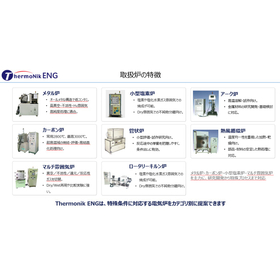
Publication Content: Points for Selecting Furnaces for H₂ Reduction Atmosphere Heat Treatment ■Purpose of Reduction Organizing the reduction of oxides, deoxidation, removal of surface oxide films, surface modification, reduction of metallic impurities and residues, and processing of powders, substrates, jigs, and components. ■H₂ Concentration Clarifying whether to process with 100% H₂ or with diluted H₂ below the explosion limit. The H₂ concentration affects the reduction power, safety measures, exhaust treatment, and interlock specifications. ■Verification Items Checking H₂ concentration, total flow rate, pressure, pre-replacement before heating, replacement during cooling, exhaust treatment, and abnormal stop conditions. ■Dilution Gases N₂: Inexpensive and easy to handle, but check for nitriding effects at high temperatures or with certain materials. Ar: Highly inert, easy to use for metals and high-purity applications. He: High thermal conductivity, effective for examining temperature uniformity and cooling. ■Points for Furnace Selection Comprehensively checking temperature range, vacuum capability, internal material of the furnace, sample shape, gas supply system, exhaust system, and safety measures. Examples of Corresponding Furnaces Multi-atmosphere furnaces, metal furnaces, carbon furnaces, etc.
Price information
Test content, furnace type, H₂ concentration, dilution gas, and safety measures will be estimated each time.
Delivery Time
※It varies depending on the furnace type, temperature range, H₂ concentration, dilution gas, flow rate, exhaust dilution, emission control, and safety interlock specifications.
Applications/Examples of results
We recommend this kind of examination. ■ Evaluation of heat treatment and firing in an H₂ reduction atmosphere ■ Reduction of oxides, deoxygenation, and reduction of oxygen concentration ■ Removal of surface oxide films and surface modification ■ Reduction of metallic impurities, residues, and attachments ■ H₂ treatment of powders, substrates, jigs, and components ■ Comparison of conditions for 100% H₂ and diluted H₂ ■ Examination of dilution gas conditions such as H₂/N₂, H₂/Ar, H₂/He ■ Confirmation of pre-replacement before heating, replacement during cooling, exhaust dilution, and leak management ■ Consideration of equipment specifications including explosion limits, decontamination, and safety interlocks ■ Exploration of conditions, firing tests, and furnace selection before equipment installation We can consult with you from the early stages of examination regarding questions such as "Is 100% H₂ necessary, or is diluted H₂ sufficient?" "How should H₂ concentration, flow rate, and replacement procedures be set?" and "Which type of furnace should be chosen, including safety measures?"
catalog(1)
Download All Catalogs
Company information

Our company integrates three technologies: "electricity," "equipment," and "chemistry," using our unique know-how to develop innovative heating furnaces and other equipment. We handle various electric furnaces (heating furnaces) such as carbon furnaces, multi-atmosphere furnaces, metal furnaces, and chlorine furnaces, leveraging our proprietary high-temperature electric furnace technology. We are not just an equipment manufacturer; we are a strategic development partner that supports innovative manufacturing with advanced heating, looking ahead to the standards of the next decade alongside our customers.


