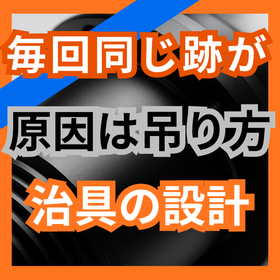
Hanger marks, gripping marks, exposed substrate. By specifying the contact position of the jig and managing conductivity, appearance defects and rework labor can be significantly reduced.
The recurring issue in visual inspections is always the same contact point of the jig. It is not due to the painting conditions, but rather the design of the hanging method. Appearance defects caused by the jig account for 20-30% of rework labor. ────────────── ■ Cause of Occurrence The contact areas of the jig do not receive paint, resulting in exposed substrate and differences in film thickness. When paint builds up at the contact points, conductivity decreases, and the adhesion efficiency of electrostatic painting also drops. ■ Truth There is often a lack of awareness that jigs are consumables. Hangers that are used continuously without being stripped create foreign matter and defects in the next batch. ■ Improvement Measures Fix the contact points to non-functional or hidden surfaces and specify them in the drawings. Determine the stripping cycle of the jig based on usage frequency and conduct regular inspections of conductivity. Please utilize the materials that summarize jig design and appearance standards.
Inquire About This Product
Related Videos
basic information
Corresponding materials: Iron / Stainless steel / Aluminum / Aluminum die casting / Zinc die casting / Tool management: Usage count management, regular peeling, continuity inspection / Contact position fixed operation as specified in the drawings / Coating peeling, repainting, test painting support / ISO 9001 certification obtained.
Price range
Delivery Time
Applications/Examples of results
OA machine enclosures, home appliance exteriors, automotive parts, fixtures, industrial machine covers, and other appearance-required products. Comprehensive support from jig stripping to regeneration management.
catalog(1)
Download All Catalogs
Company information

We are not just a "subcontracted painting factory." Established in 1958, our company has a foundation of painting technology and also specializes in chemical treatment, stripping, and cleaning, functioning as the "external surface treatment department" in your organizational chart. Based on our philosophy of "preparation is eight-tenths of the work," we emphasize participation from the "upstream process" before the drawings are finalized. We conduct test painting on a wide range of metals and difficult materials, and we produce the entire process from assembly, packaging, to delivery, thereby reducing your management workload. Additionally, by being able to perform zinc phosphate treatment in-house, we achieve stable painting quality. Furthermore, our micro-heating stripping technology, which does not use chemicals, maintains the electrical state of the "jigs (hangers)" that influence painting quality. Our approach of "pre-treatment determines painting quality" ensures the stability of the paint film during mass production. Rather than simply "applying specified standards," we work backwards to achieve optimal painting specifications and prevent scratches during transportation, sparing no effort in thorough discussions from the outset. This diligent preparation is the shortest path to preventing rework and minimizing total costs. From the development stage, please utilize the expertise of our specialists as part of your production line.