"Why is there no money left despite being busy?" - To the managers of subcontracting manufacturing businesses.
Although there are sales, cash flow is tight. This may not be a matter of "insufficient effort," but rather a "structural problem." Our service offers a "financial dashboard" that visualizes cash flow for the manufacturing industry, along with financial support that leads to profit improvement. Based on my experience standing on the front lines as a second-generation successor in the manufacturing industry, I will provide "financial translation" that allows even management who are not good with numbers to make informed decisions. [Currently available for free] "Uncovering the 'Invisible Deficit'! Financial Visualization Checklist" We are also offering a pre-implementation diagnostic report for free right now.
Inquire About This Product
basic information
Busy, yet no money left" — To the owners of first-tier subcontracting manufacturing businesses. This service visualizes the causes of cash flow deterioration and provides a dashboard to align financials with on-site operations, along with support from a former second-generation manufacturing tax accountant, to intuitively and practically create a profit-oriented structure. ● Features - Financial dashboard that visualizes cash flow - Profit structure diagnosis report that highlights deficit factors - Improvement support through the breakdown of gross profit margins and labor costs - Direct support from the representative tax accountant Free Bonus Distributing the "Invisible Deficit Exposé! Financial Visualization Checklist.
Price range
Delivery Time
Applications/Examples of results
【Purpose】 - For small and medium-sized manufacturing businesses that want to escape the situation of "having sales but no money left." - Diagnosis and improvement support to find the "structure of deficits" that cannot be seen with accounting software or tax accountants. - Financial design support for second-generation and successor managers to become "strong with numbers." 【Examples of Achievements】 - A processing company that had three consecutive years of deficits turned profitable in six months and increased cash reserves. - A company that faced cash flow difficulties after equipment updates stabilized management by reviewing its gross profit structure. - A president who was weak in finance transformed into a state where they could "read and make decisions based on financial statements."
Company information

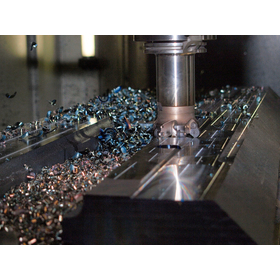
In manufacturing equipment investment, decisions may be made based solely on manufacturers' estimates and the possibility of subsidies. However, when introducing high-cost equipment, it is necessary to confirm the "total investment amount," which includes not only the main price but also transportation, installation, construction, tools, jigs, and maintenance costs. Additionally, one must consider the funds until the subsidy is received, cash reserves after the investment, monthly repayment amounts, investment recovery periods, order forecasts, production plans, and gross profit estimates, as neglecting these can strain cash flow after implementation. Our company organizes the figures that should be confirmed before equipment investment based on experience in manufacturing and financial analysis. Before ordering high-cost equipment such as machining centers, CNC lathes, 5-axis machining machines, and 3D measuring instruments, we provide materials for the manufacturing industry that highlight often-overlooked aspects such as cash flow, repayment sources, and investment recovery. Equipment investment is not merely a machine purchase; it is a management decision that changes the way a company competes. We will provide insights to confirm subsidies, loans, self-funding, repayment plans, and order forecasts before placing an equipment order. Supervised by Toshirou Ooyama, a former successor of a machining company and tax accountant.