When the tape is removed, the adhesive remains burned on. This explains the procedure to prevent adhesive residue based on heat resistance temperature and peeling timing.
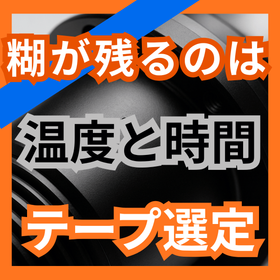
When the tape was removed, the adhesive remained as a line. It won't come off even when wiped. The cause is temperature and time. ────────────── ■ Cause of Occurrence The adhesive of masking tape decomposes and transfers to the material side when the heat resistance temperature is exceeded. Regular paper tape has a limit of around 120 degrees, and it cannot withstand baking conditions. ■ Truth The adhesive hardens more as it cools after baking, increasing the release strength. If removed after the material temperature has completely cooled down, the adhesive layer is more likely to remain. Hardened adhesive can damage the paint film when wiped with a solvent, leading to secondary defects. ■ Improvement Measures Select a heat-resistant tape with a margin of more than 20 degrees above the baking temperature. Removal should be done after baking, while the material temperature is between 60-80 degrees. Please utilize the documentation on masking conditions and tape selection.
Inquire About This Product
Related Videos
basic information
Corresponding construction method: solvent-based baked coating, powder coating / Baking temperature: 140-200 degrees / Recommended tape heat resistance: baking temperature plus 20 degrees or more / Stripping temperature: 60-80 degrees / Masking: tape, caps, dedicated jigs
Price range
Delivery Time
Applications/Examples of results
Burning paint on parts with non-painted areas such as screw holes, fitting parts, electrical contacts, and nameplate sections. To reduce rework labor hours due to adhesive residue, we have standardized tape selection criteria and release temperatures.
catalog(1)
Download All Catalogs
Company information

We are not just a "subcontracted painting factory." Established in 1958, our company has a foundation of painting technology and also specializes in chemical treatment, stripping, and cleaning, functioning as the "external surface treatment department" in your organizational chart. Based on our philosophy of "preparation is eight-tenths of the work," we emphasize participation from the "upstream process" before the drawings are finalized. We conduct test painting on a wide range of metals and difficult materials, and we produce the entire process from assembly, packaging, to delivery, thereby reducing your management workload. Additionally, by being able to perform zinc phosphate treatment in-house, we achieve stable painting quality. Furthermore, our micro-heating stripping technology, which does not use chemicals, maintains the electrical state of the "jigs (hangers)" that influence painting quality. Our approach of "pre-treatment determines painting quality" ensures the stability of the paint film during mass production. Rather than simply "applying specified standards," we work backwards to achieve optimal painting specifications and prevent scratches during transportation, sparing no effort in thorough discussions from the outset. This diligent preparation is the shortest path to preventing rework and minimizing total costs. From the development stage, please utilize the expertise of our specialists as part of your production line.